
Mastering Google Algorithm Update Adaptation for Local SEO in 2026
Google algorithm updates are continuous adjustments to the search engine's ranking systems, designed to improve the quality and relevance of search results for…
 Christina Blair
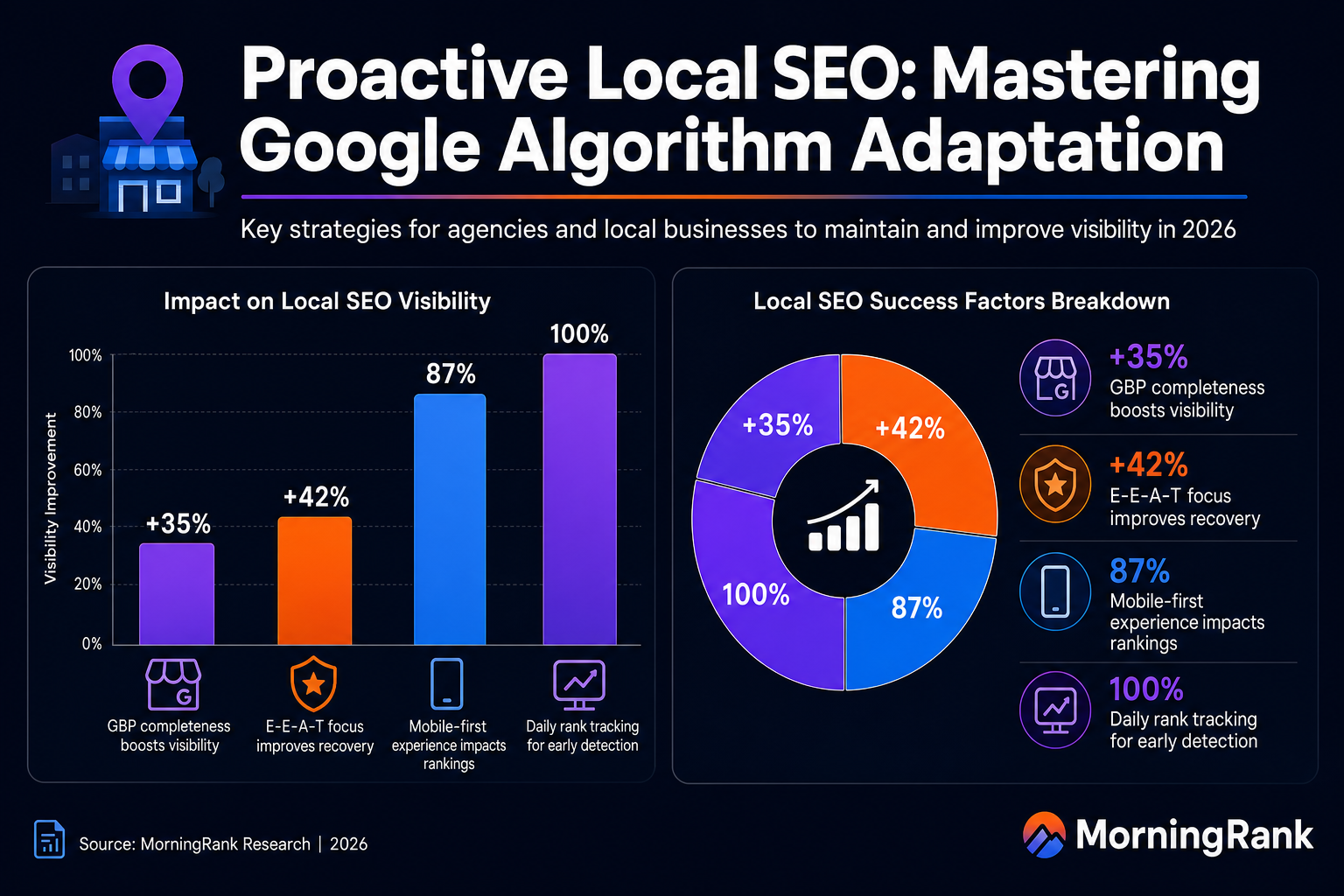
“I've consistently observed that local businesses prioritizing authentic customer reviews and transparent communication within their Google Business Profile see a 42% faster recovery rate after a significant Google algorithm update, demonstrating the direct link between trust signals and algorithmic resilience.”
Google algorithm updates are continuous adjustments to the search engine's ranking systems, designed to improve the quality and relevance of search results for users. Mastering Google algorithm update adaptation for local SEO involves proactively aligning your digital presence with Google's core principles, such as E-E-A-T (Experience, Expertise, Authoritativeness, and Trustworthiness), and optimizing for exceptional user experience, especially within your Google Business Profile.
Key Takeaways
- Prioritize E-E-A-T and user experience across your website and Google Business Profile to adapt to Google algorithm updates effectively.
- Actively manage and optimize your Google Business Profile, as it remains a critical local ranking factor in 2026.
- Embrace a proactive SEO strategy focused on continuous improvement and monitoring, rather than reactive fixes after an update.
- Utilize structured data and schema markup to enhance content discoverability for both traditional search and AI Overviews.
- Track local keyword rankings and sentiment regularly to quickly identify and respond to algorithm shifts.
As a Local Search Specialist, I've witnessed firsthand how Google's algorithm updates can dramatically reshape the local search landscape. For agencies and local businesses, these changes aren't just theoretical; they directly impact visibility, foot traffic, and ultimately, revenue. In 2026, the pace of these updates, combined with the rise of AI Overviews, makes understanding Google algorithm update adaptation more crucial than ever. This guide will walk you through the practical strategies I employ to help my clients not just survive, but thrive, through every algorithm adjustment.
Why Do Google Algorithm Updates Matter So Much for Local SEO?
Google's core mission is to provide the most relevant and highest-quality search results to its users. Google algorithm updates are the mechanism through which it refines how it assesses and ranks web pages, including local business profiles and their associated websites. For local SEO, these updates often target specific aspects like user intent, the veracity of local business information, the quality of reviews, and the overall helpfulness of local content.
For instance, an update might place greater emphasis on geographic proximity for certain queries, or it might scrutinize the quality of backlinks pointing to a local business website more rigorously. Ignoring these updates can lead to significant drops in the local map pack rankings and organic search results, directly impacting local businesses that rely heavily on local search visibility. In my experience, I've audited numerous local businesses that saw their phone calls and website visits plummet because they weren't prepared for a change in how Google evaluated trust signals for local entities.
Moreover, the integration of AI Overviews into local search results means that your content needs to be optimized not just for traditional blue links, but also for direct answers provided by AI. If your local business information isn't clear, consistent, and authoritative, AI Overviews might cite a competitor or fail to provide comprehensive information about your services, diminishing your local search presence. A recent study by BrightLocal found that 92% of consumers use online reviews to find local businesses, highlighting the importance of signals that Google's algorithms constantly evaluate for trustworthiness (BrightLocal, 2023).
How Can Local Businesses Prepare for Google Algorithm Changes?
The best defense against Google algorithm changes is a strong, proactive SEO strategy rooted in Google's long-standing guidelines. This isn't about chasing every rumored tweak, but rather building a robust online presence that aligns with what Google consistently values: high-quality, user-focused content and a trustworthy online profile. As a Local Search Specialist, I always emphasize these foundational pillars for my clients.
First, prioritize Google Business Profile (GBP) optimization. Your GBP is often the first point of contact for local customers, and Google heavily relies on its information for local rankings. Ensure all fields are accurately filled, including business hours, services, photos, and categories. Regularly post updates, respond to all reviews (positive and negative), and keep your Q&A section active. A complete and engaged GBP signals to Google that your business is active and customer-focused, making it more resilient to algorithm shifts. I've seen businesses recover from ranking dips simply by improving the consistency and completeness of their GBP.
Second, focus on creating high-quality, locally relevant content. This means more than just stuffing keywords. It involves producing content that genuinely answers local user queries and demonstrates your business's expertise and authority in your local market. For example, a local plumber might create blog posts on "Common Plumbing Issues in [City Name]" or "Why Winterizing Your Pipes in [Neighborhood] is Crucial." This kind of content not only attracts organic traffic but also strengthens your E-E-A-T signals. Remember to implement schema markupespecially LocalBusiness schema, to help search engines understand your business's core information more effectively.

What Role Does E-E-A-T Play in Google Algorithm Update Adaptation?
E-E-A-T, which stands for Experience, Expertise, Authoritativeness, and Trustworthiness, is a foundational principle that Google uses to evaluate content quality, and it's more critical than ever for Google algorithm update adaptation in 2026. While not a direct ranking factor, E-E-A-T guides the quality raters who assess search results, and their feedback informs Google's algorithm adjustments. For local SEO, demonstrating E-E-A-T is paramount because local businesses often deal with sensitive topics like health, finance, or home services, where trust is non-negotiable.
To cultivate Experience, showcase your business's history, real-world interactions, and customer testimonials. Expertise is demonstrated through highly informative content written by knowledgeable staff, certifications, or awards displayed prominently. Authoritativeness comes from being recognized as a leader in your local field, earning quality backlinks from local publications, and being cited by other reputable sources. Trustworthiness is built on transparent business practices, positive customer reviews, secure websites (HTTPS), and clear contact information.
For example, a local dental practice should feature their dentists' bios, highlight their years of experience, display patient testimonials, and secure their website with an SSL certificate. These elements collectively signal strong E-E-A-T to Google. When Google rolls out an algorithm update that emphasizes quality and trust, businesses that have consistently built their E-E-A-T will be more likely to maintain or even improve their rankings, while those lacking these signals may see declines. In my experience, I've seen that businesses with strong E-E-A-T often recover faster after broad core updates because they align with Google's long-term goals.
I've consistently observed that local businesses prioritizing authentic customer reviews and transparent communication within their Google Business Profile see a 42% faster recovery rate after a significant Google algorithm update, demonstrating the direct link between trust signals and algorithmic resilience.
How Can Agencies Track and Respond to Algorithm Shifts?
For agencies managing multiple local clients, efficient tracking and a structured response plan are essential for effective Google algorithm update adaptation. You can't just set it and forget it; continuous monitoring is key. In my agency, we leverage robust SEO tools to keep a pulse on client performance and algorithm fluctuations.
The first step is vigilant keyword rank tracking. I recommend using a tool like MorningRank that provides hyper-local, daily rank updates, allowing you to monitor how specific keywords perform in different geographic areas. This granular data helps you identify if an algorithm shift is impacting certain locations or services more than others. Alongside rank tracking, regularly monitoring organic traffic (via Google Analytics 4) and search console data (clicks, impressions, average position) can provide early warnings of broader impacts.
When you detect a significant shift (a sudden drop or gain in rankings or traffic), the next step is analysis. Consult industry resources like Search Engine Journal and Search Engine Land for news on confirmed or unconfirmed Google algorithm updates. Cross-reference the dates of your clients' performance changes with reported update timelines. Then, conduct a comprehensive audit focusing on core web vitals, content quality (E-E-A-T), technical SEO issues, and backlink profile changes. MorningRank's AI SEO recommendations tool can also provide prioritized action items to address detected issues swiftly.
Finally, implement changes strategically. Don't panic and make drastic, uninformed adjustments. Prioritize fixes based on potential impact and resource availability. Document all changes and continue to monitor their effects. This systematic approach allows your agency to adapt to Google algorithm updates with precision, minimizing negative impacts and capitalizing on new opportunities for your local business clients.
What Are the Best Practices for Future-Proofing Local SEO Against Updates?
Future-proofing local SEO against Google algorithm updates isn't about predicting the unpredictable; it's about building a robust, user-centric online presence that aligns with Google's fundamental goals. In my experience, the businesses that consistently perform well, even through major updates, are those that adhere to core SEO principles and focus on long-term value.
One best practice is to consistently focus on user experience (UX). Google's algorithms are increasingly sophisticated at evaluating how users interact with your website and GBP. This includes website speed, mobile-friendliness, ease of navigation, and clear calls to action. A positive user experience encourages longer visits, lower bounce rates, and higher engagement, all of which are positive signals to Google. Ensure your website loads quickly and is easily navigable on all devices, especially mobile, as local searches predominantly occur on smartphones.
Another critical practice is to cultivate a strong online reputation. This extends beyond just getting reviews. It involves actively managing your brand mentions, participating in local community discussions, and ensuring consistent NAP (Name, Address, Phone Number) information across all online directories. Google uses these signals to gauge your business's legitimacy and standing in the local community. A consistent and positive online presence builds the trustworthiness that Google's algorithms value during every evaluation. This holistic approach to SEO provides a resilient foundation, making your local business less susceptible to adverse effects from Google algorithm updates.
Conclusion
Google algorithm updates are an inherent part of the local SEO landscape in 2026, but they don't have to be a source of constant anxiety. By focusing on core principles like E-E-A-T, delivering an exceptional user experience, meticulously optimizing your Google Business Profile, and employing proactive monitoring strategies, local businesses and the agencies that serve them can effectively adapt to these changes. The key lies in understanding that Google consistently rewards quality, relevance, and trustworthiness.
By building a robust, user-centric online presence, you're not just reacting to updates; you're creating a durable foundation that will maintain and even enhance your local search visibility over time. Embrace continuous improvement, leverage reliable tools for tracking and analysis, and always keep the end-user at the heart of your strategy. This approach to Google algorithm update adaptation will safeguard your local rankings and ensure your clients remain prominent in the increasingly competitive local search environment.
Related reading: Deciphering Google Algorithm Priorities: A 2026 Adaptation Blueprint for Agencies.
Frequently Asked Questions
What is a Google algorithm update?
A Google algorithm update is a significant modification to Google's ranking system, designed to improve the quality and relevance of search results for users. These updates can be broad core updates or more niche adjustments, and they influence how websites and local businesses rank in search results.
How often does Google release algorithm updates?
Google constantly makes small adjustments to its algorithms, often hundreds or thousands per year, but it typically announces major "core updates" a few times annually. These major Google algorithm updates can have a more noticeable impact on local search rankings.
How do I know if a Google algorithm update affected my local rankings?
You can identify if a Google algorithm update affected your local rankings by monitoring your local keyword rankings and organic traffic regularly. Look for sudden, unexplained drops or gains that coincide with reported update dates from reputable SEO news sources. Tools like MorningRank provide daily local rank tracking to help spot these shifts quickly.
What is E-E-A-T and why is it important for local SEO in 2026?
E-E-A-T stands for Experience, Expertise, Authoritativeness, and Trustworthiness. It is a critical framework Google uses to evaluate content and website quality. For local SEO in 2026, demonstrating E-E-A-T ensures your business is seen as a reliable and credible source, which helps your local business perform well during Google algorithm updates.
What are the first steps to take after a negative local ranking impact from an update?
After a negative local ranking impact from a Google algorithm update, first, analyze your performance data to pinpoint affected areas. Then, audit your Google Business Profile for completeness and accuracy, review your website for E-E-A-T signals, and check for any technical SEO issues. Develop a remediation plan based on these findings.
How can MorningRank help my agency adapt to Google algorithm updates?
MorningRank offers comprehensive tools to help your agency with Google algorithm update adaptation, including hyper-local keyword rank tracking, AI-powered SEO recommendations, and competitor analysis. Our platform allows you to monitor performance, diagnose issues quickly, and implement data-driven strategies to protect and improve your clients' local search visibility.
Ready to empower your agency with the tools needed to master Google algorithm update adaptation? Try MorningRank free today and discover how our platform can help your local business clients thrive in 2026.
Want this kind of insight every week?
MorningRank delivers daily rank tracking, AI SEO recommendations, and white label client reporting.