
Hyper-Precise Keyword Rank Tracking for Service Area Businesses in 2026
Keyword rank tracking for service area businesses in 2026 demands a hyper-local approach, focusing on specific geographic zones and service areas.
 Marcus Rivera
“In my experience, many agencies fall into the trap of tracking keywords from a central location, which often provides misleading data for service area businesses. Tracking from a client's specific service locations is crucial for accurate insights.”
Keyword rank tracking for service area businesses in 2026 demands a hyper-local approach, focusing on specific geographic zones and service areas. Effective strategies involve monitoring rankings from precise locations, analyzing local SERP features, and adapting to the nuances of geo-specific search intent to ensure visibility where it matters most for local clients.
Key Takeaways
- Harness geo-modified keywords to accurately reflect local search queries.
- Utilize localized proxy IP tracking for precise rank monitoring from specific service areas.
- Analyze local SERP features, including the Local Pack and AI Overviews, for comprehensive visibility insights.
- Integrate review sentiment analysis into your rank tracking to understand its impact on local intent.
- Leverage advanced rank tracking tools to automate and scale hyper-local monitoring for clients.
As an agency growth strategist, I've seen firsthand how challenging it can be for service area businesses to truly understand their online performance. Standard keyword rank tracking tools often miss the mark, providing broad national or regional data that doesn't reflect the hyper-local realities of your clients. For businesses like plumbers, electricians, or landscapers, ranking #1 nationally means nothing if they aren't visible in the towns and neighborhoods they actually serve. This year, the imperative to track performance at a granular, hyper-local level is more critical than ever. We'll explore how to implement keyword rank tracking strategies that deliver actionable insights for service area businesses, ensuring your clients dominate their local markets and you can prove ROI effectively.
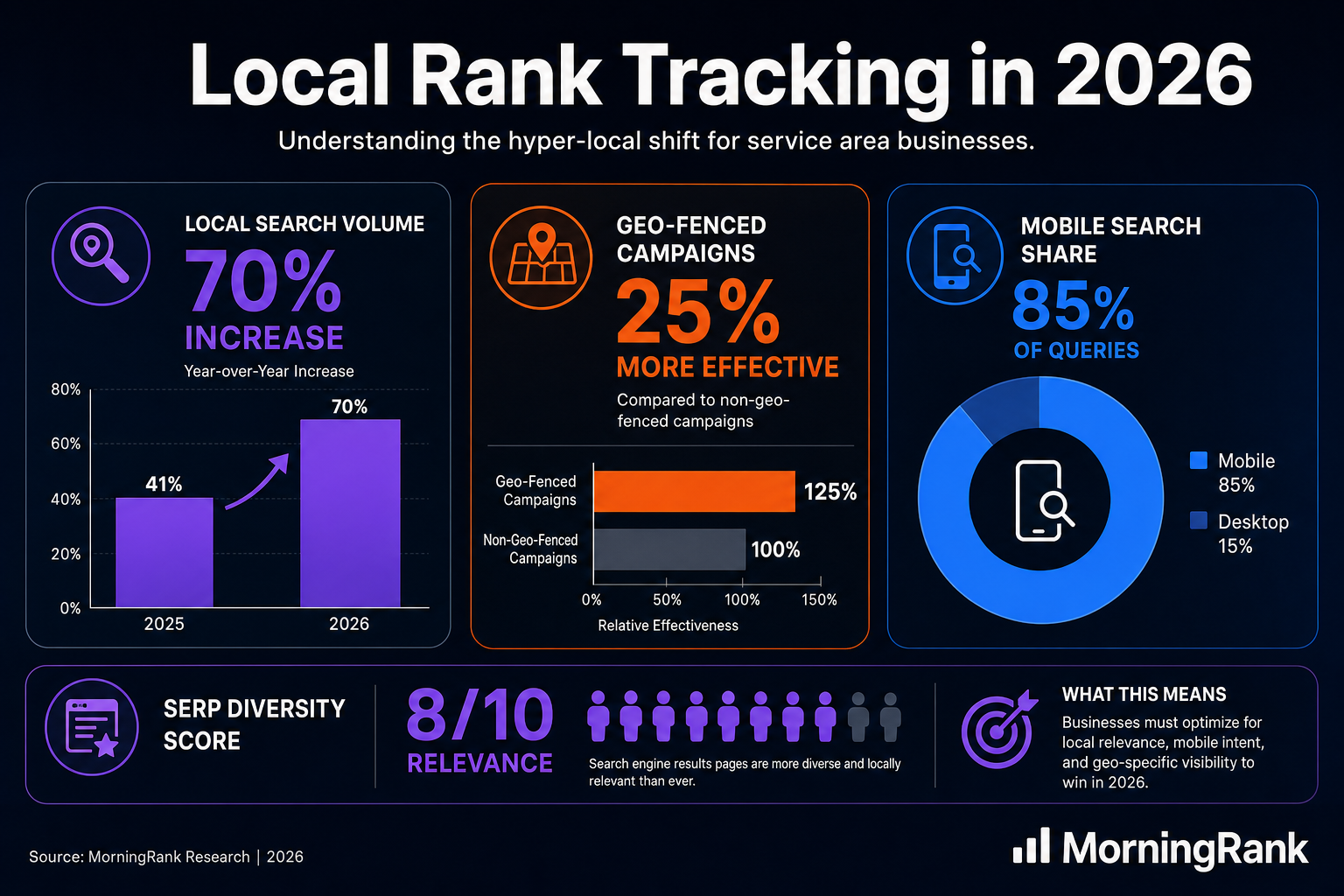 keyword rank tracking for service area businesses infographic" loading="lazy" style="width:100%;border-radius:12px;" />
What Makes Keyword Rank Tracking Different for Service Area Businesses?
For service area businesses (SABs), keyword rank tracking needs differ significantly from e-commerce or national brands. A service area business operates by providing services directly to customers at their location, rather than from a physical storefront where customers visit. This means their SEO success hinges on visibility within highly specific geographic perimeters, not just general keyword performance. A "plumber" needs to rank for "plumber near me" or "emergency plumber in [city]" from the perspective of someone *inside* that city, not someone across the country.
In my experience, many agencies fall into the trap of tracking keywords from a central location, which can provide misleading data. Google's personalized and localized search results mean that a search for "HVAC repair" from downtown Los Angeles will yield vastly different results than the same search from a suburb 30 miles away. As an example, BrightLocal's 2023 Local Search Industry Survey revealed that 63% of local businesses plan to increase their SEO budget underscoring the growing competition in local markets. Agencies must adapt their rank tracking to these localized realities. This involves tracking keywords with explicit local modifiers like "near me, " "[service] in [city], " or "best [service] [zip code]." It also means setting up tracking for multiple specific locations where the business operates, often using proxy IPs to simulate local searches.
Why are Local SERP Features Crucial for SABs?
Local SERP features are specialized search engine results page elements that appear for queries with local intent, such as the Google Local Pack, local ads, and localized organic results. For SABs, these features often drive the majority of their organic traffic and leads. Monitoring positions within the Local Pack (the map + 3 business listings) is paramount because it provides immediate visibility and direct calls to action. A local business ranking highly in the Local Pack can expect a significant boost in calls, website clicks, and direction requests. Moreover, with the rise of AI Overviews, understanding how local businesses are cited in generative AI answers is increasingly important. This requires a nuanced approach to GEO and AEO tracking moving beyond traditional ten-blue-link rankings.
Failing to track these specific local elements means missing out on the full picture of a client's local SEO performance. A business might rank well organically, but if they're absent from the Local Pack for their most important keywords, they're losing significant local market share. Tracking tools, like MorningRank's Local SEO rank tracking should be configured to explicitly report on Local Pack positions and other key local SERP entries. This granular reporting helps agencies demonstrate tangible value to clients by showing how their efforts directly impact visibility in highly competitive local spaces.
How Can Agencies Implement Hyper-Local Keyword Rank Tracking?
Implementing hyper-local keyword rank tracking requires a strategic approach beyond simply plugging keywords into a general tracker. Your strategy must reflect the actual search behavior of your clients' customers. This means understanding their service areas and the specific locations within those areas from which prospective customers are searching. In my discussions with agencies, one common challenge is scaling this for multiple clients, each with unique service territories.
The first step is to conduct thorough local keyword research. This involves identifying not only the core services but also all relevant geo-modifiers. For a moving company, this might include "movers in Brooklyn, " "local movers Queens NY, " or even "long-distance moving services Manhattan." Tools that offer AI-powered keyword suggestions can greatly assist in uncovering these nuanced local phrases. Once identified, these keywords need to be grouped by specific service areas or neighborhoods, allowing for targeted tracking. For example, a single client offering services in five different cities would need separate keyword sets and tracking profiles for each city.
What Tools and Techniques Ensure Accurate Local Rank Monitoring?
Ensuring accurate local rank monitoring often involves specialized tools and techniques to simulate actual user searches. Traditional rank trackers might show a national average or a ranking from their data center's location, which is rarely useful for a service area business. Instead, look for rank tracking platforms that offer granular location settings. This means specifying not just a city, but potentially a zip code, a street address, or even latitude and longitude coordinates to pinpoint the search origin.
Many advanced rank trackers use localized proxy IPs to mimic searches from different geographic points. For example, when tracking "electrician" for a client in Miami, the tool would perform the search as if it were physically located within Miami, ensuring the most accurate, personalized results. This level of precision is non-negotiable for hyper-local SEO. Agencies should also look for tools that can track changes in local SERP features, such as the Local Pack and relevant PAA (People Also Ask) sections. This gives a holistic view of local visibility, not just organic positions. Automated automated PDF reports from these tools can then clearly illustrate these localized gains to clients, preventing any confusion over "why the ranks look different than what I see." An external study by Search Engine Journal indicated that 78% of location-based mobile searches result in an offline purchase highlighting the direct impact of local visibility. This data can underline the importance of accurate local rank tracking in client conversations.

How Can Agencies Scale Local Rank Tracking Across Multiple Clients?
Scaling hyper-local keyword rank tracking across a portfolio of service area business clients is a common challenge for growing agencies. Each client has unique service areas, keyword targets, and reporting requirements. Without an efficient system, agencies can quickly become overwhelmed by manual data collection and reporting. The key to scalable local rank tracking lies in automation and a centralized management platform.
Begin by standardizing your client onboarding process for local SEO. This includes a detailed discovery phase to define precise service areas, identify competitor locations, and compile comprehensive lists of geo-modified keywords. For each client, structure their projects within your rank tracking software to reflect these geographical divisions. For example, separate projects or tag keywords by city or neighborhood. This ensures that data remains clean and relevant for each specific service area. My experience has shown that mapping out service territories geographically during onboarding can significantly streamline subsequent tracking efforts. You might find our post on mastering keyword rank tracking strategies for agencies particularly helpful.
What Reporting Strategies Maximize Client Value for Local SEO?
Effective client reporting for local SEO goes beyond simply presenting rank changes. Agencies must contextualize the data within the client's specific market and demonstrate the impact on their business goals. Utilize white-label reporting features found in platforms like MorningRank's white-label client portal to present data under your agency's brand, reinforcing your professional image. Focus reports on key metrics that directly relate to local visibility and lead generation:
- Local Pack Rankings: Highlight positions within the coveted Google Local Pack for top service keywords. Detail average positions and individual keyword performance.
- Geo-Specific Organic Ranks: Show classic organic rankings, but emphasize that these are tracked from specific, relevant geographic points.
- Local SERP Feature Visibility: Beyond the Local Pack, track appearances in "People Also Ask" sections, local business carousels, and other localized interactive elements.
- Review Growth & Sentiment: While not a direct rank metric, local reviews heavily influence local rankings and customer decisions. Integrate review monitoring into your reports.
- Local Search Traffic & Conversions: Correlate rank improvements with actual traffic increases from local searches and subsequent conversions, using data from Google Analytics 4 and Google Search Console.
Visual aids like charts showing rank trends over time for specific cities create a compelling narrative. Always provide qualitative analysis alongside the quantitative data, explaining *why* certain shifts occurred and *what* your agency will do next. This level of transparent, data-driven reporting builds trust and justifies your agency's ongoing value. For example, you might explain that a decline in the Local Pack for "emergency plumber Chicago" was due to a new competitor entering the market with more recent reviews, and your next steps involve a targeted review generation campaign combined with local citation building. According to a HubSpot study, agencies that consistently report ROI see higher client retention rates. For more client reporting best practices, consider reading our post on client reporting best practices for agencies.
How Can MorningRank Enhance Local Keyword Rank Tracking for Agencies?
MorningRank is purpose-built to address the complex keyword rank tracking needs of agencies serving service area businesses. Our platform provides the granular detail and scalability required to master hyper-local SEO, moving beyond the one-size-fits-all approach of generic SEO tools. We understand that for your plumbing client in Dallas, their ranking for "plumber" needs to be measured specifically from Dallas, TX, not a data center in another state.
With MorningRank, agencies can set up projects with precise geographic targeting, down to specific zip codes or even latitude/longitude coordinates. This ensures that the rank data you receive accurately reflects what potential customers see in the client's actual service areas. Our AI-powered features enhance this even further, identifying relevant geo-modified keywords your clients might be missing and suggesting a weekly SEO action plan tailored to improve local visibility. This level of precision is critical for delivering measurable results and client satisfaction in a highly localized search landscape.
Furthermore, MorningRank simplifies reporting with robust white-label options and automated PDF reports. You can brand all client dashboards and reports with your agency's logo and colors, creating a seamless, professional experience. The platform tracks not only traditional organic rankings but also specific local SERP features, including positions within the Google Local Pack and citations in AI Overviews, giving you a complete picture of local visibility. This comprehensive approach means less manual work for your team and more transparent, impactful reporting for your clients, demonstrating exactly how your strategies lead to local market dominance.
Conclusion
Effective keyword rank tracking for service area businesses in 2026 is no longer optional; it is a fundamental requirement for agencies aiming to deliver measurable results. By adopting hyper-local strategies, leveraging precise geographic targeting in your tools, and focusing on local SERP features, agencies can provide unparalleled insights into client performance. This granular approach not only improves local visibility for your clients but also strengthens your agency's position as a trusted, results-driven partner. The future of local SEO mandates a strategic and adaptable approach to rank tracking, ensuring your clients always know where they stand in their competitive local markets. Embrace these strategies to drive consistent growth and undeniable ROI.
Frequently Asked Questions
What is hyper-local keyword rank tracking?
Hyper-local keyword rank tracking is the process of monitoring a website's search engine rankings for specific keywords from highly precise geographic locations, such as particular cities, neighborhoods, or even zip codes. This is crucial for service area businesses to ensure they are visible to customers in their specific operational territories for relevant keyword rank tracking.
Why is precise location tracking important for service area businesses?
Precise location tracking is vital for service area businesses because Google's search results are heavily localized and personalized. A business needs to know its ranking from the perspective of a potential customer within its service area, rather than a generic national or regional average. This ensures accurate keyword rank tracking for local visibility.
How do I identify geo-modified keywords for my clients?
To identify geo-modified keywords, start by brainstorming core service terms and combining them with specific city names, neighborhoods, "near me, " or "in [city]" terms. Utilize keyword research tools that allow for geographic filtering and leverage AI-powered suggestions to uncover a comprehensive list for keyword rank tracking.
Can standard SEO tools handle hyper-local rank tracking?
Most standard SEO tools offer some level of location tracking, but many do not provide the hyper-granular, pinpoint accuracy needed for service area businesses. Look for tools specifically designed to track from precise addresses or latitude/longitude coordinates to get truly accurate keyword rank tracking data.
How does the Local Pack relate to keyword rank tracking for SABs?
The Local Pack is the map section with 3 business listings that often appears at the top of local search results, directly impacting local visibility for service area businesses. Tracking positions within the Local Pack is a critical component of keyword rank tracking for SABs, as it drives significant local traffic and leads.
What data should agencies include in client reports for local rank tracking?
Agencies should include Local Pack rankings, geo-specific organic rankings, local SERP feature visibility, review growth and sentiment analysis, and correlated local search traffic and conversions. These metrics provide a comprehensive view of local SEO performance through keyword rank tracking.
How can MorningRank help with hyper-local keyword rank tracking?
MorningRank offers precise geographic targeting for keyword rank tracking, allowing agencies to monitor rankings down to specific zip codes or coordinates. It provides AI-powered insights, tracks local SERP features and AI Overview citations, and offers white-label reporting to streamline hyper-local SEO for service area businesses. Learn more at MorningRank features.
Ready to master hyper-local SEO for your service area business clients? Try MorningRank free today and experience the difference precise keyword rank tracking can make for your agency at MorningRank.com.
Want this kind of insight every week?
MorningRank delivers daily rank tracking, AI SEO recommendations, and white label client reporting.