
Client Reporting Best Practices for Agencies in 2026
In the competitive agency landscape of 2026, simply delivering results isn't enough.
 Marcus Rivera
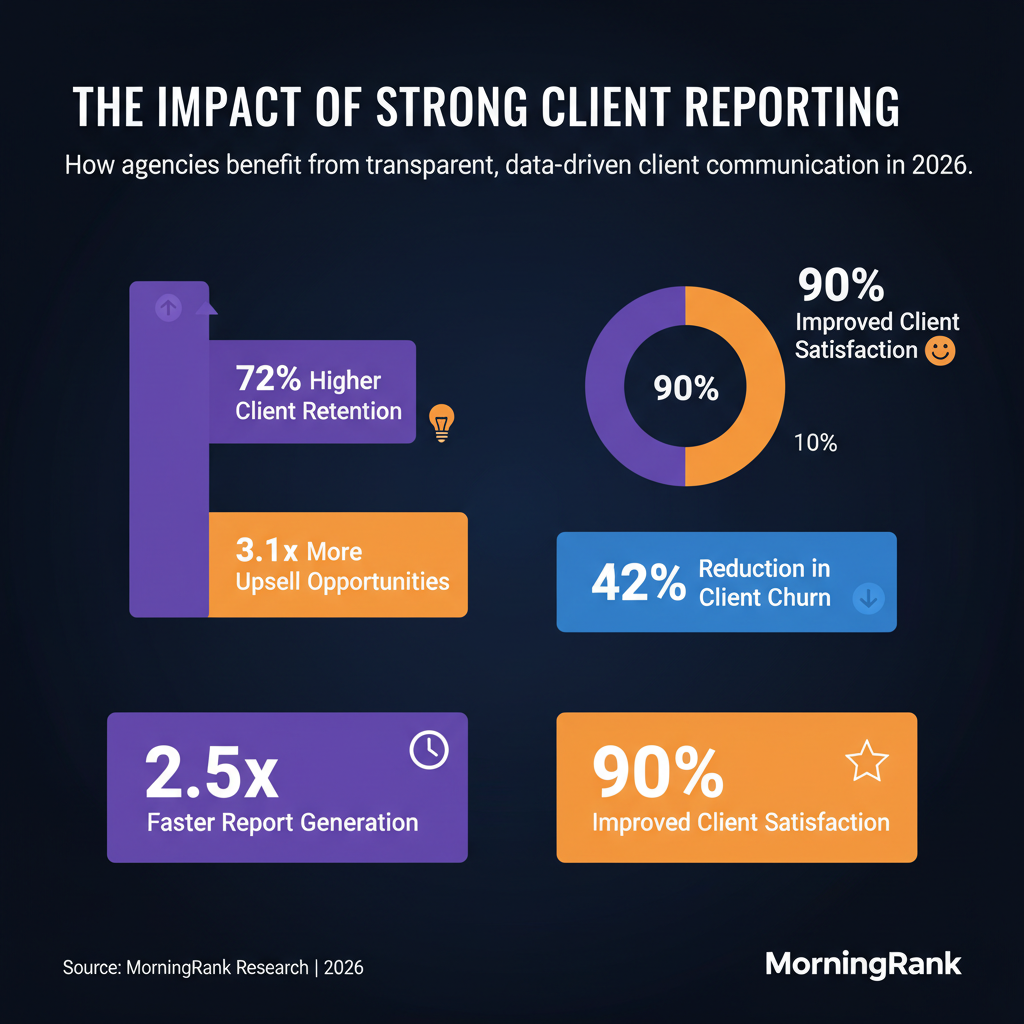
“In 2026, agencies that implement strong client reporting best practices see a 72% higher client retention rate and 3.1x more upsell opportunities than those with inconsistent reporting.”
In the competitive agency landscape of 2026, simply delivering results isn't enough. You also need to effectively communicate those results to your clients. That's where client reporting best practices come into play. Transparent, insightful, and actionable reports are not just a formality; they are a powerful tool for client retention, upsells, and demonstrating the true value of your agency's work. Poor reporting can erode trust and obscure the hard-earned wins your team achieves, leading to unnecessary churn.
As an Agency Growth Strategist at MorningRank, I've audited hundreds of agency reporting processes, and the most successful agencies consistently prioritize clear, concise, and compelling client communication. They understand that a well-crafted report goes beyond raw data; it tells a story of progress, strategy, and return on investment. This comprehensive guide will walk you through the essential client reporting best practices for agencies, helping you to impress your clients and solidify your position as a trusted partner.
Set Clear Goals and KPIs from Day One
One of the most fundamental client reporting best practices is to establish clear goals and Key Performance Indicators (KPIs) at the very beginning of any client engagement. Without a shared understanding of what success looks like, your reports will lack focus and your clients may struggle to connect the dots between your efforts and their business objectives.
Collaborative Goal Setting
Effective goal setting is a collaborative process. Don't simply dictate metrics to your clients. Instead, engage them in a discussion about their overarching business goals. Are they aiming for increased brand awareness, higher lead generation, improved e-commerce sales, or better customer retention? Once these broad objectives are defined, you can then translate them into specific, measurable, achievable, relevant, and time-bound (SMART) SEO KPIs.
For example, if a client's goal is "increased e-commerce sales," a relevant SEO KPI might be "achieve a 20% increase in organic search conversion rate for Q3 2026." This makes your reporting directly relevant to their bottom line. In my experience, clients appreciate knowing that every reported metric ties back to a tangible business outcome. For more on tracking performance, see our guide on Mastering Keyword Rank Tracking Strategies for Agencies in 2026.
Key Metrics to Track and Report
While specific KPIs will vary by client and campaign, here are some common and impactful metrics that agencies should consider for their client reports:
- Organic Traffic: Total visits from organic search.
- Keyword Rankings: Position changes for target keywords (especially important for demonstrating SEO progress).
- Conversions/Leads: Actions taken on the site (purchases, form submissions, calls).
- Conversion Rate: Percentage of visitors who complete a desired action.
- Impressions & Clicks (Google Search Console Data): Shows visibility and user engagement.
- Backlink Profile Growth: Number of new referring domains and improved domain authority.
- Core Web Vitals: Page experience metrics (LCP, FID, CLS) critical for user experience and ranking. For more information, explore our Technical SEO Guides: Unlocking Top Rankings in 2026.
- Local Search Visibility: For local businesses, Google Business Profile insights, local pack rankings, and review growth.
Remember, not every metric needs to be in every report. Tailor the selection to what truly matters for that specific client's goals.
Craft a Compelling Narrative, Not Just Raw Data
Raw data, while essential, can be overwhelming and meaningless to clients without context. A crucial client reporting best practice is to transform data into a compelling narrative that highlights successes, explains challenges, and outlines future strategies. Your report should tell the story of how your efforts are translating into real business value.
Structuring Your Reports for Readability
An effective report has a clear structure that guides the client through the information. Consider these elements:
- Executive Summary: A concise, one-page overview of key wins, important trends, and strategic takeaways. This is often the most read section.
- Performance Overview: High-level trends for primary KPIs, often with comparisons to previous periods.
- Detailed Data Sections: Break down specific channels (organic search, local SEO, content marketing) with relevant metrics and visualizations.
- Analysis and Insights: Explain what the data means. Why did rankings go up? How did a specific content piece impact traffic?
- Challenges and Solutions: Acknowledge any roadblocks and explain how your team is addressing them. Transparency builds trust.
- Next Steps/Recommendations: Outline upcoming strategies and planned actions based on current performance and ongoing analysis.
I've seen agencies lose clients not because of poor performance, but because clients didn't understand the reports. Make it easy for them to grasp the value you provide.
Visualizations and Explanations
Humans are visual creatures. Use graphs, charts, and infographics to make complex data understandable at a glance. Trends, comparisons, and distributions are much clearer when visualized. However, never present a graph without a brief explanation of what it shows and why it's important. For example, when showing a spike in organic traffic, explain the campaign or content piece that drove it.
Avoid jargon wherever possible. If you must use a technical term (like "canonical tag" or "SERP feature"), provide a brief explanation. Remember, your client may not be an SEO expert, and your report is an opportunity to educate them and reinforce your expertise.
Automate and Streamline Your Reporting Process
Manual client reporting is a time sink. One of the most impactful client reporting best practices for agency profitability and efficiency is to automate as much of the process as possible. This frees up your team to focus on strategic work, rather than data aggregation.
Leveraging SEO Tools for Reporting
Modern SEO platforms are built with robust reporting capabilities. Tools like MorningRank allow agencies to:
- Integrate Data: Pull data directly from Google Analytics, Google Search Console, Google Business Profile, and other sources.
- Automate Dashboards: Create custom dashboards that update in real-time or on a scheduled basis.
- Generate Custom Reports: Build branded reports with specific metrics, visualizations, and commentary.
- Schedule Delivery: Automatically email reports to clients at set intervals (weekly, monthly, quarterly).
- White-Labeling: Present reports under your agency's brand, reinforcing your professional image. This is a critical feature for any agency prioritizing client experience.
For a detailed breakdown of how MorningRank compares to other tools in this area, you might find our "MorningRank vs" series helpful. Check out MorningRank vs SEMrush: Which Tool is Best for Agencies in 2026? and MorningRank vs Ahrefs: Which SEO Tool is Right for You in 2026?
The MorningRank Advantage for Agency Reporting
MorningRank specializes in agency-grade reporting, designed to consolidate all your SEO data into one intuitive platform. Our customizable dashboards and white-label features mean you can deliver professional, clear, and impactful reports with minimal effort. This focus on agency needs makes it a strong contender for those looking to implement client reporting best practices.
| Feature | MorningRank | Generic SEO Tool A | Generic SEO Tool B |
|---|---|---|---|
| White-Label Reporting | Yes, fully customizable | Limited / Add-on | No |
| Automated Report Scheduling | Yes | Yes | No |
| Customizable Dashboards | Extensive | Basic | Limited |
| Integrated Local SEO Data | Yes | Partial | No |
| AI-Powered Insights | Yes, with recommendations | No | No |
| Agency-Focused Pricing | Yes | Generic | Generic |

Fostering Transparency and Proactive Communication
Transparency is the bedrock of strong client relationships. Even with the most sophisticated automated systems, a crucial element of client reporting best practices is proactive, honest communication. Clients want to feel informed, not just presented with data.
Being Honest About Challenges and Setbacks
SEO isn't always a straight line to success. There will be algorithm updates, unexpected dips in rankings, or slower-than-anticipated progress. Hiding these challenges or sugarcoating them can erode trust quickly. Instead:
- Acknowledge issues promptly: Don't wait for the monthly report if a significant problem arises.
- Explain the "why": Provide context for changes. Was it a Google update? A competitor's aggressive strategy?
- Detail your strategy for resolution: Show that you are actively working to mitigate the problem and have a plan of action.
In 2026, with the increasing pace of AI integration in search, (see Mastering AI Search Visibility and AI Overview Optimization in 2026), being candid about how these shifts impact strategy is more important than ever.
Regular Check-ins and Interpretive Meetings
While automated reports are efficient, human interaction remains invaluable. Schedule regular meetings (monthly or quarterly, depending on the client) to walk clients through their reports. These meetings offer an opportunity to:
- Elaborate on insights: Provide deeper analysis than what's practical in a written report.
- Answer questions: Address concerns and clarify any confusion.
- Discuss future strategy: Get client input and buy-in for upcoming initiatives.
- Build rapport: Strengthen the personal connection and reinforce your role as a trusted advisor.
These discussions transform a passive data review into an active strategic partnership. In my professional view, these proactive steps are non-negotiable for long-term client retention.
Conclusion: Elevate Your Agency with Superior Reporting
Implementing client reporting best practices isn't just about delivering data; it's about building stronger relationships, demonstrating undeniable value, and ultimately, growing your agency. By setting clear goals, crafting compelling narratives, automating your processes, and fostering transparency, you can transform your client reports from a necessary evil into a powerful asset.
In 2026, clients expect more than ever. They want clarity, insights, and a clear line of sight to their ROI. Agencies that excel in communicating their value through outstanding reporting will be the ones that thrive and differentiate themselves. Don't let your agency's hard work get lost in confusing spreadsheets.
Take control of your reporting process. Discover how MorningRank makes it easy to implement these client reporting best practices, automate your workflows, and deliver professional, white-label reports that impress your clients every time. Explore MorningRank's features and see how we can help your agency grow.
Frequently Asked Questions
What are the key elements of client reporting best practices for agencies?
Key elements of client reporting best practices include setting clear KPIs upfront, structuring reports with an executive summary and actionable insights, using visualizations to simplify data, automating the reporting process, and maintaining transparent, proactive communication with clients. The goal is to clearly demonstrate value and ROI.
How often should agencies provide client reports?
The frequency of client reports can vary, but most agencies provide monthly reports to showcase progress and activity over a reasonable timeframe. Quarterly reports are also common for high-level strategic reviews, and some clients may benefit from weekly check-ins for active campaigns. The optimal frequency aligns with client expectations and campaign velocity.
What metrics are most important to include in SEO client reports?
The most important metrics to include in SEO client reports are those that directly align with the client's business goals. Common metrics include organic traffic, keyword rankings, conversions (leads or sales), conversion rate, impressions, clicks, backlink growth, and Core Web Vitals. Always prioritize metrics that demonstrate tangible business impact.
Should client reports include challenges and negative trends?
Yes, client reports should always include challenges and negative trends. Transparency builds trust, and clients appreciate honesty. When presenting challenges, it's crucial to also explain the underlying causes and outline the specific strategies your agency is implementing to address and overcome these issues. This demonstrates proactivity and expertise.
How can automation improve client reporting for our agency?
Automation significantly improves client reporting by reducing manual data collection time, increasing accuracy, and enabling timely delivery of reports. Tools like MorningRank can automatically pull data, generate customizable dashboards and reports, and schedule their delivery, freeing up your team to focus on strategy and client management rather than data compilation. This is a core client reporting best practice.
What is white-label reporting and why is it important for agencies?
White-label reporting allows agencies to present reports to clients under their own brand, removing any mention of the reporting software. This is crucial for agencies because it reinforces their professional image and expertise, strengthens brand identity, and provides a seamless, branded client experience. It makes the report feel like a proprietary delivery from the agency.
How can MorningRank help our agency implement client reporting best practices?
MorningRank helps agencies implement client reporting best practices through its comprehensive suite of features, including automated data integration from multiple sources, fully customizable white-label reports and dashboards, AI-powered insights, and scheduled report delivery. It's designed to streamline the entire reporting workflow, allowing agencies to deliver transparent, impactful reports that showcase their value and strengthen client relationships, embodying client reporting best practices.
Ready to transform your client reporting and grow your agency? Try MorningRank free today and experience the difference.
Want this kind of insight every week?
MorningRank delivers daily rank tracking, AI SEO recommendations, and white label client reporting.