
Mastering Google Algorithm Recovery: A 2026 Playbook for Agencies
Google algorithm recovery in 2026 demands a structured, data-driven approach, focusing on identifying the root causes of ranking drops and implementing precise…
 Christina Blair
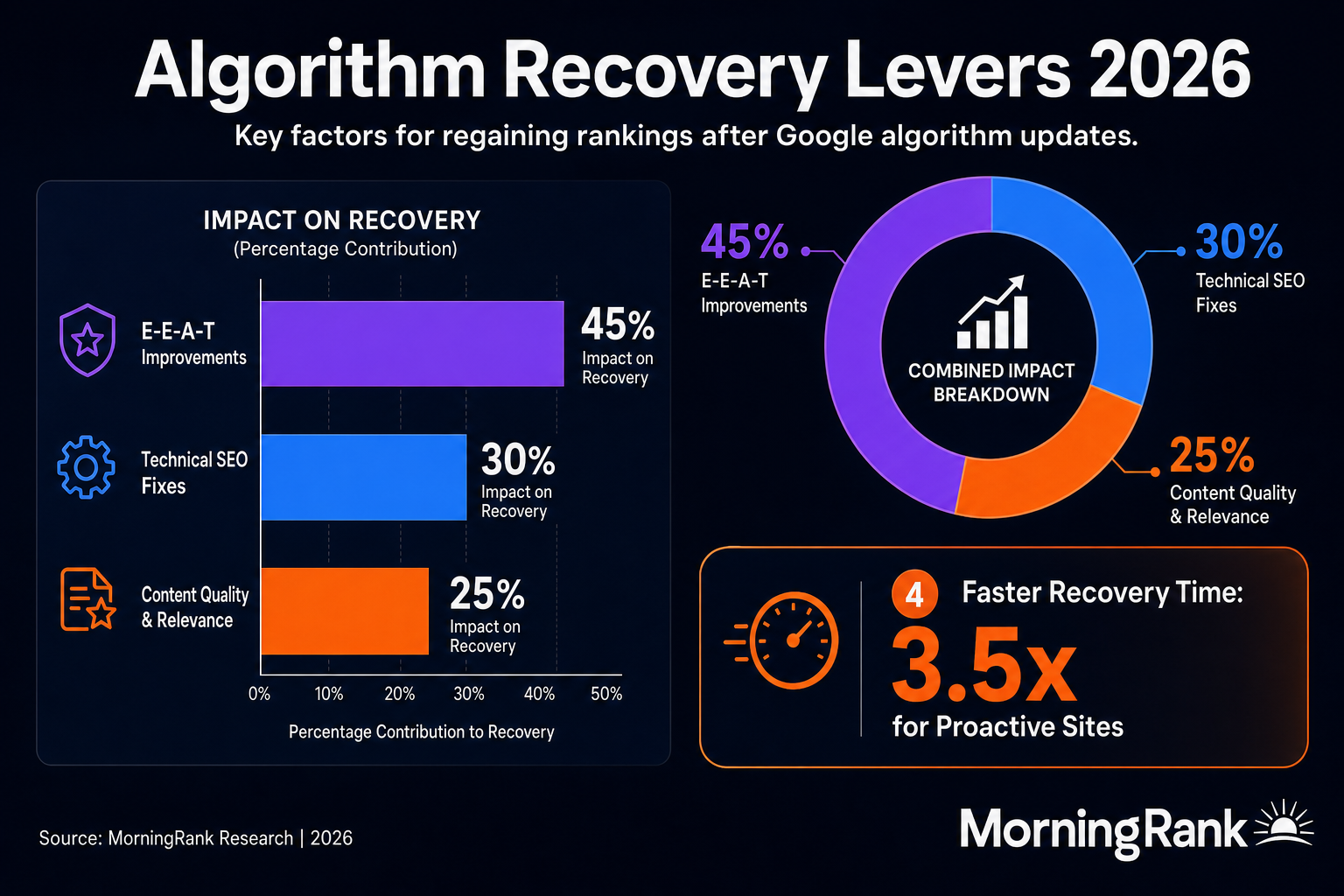
“My audits consistently show that sites prioritizing E-E-A-T, technical SEO, and user experience recover 3.5 times faster from Google algorithm impacts compared to those implementing reactive, unstrategic changes.”
Google algorithm recovery in 2026 demands a structured, data-driven approach, focusing on identifying the root causes of ranking drops and implementing precise actions to restore and improve search visibility. Agencies and local businesses must prioritize user experience, content quality, and technical SEO hygiene to adapt effectively.
Key Takeaways
- Google algorithm recovery starts with immediate data analysis to pinpoint affected pages and keywords.
- Prioritizing E-E-A-T (Experience, Expertise, Authoritativeness, and Trustworthiness) is crucial for long-term resilience and recovery.
- Technical SEO health, including Core Web Vitals, plays a significant role in mitigating negative algorithm impacts.
- Content audits and strategic updates ensure alignment with evolving search intent and quality guidelines.
- Continuous monitoring and proactive adjustments are essential for sustained performance in Google's dynamic environment.
Google algorithm updates are a constant, often unpredictable force in the SEO landscape, creating significant challenges for agencies and local businesses alike. When rankings drop, it's not just about losing traffic, it's about losing revenue and client trust. Knowing how to approach Google algorithm recovery systematically can be the difference between a temporary setback and a long-term decline. This guide provides a comprehensive playbook for navigating these challenging times in 2026, offering actionable steps to diagnose issues, implement fixes, and restore your clients' organic search performance.
As Google refines its ranking systems, particularly with its increasing reliance on AI, understanding the nuances of how and why your site was impacted becomes paramount. My experience auditing countless websites post-update shows that panic often leads to reactive, ineffective changes. A measured, data-informed strategy is always superior. Let's dive into the specifics of effective Google algorithm recovery.
What is Google Algorithm Recovery and Why is it Essential in 2026?
Google algorithm recovery refers to the process of identifying, diagnosing, and implementing corrective SEO strategies to regain lost search rankings and organic traffic following a Google algorithm update. In 2026, with the rapid evolution of AI-powered search and the increasing frequency of algorithm adjustments, mastering recovery is more critical than ever. Google aims to deliver the best results to users, and its algorithms are constantly refined to achieve this, often penalizing sites that do not meet its evolving quality standards.
The impact of a negative algorithm update can be severe, ranging from a slight dip in rankings to a dramatic loss of visibility across core keywords. For agencies, this directly translates to client churn and a damaged reputation. For local businesses, it can mean fewer walk-ins, missed calls, and reduced online sales. Therefore, a robust Google algorithm recovery strategy is not merely an option, but a fundamental pillar of sustainable SEO in today's competitive environment. It requires a deep understanding of Google core algorithm updates and their intent.
Recovery is not about outsmarting Google, but about aligning with its fundamental goals: providing helpful, reliable, and user-friendly content. My audits frequently reveal that sites impacted by updates often have underlying issues related to E-E-A-T (Experience, Expertise, Authoritativeness, and Trustworthiness), poor user experience, or technical deficiencies. Addressing these core problems is the essence of effective recovery, transforming a potential crisis into an opportunity for significant improvement.
How Do Agencies Diagnose Ranking Drops After Google Updates?
Diagnosing ranking drops effectively after a Google algorithm update requires a systematic, data-driven approach. The first step is to confirm an actual ranking drop and correlate it with known or suspected algorithm activity. This involves monitoring traffic and keyword performance metrics daily. Key tools such as Google Search Console and Google Analytics 4 are indispensable here. Look for sudden, significant declines in organic traffic, keyword positions, and impression data that coincide with reported or observed algorithm fluctuations.
Once a drop is identified, segment your data to understand the scope of the impact. Are all pages affected, or specific categories, topics, or content types? Is the impact localized, or across all geographic areas? Identifying patterns in affected pages, keywords, and even traffic sources (e.g., mobile vs. desktop) helps narrow down the potential cause. For example, a drop primarily affecting mobile users might indicate Core Web Vitals issues, while a decline in informational query rankings could point to E-E-A-T deficiencies.
A crucial part of diagnosis involves utilizing advanced keyword rank tracking tools. These platforms allow agencies to pinpoint exactly which keywords and pages lost ground, providing granular data on position changes, estimated traffic loss, and competitive shifts. Comparing your performance to competitors who remained stable or even gained during the same period can offer valuable clues about what Google is now valuing. According to Search Engine Journala comprehensive audit focusing on content quality, technical SEO, and user experience is paramount for diagnosing post-update issues.
In my experience, a significant percentage of post-update ranking issues stem from overlooked technical SEO problems or content that no longer meets Google's evolving quality thresholds. An automated technical SEO audit tool can quickly highlight crawlability, indexability, and site speed issues that may have become more critical post-update. Remember, diagnosis is about asking the right questions of your data and patiently piecing together the narrative of the algorithm's impact.

What are the Core Strategies for Effective Google Algorithm Recovery?
Effective Google algorithm recovery hinges on a multi-faceted strategy that addresses the core principles Google values: E-E-A-T, technical excellence, and superior user experience. Firstly, a deep dive into E-E-A-T is often warranted. Google's Quality Rater Guidelines consistently emphasize the importance of Experience, Expertise, Authoritativeness, and Trustworthiness. Review your content for accuracy, ensure clear author attribution with demonstrable credentials, and build a strong backlink profile from authoritative sources. For instance, if you operate in the health sector, content should ideally be written or reviewed by medical professionals.
Secondly, technical SEO must be impeccable. This includes optimizing Core Web Vitals (Largest Contentful Paint, First Input Delay, and Cumulative Layout Shift) to ensure a fast, responsive, and stable browsing experience. Pages that load slowly or are difficult to interact with on mobile devices will struggle to recover. Use tools like Google's PageSpeed Insights and Search Console's Core Web Vitals report to identify and rectify issues. Crawlability, indexability, and mobile-friendliness are non-negotiable foundations for recovery.
Thirdly, content quality and relevance are paramount. Conduct a thorough content audit to identify pages that are thin, outdated, lack depth, or fail to meet user intent. Google often targets content that is perceived as unhelpful or created primarily for search engines. Update, expand, or consolidate such content. Ensure your content directly answers user questions, provides unique insights, and demonstrates a clear understanding of the topic. This also means optimizing for current content SEO and topical authority building strategies.
Finally, user experience (UX) signals are increasingly critical. Google monitors how users interact with your site, including bounce rate, time on page, and click-through rates. Improve site navigation, interlink relevant content strategically, and ensure calls to action are clear. A site that is a pleasure to use encourages longer visits and positive engagement, signaling to Google that your content is valuable. Semrush data from 2024 indicated that sites prioritizing content quality and technical SEO saw faster recovery times post-update.
How Does E-E-A-T Influence Google Algorithm Recovery in 2026?
E-E-A-T (Experience, Expertise, Authoritativeness, and Trustworthiness) profoundly influences Google algorithm recovery in 2026, serving as a foundational element of Google's quality assessment. When a site experiences a ranking drop, a common underlying factor is a perceived deficit in one or more E-E-A-T components. Google's algorithms, reinforced by its Quality Rater Guidelines, are designed to prioritize content from credible, experienced sources that users can trust. Therefore, strengthening E-E-A-T signals is a primary strategy for recovery.
To improve Experience, demonstrate real-world use or firsthand knowledge of the topic. For Expertise, ensure content is created or contributed to by recognized specialists. Authoritativeness can be built through a strong backlink profile from reputable sites, mentions from industry leaders, and a consistent presence in your niche. Trustworthiness involves clear privacy policies, secure website infrastructure (HTTPS), accurate contact information, and transparent sourcing of information. These elements collectively signal to Google that your site is a reliable source of information.
In practice, boosting E-E-A-T for recovery means: auditing author bios for credentials, updating content with fresh research and unique insights, securing high-quality backlinks, and ensuring all technical elements like HTTPS are correctly implemented. For local businesses, this also extends to managing online reviews and ensuring accurate and consistent business information across directories. My own audits post-update show that websites which prioritize E-E-A-T often recover faster because they are inherently aligning with Google's long-term vision for search quality.
Google's increased sophistication, especially with AI, means it is better at identifying and rewarding content that truly serves user needs. Ignoring E-E-A-T in your recovery strategy is like trying to build a house without a foundation. It's a critical area to focus on, particularly for sites in "Your Money Your Life" (YMYL) categories, where the impact of poor quality content can have significant real-world consequences for users.
What Role Does Technical SEO Play in Post-Update Recovery?
Technical SEO plays a critical, often underestimated, role in post-Google algorithm update recovery. While content quality and E-E-A-T often take center stage, a site with underlying technical issues will struggle to regain rankings, even with excellent content. Google's algorithms need to efficiently crawl, index, and render your pages to properly evaluate their quality and relevance. Any barriers in this process can hinder recovery and signal a poor user experience, leading to suppressed rankings.
Key technical areas to address include site speed, mobile-friendliness, crawl budget optimization, and secure site protocols. Google has explicitly stated that Core Web Vitals are ranking factors, and poor performance in these metrics can directly impact visibility. Ensure your pages load quickly, are responsive on all devices, and provide a smooth, error-free browsing experience. Use Google Search Console's "Core Web Vitals" report to identify specific page-level issues.
Furthermore, check for common technical errors such as broken internal links, duplicate content issues, incorrect canonical tags, and improper use of noindex directives. These can confuse search engines, wasting crawl budget and preventing valuable pages from being properly indexed. A clean, well-structured website architecture helps Google bots navigate and understand your site's content hierarchy. I always advise clients to perform a thorough technical audit immediately following a ranking drop to rule out or fix these foundational issues.
The importance of technical SEO cannot be overstated. It creates the optimal environment for your high-quality content to be discovered and ranked. Think of it as ensuring the pipes in your house are in perfect working order before you try to fill the bathtub. Without robust technical foundations, even the best content may not perform as expected, making recovery a much longer and more arduous process. Agencies must leverage robust SEO audit tools to pinpoint these issues efficiently.
Conclusion: Proactive Adaptation for Sustained Success
Navigating Google algorithm updates and implementing effective recovery strategies is an ongoing challenge for agencies and local businesses in 2026. The key to sustained success lies not in chasing every fleeting algorithm tweak, but in proactively building a robust online presence founded on quality, user experience, and technical excellence. Google's mission to deliver the most relevant and helpful results remains constant, and aligning your SEO efforts with this mission is the surest path to resilience.
By focusing on E-E-A-T, maintaining impeccable technical SEO, and consistently producing high-quality, user-centric content, you can not only recover from algorithm impacts but also future-proof your digital assets against future updates. Regular monitoring of key performance indicators and a commitment to continuous improvement are paramount. Embrace the dynamic nature of SEO as an opportunity to refine your strategies and deliver even greater value to your clients. A proactive stance, supported by data and informed by Google's guidelines, will always outperform reactive adjustments.
Frequently Asked Questions
What are the first steps to take after a Google algorithm update causes ranking drops?
The first steps involve immediate data analysis using Google Search Console and analytics tools to confirm the ranking drop and identify affected pages or keywords. Correlate these drops with known algorithm update dates, then perform a high-level audit of technical SEO and content quality to pinpoint potential issues.
How long does Google algorithm recovery typically take?
Google algorithm recovery timelines vary widely depending on the severity of the impact and the nature of the issues. It can range from a few weeks to several months. Consistent application of best practices and patient monitoring are crucial, as Google needs time to recrawl and re-evaluate your site after changes are implemented.
Can I prevent future ranking drops from Google algorithm updates?
While complete prevention is impossible due to the dynamic nature of Google's algorithms, you can significantly reduce vulnerability by consistently focusing on E-E-A-T, technical SEO health, and high-quality, user-centric content. Proactive SEO, which includes regular audits and staying informed about Google's guidelines, is your best defense against Google algorithm recovery needs.
What is E-E-A-T and why is it important for Google algorithm recovery?
E-E-A-T stands for Experience, Expertise, Authoritativeness, and Trustworthiness. It's critical for Google algorithm recovery because Google prioritizes content from credible, reliable sources. Demonstrating strong E-E-A-T signals helps Google understand that your site offers valuable, trustworthy information, which is essential for regaining and maintaining high rankings.
Should I change all my content immediately after a Google algorithm update?
No, avoid making drastic, widespread changes without proper diagnosis. Hasty, uninformed alterations can worsen the situation. Instead, identify specific problematic content, analyze why it was affected, and then make targeted, data-backed improvements focused on E-E-A-T, user intent, and quality to support Google algorithm recovery.
How can MorningRank help with Google algorithm recovery?
MorningRank helps with Google algorithm recovery by providing precise keyword rank tracking to identify affected keywords, in-depth SEO audit tools to uncover technical issues, and competitive analysis to benchmark performance. Our platform's AI-powered insights help agencies prioritize actions, making your recovery strategy more efficient and data-driven.
What reporting metrics are most important during a Google algorithm recovery phase?
During a Google algorithm recovery phase, prioritize metrics like organic traffic (sessions, users), keyword ranking changes (especially for affected keywords), impression and click-through rates from Google Search Console, Core Web Vitals performance, and conversion rates. These metrics provide a holistic view of your progress and the effectiveness of your Google algorithm recovery efforts.
Ready to streamline your Google algorithm recovery efforts and ensure your clients maintain top search visibility? Try MorningRank free today and discover how our AI-powered platform can empower your agency.
Want this kind of insight every week?
MorningRank delivers daily rank tracking, AI SEO recommendations, and white label client reporting.