What Is AI Visibility and Why It Matters for Your Brand in 2026
AI visibility measures how often your brand appears in ChatGPT, Gemini, and Perplexity responses. Learn why it matters and how to track it with MorningRank.

Two years ago a client asked me a question I could not answer cleanly: "When someone asks ChatGPT for the best CRM for small contractors, do we come up?" I did what every honest SEO did in 2024. I shrugged, opened ChatGPT, ran the prompt three times, and screenshot the answers. That is not a strategy. It is also not a service you can charge for.
Two years later, the question has become the question. AI search now intercepts a meaningful share of the queries that used to drive traffic to a website, and the brands that ignored it are losing ground to competitors who learned to optimize for it. This guide is the working definition of AI visibility we use inside MorningRank, why it matters, how each major platform handles brand mentions, and how an agency can productize tracking it.
From ten blue links to AI answers
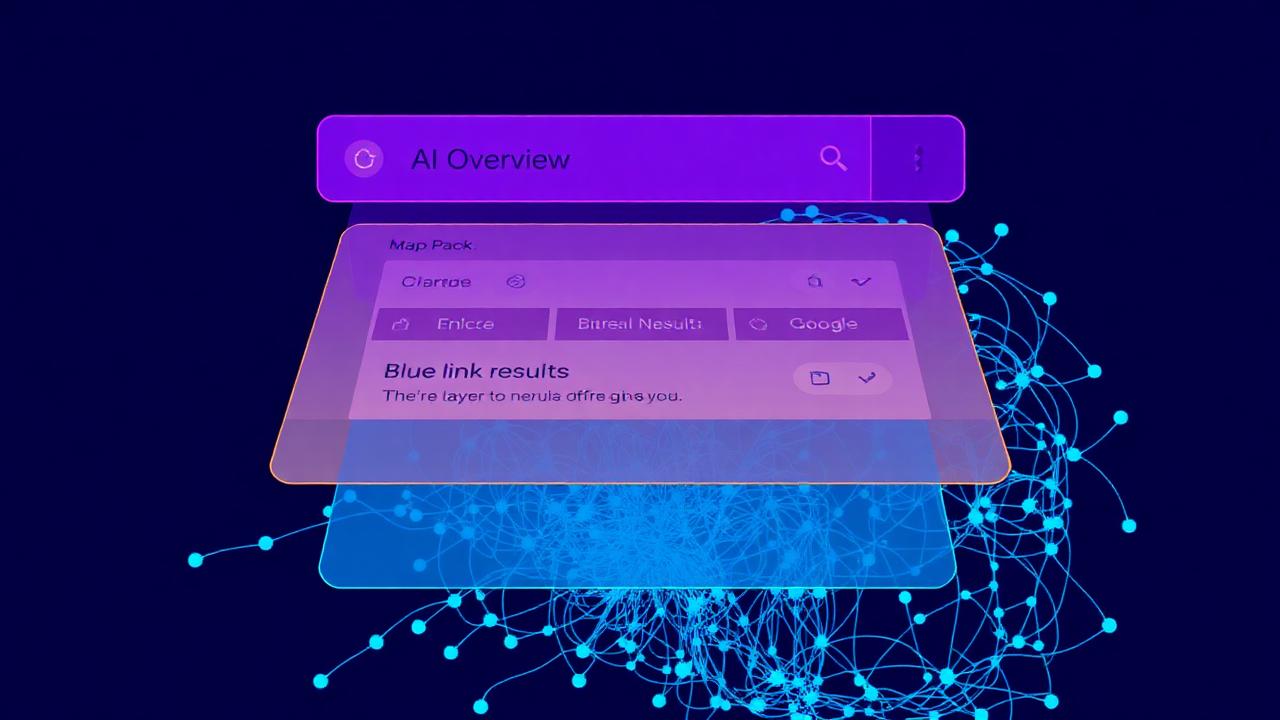
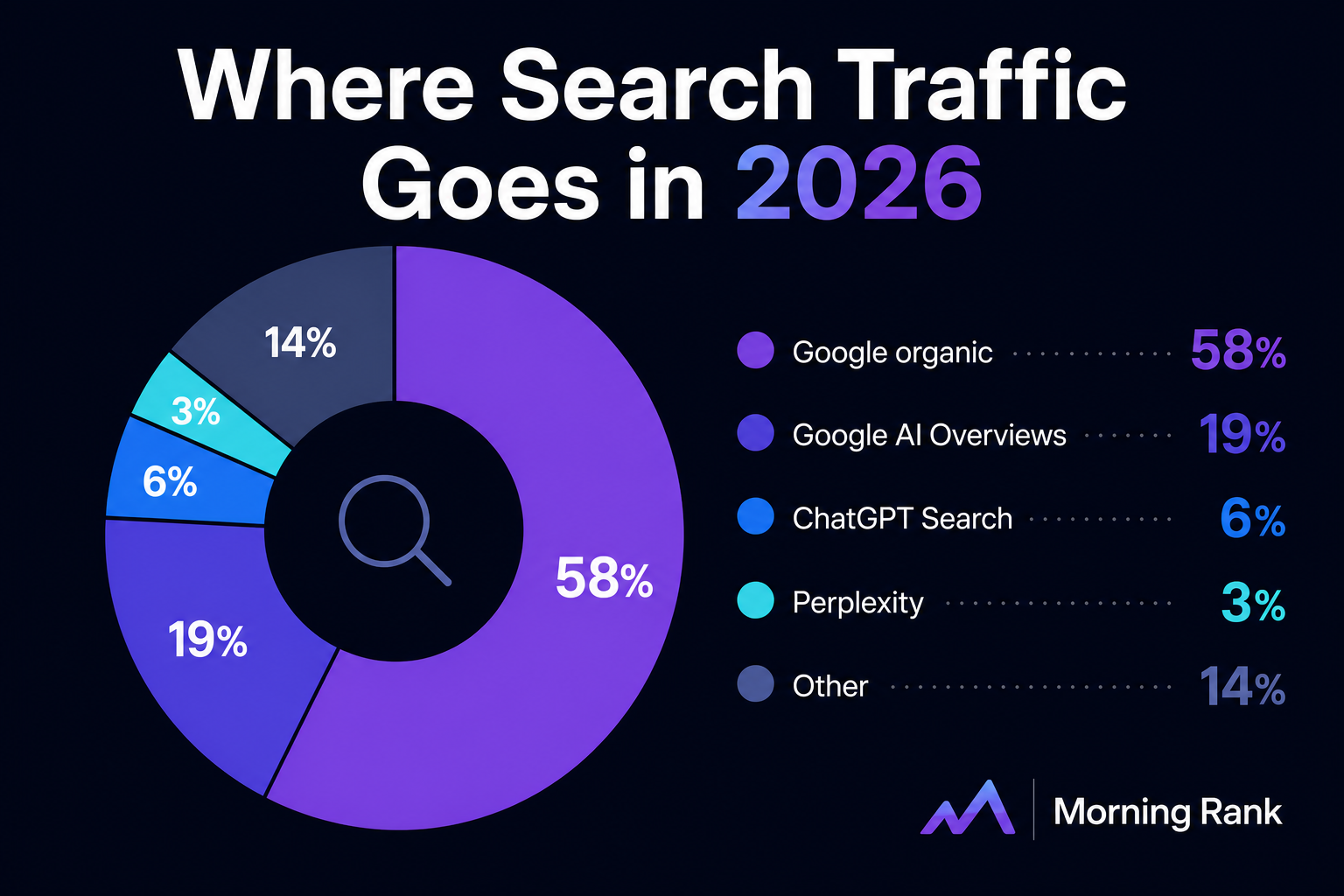
The shift is no longer theoretical. Semrush's Q1 2026 SERP study reports AI Overviews on roughly 47% of informational queries. Similarweb traffic data shows ChatGPT and Perplexity together absorb close to 9% of total search demand. Add Gemini's direct answer surface inside Google itself and you have a search market where almost half of the top of funnel is decided before anyone clicks a result.
Traditional SEO tells you whether you appear at position 4 for a keyword. AI visibility tells you whether you appear when an AI engine answers the question that keyword represents. They overlap, but they are not the same metric.
Defining AI visibility
AI visibility is the rate at which a brand is mentioned, cited, or recommended when an AI search platform answers a relevant query. It has three measurable layers:
- Mention rate: out of N relevant prompts, in how many does the brand name appear at all?
- Recommendation rate: out of those mentions, in how many is the brand recommended (not just listed)?
- Citation rate: out of those answers, in how many does the AI link out to the brand's domain as a source?
Traditional SEO visibility tracks the position of a URL on a SERP. AI visibility tracks the presence of an entity inside a generated answer. The unit of measurement changed from URL to brand.
How each AI platform handles brand mentions
ChatGPT
ChatGPT pulls from training data plus its built-in browsing tool when the user enables search. Brand mentions surface from a mix of authoritative editorial coverage, structured business data, and recent web content. Brands that show up consistently in ChatGPT have one trait in common: they are mentioned by name in third-party listicles, comparison articles, and Reddit threads that the model treats as high signal.
Google Gemini
Gemini powers both the standalone assistant and Google's AI Overview. It leans heavily on Google's index, so the same E-E-A-T signals that drive organic ranking drive Gemini citation. Schema, author credentials, and link authority matter here more than on any other platform.
Perplexity
Perplexity is the most citation-transparent engine. Every answer ships with numbered sources, and the click-through rate to those citations is materially higher than to traditional organic results. Perplexity rewards content with clear definitional answers in the first paragraph and well-structured H2/H3 hierarchy.
Google AI Overview
AI Overviews are the answer block stacked above the 10 blue links on roughly half of all informational queries. They cite 3 to 5 sources, and the citation pattern is increasingly weighted toward sites with original data, FAQ schema, and high topical authority. Our full AI strategy guide covers the optimization patterns in detail.
Why ignoring AI visibility is now a competitive risk
The brands that learned to optimize for AI visibility in 2024 and 2025 are now the default answer in their categories. When the model has been reinforced over thousands of training cycles to associate "best email marketing tool for ecommerce" with three or four specific brand names, breaking into that set is harder every quarter.
Two brands can rank similarly in organic search while appearing very differently in AI answers. Original research, structured comparison content, and credible third-party mentions can strengthen AI visibility even when the traditional ranking gap is small.
How to improve AI visibility
There is no AI visibility hack. There is, however, a pattern that consistently moves the metric.
Structured content the model can quote
- Lead every page with a definitional sentence answering the literal question in the title.
- Use clean H2 and H3 hierarchy with question-style subheads.
- Add FAQ, HowTo, and Article schema to every relevant page.
- Include tables, comparison grids, and named lists. AI engines extract these directly.
Authority and citation signals
- Earn mentions in third-party listicles and comparison articles in your category. AI engines treat these as ground truth.
- Publish original research with named methodology. The data becomes the citation everyone reaches for.
- Maintain a strong author byline with linked credentials and sameAs schema.
- Get listed in industry roundups, expert quotes, and category comparison content on high-authority domains.
Brand entity strength
- Keep your Wikipedia, Wikidata, and Crunchbase entries up to date and consistent.
- Use consistent brand naming everywhere. AI engines collapse variants into a single entity only when the signal is unambiguous.
- Build a recognizable site footer and About page that name the team. E-E-A-T compounds across surfaces.
How MorningRank tracks AI visibility
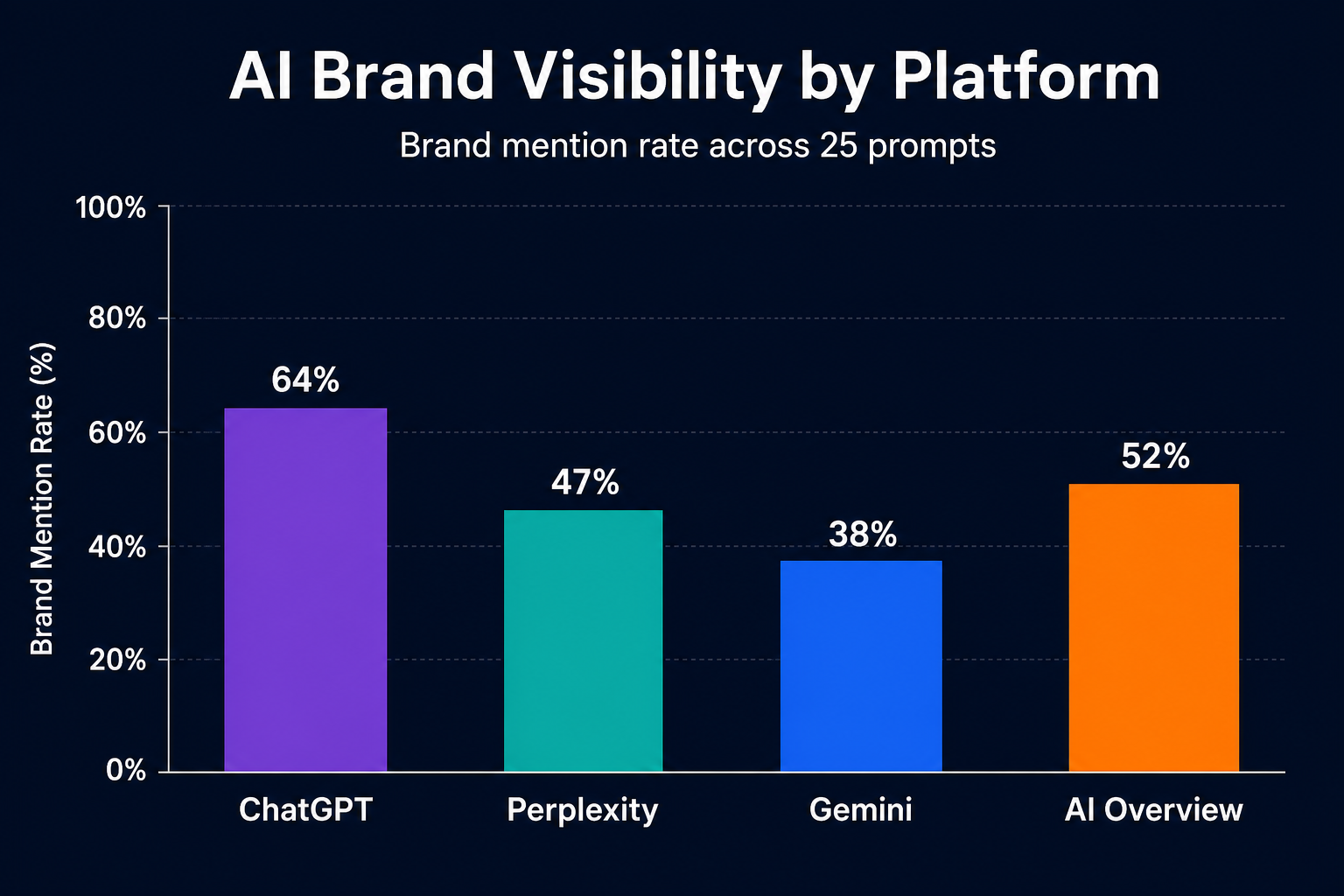
Inside MorningRank's AI visibility module, you build a prompt set per project. Each prompt is a real question a customer would ask an AI assistant about your category. The platform runs that prompt set against ChatGPT, Gemini, Perplexity, and Google AI Overview on a recurring schedule and records, for every prompt:
- Whether your brand was mentioned at all.
- Whether your brand was recommended (not just listed).
- Whether your domain was cited as a source.
- Which competitors were mentioned alongside you.
- How the answer changed week over week.
The competitor comparison view is the part agencies use most. It surfaces the prompts where a competitor consistently outranks you in AI answers and isolates the citation patterns driving the gap. From there, the action plan writes itself: match the schema, match the third-party coverage, build the missing topical cluster. The full module is on the features page.
Why agencies should sell AI visibility tracking
AI visibility is the easiest add-on an agency can sell in 2026. It is a question every CMO is already asking internally. Almost no agency has a productized answer. The first agency in any niche to package AI visibility tracking, prompt set design, and a monthly competitor comparison report wins the upmarket clients.
Three of our top agencies on MorningRank now sell AI visibility as a $1,500 to $4,000 per month add-on with no extra delivery cost beyond the platform subscription. The margin is excellent and the perceived value is high because the metric did not exist last year and clients can see exactly what they are paying for.
Where to start this week
Pick one client. Build a 25-prompt set covering the questions their customers actually ask. Run it across ChatGPT, Gemini, and Perplexity. Send the client a one-page summary with the headline number, the three biggest gaps versus competitors, and a 90-day plan. That single artifact will close more upsells than any pitch deck you have ever built.
AI visibility is not the next thing. It is the now thing. The brands and agencies that treat it that way will own their categories for the next decade.
"AI visibility gives agencies a practical way to report brand presence beyond traditional search results."
About the author
Tyler Morgan
Head of SEO, Morning Rank
Tyler writes about agency SEO strategy, rankings, AI search, and competitor research at Morning Rank.
Want this kind of insight every week?
MorningRank delivers daily keyword rank tracking, AI SEO recommendations, GA4 integration, and white label client reporting.