How AI is Rewriting SEO Strategy in 2026
AI Overviews, ChatGPT Search, and Perplexity are changing what 'ranking' means. Here's the multi-surface SEO strategy leading agencies are using in 2026.

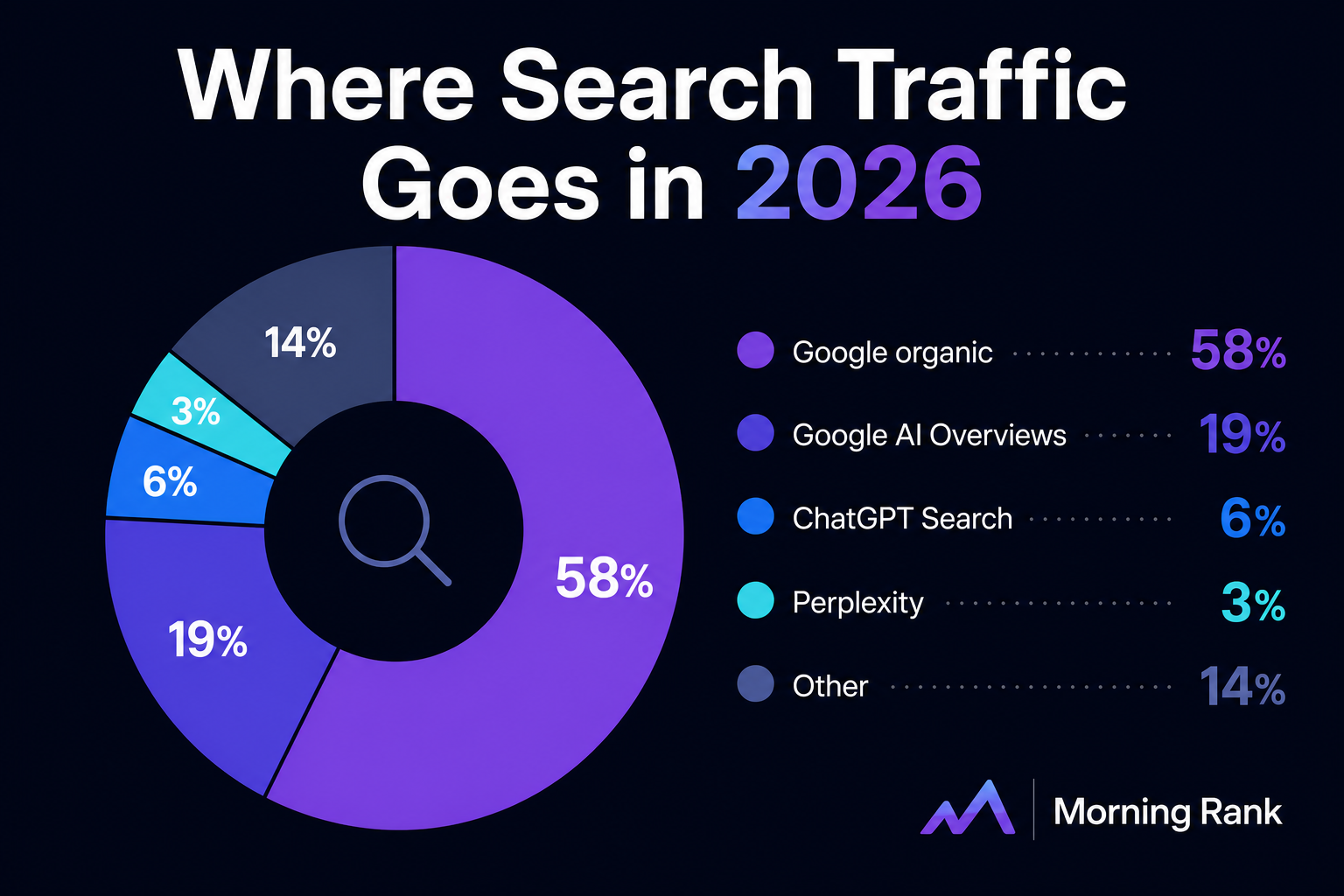
Generative search isn't a future trend - it's the current SERP. Google AI Overviews now appear on roughly 47% of informational queries (per Semrush's Q1 2026 study), and Perplexity plus ChatGPT Search together pull around 9% of total search traffic away from Google entirely. If your SEO strategy still optimizes only for the 10 blue links, you're optimizing for a shrinking surface - and undercharging your clients for the half of the SERP they can't see.
This guide walks through the strategy Morning Rank uses to think about rankings, citations, and the tracking needed to make both measurable.
What 'ranking' means now
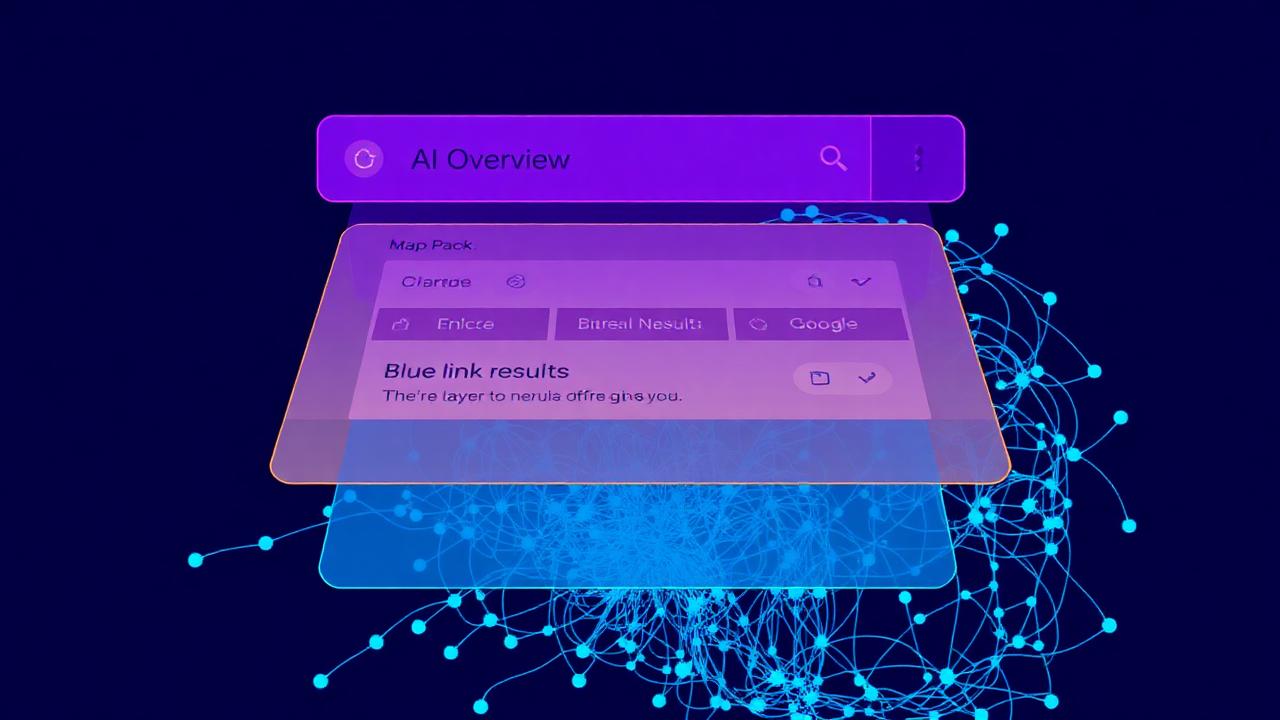
Ranking in 2026 is a multi-surface problem. A single keyword can have an AI Overview, a Map Pack, a People Also Ask, a video carousel, a featured snippet, and the classic 10 blue links - each with its own logic, format, and CTR curve. We track four primary surfaces inside Morning Rank, and we recommend every agency report on the same four:
- AI Overview citation (Google's generative answer block, plus the source list it cites).
- Map Pack (for local-intent queries).
- Organic 10 blue links (still the largest single source of click-through traffic).
- AI assistants - Perplexity, ChatGPT Search, Claude, Gemini direct answers.
This is the single biggest mindset shift for agencies in 2026: stop reporting "position" as one number. A client who is #1 organic but missing from the AI Overview is losing roughly half the available traffic on that query. A client who is cited in the AI Overview but #6 organic still wins the click most of the time, because the citation is anchored above the fold.
1. Optimize for citation, not just position
AI Overviews summarize a few authoritative sources. The goal is being one of those sources. Common patterns in cited content include:
- A clear, definitive answer in the first 1-2 sentences (not a "Let's explore..." intro). Cited paragraphs lead with the answer.
- Original data, screenshots, methodology, or a proprietary framework that can't be paraphrased away.
- Strong author bio with verifiable credentials - full E-E-A-T compliance. (See our keyword research guide for how this ties into topic selection.)
- Schema markup: Article, FAQPage, HowTo, Author, and Product where applicable. Cited pages have schema 4x more often than non-cited pages.
- Inbound links from genuinely authoritative domains in the niche. Domain Rating still matters - it just matters differently now.
- Clear semantic structure: H2/H3 hierarchy, definitional sentences, and tables/lists Google can extract directly.
The "answer-first" formatting standard
Generative engines prefer content that is structured to be quoted. The simplest tactical change we've seen move the needle: rewrite the first paragraph of every page so the literal answer to the title's question lives in the first sentence. We've watched this single change move pages from "organic only" to "AI-cited" within 2-3 weeks of recrawl.
2. Topic clusters beat keyword lists
Generative engines reason about topics, not isolated phrases. They reward sites that demonstrate full coverage, not single-page wins. Build hub-and-spoke clusters: one pillar page on the broad topic, 8-15 detail pages, all internally linked with descriptive anchor text. Semrush and Ahrefs have published case studies showing 2-4x organic lift inside 6-9 months for sites that switch from flat content libraries to clustered architectures.
Inside Morning Rank's AI Insights, we surface cluster gaps automatically - pages where you have one strong asset but no supporting subtopic coverage. That's almost always where the AI Overview citation is going to a competitor.
3. Track AI surfaces explicitly
If you don't measure it, you can't optimize it. Tools like Ahrefs and Semrush now flag AI Overview presence at the keyword level. Morning Rank goes further - tracking both Overview citation and direct assistant answers (Perplexity, ChatGPT Search, Gemini) for every tracked keyword, in one daily report. We built that tracker because client stakeholders kept asking "are we in the AI answer?" and Excel screenshots weren't a real answer.
What to track at minimum:
- Per keyword: AI Overview present? Yes/No.
- Per keyword: are you cited in the AI Overview? Yes/No.
- Per keyword: which 3-5 sources are cited (so you can reverse-engineer the pattern).
- Trend over time: % of your tracked keyword set with AI Overviews triggered, % cited.
4. The E-E-A-T premium got real
Google's Experience-Expertise-Authoritativeness-Trust framework was always important; in 2026 it's existential. Anonymous content farms collapsed in the March 2025 Helpful Content update and the November 2025 spam update. Sites with named authors, real bylines, linked LinkedIn profiles, and citable expertise are now eating the long tail.
The minimum E-E-A-T setup
- A real author byline on every post, linking to a real Author page.
- Author pages with bio, credentials, social profiles, and links to other published work.
- Author schema markup (Person + sameAs) on every article.
- Last-updated dates that reflect real updates, not just date-stamp manipulation.
- An About page with team photos, contact info, and a physical address. Yes, even for SaaS.
- Editorial review notes when applicable ("Reviewed by Dr. Smith, MD").
5. Don't abandon traditional SEO - extend it
Technical SEO, internal linking, page speed, and structured data still matter - they're table stakes for AI surfaces too. The shift is additive, not substitutive. Crawlable, fast, well-linked sites with real expertise win on both surfaces. The lazy interpretation - "SEO is dead, just optimize for AI" - produces sites that rank nowhere. Both surfaces use the same underlying index, the same crawler signals, and largely the same authority graph.
If you want to see how this plays out for local businesses specifically, read our Complete Local SEO Guide for 2026. For the keyword side of the workflow, see Keyword Research for Agencies.
6. The reporting shift agencies need to make
A useful dashboard can separate AI Overview visibility, Map Pack share, organic visibility, and assistant citation rate. See our white-label reporting guide for the full template.
"Do not compress every search surface into one ranking number. Report each surface clearly so the reader can understand what changed."
About the author
Tyler Morgan
Head of SEO, Morning Rank
Tyler writes about agency SEO strategy, rankings, AI search, and competitor research at Morning Rank.
Want this kind of insight every week?
MorningRank delivers daily keyword rank tracking, AI SEO recommendations, GA4 integration, and white label client reporting.