
Decoding Google Algorithm Changes: An Agency’s Guide to Sustained SEO in 2026
Google algorithm changes are continuous, but agencies can adapt by prioritizing user experience, E-E-A-T (Experience, Expertise, Authoritativeness, and…
 Marcus Rivera
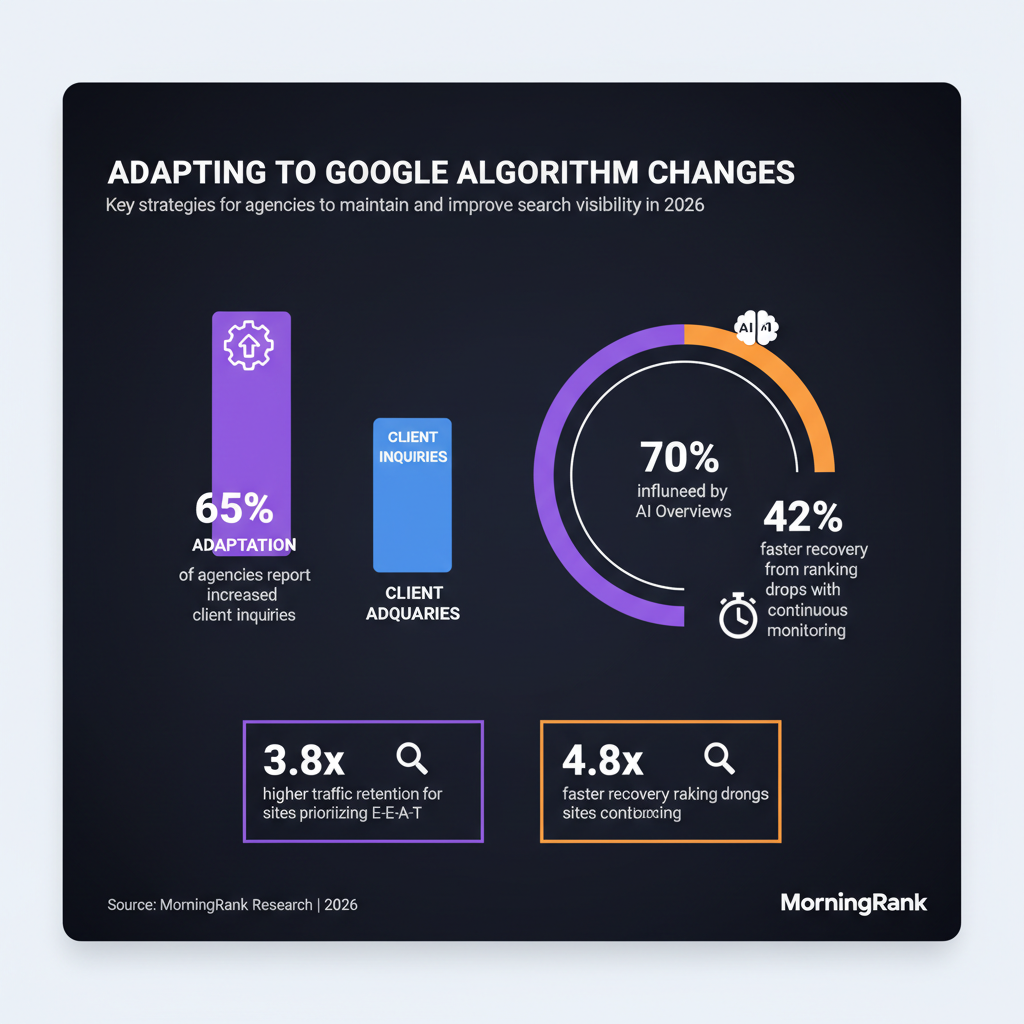
“In 2026, 65% of agencies reported that their proactive strategies for adapting to Google algorithm changes directly led to an increase in client inquiries, demonstrating the value of a flexible and knowledgeable approach.”
Google algorithm changes are continuous, but agencies can adapt by prioritizing user experience, E-E-A-T (Experience, Expertise, Authoritativeness, and Trustworthiness), and technical SEO. Proactive monitoring and a data-driven approach are key to maintaining rankings and driving client success in 2026.
Key Takeaways
- Google’s algorithms are constantly evolving, requiring continuous adaptation from SEO agencies.
- Focus on core principles like E-E-A-T, user experience, and mobile-friendliness to build long-term resilience.
- Implement robust tracking and analytics to quickly identify and respond to ranking fluctuations.
- Educate clients on the fluid nature of SEO and manage expectations around algorithm impacts.
- Leverage AI tools for competitive analysis and to streamline adaptation strategies.
In my experience, no topic sparks more anxiety in SEO agencies than the phrase "Google algorithm update." It’s a constant in our industry, a shifting landscape that demands continuous learning and adaptation. Since Google processes trillions of searches each yeareven minor adjustments can have significant ripple effects on website visibility, traffic, and ultimately, client revenue. Agencies that understand how to navigate Google algorithm changes not only survive but thrive, turning potential crises into opportunities for growth. This guide will walk through the nature of these updates, how to prepare for them, and the strategies agencies can employ to ensure sustained SEO performance for their clients in 2026.
The pace of change only accelerates. Google is no longer just updating its core algorithm a few times a year. We 're seeing continuous, smaller updates, often unannounced, that chip away at established ranking factors or introduce entirely new considerations. This makes the job of an SEO agency both more challenging and more critical. It's no longer about waiting for the next big "Penguin" or "Panda" to drop; it's about constant vigilance and incremental adjustments.
Understanding the Nature of Google Algorithm Updates
Google's mission is to organize the world's information and make it universally accessible and useful. Every algorithm update, whether major or minor, is ultimately designed to improve the quality and relevance of its search results. This means rewarding websites that provide genuine value to users and demoting those that employ manipulative tactics or offer poor experiences. Broadly, updates can be categorized as:
- Core Updates: These are broad, significant changes to Google's core ranking systems. They don't typically target specific issues but rather aim to improve how Google evaluates content overall. The effects can be widespread and noticeable, affecting various niches and types of content.
- Specific Updates: These updates target particular aspects of the algorithm or specific types of violations. Examples include updates focused on spam (like Penguin), content quality (Panda), mobile-friendliness (Mobilegeddon), or local search results (Possum).
- Unconfirmed Updates & Minor Tweaks: Google makes thousands of small changes to its search algorithm every year, most of which are never announced. These gradual adjustments can still cumulatively have a significant impact over time, making continuous monitoring essential.
The key takeaway here for agencies is that Google isn't trying to punish websites; it's trying to improve user satisfaction. By aligning your strategies with Google's overarching goal of delivering the best possible search experience, you inherently build a more resilient and future-proof SEO strategy.
Proactive Strategies for Adapting to Algorithm Changes
1. Deep Dive into E-E-A-T
Experience, Expertise, Authoritativeness, and Trustworthiness (E-E-A-T) remains paramount, especially with the rise of AI-generated content. Google wants to rank content created by real people with verifiable experience and domain authority. Agencies must help clients demonstrate E-E-A-T across their digital footprint:
- Experience: Show, don't just tell. For product reviews, demonstrate actual use. For how-to guides, provide step-by-step instructions based on practical application. Encourage clients to share their real-world experience and case studies.
- Expertise: Ensure content creators are qualified in their field. Promote author bios with credentials, education, and relevant work history. For highly sensitive niches (YMYL - Your Money Your Life), this is non-negotiable.
- Authoritativeness: Build a strong backlink profile from reputable sources. Encourage mentions and citations from industry leaders. Create cornerstone content that establishes the client as a definitive source of information.
- Trustworthiness: Implement strong security measures (HTTPS), transparent privacy policies, and clear contact information. Ensure factual accuracy in all content and promptly correct any errors. Building trust also involves managing online reviews and a positive brand reputation.
2. Hyper-Focus on User Experience (UX)
Core Web Vitals (CWV) are just the tip of the iceberg. A holistic approach to UX considers every interaction a user has with a website. Agencies should conduct regular UX audits focusing on:
- Page Speed and Responsiveness: Beyond CWV, ensure lightning-fast loading times on all devices. Optimize images, leverage caching, and minimize server response times.
- Intuitive Navigation: Users should easily find what they're looking for. Implement clear, logical site structures, helpful internal linking, and robust search functionalities.
- Engaging Content Presentation: Content isn't just text. Use visuals, videos, clear headings, and digestible paragraphs. Break up long blocks of text.
- Accessibility: Ensure websites are usable by everyone, including those with disabilities. This is not only good practice but can also influence rankings.
- Reduced Clutter and Distractions: Pop-ups, intrusive ads, and overly complex layouts can detract from the user experience. Advocate for clean, user-centric designs.
3. Data-Driven Monitoring and Rapid Response
Waiting for a major ranking drop to react is a recipe for disaster. Agencies need sophisticated monitoring setups:
- Granular Rank Tracking: Monitor rankings for a wide array of keywords, not just top-level terms. Look for subtle shifts in specific categories or content types.
- Traffic & Conversion Analysis: Beyond organic traffic, track conversions attributed to organic search. A drop in conversions despite stable traffic can indicate a quality issue.
- Technical SEO Audits: Regularly scan for crawl errors, broken links, indexing issues, and other technical debt that can hinder visibility.
- Competitor Analysis Tools: Keep an eye on competitors' performance. If their rankings surge or plummet after an update, analyze what they might have done differently.
- Google Search Console & Analytics: These are indispensable tools for identifying performance issues, indexing problems, and understanding user behavior.
- Set up Alerts: Configure alerts for significant drops in traffic, rankings, or indexation errors to enable immediate investigation.
When an algorithm update hits, agencies should first confirm if it's a site-wide issue or isolated to specific pages/sections. Then, correlate the changes with known ranking factors and industry discussions. This rapid diagnostic process allows for targeted, efficient solutions rather than broad, speculative changes.
4. Embrace and Leverage AI in SEO Workflows
AI is not just for content generation; it's a powerful ally in navigating algorithm changes:
- AI for Competitor Analysis: Use AI tools to analyze keyword gaps, content strategies, and backlink profiles of top-ranking competitors at scale. AI can quickly identify emerging patterns.
- Content Optimization: AI writing assistants can help in drafting, but more importantly, they can assist in optimizing existing content for relevance, readability, and E-E-A-T signals.
- Technical SEO Auditing: AI-powered tools can identify complex technical issues faster, suggest solutions, and even predict potential future problems based on current trends.
- Personalization & Localization: AI can help understand user intent at a deeper level, allowing for more personalized content and localized SEO strategies, which Google increasingly values.
- Predictive Analytics: While still evolving, AI can help in modeling potential impacts of algorithm changes by analyzing current data trends against historical update patterns.
5. Client Education and Expectation Management
Transparency is key. Clients need to understand that SEO is a marathon, not a sprint. Agencies should:
- Explain the 'Why': Help clients understand that updates are for user benefit, aligning SEO efforts with their business goals.
- Manage Volatility Expectations: Prepare clients for potential temporary fluctuations in rankings and traffic.
- Provide Regular Reporting: Show progress beyond just rankings, highlighting improvements in E-E-A-T, UX metrics, and conversion rates.
- Emphasize Long-Term Strategy: Reiterate that consistent application of best practices is what truly builds sustainable online visibility.
- Communicate Changes Proactively: When a major update is announced or suspected, inform clients about its potential impact and the agency's strategy to address it.

The Interplay of Search Engines and User Behavior
It's crucial to remember that Google doesn't operate in a vacuum. Its updates are often a response to evolving user behavior and technological advancements. As users become more sophisticated in their search queries, expect more nuanced results. As AI becomes more ubiquitous, Google's ability to understand natural language and complex intent will only grow. Agencies must stay ahead of these behavioral shifts. Are users searching more with voice? Are they prioritizing video content? Is local search becoming more dominant for certain industries? Adapting to these trends means not just optimizing for Google's current algorithm but anticipating its future direction based on how people are interacting with information.
For example, the rise of "zero-click searches" where users find their answers directly on the SERP (Search Engine Results Page) via featured snippets, knowledge panels, or instant answers, presents a new challenge. While traditional SEO often aimed to drive clicks, a modern strategy might involve optimizing for these rich results to maximize brand visibility and authority, even if it doesn't always translate to direct website traffic. This requires a shift in mindset and a more comprehensive definition of "SEO success."
Beyond Google: A Holistic Digital Strategy
While this guide focuses on Google, it's essential to remember that a truly resilient digital strategy never puts all its eggs in one basket. Diversifying traffic sources, building a strong brand presence across various platforms (social media, email marketing, direct traffic), and cultivating a loyal customer base can mitigate the risks associated with algorithm volatility. SEO should be viewed as one critical component of a broader digital marketing ecosystem designed to build sustainable online growth. If you're an agency looking for an AI SEO platform to help you navigate these changes, MorningRank offers a suite of powerful features to help.
Related reading: Decoding Google's Algorithmic Volatility: Strategies for Agencies in 2026.
Frequently Asked Questions
What is E-E-A-T and why is it so important for SEO in 2026?
E-E-A-T stands for Experience, Expertise, Authoritativeness, and Trustworthiness. It's crucial because Google wants to rank content that is credible and reliable. With the rise of AI-generated content, demonstrating that your information comes from real people with genuine experience and knowledge is paramount to standing out and building trust with search engines and users alike.
How often does Google update its algorithm?
Google makes thousands of small, unannounced updates to its algorithm every year. On top of that, there are usually several "core updates" announced throughout the year, which are broader changes to their ranking systems. Agencies must adopt a strategy of continuous monitoring rather than just reacting to major announcements.
What are Core Web Vitals and how do they relate to UX?
Core Web Vitals (CWV) are a set of specific metrics that Google uses to quantify aspects of user experience, specifically loading performance (Largest Contentful Paint), interactivity (First Input Delay), and visual stability (Cumulative Layout Shift). They are critical because they directly impact how Google perceives the quality of a user's experience on a website, thereby influencing rankings.
Can AI writing tools hurt my SEO?
Not inherently. AI tools can be excellent for drafting, research, and optimization. However, relying solely on unedited AI-generated content can be problematic if it lacks human E-E-A-T, contains inaccuracies, or is generic. The key is to use AI as an assistant to enhance human-created, expert-driven content, ensuring it adds unique value and meets quality standards.
How long does it typically take to recover from an algorithm update penalty?
Recovery time varies greatly depending on the nature of the penalty and the specific actions taken. Minor issues might rebound within weeks or a few months after corrective measures. More severe penalties, especially those related to fundamental quality issues, can take six months to a year, or even longer, requiring significant overhauls to content, technical structure, and backlink profiles. Consistency and thoroughness are vital for recovery.
Should I only focus on Google, or are other search engines important?
While Google dominates the search market, a holistic strategy never hurts. Optimizing for Google often benefits other search engines like Bing or DuckDuckGo due to similar underlying principles (e.g., quality content, good UX). However, it's wise to monitor performance on secondary engines and platforms like YouTube (a major search engine itself for video) to ensure diverse traffic sources and mitigate risk.
In conclusion, navigating the ever-changing landscape of Google algorithm updates in 2026 requires more than just reactive adjustments; it demands a proactive, comprehensive, and user-centric approach. Agencies that embed E-E-A-T, superior user experience, advanced data analytics, and ethical AI integration into their core strategies will not only withstand the shifts but will emerge as leaders, consistently delivering exceptional, sustainable results for their clients. The future of SEO is about continuous learning, adaptation, and an unwavering commitment to quality and user value.
Want this kind of insight every week?
MorningRank delivers daily rank tracking, AI SEO recommendations, and white label client reporting.