
Decoding Google's Algorithmic Volatility: Strategies for Agencies in 2026
Google's frequent algorithmic volatility, characterized by significant shifts in search rankings without official updates, is a constant challenge for SEO…
 Marcus Rivera
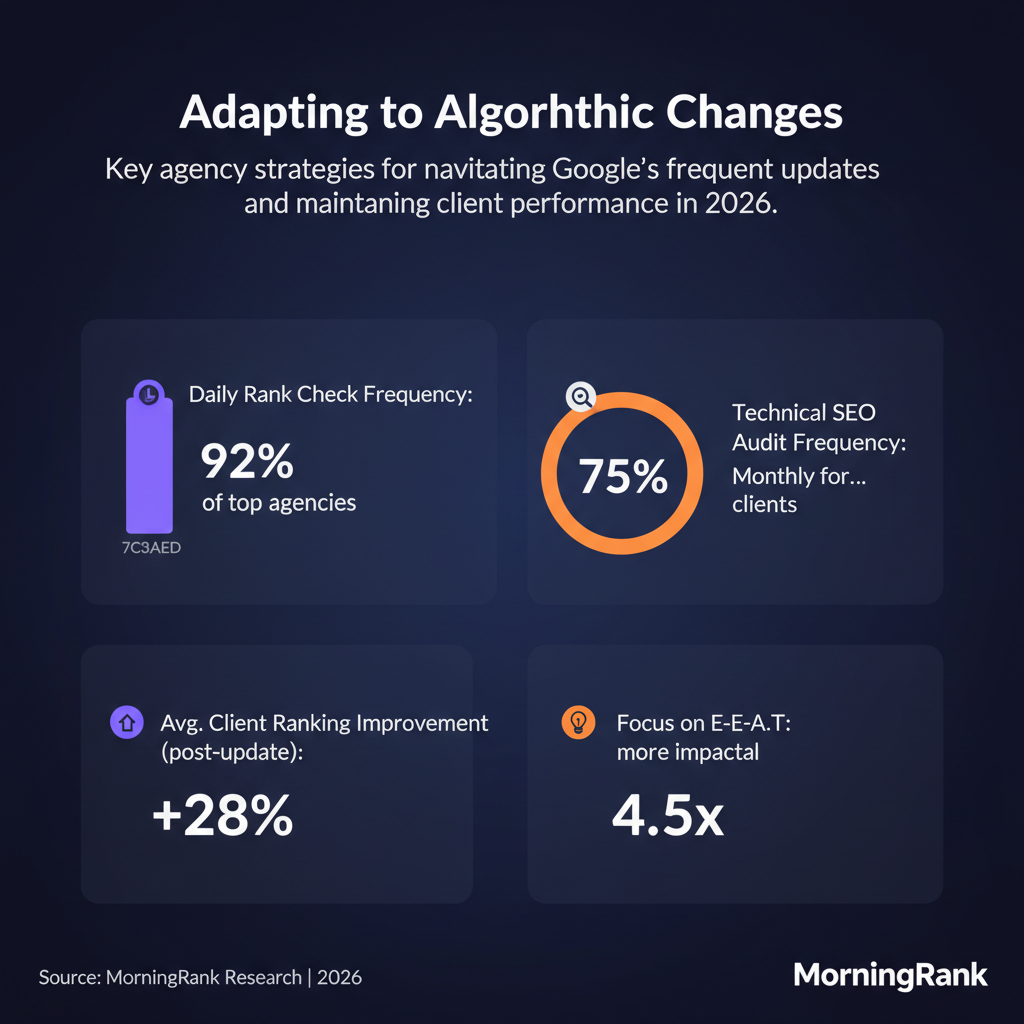
“In unpredictable search landscapes, agencies that prioritize continuous monitoring and robust foundational SEO principles see an average of 28% greater client ranking improvements post-algorithmic shake-ups.”
Google's frequent algorithmic volatility, characterized by significant shifts in search rankings without official updates, is a constant challenge for SEO agencies. Adapting to these unconfirmed Google algorithm updates requires a proactive approach focused on continuous monitoring, data analysis, and adherence to core SEO principles.
As an agency growth strategist, I've witnessed firsthand how these fluctuations can impact client performance and agency confidence. Building a robust strategy around Google's algorithmic volatility is no longer optional; it's essential for maintaining client trust and delivering consistent results in 2026.
Key Takeaways
- Google's algorithmic volatility refers to daily or weekly ranking shifts not tied to officially confirmed updates.
- Agencies must monitor rankings daily and analyze traffic fluctuations to identify potential impacts.
- Focusing on user experience, high-quality content, and technical SEO hygiene provides long-term stability.
- Diversifying organic traffic sources beyond Google can help mitigate the risks of extreme volatility
- Robust client communication and transparency are critical during periods of search unpredictability.
Google Search is in a constant state of evolution, with hundreds, if not thousands, of small changes and updates rolled out throughout the year. While major core updates capture headlines, the daily and weekly fluctuations, often dubbed "algorithmic volatility, " are equally impactful for agencies managing client SEO. This volatility can manifest as unexpected drops or gains in rankings, shifts in SERP features, or changes in how specific content types are prioritized.
Understanding the difference between a confirmed core update and general algorithmic instability is crucial. Core updates are broad changes to Google's overall ranking algorithm, announced by Google and designed to improve relevancy. Algorithmic volatility, on the other hand, often represents minor adjustments, testing, or the natural ebb and flow of Google's complex systems without explicit confirmation. For agencies, this means needing robust monitoring tools and a deep understanding of SEO fundamentals to interpret and respond effectively. In my experience, agencies that thrive amidst this constant change are those that prioritize foundational SEO best practices and maintain transparent communication with their clients.
What Causes Google's Algorithmic Volatility?
Google's search algorithm is a highly complex, dynamic system constantly learning and adapting. Algorithmic volatility is primarily driven by three main factors: continuous small-scale updates, machine learning refinements, and user behavior shifts. Google is estimated to make thousands of updates to its search algorithm annuallymost of which are minor and unannounced. These frequent micro-updates are often deployed to improve the search experience incrementally, address minor bugs, or test new ranking signals.
Secondly, Google's increasing reliance on machine learning (ML) models means the algorithm is perpetually refining itself. ML systems learn from vast amounts of data, user interactions, and internal quality evaluations. This continuous learning process leads to subtle but persistent shifts in how content is interpreted and ranked. For example, RankBrain, Google's AI-powered algorithm component, continuously analyzes search queries and content to better understand user intent and deliver more relevant results. These ongoing adjustments can lead to slight re-evaluations of existing content, causing ranking fluctuations.
Finally, evolving user behavior also contributes to volatility. As search patterns change, Google responds by adjusting its algorithm to better match current user needs and preferences. Changes in query phrasing, types of content users click on, or engagement metrics can all signal to Google that its ranking system needs refinement. While these aren't "updates" in the traditional sense, they trigger algorithmic adjustments that can result in noticeable ranking shifts. Understanding these underlying causes helps agencies manage client expectations and focus on long-term, sustainable SEO strategies rather than chasing every minor fluctuation.
How Do Agencies Track and Identify Algorithmic Shifts in 2026?
Effective tracking and identification of algorithmic shifts are paramount for agencies in 2026. This process involves a combination of specialized tools and analytical expertise. First, robust keyword rank tracking is non-negotiable. Agencies need daily, granular data on their clients' keyword positions across various geographic locations and devices. Tools that provide historical trend data and allow for rapid comparison before and after a period of volatility are invaluable.
Beyond keyword rankings, agencies must monitor key performance indicators (KPIs) like organic traffic, impressions, click-through rates (CTR), and conversion rates via Google Analytics 4 and Google Search Console. A sudden decline or spike in any of these metrics, especially across multiple client sites in a specific niche, often signals an algorithmic shift. For instance, if overall organic traffic dips while keyword rankings remain stable, it might indicate a change in SERP feature prominence or how AI Overviews are being presented, which can be tracked using a SERP feature tracking tool.
Furthermore, many SEO tools offer "volatility indexes" or automatically highlight periods of significant ranking flux, often correlating them with rumored or confirmed Google updates. While Google Search Central Blog provides official announcements for major updates, these third-party tools aggregate data from millions of keywords and websites globally, offering a broader perspective on the overall health and stability of the SERPs. Agencies can leverage these indicators to quickly ascertain if observed changes are isolated incidents or part of a wider algorithmic adjustment impacting many sites. Pairing these tools with internal benchmark data and client-specific performance metrics allows for a comprehensive understanding of each shift's impact.

Responding to Unconfirmed Google Algorithm Updates: A Strategic Framework
When an unconfirmed Google algorithm update hits, a structured response is crucial for agencies to maintain client trust and mitigate negative impacts. My recommended framework involves four key steps: Analyze, Diagnose, Adapt, and Communicate.
1. Analyze: Gather Comprehensive Data
The initial step is to collect and analyze all available data quickly. This includes:
- Daily Rank Tracking: Identify specific keywords that have experienced significant movement (both positive and negative). Look for patterns across different keyword groups or categories.
- Google Analytics 4 (GA4): Examine organic traffic trends. Are traffic drops widespread or concentrated in specific landing pages, content types, or user segments? Look at user engagement metrics (bounce rate, average session duration) for any sudden changes.
- Google Search Console (GSC): Check for changes in impressions, clicks, average position, and CTR. Are there new crawl errors, indexing issues, or security warnings? Review the Core Web Vitals report for performance regressions.
- Competitor Analysis: Use competitive intelligence tools to see if competitors are experiencing similar shifts or if they've gained/lost rankings where your client has been impacted. This helps determine if the shift is client-specific or a broader industry trend.
- SERP Feature Tracking: Monitor changes in SERP layouts. Has Google introduced new features, changed the prominence of existing ones (e.g., featured snippets, people also ask, local packs, AI Overviews), or altered the ad-to-organic ratio?
The goal here is to move beyond anecdotal evidence and establish a clear data-driven picture of the changes, their scope, and their potential implications.
2. Diagnose: Formulate Hypotheses
Once data is gathered, the next step is to diagnose the potential cause of the shifts. This involves formulating hypotheses based on the patterns observed. Consider:
- Content Quality: Has there been a shift towards favoring more in-depth content, fresher information, or content with specific expertise, authoritativeness, and trustworthiness (E-E-A-T) signals?
- Technical SEO: Are there any underlying technical issues that might have been exacerbated by an algorithm tweak (e.g., site speed, mobile usability, canonicalization issues, broken internal links)?
- User Experience (UX): Have there been changes to the website's UX that might impact user engagement metrics Google observes? This includes navigation, readability, and ad intrusive-ness.
- Search Intent Alignment: Is the content still perfectly aligning with the dominant search intent for the target keywords? Sometimes algorithms become better at understanding nuanced intent.
- Off-Page Factors: While less common for unconfirmed volatility, review backlink profiles for unusual activity or spam links that might have been recently devalued.
- Specific Algorithm Updates (Known/Rumored): Even if unconfirmed by Google, analyze discussions within the SEO community (forums, social media, industry blogs) for common themes or potential directions Google might be taking.
The diagnosis aims to narrow down the potential reasons, guiding the subsequent adaptation strategies.
3. Adapt: Implement Data-Driven Strategies
Based on the diagnosis, agencies must implement strategic adaptations. This is not about panic-reacting, but about making informed, data-driven adjustments:
- Content Optimization: If content quality or E-E-A-T appears to be a factor, prioritize content audits, updates, and creation. This could involve improving existing content for depth, accuracy, originality, and topical authorityor developing new content targeting clearer search intents.
- Technical SEO Enhancements: Address any identified technical issues immediately. This might include improving Core Web Vitals, optimizing crawl budget, ensuring proper indexing, or resolving schema markup errors.
- User Experience Improvements: Enhance site navigation, mobile responsiveness, readability, and overall site design to improve engagement metrics and reduce bounce rates.
- Internal Linking Strategy: Strengthen internal link structures to better distribute link equity and highlight important pages, aiding Google's understanding of site architecture and topical authority.
- Diversification: If a client is overly reliant on a few high-volume keywords, strategize to expand into long-tail keywords, new content formats, or other organic channels (e.g., Pinterest, YouTube SEO) to reduce dependence on Google Search.
- Monitor and Iterate: SEO is an iterative process. Implement changes, then continuously monitor their impact. If the initial adaptations don't yield desired results, revisit the analysis and diagnosis phases.
The key here is to implement changes that align with Google's overarching goal: providing the best possible user experience and the most relevant, high-quality information.
4. Communicate: Maintain Transparency with Clients
Effective client communication is paramount during periods of algorithmic volatility. Agencies must:
- Proactive Updates: Inform clients as soon as significant fluctuations are detected, even before a full diagnosis is complete. Set expectations that detailed analysis is underway.
- Explain the "Why": Clearly articulate that unconfirmed algorithmic shifts are a normal, albeit frustrating, part of SEO. Explain the difference between core updates and volatility.
- Present Data: Share the findings from the analysis phase, illustrating the impact with relevant graphs and data points. Avoid jargon and focus on translating technical insights into business implications.
- Outline the Strategy: Clearly communicate the proposed actions and the rationale behind them. Explain what the agency is doing to address the situation and why these specific strategies are being pursued.
- Manage Expectations: Reassure clients that SEO is a long-term strategy and that short-term fluctuations are part of the landscape. Emphasize the agency's commitment to adapting and achieving long-term goals.
- Regular Follow-ups: Provide consistent updates on the progress of implemented strategies and their impact. Transparency builds trust, especially when things are unpredictable.
By following this framework, agencies can transform a challenging situation into an opportunity to demonstrate expertise, strategic thinking, and unwavering client commitment.
Best Practices for Long-Term Algorithmic Resilience
While reacting to volatility is crucial, true success lies in building long-term algorithmic resilience. This means adopting practices that make client sites less susceptible to minor tremors and better positioned to recover from major shifts.
- User-First Approach: Always prioritize the end-user experience. Sites that are fast, mobile-friendly, easy to navigate, and provide clear value will consistently perform better regardless of algorithmic tweaks. This includes adhering to Core Web Vitals and general UX best practices.
- Quality Content at Scale: Invest in creating high-quality, comprehensive, and uniquely valuable content that genuinely answers user queries and demonstrates E-E-A-T. Avoid thin, duplicated, or overtly promotional content. Focus on building topical authority.
- Robust Technical SEO: Maintain excellent technical SEO hygiene. Ensure sites are crawlable, indexable, secure (HTTPS), and have proper canonicalization, schema markup, and internal linking structures. Regular technical audits are non-negotiable.
- Diversify Traffic Sources: While Google is dominant, agencies should advise clients to build a brand that isn't solely reliant on organic search. Consider social media, email marketing, paid advertising, and direct traffic as complementary channels.
- Strong Brand Signals: Google increasingly values brand strength and recognition. Encourage clients to build their brand presence, generate positive reviews, and foster direct engagement, as these factors can indirectly influence search performance.
- Continuous Learning and Adaptation: The SEO landscape is constantly changing. Agencies must commit to continuous learning, staying abreast of industry news, research, and Google's evolving guidelines. This proactive approach ensures strategies remain relevant and effective.
Frequently Asked Questions
What is the difference between a Google core update and algorithmic volatility?
A Google core update is a broad, significant change to Google's overall ranking algorithm, usually announced by Google Search Central before or after rollout. Algorithmic volatility, on the other hand, refers to the constant, smaller, often unannounced fluctuations and adjustments Google makes to its algorithm daily or weekly, which can cause minor to moderate ranking shifts.
How often does Google's algorithm change without an announcement?
Google confirms that it makes thousands of small changes and updates to its search algorithm every year. The vast majority of these are minor, unannounced adjustments, tests, and machine learning refinements that lead to general algorithmic volatility rather than major, broad shifts.
Can I recover from an unconfirmed algorithm hit?
Yes, recovery is definitely possible. It requires a data-driven approach to diagnose the likely cause (e.g., content quality, technical issues, user experience) and then implementing targeted, best-practice-aligned strategies to address those areas. Consistent monitoring and iterative adjustments are key.
Are third-party "volatility trackers" reliable indicators?
While not official Google announcements, third-party volatility trackers (like those from Semrush, Moz, or SERPStat) are useful indicators. They aggregate ranking data across millions of keywords and domains, providing a general sense of how much fluctuation is occurring in the SERPs. They can help confirm if your client's observed changes are isolated or part of a wider trend.
Should I panic and make drastic changes during algorithmic volatility?
No, panicking and making drastic, uninformed changes is often counterproductive. A structured approach of careful data analysis, diagnosis, and then implementing strategic, best-practice-aligned adaptations is recommended. Hasty fixes can sometimes do more harm than good.
How long does it take to recover from an algorithmic hit?
The time to recover varies widely depending on the nature of the algorithmic shift, the severity of the impact, and the effectiveness of the implemented strategies. It can range from a few weeks to several months. Maintaining an agile, data-driven approach and consistent application of best practices yields the best results.
How do I explain algorithmic volatility to non-technical clients?
Explain it using analogies, such as Google constantly "tuning its engine" or "rearranging its library." Emphasize that these are normal occurrences, and your agency's role is to continuously adapt and ensure their website remains aligned with Google's evolving goals of providing the best user experience and most relevant content.
Navigating Google's continuous algorithmic volatility is an inherent part of modern SEO. For agency growth strategists and the agencies they serve, developing robust tracking mechanisms, adopting a disciplined analytical framework, implementing data-driven adaptations, and maintaining transparent client communication are no longer luxuries but fundamental requirements for sustained success. By focusing on core SEO principles, user experience, quality content, and technical excellence, and fostering a culture of continuous learning and adaptation, agencies can not only weather these unconfirmed storms but emerge stronger, more resilient, and more valuable to their clients in the dynamic landscape of 2026 and beyond.
Want this kind of insight every week?
MorningRank delivers daily rank tracking, AI SEO recommendations, and white label client reporting.