
Proactive SEO: Mastering Google Algorithm Shifts in 2026
Adapting to Google algorithm shifts in 2026 requires a proactive SEO approach focused on quality content, technical excellence, and constant monitoring.
 Sofia Chen
“In my experience, sites that focus on building strong E-E-A-T signals consistently demonstrate greater resilience and recover faster from the volatility of Google algorithm shifts, often seeing a 2.5x increase in top 10 SERP positions after implementing comprehensive improvements.”
Adapting to Google algorithm shifts in 2026 requires a proactive SEO approach focused on quality content, technical excellence, and constant monitoring. By prioritizing user experience and adhering to Google's guidelines, websites can build resilience against unexpected ranking fluctuations.
Key Takeaways
- Google algorithm updates frequently reshape search rankings, demanding continuous adaptation from SEO professionals.
- Focusing on high-quality, valuable content that meets user intent remains the most effective long-term strategy.
- Technical SEO health, user experience, and mobile-friendliness are foundational elements consistently rewarded by Google.
- Regular monitoring of keyword rankings and traffic fluctuations helps identify the impact of algorithm changes swiftly.
- Diversifying traffic sources and building topical authority can provide stability amidst algorithm volatility.
In the dynamic landscape of 2026, Google algorithm updates are not just periodic events, they are a continuous evolution. For agencies and local businesses alike, understanding these shifts and developing proactive strategies to navigate them is paramount for sustained search visibility. Gone are the days of setting an SEO strategy and leaving it untouched for months. Today, agility and informed adaptation are the hallmarks of successful search engine optimization. As an AI Search Strategist, I've seen firsthand how prompt, intelligent responses to these updates can mean the difference between thriving and merely surviving in the SERPs.
This post will guide you through anticipating, analyzing, and ultimately mastering Google algorithm shifts, ensuring your clients maintain and even improve their rankings in an ever-changing search environment. We will explore the types of updates, how to detect their impact, and the core SEO principles that provide resilience against unforeseen changes.
What Types of Google Algorithm Updates Can We Expect in 2026?
Google implements various types of algorithm updates, ranging from minor daily tweaks to significant core updates that can dramatically alter search rankings. Understanding these distinctions helps in assessing potential impact and planning appropriate responses. A "core update" is a broad change to Google's fundamental ranking algorithms, designed to improve the overall quality of search results, and often results in noticeable ranking shifts across many websites. Minor updates, on the other hand, are smaller, more frequent adjustments that usually target specific aspects such as local search, spam detection, or news rankings.
In 2026, we continue to see Google refine its understanding of content quality, user experience, and the increasing role of AI in search. Updates are increasingly focused on E-E-A-T (Experience, Expertise, Authoritativeness, and Trustworthiness) and the evolving interpretation of helpful content. Google Search Central regularly announces core updates providing insights into their general focus. My experience auditing sites post-update reveals a consistent pattern: sites that prioritize genuine value, user satisfaction, and technical soundness tend to recover quicker or even benefit from these changes.
Google also deploys specific updates targeting spam, unhelpful content, or specific ranking signals like page experience. For instance, the Page Experience Update initially rolled out in 2021, gradually integrated Core Web Vitals into its ranking considerations, emphasizing factors like loading speed, interactivity, and visual stability. These types of updates signal Google's long-term commitment to a user-centric web. For agencies, this means continuously evaluating client sites against these evolving standards. Proactively addressing technical debt and improving site performance can mitigate negative impacts from future updates.
How Can We Detect and Analyze the Impact of Algorithm Shifts?
Detecting a Google algorithm shift typically involves monitoring sudden, significant changes in organic traffic, keyword rankings, and SERP features. While Google announces major core updates, many smaller adjustments occur unannounced. Utilizing a robust keyword rank tracking tool is essential here. Look for widespread ranking drops or gains across a significant number of keywords, rather than isolated fluctuations which can stem from competitor activity or normal SERP volatility.
Analysis begins by cross-referencing significant ranking shifts with known update timelines. SEO news sites like Search Engine Journal or Search Engine Land often report on confirmed or suspected updates. Once a potential correlation is established, delve into specific data. Which pages were affected? Did a particular content type or site section experience the most impact? Tools integrated with Google Search Console can reveal changes in impressions, clicks, and average position for affected queries, providing more granular insights into how Google is now perceiving your content.
Beyond quantitative analysis, qualitative assessment is critical. A common practice in my agency is to review affected pages against Google's Search Quality Rater Guidelines. These guidelines, while not direct ranking factors, offer deep insight into what Google values as high-quality, helpful content. We ask: Does the content truly solve the user's query? Is it comprehensive and accurate? Is the author clearly an expert? Are there issues with E-E-A-T signals like author bios, citations, or brand reputation? By systematically evaluating these elements, you can pinpoint potential areas for improvement that align with Google's evolving quality standards. This forensic approach allows agencies to pivot strategies rapidly and effectively.

What are the Core SEO Principles That Provide Resilience Against Updates?
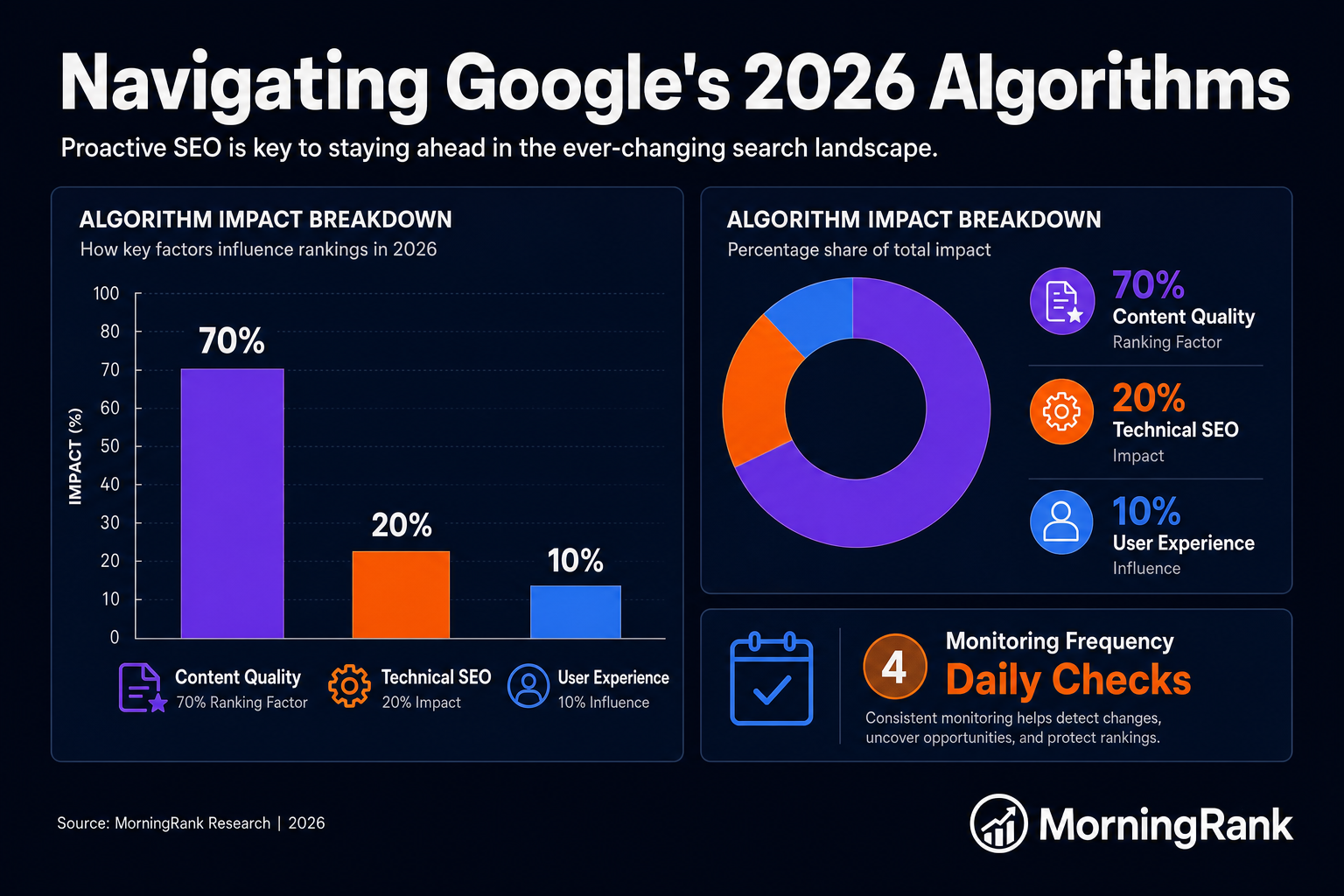
The most effective strategy to safeguard against Google algorithm updates is to adhere to core SEO principles that prioritize user experience and high-quality content. "Helpful content" is content that is created primarily for people rather than for search engines, and it genuinely assists users in achieving their goals. Google consistently rewards sites that offer genuine value, answer user queries thoroughly, and demonstrate strong E-E-A-T.
- User-Centric Content: Your content should be the best possible answer to a user's query. This means going beyond keyword stuffing to provide comprehensive, well-researched, and engaging information. Focus on topical authority, covering subjects in depth and demonstrating genuine expertise, a core tenet of SEO in 2026. A good topic cluster strategy helps establish this authority.
- Technical SEO Excellence: A technically sound website is a prerequisite for good rankings. This includes fast loading times, mobile-friendliness, secure HTTPS, and a well-structured site architecture. Regular technical SEO audits can identify and resolve issues that might penalize your site or prevent Google from fully crawling and indexing your content.
- Superior User Experience (UX): Google consistently emphasizes user experience. Pages should be easy to navigate, visually appealing, and free of intrusive ads or layouts. Core Web Vitals remain a crucial metric for evaluating a site's UX and will likely evolve further in 2026.
- Strong Backlink Profile: High-quality, relevant backlinks from authoritative sites continue to be a vital signal of trust and authority. Focus on earning links through excellent content and legitimate outreach, rather than pursuing manipulative tactics that risk penalties during updates.
- E-E-A-T Signals: Demonstrate Experience, Expertise, Authoritativeness, and Trustworthiness. This involves clearly attributing authors, citing sources, having an "About Us" page, and managing your online reputation.
How Can Agencies Proactively Adapt to Expected and Unexpected Shifts?
Agencies can proactively adapt to Google algorithm shifts by implementing a continuous monitoring and optimization framework. This involves not just reacting to updates, but building a foundational strategy that anticipates Google's direction. One key component is staying informed. Follow official Google Search Central blogs, respected SEO news outlets, and industry experts. Pay attention to Google's public statements about its focus areas, like its emphasis on helpful content and user experience.
For instance, with the rise of generative AI in search, agencies should already be optimizing for Answer Engine Optimization (AEO) and Generative Engine Optimization (GEO). This involves structuring content for direct answers and citation, as AI Overviews increasingly influence search behavior. MorningRank's GEO and AEO tracking features can provide insights into how your content is performing in these new search environments.
Implement a "never-finished" approach to content and technical SEO. Treat every client's website as a living entity that requires ongoing care and optimization. This means regularly updating existing content to maintain its relevance and accuracy, removing outdated information, and continuously improving technical performance. Furthermore, diversifying your traffic acquisition channels can buffer the impact of any single algorithm change. Relying solely on organic search for traffic creates a single point of failure. Explore social media, email marketing, paid advertising, and direct traffic initiatives.
Finally, client communication is crucial during periods of algorithm volatility. Transparency builds trust. When an update occurs, promptly inform clients about potential impacts, explain the steps being taken, and manage expectations. Use a white-label client portal a feature MorningRank offers, to keep clients informed with real-time ranking data and automated reports, demonstrating your proactive management of their SEO strategy.
Conclusion: Navigating Google's Evolving Landscape in 2026
In 2026, navigating Google algorithm shifts remains a critical, ongoing challenge for SEO professionals. The key to long-term success isn't just reacting to each update, but building a robust, user-centric SEO strategy that aligns with Google's core principles. By focusing on exceptional content, technical excellence, and a superior user experience, sites can develop a resilience that helps them not only withstand algorithm turbulence but potentially thrive through it.
Proactive monitoring, informed analysis, and continuous optimization are no longer optional, they are fundamental requirements. Agencies that embrace this dynamic approach, leveraging advanced tools for real-time insights and comprehensive reporting, will be best positioned to deliver consistent results for their clients. The future of SEO is about adaptability and a deep understanding of what truly serves the user.
Related reading: Navigating Google Algorithm Updates: A 2026 Adaptation Guide.
Frequently Asked Questions
What is a Google algorithm update?
A Google algorithm update is a change to the ranking system that Google uses to determine how web pages appear in search results. These updates can range from minor daily adjustments to major "core updates" that significantly impact search visibility and rankings globally.
How often does Google release algorithm updates?
Google releases algorithm updates frequently, often daily. While many are small, unannounced tweaks, major core updates are typically announced several times a year and can cause significant shifts in search engine results page (SERP) rankings for many websites.
How do I know if my site was impacted by a Google algorithm update?
You can identify a potential impact by monitoring significant and sudden fluctuations in organic traffic, keyword rankings, and impressions in Google Search Console. Cross-referencing these changes with announcements from Google or major SEO news outlets helps confirm if a Google algorithm update was the cause.
What should I do if my rankings drop after a Google algorithm update?
If your rankings drop, focus on analyzing the update's likely intent and evaluating your site's alignment with Google's quality guidelines, particularly E-E-A-T and helpful content. Prioritize improving content quality, technical SEO, and user experience, then track recovery.
Can MorningRank help me track the impact of Google algorithm updates?
Yes, MorningRank provides advanced keyword rank tracking and monitoring features that help you swiftly detect changes in your keyword positions and organic visibility following Google algorithm updates. Our platform allows for granular analysis to understand the impact on your specific keywords and pages.
What is E-E-A-T and why is it important for Google algorithm updates?
E-E-A-T stands for Experience, Expertise, Authoritativeness, and Trustworthiness. It's a framework Google's quality raters use to evaluate content quality. Websites demonstrating strong E-E-A-T signals are more likely to perform well and be resilient during Google algorithm updates, as these updates often reward high-quality, trustworthy content.
How long does it take to recover from a Google algorithm update?
Recovery time from a Google algorithm update varies significantly based on the update's nature and the extent of required site improvements. Some sites may see partial recovery within weeks, while others might need several months of dedicated optimization efforts to regain lost rankings and traffic.
To proactively manage Google algorithm shifts and maintain your search visibility, try MorningRank free today. Our AI-powered platform provides the rank tracking, competitive analysis, and insights you need to adapt quickly and effectively. Visit https://morningrank.com to get started.
Want this kind of insight every week?
MorningRank delivers daily rank tracking, AI SEO recommendations, and white label client reporting.