
Decoding Google's Spam Algorithm Updates in 2026: An Agency Playbook
Google’s spam algorithm updates in 2026 aim to reduce low-quality, unoriginal, and manipulative content in search results, ensuring a cleaner and more relevant…
 Daniel Park
“In my experience, relying on tools that promise quick ranking fixes through auto-generated content or exploiting domain authority often leads to significant penalties in the long run. The foundation of successful SEO in 2026 is high-quality, relevant content.”
Google’s spam algorithm updates in 2026 aim to reduce low-quality, unoriginal, and manipulative content in search results, ensuring a cleaner and more relevant user experience. For SEO agencies, understanding these updates is essential for protecting client rankings and building sustainable, ethical strategies that prioritize helpful content.
In my experience, staying ahead of these changes requires more than just reactive fixes. It demands a deep understanding of Google’s long-term goals: rewarding genuine value and penalizing practices that degrade search quality. This post will break down the latest spam-fighting initiatives, discuss how to diagnose their impact, and provide a actionable playbook for agencies to adapt and thrive in this evolving landscape.
Key Takeaways
- Google's 2026 spam updates target AI-generated spam, scaled content abuse, expired domain exploitation, and site reputation abuse.
- Agencies must prioritize Originality, Expertise, Authoritativeness, and Trustworthiness (E-E-A-T) to align with Google's helpful content principles.
- Proactive site audits and content quality checks are crucial for identifying and remediating potential spam signals before algorithm updates hit.
- Monitoring keyword rankings and traffic shifts post-update helps in diagnosing the specific impact and informing recovery strategies.
- Establishing clear internal guidelines for content creation, link building, and technical SEO is vital for agency-wide compliance.
What are Google's Latest Spam Algorithm Updates in 2026 Targeting?
Google regularly rolls out algorithm updates designed to improve the quality and relevance of its search results. In 2026, a significant focus remains on combating various forms of spam and low-quality content. These updates are a continuous effort by Google to ensure users find helpful, reliable information. The core objective is to de-rank content that offers little value, manipulates rankings, or attempts to game the system.
What Specific Spam Types Are Google Addressing?
Google’s recent updates are explicitly targeting several pervasive spam techniques. Understanding these will help agencies proactively adjust their strategies.
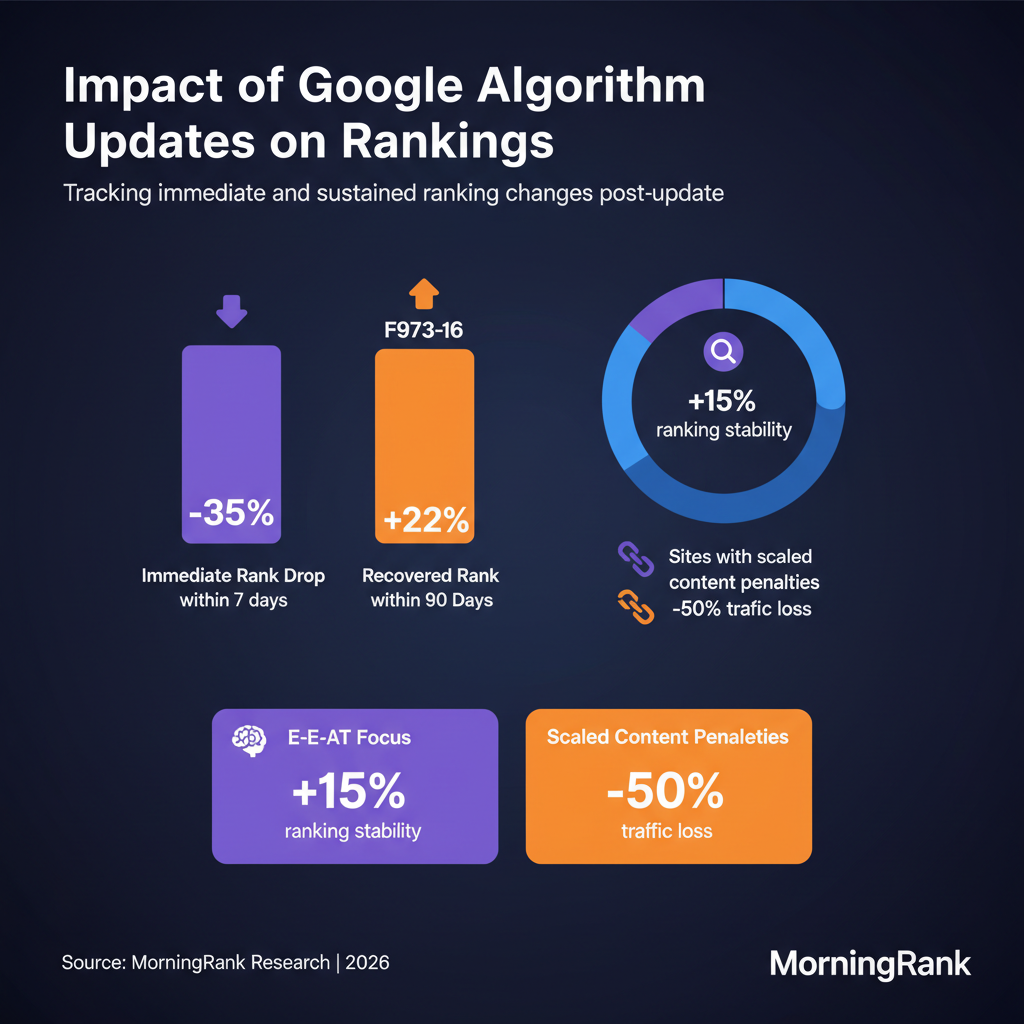
- Scaled Content Abuse: This refers to content produced at scale with the primary goal of manipulating search rankings, rather than helping users. This can include AI-generated content that lacks human oversight, or content created by humans with only search engine ranking in mind. While AI can be a powerful tool for content creation, it must be used responsibly, with significant human editing and value-add. As Google stated in an official announcement, "Creating helpful, reliable, people-first content remains paramount." According to an analysis by Search Engine Journal, nearly 40% of sites impacted by recent core updates showed signs of producing low-quality scaled content (Source: Search Engine Journal).
- Expired Domain Exploitation: This is the practice of purchasing expired domains with existing backlinks or authority to host low-quality content, hoping to leverage the old domain's reputation for ranking boosts. Google is actively working to nullify this manipulative tactic, ensuring that a site’s authority is genuinely earned and relevant to its current content.
- Site Reputation Abuse: Also known as "parasite SEO", this involves low-quality third-party content published on otherwise reputable websites, exploiting the site’s strong ranking signals. This generally refers to content that is not produced or closely supervised by the host site and primarily serves to manipulate search rankings. For example, a loan company publishing unhelpful content on a respected news site's subfolder to rank for competitive terms could be flagged for site reputation abuse.
These spam algorithm updates underscore Google's commitment to helpfulness and E-E-A-T. Agencies must ensure that all content strategies are aligned with these principles, prioritizing genuine user value over shortcuts.
In my experience, relying on tools that promise quick ranking fixes through auto-generated content or exploiting domain authority often leads to significant penalties in the long run. The foundation of successful SEO in 2026 is always high-quality, relevant content.
How Can Agencies Proactively Adapt to Google's Evolving Spam Algorithms?
Proactive adaptation is key to navigating Google's spam algorithm updates. Instead of waiting for a penalty to strike, agencies should integrate continuous quality assessment and ethical best practices into their SEO workflows. This approach minimizes risk and builds long-term client trust and ranking stability.
What Does a Proactive Content Strategy Look Like?
A proactive content strategy centers on creating truly helpful, original, and E-E-A-T aligned content. This means moving beyond keyword stuffing and towards comprehensive topic coverage that addresses user needs effectively.
- Emphasize E-E-A-T: Ensure content demonstrates clear Experience, Expertise, Authoritativeness, and Trustworthiness. This involves showcasing author credentials, citing credible sources, and providing unique perspectives.
- Prioritize Originality and Depth: Avoid thinly veiled rehashes of existing content. Instead, focus on producing original research, unique insights, and in-depth guides that offer more value than competitors. This is especially critical when leveraging AI for content creation. AI tools are powerful, but the output must be extensively reviewed, edited, and enhanced by human experts.
- Conduct Regular Content Audits: In my work, I find that regular content audits are invaluable. Identify and address content that is low-quality, duplicative, or no longer relevant. Consider updating, consolidating, or even removing content that doesn’t meet high standards. An ideal audit cycle is quarterly, or immediately after a major Google update.
For more insights on maintaining strong content quality, consider reviewing our guide on Content SEO & Topical Authority Building in 2026: An Agency Guide.
What Technical SEO Best Practices Should Agencies Follow?
Technical SEO resilience is another critical component of proactive adaptation. A technically sound website is less likely to be negatively impacted by updates that scrutinize site quality.
- Maintain Site Speed and User Experience: Core Web Vitals remain crucial. Ensure websites load quickly, are interactive, and offer a stable visual experience. A seamless user experience signals a high-quality site to Google.
- Ensure Mobile Responsiveness: With mobile-first indexing, a responsive design is non-negotiable. Websites must provide an optimal experience across all devices.
- Regularly Audit for Technical Issues: Use tools to regularly scan for broken links, crawl errors, indexing issues, and other technical problems that can degrade site quality. MorningRank’s SEO audit tool can help agencies automate this process and receive actionable recommendations.
By integrating these proactive measures, agencies can build a more resilient SEO foundation for their clients, one that withstands the volatility of Google algorithm updates.

How Do You Diagnose and Recover from Google Algorithm Update Impacts?
Despite proactive measures, even the most diligent agencies might see ranking fluctuations after a significant Google algorithm update. The ability to quickly diagnose the problem and implement effective recovery strategies is essential for client retention and long-term success.
What Are the First Steps in Diagnosing an Update's Impact?
Accurate diagnosis is the foundation of any recovery plan. Here’s how I approach initial investigations:
- Monitor Keyword Rankings and Traffic: Immediately after an announced (or unannounced, but observed) update, use a robust rank tracking tool to monitor daily keyword positions. Look for significant drops across a broad set of keywords, or specific categories of keywords. Simultaneously, check Google Analytics 4 and Google Search Console for drops in organic traffic, impressions, and click-through rates. These data points provide a clear picture of the scale and scope of the impact.
- Analyze SERP Changes: Examine the Search Engine Results Pages (SERPs) for your target keywords. Have new competitors emerged? Are different types of content now ranking higher (e.g., more video, forum discussions, or highly authoritative publications)? This can reveal Google’s shifting preferences.
- Review Google's Official Announcements: Pay close attention to Google Search Central blogs, developer updates, and official statements from Google representatives on social media. They often provide valuable clues about the intent behind an update.
- Check for Manual Actions: While distinct from algorithmic penalties, it’s always wise to check Google Search Console for any manual actions taken against the site. A manual action requires direct remediation.
I cannot stress enough the importance of precise keyword rank tracking data. Without it, you are flying blind. Agencies using MorningRank’s AI-powered keyword rank tracking can quickly identify shifts and pinpoint impacted keywords and pages. In my experience, waiting to diagnose issues can turn a minor dip into a catastrophic decline, demonstrating the critical value of real-time data.
What Recovery Strategies Are Most Effective Post-Update?
Once you’ve diagnosed the problem, implement targeted recovery strategies. These typically involve addressing the issues Google’s algorithm is known to target.
- Content Quality Enhancement: If the update targeted content quality, perform a thorough audit. Identify thin, unhelpful, or unoriginal content. Update, expand, or rewrite it to be more comprehensive and E-E-A-T compliant. Remove entirely redundant or low-value pages.
- Technical SEO Fixes: Address any technical issues that surfaced during diagnosis, such as egregious Core Web Vitals scores, crawl errors, or indexing problems. A healthy site foundation is essential for recovery.
- Backlink Profile Audit: While Google has stated it’s adept at ignoring spammy links, a site significantly impacted by a spam update might benefit from a backlink audit. Disavow genuinely manipulative or harmful backlinks if necessary, especially those associated with black-hat PBNs or link schemes. However, focus more on building high-quality, natural links rather than disavowing excessively.
- User Experience Improvements: If user signals (bounce rate, time on page) declined, focus on improving the overall user experience. This might involve better site navigation, clearer calls to action, or more engaging content formats.
Recovery is often a gradual process, but consistent effort focused on quality and user value ultimately yields positive results.
Why Is Continuous Monitoring Essential for Agency SEO in 2026?
In the dynamic landscape of 2026, continuous monitoring is not just a best practice, it is an absolute necessity for SEO agencies. Google’s algorithms are always evolving, and what worked last year might not be effective today. Proactive monitoring ensures agencies can detect subtle shifts, respond to major updates, and maintain client rankings with confidence.
What Does "Continuous Monitoring" Entail for Agencies?
Continuous monitoring goes beyond periodic check-ins; it’s an integrated, ongoing process that incorporates various data sources and tools.
- Daily Keyword Rank Tracking: Fluctuations in keyword rankings are often the first indicator of an impending or active algorithm change. Daily monitoring, particularly for core keywords, allows for immediate identification of upward or downward trends. Tools like MorningRank provide always-fresh 2026 rankings giving agencies real-time data to react swiftly.
- Traffic and Engagement Metrics: Regularly review organic traffic, bounce rates, time on page, and conversion rates in Google Analytics and Google Search Console. Significant changes here can corroborate ranking shifts and indicate deeper issues with user satisfaction or content relevance.
- Technical Site Health Audits: Automate regular technical audits to catch issues like broken links, crawl errors, schema markup problems, and Core Web Vitals regressions. These underlying technical issues can become more prominent during algorithm updates focused on site quality.
- Competitor Analysis: Keep a close eye on your clients ' competitors. If they are gaining ground while your clients are losing it, analyze their strategies. This competitive intelligence can offer clues about what Google might be favoring.
- Google Search Console Alerts: Set up alerts in Google Search Console for new manual actions, indexing issues, and core web vitals changes. These direct notifications from Google are invaluable.
In my experience, agencies that integrate continuous monitoring into their daily workflow are far more resilient. They can pivot quickly, explain changes to clients with data-backed insights, and maintain a reputation for excellence. Conversely, agencies that only check in periodically often find themselves playing catch-up, which can lead to client dissatisfaction and churn.
Establishing Internal Guidelines for SEO Excellence
Beyond individual client strategies, agencies themselves must establish robust internal guidelines to ensure consistency, quality, and compliance across all projects. This internal framework is crucial for scaling ethical SEO practices and protecting the agency's reputation.
What Guidelines Should Agencies Implement?
Clear, well-documented guidelines empower teams, streamline workflows, and minimize the risk of inadvertently engaging in practices that could trigger spam penalties.
- Content Creation Guidelines:
- E-E-A-T First: Mandate that all content produced must clearly demonstrate Experience, Expertise, Authoritativeness, and Trustworthiness. This means assigning topics to subject matter experts, encouraging original research and insights, and thoroughly citing sources.
- Originality & Value: Implement strict policies against thin content, excessive AI over-reliance without human augmentation, and unoriginal rewrites. Every piece of content should aim to add unique value to the user.
- Regular Audits: Require regular internal content audits for quality control, ensuring that content continually meets high standards and is updated as needed.
- Link Building Policies:
- Natural & Editorial Focus: Emphasize earning links through high-quality content that naturally attracts attention. Discourage any direct link purchasing, participation in link schemes, or excessive use of low-quality guest posting.
- Relevance & Authority: Focus on acquiring links from genuinely relevant and authoritative websites within the client's industry.
- Transparency: Ensure all link-building efforts are transparent and ethical, aligning with Google's Webmaster Guidelines.
- Technical SEO Standards:
- Core Web Vitals Compliance: Set internal benchmarks for LCP, FID, and CLS that all client sites must strive to meet or exceed.
- Accessibility: Ensure all technical implementations prioritize user accessibility, reflecting Google's emphasis on user experience for all.
- Schema Markup Accuracy: Standardize the use and implementation of structured data to ensure it's accurate, relevant, and not used for manipulative purposes.
- AI Usage Protocols:
- Human Oversight Mandate: Establish that all AI-generated content or SEO recommendations must undergo significant human review, editing, and enhancement. AI should be a tool to assist, not replace, human expertise.
- Plagiarism & Fact-Checking: Implement rigorous fact-checking and plagiarism detection for any content that has utilized AI, ensuring accuracy and originality.
By embedding these guidelines into the agency's culture, agencies can foster a consistent approach to ethical, high-quality SEO that naturally aligns with Google's long-term goals. This not only mitigates risk but also enhances the agency's reputation as a trusted partner.
Looking Ahead: The Future of Spam Fighting in SEO
The arms race between Google's spam fighters and those attempting to manipulate search results is ongoing. As AI becomes more sophisticated, so too will Google's ability to detect AI-generated spam and other low-quality content at scale. Agencies must view these 2026 updates not as isolated incidents, but as part of a continuous evolution towards a cleaner, more useful internet.
The future of SEO will increasingly reward genuine value creation, deep expertise, and user-centric design. Agencies that embrace these principles, invest in their teams' knowledge, and prioritize ethical practices will not only survive but thrive. Those clinging to outdated or manipulative tactics will find their strategies increasingly ineffective and prone to penalty.
Ultimately, the goal for agencies should be to become indispensable partners to their clients, guiding them towards sustainable growth by building online presences that are genuinely helpful, authoritative, and trusted, qualities that Google consistently rewards.
For additional context and authoritative reference reading on this topic, see Moz BlogBacklinko.
Frequently Asked Questions
What is "E-E-A-T" and why is it so important now?
E-E-A-T stands for Experience, Expertise, Authoritativeness, and Trustworthiness. It's a concept Google uses to evaluate content quality, especially for YMYL (Your Money or Your Life) topics. It's crucial because Google wants to rank reliable, high-quality content from credible sources, particularly as misinformation and low-quality AI-generated content become more prevalent. Demonstrating E-E-A-T helps build trust with both users and Google's algorithms.
Can I still use AI tools for content creation without getting penalized?
Absolutely. Google has stated that AI-generated content is not inherently against its guidelines, as long as it is helpful, high-quality, and created with human oversight. The key is to use AI as a productivity tool, not a replacement for human judgment. Content should be extensively edited, fact-checked, and enhanced by human experts to ensure it meets E-E-A-T standards and provides unique value.
What exactly is scaled content abuse?
Scaled content abuse refers to the practice of generating large volumes of content, often with automation or minimal human effort, primarily to manipulate search rankings without genuinely helping users. This can include AI-generated content that lacks depth, human oversight, or originality, or content created by humans solely to target thousands of long-tail keywords without offering real value.
How do Google's updates affect expired domain SEO strategies?
Google's updates specifically target the exploitation of expired domains. While purchasing an expired domain for legitimate business purposes is fine, buying one solely for its old backlink profile to host unrelated or low-quality content and gain an unfair ranking advantage is being actively devalued. Google aims to ensure that a site's current content and relevance are the primary drivers of its authority, not just inherited link equity from a past, unrelated site.
What is "site reputation abuse" or "parasite SEO"?
Site reputation abuse, or parasite SEO, occurs when low-quality, third-party content is published on a reputable, high-authority website (often in a subdirectory or subdomain) to exploit that site's strong ranking signals. This content is typically not produced or closely supervised by the host site and is solely intended to manipulate search rankings for the third party. Google is cracking down on this to prevent established sites from being used as platforms for unhelpful content.
How often should an agency perform content audits for clients?
While there's no single perfect answer, a good baseline is to perform comprehensive content audits at least quarterly for active clients, or immediately after any significant Google algorithm update. For larger sites or those in highly competitive niches, monthly spot checks or audits of critical sections might be more appropriate. Regular auditing helps identify and address declining quality, remove outdated information, and ensure content remains E-E-A-T compliant.
What is the most critical metric to monitor after a Google update?
While a combination of metrics is ideal, the most critical single metric to monitor immediately after a Google update is keyword rankings, coupled with organic traffic data from Google Search Console. Significant changes in impression share, click-through rates, and average position across a broad range of keywords will quickly indicate the scale and direction of an update's impact on a client's visibility. This provides the clearest early signal for diagnosis and recovery planning.
By understanding Google's motivations, adapting proactively, and committing to ethical, user-centric practices, SEO agencies can not only survive but thrive in the dynamic landscape of 2026 and beyond, delivering consistent, sustainable results for their clients. Learn how MorningRank can assist your agency in this journey, or check out our article on Mastering Google Algorithm Shifts in 2026.
Want this kind of insight every week?
MorningRank delivers daily rank tracking, AI SEO recommendations, and white label client reporting.