
Understanding Google’s Unconfirmed Updates: Strategies for 2026
Google frequently deploys what are often termed "unconfirmed updates" (or "fluxes" or "volatility spikes"), which are minor adjustments to its algorithms that…
 Daniel Park
“In my experience, strong E-E-A-T translates directly into better performance in Google AI Overviews and other Generative AI results, making it critical for both traditional SERP and AI-driven search visibility in 2026.”
Google frequently deploys what are often termed "unconfirmed updates" (or "fluxes" or "volatility spikes"), which are minor adjustments to its algorithms that are not officially announced but can still cause noticeable shifts in search rankings. Adapting to these unconfirmed Google algorithm updates requires diligent tracking, swift analysis of impact, and a focus on long-term SEO best practices rather than quick fixes. This proactive approach helps maintain stability and drive recovery during periods of market volatility.
Key Takeaways
- Unconfirmed updates are frequent, unannounced Google algorithm adjustments that can impact search rankings.
- Monitoring SERP volatility and rank tracking tools is essential to identify the onset of these updates.
- Analyzing traffic and ranking data quickly helps pinpoint affected pages and keywords.
- Focus on core SEO principles like E-E-A-T, helpful content, and technical excellence for long-term resilience.
- Agencies should prioritize clear communication and data-driven insights when client rankings fluctuate due to unconfirmed updates.
As a technical SEO Lead, I have audited countless sites that have been caught off guard by these subtle yet impactful changes. While major core updates usually come with official announcements and sometimes even guidance from Google, unconfirmed updates operate in the background. They can be confusing and frustrating for agencies and local businesses, often leading to sudden drops or gains in visibility without a clear explanation. In my experience, the key to navigating this landscape in 2026 is not to chase every tremor but to build a robust, quality-driven SEO foundation that can withstand these continuous algorithmic shifts. This post will delve into how to identify, analyze, and strategically adapt to Google's unconfirmed algorithm updates, ensuring your SEO efforts remain effective and resilient.
What Are Google's Unconfirmed Algorithm Updates?
Google's unconfirmed algorithm updates are minor or incremental adjustments to the search ranking algorithm that Google quietly rolls out without any public announcement. Unlike major Google algorithm shifts or core updates, which are typically confirmed by Google Search Central, these unconfirmed changes are often identified by SEO professionals observing widespread search engine results page (SERP) volatility and fluctuations in rankings across various tools. They are a continuous part of Google's effort to refine search quality and user experience.
Why Does Google Make Unconfirmed Changes?
Google makes unconfirmed changes for several reasons, primarily to continuously improve the quality and relevance of its search results. These adjustments might be small tweaks to existing ranking signals, updates to machine learning models, or testing new features. Often, these updates are part of broader ongoing initiatives, making explicit announcements impractical or unnecessary from Google's perspective. For instance, Google's Helpful Content System is continuously updated, and many of these refinements occur without specific announcements. This means that even without a confirmed update, sites frequently assessed as producing "unhelpful" content can experience ranking declines during periods of unconfirmed flux.
How Do Unconfirmed Updates Differ From Core Updates?
The primary difference lies in the communication from Google. Core updates are broad, significant changes to Google's search algorithms and systems, typically announced on the Google Search Central blog. They often lead to widespread, noticeable ranking shifts across many sites. Unconfirmed updates, conversely, are typically smaller in scope, happen more frequently, and are not announced. While their individual impact might be less dramatic than a core update, their cumulative effect over time can be substantial. In 2026, I have observed that these unconfirmed updates often target specific aspects of E-E-A-T (Experience, Expertise, Authoritativeness, Trustworthiness) or content quality that align with the spirit of larger core updates, but with finer granularity.
How Can Agencies Track and Identify Unconfirmed Algorithm Updates?
Tracking unconfirmed Google algorithm updates requires a vigilant approach to search performance monitoring. Agencies must rely on a combination of proprietary tools, industry chatter, and keen observation of client data to understand when these shifts occur and what their potential impact might be. Proactive site monitoring is not just about reacting to problems, but anticipating them.
What Tools Are Essential for Tracking SERP Volatility?
Several specialized tools are indispensable for monitoring SERP volatility:
- SERP Tracking Tools: Tools like MorningRank provide daily rank tracking for target keywords and can quickly highlight significant fluctuations. MorningRank's AI-powered keyword rank tracking can show sharp changes in rankings corresponding to unconfirmed updates.
- Google Search Console: This free tool offers invaluable data on impressions, clicks, and average position trends over time, allowing you to spot declines or improvements in specific queries or pages.
- Industry Volatility Trackers: Several third-party tools, such as Semrush Sensor, MozCast, and AccuRanker Grump Rating, monitor overall SERP fluctuations on a daily basis. These tools can indicate when the broader search landscape is experiencing high volatility. When these indicators are high, it’s a strong sign that an unconfirmed update is likely underway.
By cross-referencing data from internal rank trackers with external volatility indicators, agencies can more confidently identify periods of unconfirmed updates. For example, if MorningRank shows client rankings are dropping significantly for a group of core keywords, and MozCast is reporting high volatility, it is highly probable an unconfirmed update is affecting performance.
How Do You Pinpoint Impacted Pages and Keywords?
Once you suspect an unconfirmed update, the next step is to pinpoint exactly which pages and keywords have been affected. This deep dive into data is critical for developing a targeted response. Here’s my process for doing this:
- Compare Ranking Data: Use your keyword rank tracking tool to compare current rankings against data from before the suspected update period. Look for sudden, widespread drops or gains that don’t correlate with your own SEO activities.
- Analyze Organic Traffic in Google Analytics 4 (GA4): Examine organic search traffic trends in GA4. Look for significant drops or spikes in traffic to specific landing pages. Segmenting this data by date range (pre-update vs. post-update) can reveal patterns. MorningRank integrates with Google Analytics 4 allowing for consolidated reporting.
- Review Google Search Console Performance: Go to the Performance report in GSC. Filter by "Pages" or "Queries" and set a custom date range to compare performance before and after the update. This often highlights the specific queries losing impressions or clicks, or the pages experiencing a dramatic decline in average position.
- Segment by Content Type or Topic: Sometimes, unconfirmed updates target specific content types (e.g., product review pages, informational articles) or thematic clusters. By segmenting your analysis, you might discover that the update disproportionately affected a particular category of content on your site. For example, in 2026, I've seen unconfirmed updates subtly penalize content lacking clear author expertise or strong supporting evidence on YMYL (Your Money, Your Life) topics.

Best Practices for Adapting and Recovering from Unconfirmed Updates
Adapting to and recovering from unconfirmed Google algorithm updates centers on reinforcing core SEO principles and maintaining a proactive, data-driven approach. Instead of chasing instant fixes, focus on long-term quality and user experience across all digital properties.
How Can SEO Agencies Proactively Prepare for Algorithm Shifts?
Proactive preparation is the best defense against unpredictable algorithm shifts. Here are key strategies:
- Prioritize E-E-A-T: Google increasingly emphasizes Experience, Expertise, Authoritativeness, and Trustworthiness. Ensure your content is created by knowledgeable sources, backed by evidence, and presented on a trustworthy site. For example, articles on medical topics should be written or reviewed by medical professionals.
- Focus on Helpful Content: Consistently create content that genuinely serves user intent, answers questions thoroughly, and avoids "thin, " AI-generated, or overwhelming content designed purely for search engines. Google's helpful content system is designed to reward content created for people, not just for search engines. In fact, a recent study by Semrush found that websites with high-quality, helpful content consistently perform better following algorithm updates.
- Technical SEO Excellence: Maintain a solid technical foundation. This includes fast loading speeds, mobile-friendliness, clear site architecture, and proper schema markup implementation. Core Web Vitals remain crucial, and issues here can be exacerbated during algorithm adjustments. I've audited sites where minor technical glitches became major ranking obstacles during an unconfirmed update.
- Diverse Traffic Sources: Don't put all your eggs in Google's basket. Diversify traffic sources through social media, email marketing, paid advertising, and direct traffic. This mitigates risk if organic search traffic takes a hit.
- Continuous Monitoring: Regularly check your site's health, crawlability, and indexation status. MorningRank's automated SEO site audits can help you stay on top of potential issues before they become critical.
What Recovery Strategies Work for Unconfirmed Updates?
If your site has been negatively impacted by an unconfirmed update, a measured and strategic recovery approach is necessary. Avoid knee-jerk reactions and focus on data-backed decisions:
- Content Audit and Improvement: Review affected content for quality, depth, and E-E-A-T signals. Can you add more unique insights, original research, expert citations, or compelling media? Remove or improve any thin, outdated, or unhelpful content.
- Enhance User Experience (UX): Look beyond rankings to actual user behavior. Are bounce rates high on affected pages? Is time on page low? Improve readability, navigation, and overall site usability.
- Re-Evaluate Keyword Targeting: Ensure your content still aligns with current user intent. Search intent can subtly shift, and what ranked well previously might not fully satisfy users now. Use AI keyword research tools to uncover fresh opportunities.
- Strengthen Internal Linking: Improve the internal link structure to flow authority and context to important pages. This helps Google understand the relationships between your content pieces and their overall topical authority.
- Build High-Quality Backlinks: While not a quick fix, earning authoritative and relevant backlinks remains a strong signal of trust and authority. Focus on ethical, white-hat link building strategies, not spammy tactics.
- Monitor and Iterate: After making changes, continuously monitor your rankings and traffic. Algorithm changes often roll out gradually, and recovery can also be a slow process. MorningRank helps agencies track these changes with always-fresh daily rankings.
The Role of AI and E-E-A-T in Surviving Algorithm Flux
In 2026, the increasing sophistication of Google's AI systems means that signals related to E-E-A-T (Experience, Expertise, Authoritativeness, and Trustworthiness) are more crucial than ever. These factors significantly influence how content is perceived and ranked by Google, especially during periods of unconfirmed algorithm updates where quality signals are often emphasized.
How Does E-E-A-T Influence Adaptability?
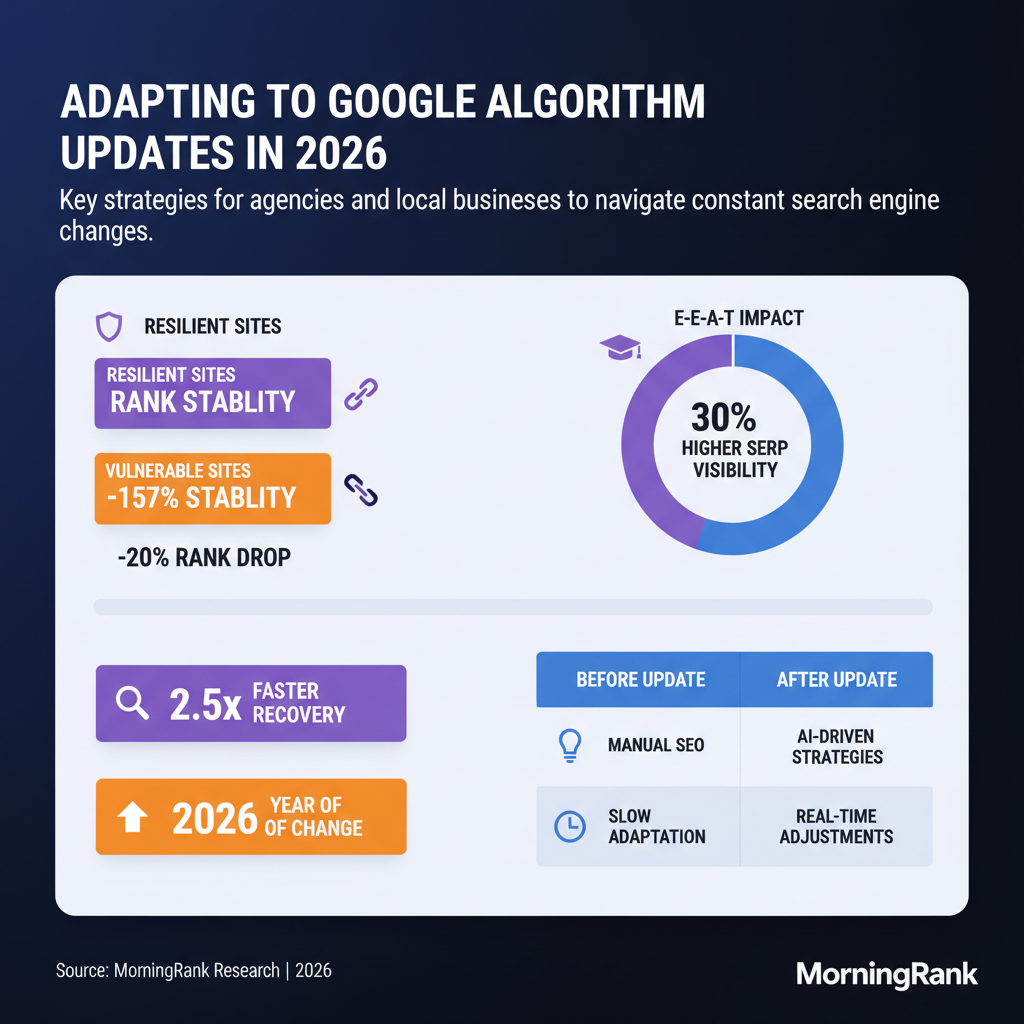
E-E-A-T acts as a fundamental defense against algorithm instability. Sites that demonstrate strong E-E-A-T are inherently more resilient to algorithm shifts. When Google makes an unconfirmed tweak to its ranking systems, it often aims to better identify and reward high-quality, trustworthy content. If your site consistently publishes content from experienced professionals, backed by verifiable facts, and presented on a secure, reputable platform, it aligns with these goals. For instance, a finance blog written by a certified financial planner will likely fare better than one written by an unknown author with generic advice following an update targeting financial advice quality.
In my experience, strong E-E-A-T also translates directly into better performance in Google AI Overviews and other Generative AI (GAI) results. These AI systems prioritize reliable, authoritative sources, making E-E-A-T a critical factor for both traditional SERP and AI-driven search visibility.
| Factor | Resilient Sites (High E-E-A-T) | Vulnerable Sites (Low E-E-A-T) |
|---|---|---|
| Content Creator | Demonstrable expertise (author bio, credentials) | Anonymous or generic authors |
| Information Accuracy | Fact-checked, cited sources, original research | Unverified claims, superficial information |
| Site Reputation | Positive reviews, industry recognition, strong backlinks | Poor reviews, spammy link profile, no brand recognition |
| Website Security | HTTPS, secure transactions, clear privacy policy | HTTP, vulnerable to attacks, vague policies |
| Adaptability to Updates | Often see minor fluctuations or even gains | Experience significant drops and prolonged recovery |
How Can AI-Powered SEO Tools Help Agencies Cope?
AI-powered SEO tools are becoming indispensable for agencies in navigating the complexities of unconfirmed updates. They offer capabilities that significantly enhance an agency's ability to adapt:
- Automated Monitoring and Alerts: AI-driven platforms like MorningRank can automatically monitor vast sets of keywords and immediately alert agencies to significant ranking changes. This early detection is vital for the rapid response needed during an unconfirmed update.
- Insightful Data Analysis: AI can process and identify patterns in large datasets much faster than humans. It can pinpoint which specific content clusters or technical aspects might be signaling quality issues to Google, even during subtle updates. MorningRank's AI-generated SEO recommendations provide actionable insights based on these patterns.
- Content Optimization Suggestions: AI can analyze existing content against top-ranking pages and suggest improvements for E-E-A-T, helpfulness, and comprehensiveness. This includes identifying gaps in your content that could be targeted by a quality-focused update.
- Predictive Analytics: Some advanced AI tools are starting to offer predictive capabilities, helping agencies anticipate potential impacts of rumored or ongoing algorithmic shifts. While not foolproof, these tools can provide an early warning system.
- Efficient Reporting: Automated, white-label client reports generated by AI-powered tools allow agencies to quickly communicate performance changes and strategic adjustments to clients, maintaining transparency and trust when rankings fluctuate. MorningRank offers automated PDF reports for agencies.
The Importance of Ongoing SEO Audits and Maintenance
Regular SEO audits and continuous site maintenance are critical components of a resilient SEO strategy, particularly in the face of frequent unconfirmed Google algorithm updates. Treating SEO as a one-time project rather than an ongoing process leaves sites vulnerable to performance declines.
Why Are Frequent SEO Audits Necessary in 2026?
Just as a car requires regular servicing to perform optimally, a website needs consistent SEO audits to maintain its health and ranking potential. In 2026, the reasons for this are more compelling than ever:
- Rapidly Evolving Algorithms: Google's algorithms are in a constant state of flux. What was optimal six months ago might be suboptimal today. Regular audits help you keep pace with these changes.
- Identifying Technical Debt: As websites grow and evolve, technical debt (e.g., broken links, crawl errors, slow pages) can accumulate. An audit uncovers these issues before they negatively impact search performance. As I mentioned in a previous post, mastering Core Web Vitals in 2026 is impossible without regular technical checks.
- Content Decay Detection: Content can become outdated, less relevant, or surpassed by competitors. Audits help identify opportunities to update, republish, or consolidate content to maintain its helpfulness and E-E-A-T.
- Competitor Analysis: Regular audits should include an element of competitive analysis. Understanding what competitors are doing right (or wrong) in terms of technical SEO, content, and backlinks provides valuable insights for your own strategy. MorningRank's competitor tracking features are invaluable here.
- Preventing Penalties or Declines: Proactive identification and remediation of issues (like broken internal links, duplicate content, or poor Core Web Vitals) can prevent sites from being negatively impacted during unconfirmed updates.
In my experience, sites that conduct comprehensive SEO audits at least quarterly, even for small to mid-sized businesses, are significantly more likely to maintain stable rankings and recover faster from algorithm impacts. These audits go beyond simple rank checks. They delve into technical elements, content quality, backlink profiles, and user experience.
What Does an Effective Maintenance Schedule Look Like?
An effective SEO maintenance schedule ensures ongoing vigilance and adaptive capacity. Here’s a breakdown of key activities and their suggested frequency:
- Daily/Weekly:
- Monitor keyword rankings via MorningRank to spot immediate shifts.
- Check Google Search Console for new crawl errors or manual actions.
- Review site analytics for unusual traffic drops or spikes.
- Monthly:
- Review top-performing content and identify areas for optimization.
- Conduct competitor analysis to identify new strategies or opportunities.
- Check backlink profile for suspicious or broken links, utilizing backlink monitoring tools.
- Quarterly:
- Perform a mini-technical SEO audit focusing on crawlability, indexability, site speed, and mobile-friendliness.
- Update or refresh outdated content.
- Analyze user experience metrics (bounce rate, time on page, conversion rates) and adjust accordingly.
- Bi-Annually/Annually:
- Conduct a comprehensive technical SEO audit.
- Review overall content strategy and topical authority.
- Assess backlink strategy and look for new link building opportunities.
- Update Google Business Profile information and local citations for local businesses.
By adhering to a structured maintenance schedule, agencies can ensure client sites are always optimized for Google's current and future algorithmic preferences, including those elusive unconfirmed updates.
Conclusion
Navigating Google Navigating Google's unconfirmed algorithm updates might seem like an insurmountable challenge, but with a proactive, data-driven approach, SEO agencies can not only survive but thrive amidst constant change. The key is to move beyond reactive panic and embrace a strategy rooted in continuous monitoring, deep technical understanding, an unwavering commitment to E-E-A-T, and a focus on truly helpful content. Tools like MorningRank empower agencies to swiftly identify shifts, analyze impacts, and implement strategic adjustments, transforming potential threats into opportunities for stronger client performance. By consistently prioritizing user experience and embracing the iterative nature of SEO, agencies can build robust, future-proof digital presences that remain resilient against the ebb and flow of Google's ever-evolving algorithms.
Frequently Asked Questions
How often do unconfirmed Google algorithm updates occur?
Unconfirmed updates occur very frequently, often multiple times a month, sometimes even weekly. Unlike major core updates, which are less common and officially announced, these smaller adjustments are part of Google's continuous refinement process, constantly tweaking the algorithm to improve search results.
Can unconfirmed updates lead to a Google penalty?
While unconfirmed updates themselves are not penalties, they can expose existing weaknesses in a website's SEO strategy that might lead to ranking declines. For example, if an update emphasizes content quality, sites with low-quality or unhelpful content might see significant drops, effectively acting like a "soft penalty" against poor practices, even if no manual action is taken.
How long does it take to recover from an unconfirmed update?
Recovery time varies greatly depending on the severity of the impact, the nature of the update, and the speed and effectiveness of your remediation efforts. Some sites may recover within weeks after implementing improvements, while others might take several months. Consistent monitoring and iterative changes are crucial.
Should I make drastic changes to my site during an unconfirmed update?
No, drastic, knee-jerk changes are generally discouraged. Instead, focus on data-driven decisions. Identify exactly which pages or content types were affected, understand the potential underlying algorithmic focus (e.g., E-E-A-T, helpfulness), and then implement targeted, thoughtful improvements. Avoid making too many changes at once, making it difficult to attribute recovery to specific actions.
Is it possible to predict unconfirmed updates?
It's not possible to predict the exact timing or nature of unconfirmed updates. However, by closely monitoring industry volatility trackers, staying informed on official Google guidance (even for confirmed updates, as insights often apply broadly), and observing trends in large datasets, SEO professionals can often anticipate areas Google might be focusing on (e.g., a continued emphasis on E-E-A-T or content quality).
What's the single most important thing an agency can do to prepare for unconfirmed updates?
The single most important thing an agency can do is to consistently prioritize the creation of genuinely helpful, high-quality content that demonstrates strong E-E-A-T. By focusing on providing the best possible user experience and adhering to white-hat SEO best practices, websites become inherently more resilient to algorithmic shifts, confirmed or unconfirmed.
How does MorningRank help agencies manage unconfirmed updates?
MorningRank provides essential tools like AI-powered keyword rank tracking for rapid detection of ranking shifts, integrations with Google Analytics 4 for traffic analysis, automated SEO site audits for proactive maintenance, and competitor tracking to benchmark performance. Its AI-generated recommendations and automated reporting streamline the analysis and client communication process, enabling faster and more informed responses to unconfirmed updates.
Ready to empower your agency with the tools to master Google's unconfirmed algorithm updates? Explore MorningRank’s comprehensive SEO platform and see how our features can help you stay ahead of the curve. Request a demo today!
Want this kind of insight every week?
MorningRank delivers daily rank tracking, AI SEO recommendations, and white label client reporting.