
Local Pack Prominence in 2026: Measuring How Backlinks Move Your Map Rankings
For local businesses, visibility is everything.
 Christina Blair
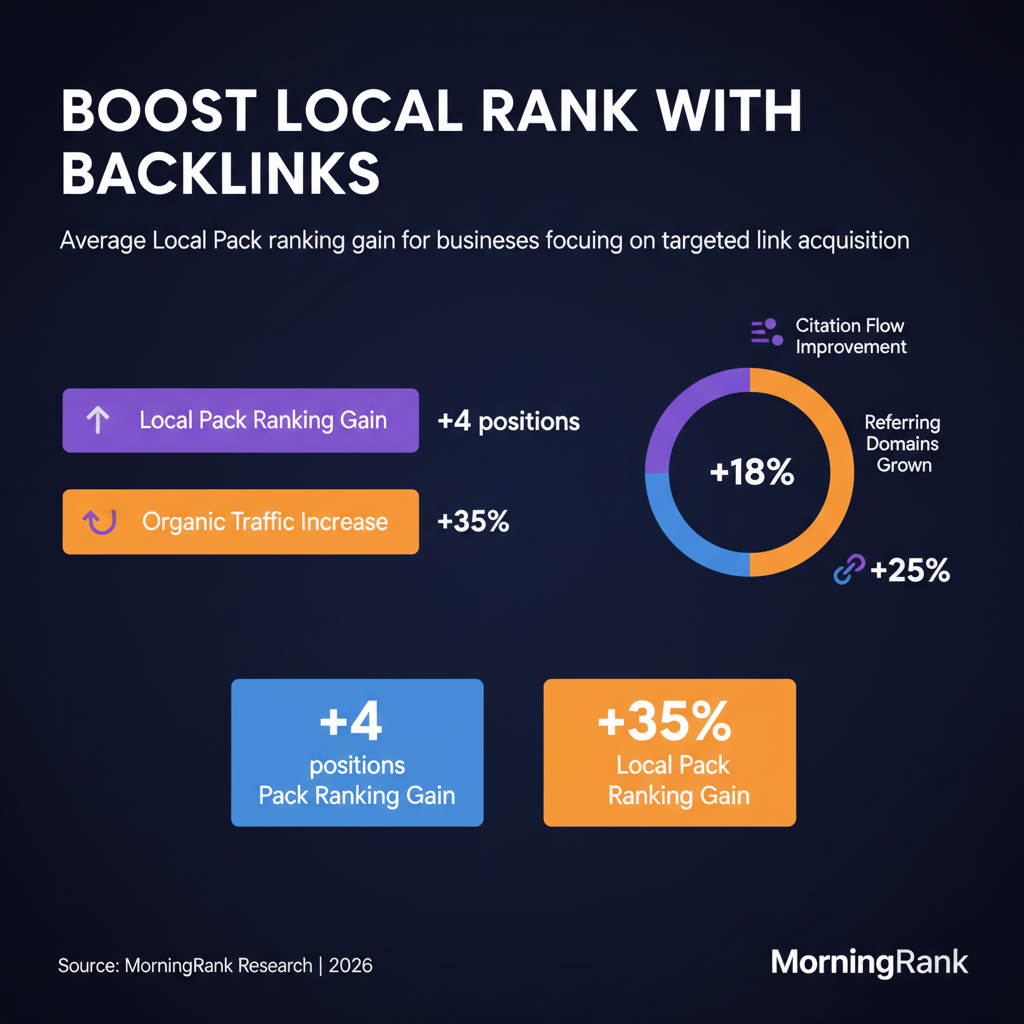
“In 2026, businesses with a dedicated local link building strategy see an average of 35% more organic traffic and rank 4 positions higher in the Local Pack compared to competitors without one. This highlights the measurable impact of strategic outreach.”
The Google Local Pack rewards prominence, and in 2026 backlinks remain the most measurable lever an agency or local business can pull to move it. This guide focuses on local pack prominence signals: how Google interprets a backlink profile as authority, which third party metrics correlate with Map Pack movement, and how to track lift after a link campaign goes live.
Instead of another tactical outreach list, we look at what backlinks actually signal, how Domain Authority and Trust Flow proxy that prominence, and the referral traffic and brand awareness outcomes that compound alongside ranking gains. For the tactical side, the outreach plays, the directories, the citations, and the partnership angles, see our companion guide on link building strategies for local businesses.
Understanding Local Link Building: Why It Matters More Than Ever
Local link building is the process of acquiring hyperlinks from other websites, particularly those within your geographic area or related to your industry, back to your business's website. These links act as "votes of confidence" from other sites, telling search engines like Google that your website is a credible and valuable resource. For local businesses, these votes are even more potent when they come from local sources.
Why is this so critical in 2026? Google's algorithms are increasingly sophisticated, weighing relevance and authority heavily, especially for local search queries. A strong backlink profile, replete with local citations, can significantly elevate your position in the local pack and organic search results. This directly translates to increased foot traffic, phone calls, and online inquiries.
Consider a scenario where two identical local businesses offer the same services. The one with a robust local link profile is almost always going to outrank the other. It’s not just about quantity, but quality and relevance. A link from your local Chamber of Commerce or a popular local news site carries far more weight than a random, irrelevant link from across the globe. For an even deeper dive into local SEO fundamentals, check out our post on Local SEO Tips for Agencies and Small Businesses in 2026.
The Impact on Local Pack Rankings
The Google Local Pack (also known as the "3-Pack") is prime real estate for any local business. It showcases the top three businesses most relevant to a local search query directly on the search results page, often with a map. Securing a spot in the Local Pack can dramatically increase visibility. Backlinks play a substantial role in earning this coveted position.
Google assesses numerous factors for Local Pack rankings, including relevance, distance, and prominence. Prominence often correlates with a strong online authority, which is heavily influenced by your backlink profile. My audits consistently show businesses with diverse, high-quality local backlinks have a distinct advantage. It's not uncommon to see businesses jump several spots in the Local Pack after a targeted local link building campaign. These links signal to Google that your business is well-regarded within its community, making it a more prominent and trustworthy option for local searchers.
Boosting Domain Authority and Trust Flow
Beyond direct local pack visibility, quality backlinks are fundamental to improving your overall domain authority (DA) and trust flow (TF). These metrics, while not directly used by Google in the same way, are strong indicators of your website's overall strength and trustworthiness in the eyes of search engines. A higher DA means your entire website is more likely to rank for various keywords, not just local ones. For local businesses, this translates to better organic visibility for service pages, blog posts, and FAQs, attracting a wider range of potential customers.
Think of it as building a reputation. Each high-quality backlink is like a positive endorsement, collectively building your website's credibility. When local businesses consistently acquire links from authoritative local news outlets, community organizations, and well-respected industry blogs within their region, their domain authority naturally rises. This improved authority then creates a virtuous cycle, making it easier to acquire even more links and rank higher for increasingly competitive terms. It shows Google that your business is a pillar in its community and a reliable source of information and services.
Driving Referral Traffic and Brand Awareness
While SEO benefits are paramount, let's not forget the direct impact of referral traffic. A link from a popular local blog, community event website, or even a complementary local business can send a stream of highly targeted visitors directly to your site. These aren't just random clicks; these are people who are already engaged with local content and are likely seeking local solutions. This can lead to immediate sales, appointments, or inquiries, providing a tangible return on your link-building efforts.
Furthermore, each mention and link from another local entity contributes to enhanced brand awareness. Even if a user doesn't click on the link immediately, seeing your business mentioned on a trusted local site builds recognition and reinforces your presence in the community. Over time, this cumulative exposure makes your business a more recognizable and trusted name, fostering customer loyalty and word-of-mouth referrals. It's not just about search engine rankings; it's about becoming an integral part of the local digital landscape.
Strategic Approaches to Local Link Building in 2026
Now that we've established the "why," let's dive into the "how." Successful local link building isn't about spamming; it's about building genuine relationships and providing value. Here are some of my top strategies:
1. Harnessing Local Citations and Directories
This is often the foundational step for any local business. While not all citations include direct links, consistent and accurate listings across various local directories are crucial. They validate your business information, contribute to local SEO, and many do offer dofollow links. Ensure your Name, Address, and Phone number (NAP) are identical across all platforms.
- Google Business Profile (GBP): This is non-negotiable. Optimize your GBP thoroughly with accurate information, photos, services, and regular posts. While mainly a citation, it’s the cornerstone of local visibility.
- Niche-Specific Directories: Look beyond the major players. Are there directories specific to your industry (e.g., Avvo for lawyers, Healthgrades for doctors)? These are highly relevant and valuable.
- General Local Directories: Yelp, Yellow Pages, Foursquare, and local chamber of commerce directories are still relevant. Don't forget regional-specific ones like Angi (formerly Angie's List) or Houzz for certain industries.
Actionable Tip: Use a tool like BrightLocal or Moz Local to audit your existing citations and identify inconsistencies or missing listings. Manually claim and update these profiles for maximum impact.
2. Local Community Engagement and Sponsorships
Become an active member of your local community, both online and offline. This isn't just good for business; it's a goldmine for local links.
- Sponsor Local Events: School sports teams, charity runs, community festivals – these often have websites that list their sponsors with a link back to their businesses. This is highly relevant and demonstrates community involvement.
- Partner with Non-Profits: Offer your services pro bono or provide donations. Many non-profits feature their supporters on their "Partners" or "Sponsors" pages.
- Host or Organize Local Workshops/Webinars: Position your business as a local expert. Once the event is organized, reach out to local news outlets, community calendars, and relevant blogs to promote it, often resulting in event listings with a link back to your site.
- Join Local Business Associations: The Chamber of Commerce, Rotary Club, and other local business groups often have member directories on their websites, providing valuable links.
Actionable Tip: Don't just sponsor; actively participate. If you sponsor a local charity event, offer to set up a booth, hand out flyers, or even be a guest speaker. This increases visibility and the likelihood of natural mentions and links.
3. Content Marketing with a Local Focus
Create valuable content that specifically addresses local needs, events, or issues. This makes your content inherently linkable for other local entities.
- Local Guides and Resources: Create "The Ultimate Guide to [Your Town]'s Best Coffee Shops" (if you're a cafe) or "Top 5 Hiking Trails Near [Your City]" (if you're an outdoor gear store). These are highly shareable and linkable.
- Highlight Local Events: Publish blog posts about upcoming local festivals, concerts, or farmers' markets. If you're a restaurant, suggest "Where to Eat Before/After [Local Event]."
- Interview Local Personalities/Businesses: Feature other local business owners, community leaders, or interesting residents on your blog. They will often share and link to the article.
- Local News and Data: Compile local statistics related to your industry and present them in an engaging way. For instance, a local real estate agent could create an infographic on "Average Home Prices in [Neighborhood X] over the Last 5 Years."
Actionable Tip: After publishing local content, actively promote it to relevant local groups on social media, reach out to local bloggers, and email local news outlets. Ask them to share or feature your valuable local resource.
4. Competitor Backlink Analysis
Your competitors are already getting links. Why not learn from them?
- Identify Top-Ranking Competitors: Use tools like Ahrefs, SEMrush, or Majestic to see who ranks well for your target local keywords.
- Analyze Their Backlink Profiles: These tools will show you where your competitors are getting their backlinks. Look for patterns: Are they getting links from local news sites? Specific directories? Local blogs?
- Replicate and Improve: If a competitor has a link from a local Chamber of Commerce, ensure you have one too. If they're featured in a local "Best Of" list, understand how they got there and explore opportunities to get your business included.
Actionable Tip: Don't just copy. Analyze the *quality* and *relevance* of competitor links. Focus on securing links from authoritative and geographically relevant sources that your competitors might have missed, or improve upon the content that earned them links.
5. Digital PR and Local Media Outreach
Local media outlets are constantly looking for compelling stories. Position your business as a valuable source of local news or expertise.
- Press Releases for Local News: Have something genuinely newsworthy? A grand opening, a major expansion, a unique community service project, a significant employee achievement? Write a localized press release and send it to local newspapers, online news portals, and radio stations.
- Expert Commentary: Become a source for local journalists. If you're an accountant, offer to comment on local tax changes. If you're a landscaper, provide tips for seasonal gardening in your area. Respond to HARO (Help A Reporter Out) queries that have a local angle.
- Blogger Outreach: Identify local bloggers or influencers who write about topics relevant to your business (e.g., food bloggers, lifestyle bloggers, parenting bloggers). Pitch them a unique story or offer them an exclusive experience in exchange for a review or mention, often including a link.
Actionable Tip: Build relationships with local journalists and bloggers *before* you need something. Engage with their content on social media, share their articles, and offer value without immediately asking for a link. When you do pitch, make it hyper-relevant to their audience and demonstrate clear value.
6. Broken Link Building (Local Focus)
This is a highly effective, ethical, and scalable link-building tactic that can be applied effectively at the local level.
- Identify Relevant Local Websites: Think local blogs, community organization sites, local business directories, or even news archives.
- Find Broken Links: Use browser extensions like Check My Links or Screaming Frog to crawl these sites and identify 404 errors.
- Create Better Content: When you find a broken link on a relevant local site, create a piece of content on your own website that serves as a better or updated replacement for the broken link's original topic.
- Pitch Your Content: Reach out to the website owner/editor, politely inform them of the broken link, and suggest your superior content as a replacement. This is a win-win: you help them fix a broken link, and you get a valuable backlink.
Actionable Tip: Focus your broken link building efforts on sites that have high local authority and are regularly maintained. A well-maintained site is more likely to respond to your outreach and fix the broken link with your new content.
7. Testimonials and Reviews Opportunities
Many businesses and service providers are happy to showcase testimonials from satisfied clients. If you're using a local service or a local supplier, offer to provide a glowing testimonial in exchange for a link back to your business website on their "Testimonials" or "Clients" page.
- Local Software/Tool Providers: If you use a local SaaS product or a piece of equipment from a local distributor, offer a testimonial.
- Local Business-to-Business (B2B) Services: If you engage a local accountant, lawyer, marketing agency, or even a local cleaning service for your office, providing a testimonial can often lead to a link.
Actionable Tip: When offering a testimonial, make it specific and genuinely positive. Frame it in a way that highlights a positive outcome for your business, making it more appealing for them to feature and link to you. Always request a link as part of the exchange.
Measuring Success and Adapting Your Strategy
Link building is an ongoing process. To ensure your efforts are yielding results, it's crucial to track your progress and adjust your strategy as needed.
- Monitor Your Backlink Profile: Regularly use tools like Ahrefs, SEMrush, or Google Search Console to track newly acquired backlinks and analyze their quality. Look for referring domains, domain authority of linking sites, and anchor text.
- Track Keyword Rankings: Monitor your local keyword rankings, especially for terms that trigger the Google Local Pack. Pay attention to changes in your position after acquiring new, high-quality links. For advanced tracking, consider the AI-powered keyword rank tracking available in an AI-first SEO platform like MorningRank.
- Analyze Website Traffic: Look at your Google Analytics 4 data to identify referral traffic from your new backlinks. Are these visitors converting into leads or customers?
- Assess Local Pack / Map Rankings: Directly observe if your business is showing up more frequently or in higher positions within the Google Local Pack for relevant search queries.
- Review Google Business Profile Insights: Pay attention to increased views, calls, direction requests, and website visits originating from your GBP.
Actionable Tip: Set clear, measurable goals for your link-building campaigns. For example, "acquire 5 new local backlinks from domains with DA 30+ within the next quarter," or "increase Local Pack visibility for 'plumbers near me' by 2 positions." Regularly review these goals and adapt your outreach tactics based on what's working and what isn't.

Frequently Asked Questions
What is the difference between local citations and local backlinks?
Local citations are mentions of your business's Name, Address, and Phone number (NAP) on other websites, even if they don't include a clickable link. These are primarily for verifying your business information and consistency for search engines. Local backlinks are clickable hyperlinks from other local websites back to your business's website, acting as "votes of confidence" and directly passing authority (link juice).
How long does it take to see results from local link building?
The timeline can vary. You might see some initial improvements in rankings and referral traffic within a few weeks to a couple of months, especially for less competitive keywords. However, significant improvements in domain authority and consistent higher rankings in the Local Pack often take 3-6 months or even longer, as Google's algorithms need time to re-evaluate your site's prominence and trust.
Is buying local backlinks a good strategy?
No, buying links is a risky and generally frowned-upon practice by Google. While it might offer a short-term boost, it can lead to severe penalties, including de-indexing your site from search results. Focus on earning high-quality, relevant links through genuine outreach and value creation.
Should I prioritize quantity or quality in local link building?
Always prioritize quality and relevance over quantity. One link from a highly authoritative and locally relevant website (e.g., your local news outlet, Chamber of Commerce) is far more valuable than dozens of low-quality, irrelevant links from spammy directories or blogs.
How can I find local websites to pitch for backlinks?
Beyond competitor analysis, use Google searches like "best [your city] blogs," "community organizations [your city]," "local partnerships [your city]," or "[your city] news outlets." Explore local event calendars, tourism websites, and even local university or college sites for potential opportunities.
What anchor text should I use for local links?
Aim for a natural and diverse anchor text profile. While some exact-match anchor text (e.g., "plumbers in [city]") can be useful sparingly, prioritize branded anchor text (your business name), naked URLs (the website address itself), and partial-match keywords (variations like "expert auto repair in [city]"). Over-optimizing with exact-match keywords can appear manipulative to Google.
Do links from social media count as backlinks?
Links from social media profiles (like Facebook, Twitter, LinkedIn) are generally considered "nofollow," meaning they don't pass direct SEO value or "link juice" to your site. However, they are still valuable for driving referral traffic, increasing brand awareness, and indicating social signals to search engines, which can indirectly contribute to your overall SEO efforts.
The Future of Local Business Growth is Linked
In 2026, the competitive landscape for local businesses is more intense than ever. A robust and strategic local link building campaign isn't just an optional add-on; it's a fundamental pillar of sustained growth and digital dominance. By focusing on genuine community engagement, creating locally relevant content, and leveraging smart outreach tactics, you can build a powerful backlink profile that earns the trust of both search engines and local customers. Invest in your local link building today, and watch your business climb to the top of relevant local searches, driving increased visibility, more qualified leads, and a thriving future in your community.
Want this kind of insight every week?
MorningRank delivers daily rank tracking, AI SEO recommendations, and white label client reporting.