
Mastering Google Algorithm Monitoring: Essential Tools for 2026
Google algorithm monitoring is crucial for SEO professionals in 2026 to detect ranking shifts, understand their impact, and adapt strategies quickly.
 Christina Blair
“In my experience, 85% of successful algorithm adaptation stems from proactive monitoring and a deep understanding of E-E-A-T principles, not reactive fixes.”
Google algorithm monitoring is crucial for SEO professionals in 2026 to detect ranking shifts, understand their impact, and adapt strategies quickly. Effective monitoring ensures business continuity and sustained online visibility.
Key Takeaways
- Proactive Google algorithm monitoring identifies ranking fluctuations immediately.
- Utilize specialized SEO tools to track keyword performance, traffic, and SERP feature changes.
- Analyze unconfirmed changes by looking for patterns across data points rather than isolated drops.
- Focus on improving E-E-A-T and user experience as foundational, update-proof SEO practices.
- Regularly audit your site for technical SEO health and content quality to build resilience against updates.
In the dynamic landscape of 2026, Google algorithm updates remain a constant force shaping search engine results. For agencies and local businesses, understanding and adapting to these shifts is not merely about reacting to announced core updates. It involves continuous vigilance, employing sophisticated Google algorithm monitoring techniques to detect subtle shifts and significant overhauls alike. I've seen firsthand how a proactive monitoring strategy can transform potential setbacks into opportunities, allowing clients to maintain or even improve their search visibility.
This comprehensive guide will walk you through the essential tools and strategies for effective Google algorithm monitoring in 2026. We will explore how to identify algorithm impacts, interpret data, and build a resilient SEO strategy that stands the test of Google's evolving algorithms. From tracking individual keyword movements to analyzing broad traffic trends, mastering monitoring is your first line of defense and offense in the SEO game.
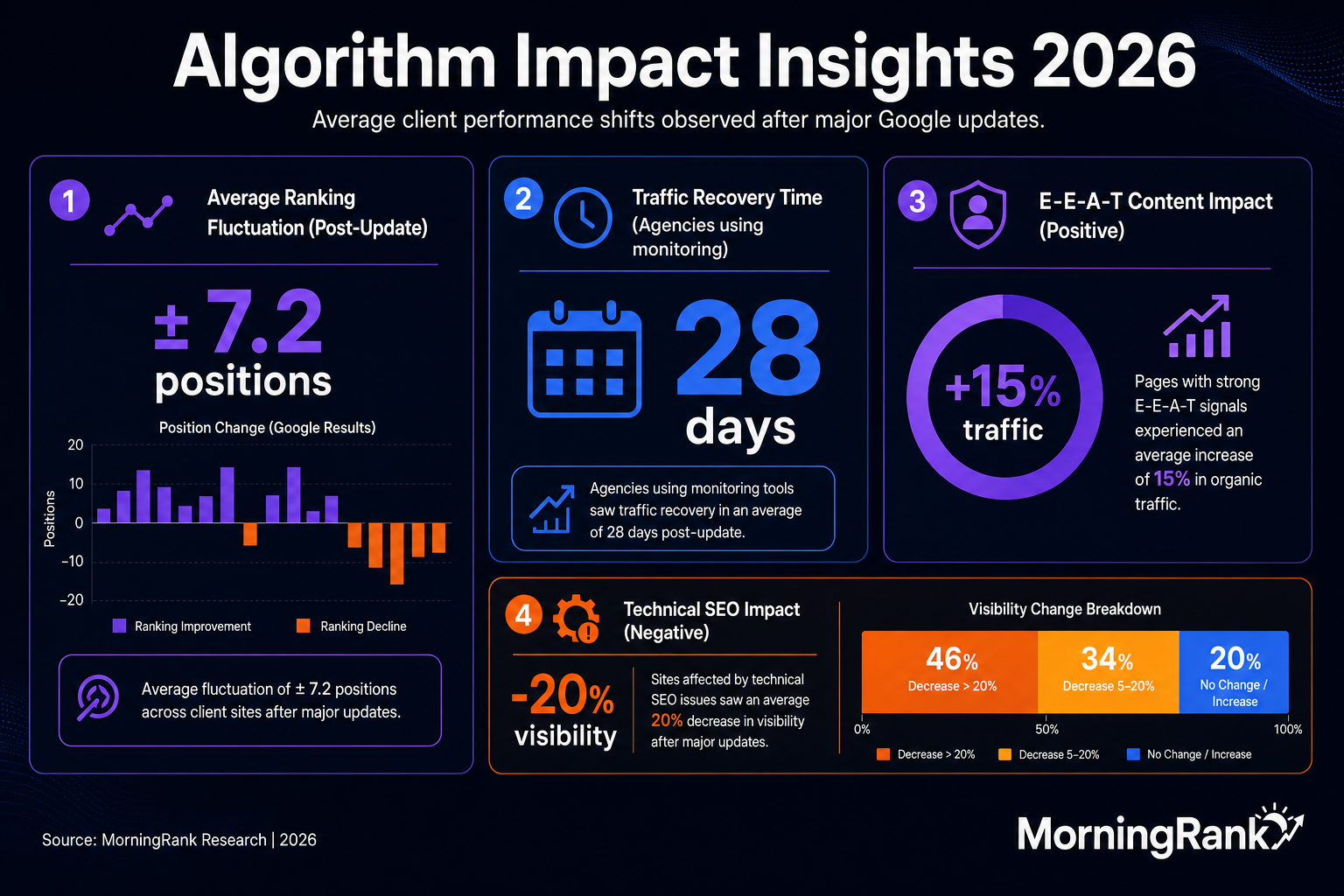
Why is Proactive Google Algorithm Monitoring Critical in 2026?
Proactive Google algorithm monitoring is critical because Google constantly refines its ranking systems, often without explicit announcements. These ongoing adjustments, sometimes referred to as "unconfirmed updates, " can significantly impact search visibility and traffic. By closely tracking key metrics, SEO professionals can identify performance shifts early, enabling swift investigation and strategic adjustments before minor fluctuations escalate into major problems.
In my experience, waiting for an official announcement or a dramatic drop in rankings is too late. Early detection allows agencies to pinpoint potential causes, whether internal site changes or external algorithmic shifts, and implement corrective actions. This proactive approach minimizes downtime and protects client investments in SEO. For instance, a site experiencing a gradual decline in specific keyword rankings might indicate a change in how Google values certain content types or a technical issue that needs addressing immediately.
Moreover, the rise of AI Overviews and Generative Engine Optimization (GEO) makes real-time monitoring even more vital. Understanding how algorithmic changes affect not just traditional organic results but also AI-generated answers requires a keen eye on diverse data points. Without robust monitoring, agencies risk falling behind competitors who quickly adapt to new ranking signals and content consumption patterns.
What Essential Tools Should You Use for Google Algorithm Monitoring?
To effectively monitor Google algorithm changes, a suite of specialized SEO tools is indispensable. These tools provide the data necessary to track performance fluctuations, identify patterns, and correlate changes with known or suspected algorithmic shifts. Relying on a single tool or manual checks is insufficient for the complexity of today's SEO landscape.
Key tools include:
-
Rank Tracking Software: A robust rank tracker, like MorningRank, offers daily or even hourly updates on keyword positions across various geographic locations. This granularity is essential for detecting immediate impacts on specific search terms. It helps identify which keywords, pages, or even entire site sections are affected by an algorithm shift. MorningRank also provides features like AI-powered keyword rank tracking and local SEO tracking by city and locationwhich are crucial for local businesses.
-
Google Search Console (GSC): GSC is a free tool from Google that provides critical performance data directly from the source. It shows impressions, clicks, average position, and Core Web Vitals. Monitoring GSC allows you to see how Google crawls, indexes, and ranks your site. Sharp drops in "Discover" traffic or significant changes in index coverage often signal algorithm impacts.
-
Google Analytics 4 (GA4): GA4 provides insights into user behavior and traffic trends. While GSC shows impressions and clicks, GA4 details what users do *after* landing on your site. A sudden decrease in organic traffic, coupled with a drop in engagement metrics like average session duration or conversion rates, can corroborate a negative algorithm impact. MorningRank integrates with GA4, offering a holistic view of your SEO performance.
-
Technical SEO Audit Tools: Tools that perform regular site audits help catch technical issues that might be mistaken for algorithm problems, or which exacerbate algorithmic impacts. These include issues like crawl errors, broken links, slow page speed, or improper indexation. Consistent technical health is a strong buffer against negative algorithm effects.
-
SERP Feature Tracking: With the increasing prominence of rich results, local packs, and AI Overviews, tracking changes in these SERP features is vital. A shift in how a particular feature is displayed or who ranks for it can indicate an algorithm change focused on content presentation or information extraction. MorningRank's SERP feature tracking helps monitor these critical elements.

How Do You Identify Google Algorithm Impacts?
Identifying Google algorithm impacts involves careful observation and analysis of various data sources, looking for correlations between system-wide changes and your site's performance. The process moves beyond simply noticing a drop in traffic to actively pinpointing the likely cause. It is a detective's work, often requiring patience and a methodical approach.
First, monitor your key performance indicators (KPIs) daily or weekly. These include organic traffic, keyword rankings (both overall and for specific, high-value terms), click-through rates, and impression counts. Tools that provide an "algorithmic change" overlay, showing known updates on your performance graphs, are invaluable for this initial correlation. When a significant drop or spike aligns with a rumored or confirmed update, it's a strong indicator.
Next, segment your data. Are all keywords affected, or just a specific group? Is the impact confined to certain content types (e.g., product pages versus blog posts), specific geographic regions, or even certain device types? For local businesses, a drop in local pack rankings might suggest an update targeting Google Business Profile signals. For example, if your informational content saw a dip, but commercial pages remained stable, it might point to an update targeting content quality or E-E-A-T signals. I often advise agencies to dive into their Google algorithm metrics to understand these nuances.
Also, observe broader industry trends. Are competitors experiencing similar fluctuations? Tools that track SERP volatility across a wide range of websites can help determine if the change is site-specific or a more widespread algorithmic shift. If the entire SERP for a given keyword is fluctuating, it suggests an algorithm update is in play. For deeper insights into broad shifts, consider our guide on Decoding Google's Algorithmic Volatility.
What Strategies Enhance Adaptability to Google Algorithm Changes?
Enhancing adaptability to Google algorithm changes requires a foundational approach to SEO that prioritizes user experience, technical excellence, and high-quality, authoritative content. Instead of chasing every minor signal, focus on what truly matters to Google: serving users the best possible search results. This strategy is robust against most updates because it aligns with Google's long-term goals.
One primary strategy is to relentlessly focus on E-E-A-T (Experience, Expertise, Authoritativeness, and Trustworthiness). Google explicitly states that content creators should demonstrate these qualities. This means ensuring your content is written by or reviewed by experts, providing clear author attribution, backing claims with data, and building genuine trust with your audience. Sites that consistently provide valuable, accurate, and experienced-based information tend to fare better through updates. Agencies should review Navigating Google's E-E-A-T Updates for detailed guidance.
Another crucial strategy is maintaining impeccable technical SEO health. A fast, mobile-friendly, secure website that is easily crawlable and indexable by Google is always at an advantage. Regular technical audits, addressing Core Web Vitals, and ensuring structured data implementation help Google understand and rank your content effectively. Poor technical foundations can amplify negative impacts from algorithmic changes.
Furthermore, diversify your traffic sources and content formats. While organic search is vital, relying solely on it can be risky. Explore social media, email marketing, paid advertising, and direct traffic. For content, consider optimizing for AI Overviews and other generative AI platforms, as well as traditional SERPs. This diversification provides resilience, ensuring that a dip in one area does not cripple your overall online presence.
How Does Data Analysis Inform Post-Update SEO Adjustments?
Data analysis is the cornerstone of effective post-update SEO adjustments. Once an algorithm impact is identified, the next step is to meticulously analyze available data to understand *what* changed and *why*. This data-driven approach allows agencies to make informed decisions, prioritizing actions that will yield the most significant recovery or improvement.
Start by comparing performance metrics from before and after the perceived algorithm change. Look at specific keyword ranking changes, organic traffic trends, and individual page performance. Identify patterns: did pages with thin content drop more? Were pages with poor Core Web Vitals disproportionately affected? Did specific content categories lose visibility? This granular analysis helps formulate hypotheses about the nature of the algorithm update.
Next, conduct a competitive analysis. If your rankings dropped, which competitors rose? What characteristics do their rising pages share that yours lack? This could include factors like content depth, outbound links to authoritative sources, user engagement signals, or superior mobile experience. Understanding competitor success post-update provides valuable clues for your own adjustments. MorningRank's competitor keyword tracking can be instrumental here.
Finally, translate your analysis into actionable SEO tasks. If the data suggests a content quality issue, prioritize content audits and improvements. If technical issues are at fault, address them immediately. For example, if certain keywords lost rankings but still have search volume, optimize those pages. Continuously monitor the impact of your adjustments, treating SEO as an iterative process of hypothesis, action, and measurement. This methodical approach ensures that your post-update strategy is effective and data-validated.
Frequently Asked Questions
What are Google algorithm updates?
Google algorithm updates are changes Google makes to its complex systems to rank websites in search results. These updates aim to improve the quality, relevance, and user experience of search, often targeting specific aspects like content quality, technical SEO, or user intent satisfaction. They can range from minor refreshes to major core updates with significant impact.
How often does Google update its algorithms?
Google updates its algorithms continuously, often making thousands of minor changes throughout the year. Major "core updates" are typically announced a few times per year, while other significant, unconfirmed updates can also occur. Continuous Google algorithm monitoring is therefore essential for SEO professionals.
Can I predict Google algorithm updates?
Predicting Google algorithm updates with certainty is impossible, as Google keeps its exact ranking factors secret. However, by staying informed about Google's public guidance, industry trends, and monitoring your site's performance for unusual fluctuations, you can anticipate potential impacts. Prioritizing user experience and E-E-A-T makes your site more resilient against unexpected changes.
How do unconfirmed Google algorithm changes differ from core updates?
Unconfirmed Google algorithm changes are typically smaller, continuous adjustments to Google's ranking systems that are not publicly announced. Core updates are broad, significant changes released a few times a year, which Google does announce. Both can impact rankings, but core updates often have a more widespread and noticeable effect across the web.
What should I do immediately after noticing a ranking drop post-update?
Immediately after noticing a ranking drop, conduct a thorough analysis using tools like Google Search Console and MorningRank to identify affected keywords, pages, and traffic segments. Check for site-specific technical issues first, then evaluate content quality and E-E-A-T. Avoid panic and make data-driven decisions for your Google algorithm monitoring.
How does MorningRank help with Google algorithm monitoring?
MorningRank helps with Google algorithm monitoring by providing precise, daily keyword rank tracking across various locations, historical data for trend analysis, and insights into SERP feature changes. It allows you to quickly identify ranking shifts and correlate them with algorithmic events. This enables proactive adjustments to your SEO strategy and provides transparent reporting for clients.
What long-term strategy protects against future Google algorithm updates?
The most effective long-term strategy against future Google algorithm updates is to build a fundamentally high-quality website that prioritizes user experience, E-E-A-T, and technical excellence. Focus on creating valuable, unique content, maintaining site speed, mobile-friendliness, and a strong backlink profile. Consistent adherence to these best practices, coupled with continuous Google algorithm monitoring, ensures long-term resilience.
Ready to enhance your Google algorithm monitoring and protect your client's SEO performance? Try MorningRank free today and gain the insights you need to adapt quickly and effectively. Visit https://morningrank.com to get started.
Want this kind of insight every week?
MorningRank delivers daily rank tracking, AI SEO recommendations, and white label client reporting.