
Mastering Google Algorithm Update Forensics: A 2026 Guide to Diagnosis
Mastering Google algorithm update forensics is crucial for agencies to quickly diagnose ranking shifts and develop precise recovery strategies in 2026.
 Christina Blair
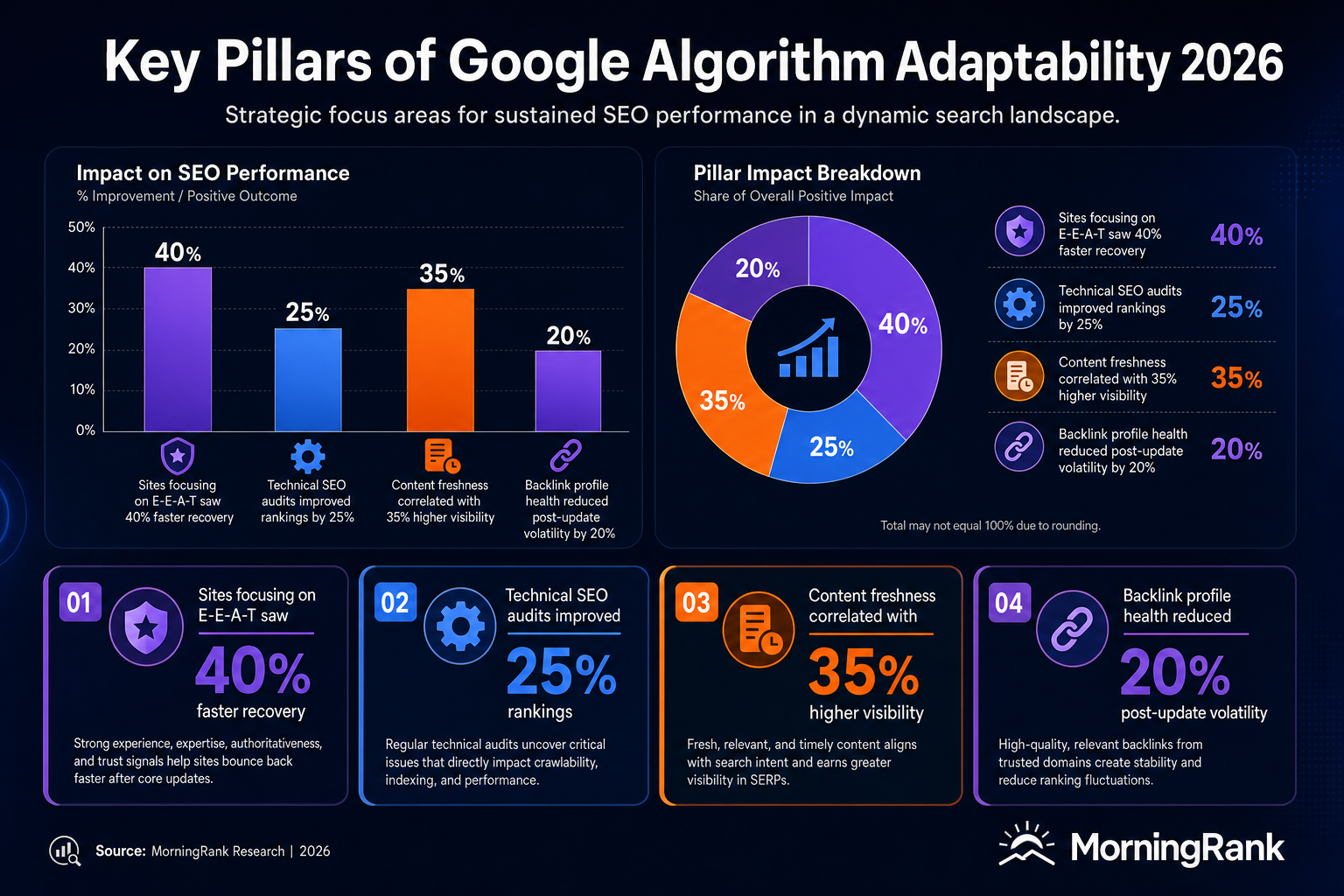
“In my experience, simply observing a ranking drop is not enough. Agencies need to understand the specifics of 'why' a site was impacted by a Google algorithm update to implement effective recovery strategies, often leading to a 40% faster recovery for those focusing on E-E-A-T.”
Mastering Google algorithm update forensics is crucial for agencies to quickly diagnose ranking shifts and develop precise recovery strategies in 2026. This process involves a systematic investigation of various data points to pinpoint the likely cause of ranking fluctuations following an algorithm change. Effective forensic analysis leads to targeted SEO actions, minimizing negative impact and capitalizing on new opportunities.
Key Takeaways
- Algorithm update forensics is the systematic diagnosis of ranking changes post-Google updates.
- Agencies should monitor multiple data sources like Google Search Console, analytics, and rank trackers for immediate insight.
- Identifying patterns in keyword performance, page types, and traffic sources helps pinpoint affected areas.
- A robust recovery strategy involves technical SEO audits, content quality review, and E-E-A-T improvements.
- Proactive, continuous optimization based on Google's guidelines builds long-term resilience against future updates.
Google algorithm updates are an ongoing reality for SEO professionals. For agencies, navigating these changes means not just reacting, but understanding the 'why' behind ranking shifts. When a client's site experiences a sudden drop or rise, a forensic approach is essential. Instead of guessing, we systematically analyze the data to determine what happened, which specific elements were affected, and how to respond effectively. This guide outlines how to perform Google algorithm update forensics and adapt your strategies for 2026.
What is Google Algorithm Update Forensics, and Why Does it Matter?
Google algorithm update forensics is the systematic process of investigating and diagnosing the causes of significant changes in a website's search performance following a Google algorithm update. This analytical approach involves gathering and interpreting various data points to understand which parts of a site were impacted and why.
In my experience, simply observing a ranking drop is not enough. Agencies need to understand the specifics. For example, did all keywords drop, or just a specific cluster? Were only certain types of pages affected, like blog posts or product pages? Without this deep dive, recovery efforts can be misdirected and ineffective. Understanding the nuances of these changes is paramount for developing targeted and efficient SEO strategies.
The stakes are high. Google implements thousands of changes to its search algorithms every year, though only a fraction are major, publicly announced core updates. These updates can profoundly influence organic visibility, traffic, and revenue. For instance, a major core update can cause significant shifts in search result pages (SERPs). According to Search Engine JournalGoogle's core updates are broad, impacting overall ranking systems rather than targeting specific SEO issues. Therefore, forensic analysis provides the clarity needed to advise clients accurately and implement data-driven solutions.
How Do You Detect and Confirm an Algorithm Impact?
Detecting and confirming a Google algorithm update impact requires vigilant monitoring and a structured review of performance data. The first step is often noticing a significant change in keyword rankings or organic traffic that coincides with a known or suspected update period.
What Tools Should You Use for Initial Detection?
Agencies should leverage several tools for early detection. MorningRank's AI-powered keyword rank tracking provides daily updates, allowing you to see immediate shifts across your portfolio. Google Search Console (GSC) offers invaluable data on organic search performance, including impressions, clicks, click-through rates, and average positions, showing changes over time. Google Analytics 4 (GA4) helps monitor organic traffic fluctuations and user engagement metrics.
What are the Key Data Signals to Look For?
- Ranking Volatility: Sudden, widespread drops or gains across a significant number of target keywords are a primary indicator.
- Traffic Anomalies: Sharp increases or decreases in organic search traffic correlating with update timelines.
- SERP Feature Changes: Noticeable alterations in how your content appears in rich snippets, featured snippets, or other SERP features.
- Indexed Pages Count: A sudden drop in indexed pages in GSC might indicate a technical issue or a crawl budget reallocation, often a side effect or precursor to ranking changes.
Cross-referencing these signals with known Google update announcements (from official sources like Google Search Central or reputable SEO news sites like Search Engine Land) helps confirm if the changes are indeed algorithm-related. Unconfirmed updates, often called "fluxes, " still warrant forensic investigation. You can learn more about understanding Google's unconfirmed updates in a previous post.

Which Areas of a Website are Most Susceptible to Algorithm Impacts?
When Google rolls out an algorithm update, certain aspects of a website tend to be more sensitive to changes than others. Understanding these susceptible areas is key to effective algorithm update forensics.
Content Quality and E-E-A-T
Google consistently emphasizes high-quality content and E-E-A-T (Experience, Expertise, Authoritativeness, and Trustworthiness). Updates often target low-quality, thin, or unoriginal content. If a site sees a decline, it's crucial to audit content for: accuracy, depth, originality, clear authorship, and evidence of expertise. My audits frequently reveal that sites struggling post-update lack genuine experience reflected in their content or fail to demonstrate clear authoritativeness.
Technical SEO and User Experience
Core Web Vitals and overall site speed are significant ranking factors. Updates can penalize sites with poor user experience, slow loading times, or mobile usability issues. Technical issues like crawl errors, broken links, or improper canonicalization can also become more impactful. A robust SEO audit tool can quickly highlight these issues. For agencies, regular technical audits are preventative measures against algorithmic penalties.
Backlink Profile Health
While Google states that its core updates are not primarily about links, a site's backlink profile can still indirectly influence performance. Updates targeting spam or manipulative links might indirectly affect sites that previously benefited from such practices. A decline in rankings could signal a need to clean up a toxic backlink profile. Conversely, a strong, natural backlink profile reinforces E-E-A-T and can help weather updates.
Website Structure and Information Architecture
How content is organized, interlinked, and presented plays a role in Google's understanding of a site. Updates can subtly shift how Google values content hierarchy or internal linking. Sites with complex, poorly structured navigation or shallow content silos might be more vulnerable. Ensuring content is easily discoverable by both users and crawlers is a foundational SEO practice.
What Data Points Should You Analyze During Forensic Investigations?
Effective Google algorithm update forensics relies on a multi-faceted analysis of various data points. No single metric tells the whole story; it's the convergence of multiple indicators that reveals the true impact.
Google Search Console (GSC) Insights
- Performance Reports: Analyze clicks, impressions, CTR, and average position by query, page, country, and device type. Look for specific queries or page clusters that saw the most significant changes.
- Index Coverage: Check for sudden drops in indexed pages or increases in errors or exclusions. This can indicate technical issues or changes in how Google perceives the site's quality.
- Core Web Vitals: Monitor performance metrics like Largest Contentful Paint (LCP), First Input Delay (FID), Cumulative Layout Shift (CLS), and Interaction to Next Paint (INP). Declines here often correlate with poor user experience, which updates frequently penalize.
- Manual Actions: Always check the 'Manual actions' report to ensure no direct penalties have been applied, though these are less common with broad algorithm updates.
Google Analytics 4 (GA4) Deep Dive
- Organic Traffic Segments: Filter traffic specifically for organic search to observe changes in user behavior (e.g., bounce rate, engagement rate, average session duration, conversions). Look for significant drops or rises in key engagement metrics.
- Landing Page Performance: Identify which landing pages experienced the most substantial shifts in organic traffic. This helps narrow down content areas that might be most affected.
- Audience Demographics and Geographics: Sometimes, updates might disproportionately affect certain audience segments or geographic regions. Analyzing these can provide clues about the nature of the algorithm change.
- Conversions/Goals: Ultimately, what matters most is business impact. Track organic conversion rates and goal completions to quantify the actual financial implications of the update.
Rank Tracking and SERP Analysis
- Keyword Level Analysis: Beyond overall trends, delve into specific keyword groups. Did branded terms remain stable while non-branded terms tanked? Did long-tail keywords perform differently than head terms? MorningRank's detailed keyword insights can be invaluable here.
- Competitor Performance: Use rank tracking tools to monitor competitors. If your rankings dropped but theirs remained stable or improved, it suggests your site might have been specifically targeted or outranked. If all competitors in your niche experienced similar shifts, it indicates a broader industry-wide impact.
- SERP Feature Evolution: Observe changes in the types of SERP features appearing for your target keywords. Has Google started favoring video snippets, People Also Ask boxes, or different kinds of rich results? This could indicate a shift in user intent interpretation for those queries.
- Historical Data Comparison: Compare current performance against pre-update periods. This baseline is crucial for quantifying the impact and identifying true shifts versus normal fluctuations.
Content Inventory and Quality Audit
- Content Type Performance: Categorize your content (e.g., blog posts, product pages, service pages, informational guides). Which categories saw the most significant changes?
- E-E-A-T Signals: Manually or semi-automatically review content for evidence of Experience, Expertise, Authoritativeness, and Trustworthiness. Are author bios clear? Are sources cited? Is the information up-to-date and accurate?
- Content Uniqueness and Depth: Assess if your content provides genuinely unique value, goes in-depth, and fully addresses user intent compared to competing content in the new SERP landscape.
Developing a Targeted Recovery and Adaptation Strategy
Once the forensic analysis pinpoints the areas affected and the likely reasons, the next crucial step is developing a targeted strategy. Generic SEO fixes won't cut it; the approach must be data-driven and specific to the identified algorithmic impact.
Prioritizing Issues and Actions
The forensic investigation will likely uncover multiple issues. It's essential to prioritize them based on their potential impact and ease of implementation. Focus on "quick wins" that can restore some performance while simultaneously tackling more complex, long-term initiatives. For example, addressing critical Core Web Vitals issues might take precedence over a comprehensive content rewrite if speed is identified as a major factor.
Content Enhancement and E-E-A-T Fortification
If the update hit content quality or E-E-A-T, this becomes a central pillar of the recovery.
- Content Audits and Rewrites: Identify underperforming content and determine if it needs updating, expanding, or consolidating. Remove or de-index thin, low-quality, or duplicate content.
- Expertise Showcase: Ensure author expertise is clearly demonstrated. Add or enhance author bios, link to their professional profiles, and highlight their credentials.
- Trust Signals: Bolster trust by citing reputable sources, providing transparent policies, securing user data (HTTPS), and showcasing customer reviews or testimonials.
- Experience Integration: For YMYL (Your Money Your Life) content especially, demonstrate first-hand experience where applicable. This could involve case studies, personal anecdotes (if appropriate for the brand voice), or practical advice derived from actual usage.
Technical SEO Remediation and User Experience Improvements
If technical issues or poor UX were contributing factors, these need immediate attention.
- Core Web Vitals Optimization: Implement strategies to improve LCP, FID, CLS, and INP. This might involve optimizing images, deferring non-critical CSS/JS, using a CDN, and improving server response times.
- Mobile-First Indexing Audit: Ensure the mobile version of the site is fully functional, fast, and contains all critical content and internal links present on the desktop version.
- Crawlability and Indexability: Address any crawl errors, broken links, or issues reported in GSC. Ensure robots.txt and sitemap.xml are correctly configured and up-to-date.
- Site Structure Refinement: Improve internal linking, optimize URL structures, and ensure a clear information hierarchy to help Google understand content relationships.
Backlink Profile Review and Disavow Strategy
While often not the primary cause of core update drops, a toxic backlink profile can be a drag.
- Link Audit: Periodically review your backlink monitoring for spammy or unnatural links.
- Disavow File: If a significant number of manipulative links are identified, consider submitting a disavow file through GSC. This is a delicate process and should be done cautiously.
- Ethical Link Building: Focus on earning high-quality, relevant backlinks from authoritative sources through genuine outreach and valuable content creation.
Proactive Measures and Continuous Monitoring for 2026 and Beyond
The best defense against future algorithm updates is a strong, healthy website aligned with Google's overarching goals: to provide the most helpful, reliable, and user-friendly results. Forensic analysis helps after an update, but proactive measures prevent major impacts.
Embrace Google's Guidelines Holistically
Move beyond keyword stuffing and surface-level SEO tactics. Focus on creating genuinely valuable content, providing an excellent user experience, and building a trustworthy brand online. Regularly review Google's Quality Rater Guidelines and official Search Central Blog for evolving recommendations.
Invest in Robust Monitoring and Alert Systems
Agencies need sophisticated tools that provide real-time alerts for significant changes in rankings, traffic, and technical health. MorningRank's AI-powered tracking and analysis features are designed to keep you ahead of the curve. Set up custom dashboards to monitor key performance indicators (KPIs) for each client, allowing for rapid detection of anomalies.
Foster a Culture of Continuous Improvement
SEO is not a one-time project; it's an ongoing process. Regular content audits, technical checks, and competitor analysis should be part of your agency's standard operating procedure. Educate clients on the dynamic nature of SEO and the importance of long-term investment in website quality and authority.
Stay Informed and Adaptable
Keep abreast of SEO news, industry trends, and Google's public announcements. Participate in SEO communities and share insights. The ability to adapt quickly to new information and evolving best practices is a hallmark of successful agencies in the ever-changing search landscape. For further reading on navigating Google's frequent shifts, check out our guide on Mastering Google Algorithm Update Mindset for Agencies.
Frequently Asked Questions
What is the typical timeframe to see recovery after implementing changes post-update?
Recovery times vary significantly depending on the nature of the update, the extent of the issues, and the effectiveness of the implemented solutions. Some sites see partial recovery within weeks, especially after technical fixes. However, major content or E-E-A-T related issues might take months, or even require subsequent algorithm refreshes, to show significant improvement. Patience and consistent effort are key.
Can a website be permanently penalized by an algorithm update?
Google algorithm updates are not typically "penalties" in the manual action sense. They are shifts in how Google assesses and ranks content. While a site might see a severe, long-lasting drop, it's generally not permanent if the underlying issues are thoroughly addressed. By bringing the site into alignment with Google's quality guidelines, recovery is usually possible, though it can take considerable time and effort.
How often should agencies perform algorithm update forensics?
Agencies should maintain continuous monitoring of client sites for ranking and traffic anomalies. A full forensic analysis should be triggered immediately upon detection of significant, sustained drops coinciding with known or suspected Google updates. Even during stable periods, periodic "health checks" can proactively identify potential vulnerabilities. Our full features overview can help you discover robust monitoring solutions.
What if an update seems to have no clear cause, or affects very specific pages?
Sometimes updates have subtle impacts, or target very niche aspects of quality. If the cause isn't immediately clear, broaden your analysis to include less obvious factors like page-specific E-E-A-T, subtle changes in user intent for those queries, or shifts in how Google perceives information hierarchy. Detailed competitor analysis on those specific pages can often reveal what Google is now rewarding.
Is it possible for an algorithm update to be beneficial for a site?
Absolutely! While often discussed in terms of negative impact, many sites experience significant gains after an algorithm update. This typically happens when a site's quality, E-E-A-T, or technical foundation is already strong and aligns well with the new algorithmic preferences. Forensic analysis is just as important in these cases to understand what worked and how to capitalize on it.
Should I immediately make changes if I suspect an update impact?
No, not immediately. The first step is always thorough forensic analysis. Rash, uninformed changes can do more harm than good. Gather data, identify the root cause, and formulate a targeted strategy before implementing any significant adjustments. This data-driven approach minimizes risk and maximizes the chances of successful recovery.
How do I explain an algorithm update to a non-technical client?
Focus on the impact on their business metrics (traffic, leads, sales) rather than technical jargon. Explain that Google continually refines how it measures "quality" and "helpfulness, " and the update is a reflection of those refinements. Frame it as an opportunity to further enhance their online presence in line with Google's evolving best practices, leading to long-term success.
Mastering Google algorithm update forensics is more than just damage control; it's about strategic adaptation and continuous improvement. For agencies, this expertise is a cornerstone of client trust and long-term success. By systematically detecting, diagnosing, and responding to algorithm shifts, you not only mitigate risks but also uncover new opportunities for growth and solidify your clients' positions as leaders in the ever-evolving search landscape. Equip your agency with the tools and processes to turn every Google update into a pathway for stronger, more resilient SEO performance. For more insights on dealing with specific updates, read our post on Mastering Google Algorithm Update Strategy.
Want this kind of insight every week?
MorningRank delivers daily rank tracking, AI SEO recommendations, and white label client reporting.