
Mastering Google Algorithm Update Mindset for Agencies in 2026
In 2026, agencies must adopt a proactive Google algorithm update mindset to consistently navigate changes and uphold client rankings.
 Christina Blair
“In my experience, many agencies fall into the trap of reactive SEO, scrambling only after an update has hit. A proactive mindset means you are already aligning with Google's long-term goals.”
In 2026, agencies must adopt a proactive Google algorithm update mindset to consistently navigate changes and uphold client rankings. This approach prioritizes continuous improvement and fundamental SEO principles over reactive adjustments, ensuring sustained visibility.
Key Takeaways
- A proactive mindset focuses on continuous improvement and foundational SEO, reducing update impact.
- Agencies should prioritize E-E-A-T and user experience to align with Google's core objectives.
- Implementing robust monitoring and analysis tools allows for rapid identification of performance shifts.
- Diversifying traffic sources reduces reliance on Google and builds resilience.
- Clear communication with clients about algorithm dynamics builds trust and manages expectations.
Google algorithm updates are a constant, sometimes unsettling, force in the SEO landscape. For agencies and local businesses, these changes can mean sudden shifts in rankings, traffic, and ultimately, client success. I've audited countless sites post-update, and one thing is clear: those who thrive don't just react, they anticipate and integrate a specific mindset into their ongoing SEO strategy. This post will explore the proactive Google algorithm update mindset necessary to not just survive, but flourish in 2026's dynamic search environment. We will cover establishing foundational stability, effective monitoring, communicating with clients, and building long-term resilience.
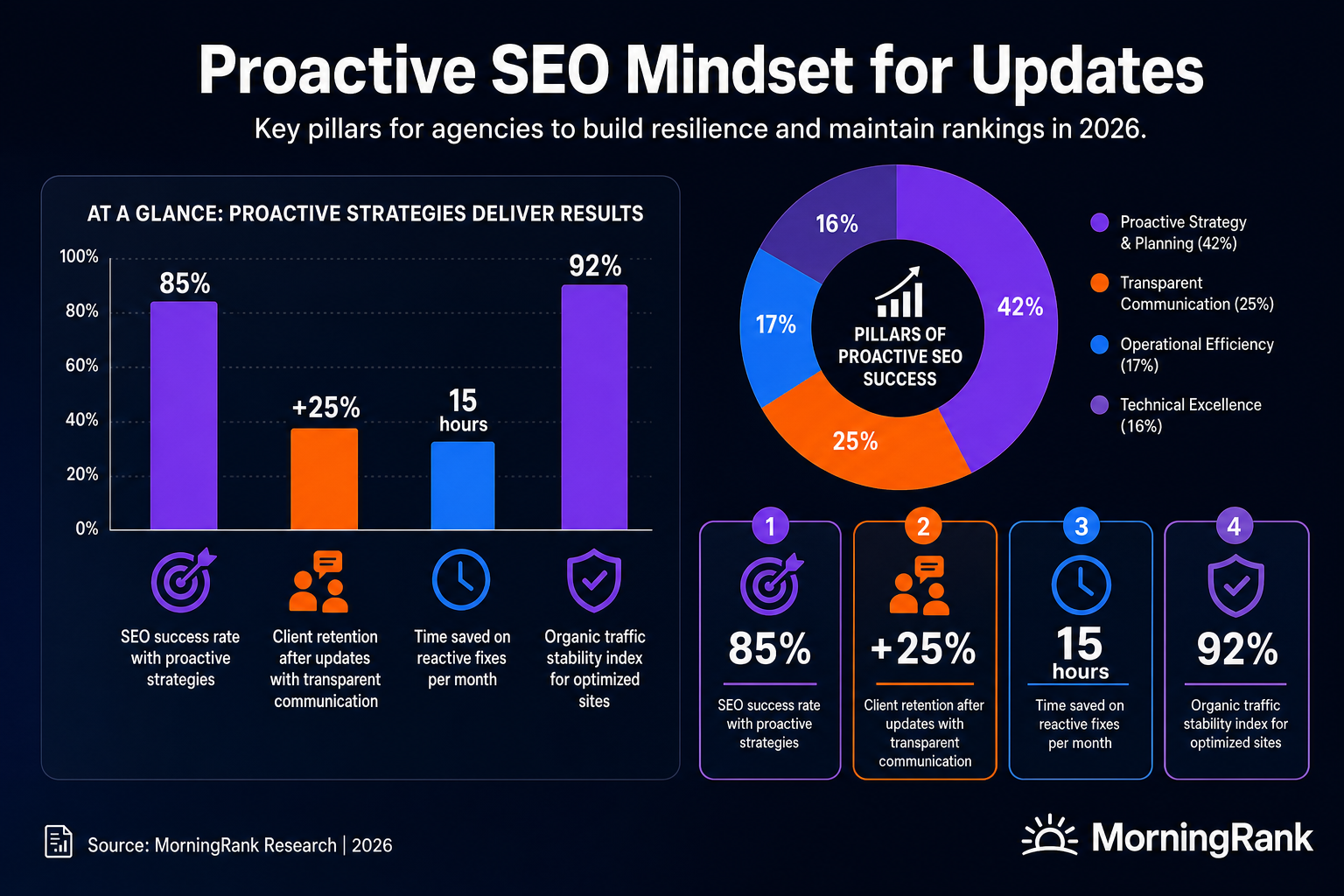
What is a Google Algorithm Update Mindset, and Why Does it Matter?
A Google algorithm update mindset is a proactive and adaptive approach to search engine optimization that emphasizes foundational quality, continuous improvement, and resilience against ranking fluctuations. This mindset recognizes that Google's algorithms are constantly evolving to better serve users, rather than being static targets. Agencies that embrace this perspective understand that SEO is not about chasing individual algorithm changes, but about consistently optimizing for user intent and experience.
In my experience, many agencies fall into the trap of reactive SEO, scrambling only after an update has hit. This leads to costly, last-minute adjustments and often creates unnecessary panic. By contrast, a proactive mindset means you are already aligning with Google's long-term goals. For example, Google held over 91% of the global search market share in 2026making it indispensable for online visibility. Therefore, understanding and adapting to its evolution is paramount. This strategic approach ensures your clients' websites remain robust and visible, regardless of the specific changes Google implements.
How Can Agencies Establish Foundational Stability Before Updates?
Establishing foundational stability involves consistently building websites that align with Google's core principles: E-E-A-T (Experience, Expertise, Authoritativeness, and Trustworthiness) and exceptional user experience. E-E-A-T is a framework Google uses to assess the quality of content and websites, prioritizing sources that demonstrate genuine knowledge and reliability. This means creating high-quality, relevant content that genuinely helps users, ensuring fast loading times, mobile-friendliness, and intuitive navigation.
Agencies should regularly conduct comprehensive technical SEO audits to identify and fix issues that could undermine performance. Prioritize site speed, Core Web Vitals, and secure HTTPS protocols. Focus on creating topical authority by developing in-depth content clusters that cover subjects comprehensively, as discussed in our guide on Topic Clusters and User-Intent Mapping. Furthermore, cultivate a strong backlink profile from reputable sources, as authoritative backlinks remain a significant ranking factor. By consistently adhering to these best practices, your clients' sites become inherently more resilient to Google algorithm updates.

What is the Role of Continuous Monitoring and Analysis?
Continuous monitoring and in-depth analysis are crucial components of a proactive Google algorithm update mindset, allowing agencies to detect and respond to changes swiftly. It's not enough to set up a website and hope for the best; you must actively track performance across a multitude of metrics. This includes closely watching keyword rankings, organic traffic fluctuations, conversion rates, and SERP feature visibility.
Utilizing robust keyword rank tracking tools is essential for identifying patterns and deviations. I recommend daily rank checks, particularly for critical keywords, and segmenting data by location and device type for local businesses. Integrating Google Analytics 4 and Google Search Console provides invaluable insights into user behavior and site health warnings. When an update rolls out, immediate access to this data allows you to quickly pinpoint affected pages or keyword sets, enabling a targeted response rather than broad, speculative changes. This granular data helps distinguish between a minor fluctuation and a significant algorithmic shift.
How Should Agencies Communicate Algorithm Updates to Clients?
Transparent and proactive communication with clients about Google algorithm updates is vital for maintaining trust and managing expectations. Many clients lack a deep understanding of SEO intricacies, and sudden ranking drops can cause alarm. As their SEO partner, it's your responsibility to educate them on the nature of these updates, explaining that they are a normal, ongoing part of Google's effort to improve search quality.
Before an update hits, provide an overview of Google's typical update patterns and why they occur. When an update is confirmed or suspected, communicate promptly about any observed impact, detailing the actions your agency is taking to investigate and adapt. Share progress reports using clear, client-friendly language, emphasizing long-term strategy over short-term fluctuations. Our Client Reporting Best Practices for Agencies in 2026 provides further guidance on this. This approach positions your agency as a knowledgeable and reliable partner, reinforcing confidence even during periods of volatility.
How Can Agencies Build Long-Term SEO Resilience?
Building long-term SEO resilience extends beyond reacting to individual algorithm changes; it involves diversifying strategies and focusing on holistic digital growth. Relying solely on Google for traffic creates a single point of failure. Agencies should explore additional channels such as social media marketing, email marketing, paid advertising, and direct engagement to broaden their clients' online presence.
For local businesses, optimizing for Google Business Profile optimization and local citations is more critical than ever, as these often have a distinct impact on local pack rankings independent of broader core updates. Furthermore, embracing emerging platforms like AI Answer Engines and optimizing for Generative Engine Optimization (GEO) and Answer Engine Optimization (AEO) can unlock new visibility opportunities, as discussed in our insights on GEO and AEO tracking. A truly resilient strategy anticipates where users are going next and ensures your clients' brands are visible there too, spreading risk and maximizing reach.
Conclusion
Navigating the ever-shifting landscape of Google algorithm updates in 2026 requires more than just technical expertise; it demands a resilient and proactive mindset. By prioritizing foundational SEO principles, embracing continuous monitoring, communicating transparently with clients, and diversifying digital strategies, agencies can transform potential threats into opportunities for sustained growth. This mindset shifts the focus from merely reacting to algorithm changes to consistently building and maintaining robust, user-centric online presences that thrive in any search environment. In essence, it's about future-proofing your clients' success through enduring quality and intelligent adaptation.
Frequently Asked Questions
What is a Google algorithm update?
A Google algorithm update is a significant change to Google's ranking systems, designed to improve the quality, relevance, and fairness of search results. These updates can impact how websites are evaluated and ranked, often leading to fluctuations in search visibility. Adopting a proactive Google algorithm update mindset is crucial for navigating these shifts successfully.
How often does Google release algorithm updates?
Google releases algorithm updates frequently, ranging from minor, unconfirmed daily adjustments to major "core updates" that are announced. Significant core updates typically occur a few times a year, while smaller tweaks happen almost constantly. Maintaining a proactive Google algorithm update mindset allows agencies to adapt to this continuous evolution.
What are the primary goals of Google algorithm updates?
The primary goals of Google algorithm updates are to deliver the most relevant, high-quality, and trustworthy information to users. Google aims to reduce spam, promote authoritative content, and enhance the overall user experience. Agencies with a strong Google algorithm update mindset consistently align their strategies with these core objectives.
How quickly do Google algorithm updates affect website rankings?
The impact of Google algorithm updates can vary. Minor updates might show gradual shifts over days, while major core updates can cause significant ranking fluctuations within hours or days of rollout. Agencies need rapid monitoring and a prepared Google algorithm update mindset to respond effectively.
What should an agency do immediately after a significant Google algorithm update?
Immediately after a significant Google algorithm update, an agency should conduct a thorough impact analysis, focusing on keyword rankings, organic traffic, and page performance. Analyze which pages or content types were most affected, compare performance against competitors, and review Google's official guidance if available. This quick assessment is key to a responsive Google algorithm update mindset.
How can MorningRank help agencies manage Google algorithm updates?
MorningRank offers advanced tools for monitoring keyword rankings, tracking organic performance, and providing AI-powered insights, all essential for adapting to Google algorithm updates. Our platform helps agencies quickly identify performance shifts, analyze competitor strategies, and generate actionable SEO recommendations, fostering a proactive Google algorithm update mindset for sustained client success.
Ready to empower your agency with the tools needed to master Google algorithm updates? Try MorningRank for free today at https://morningrank.com.
Want this kind of insight every week?
MorningRank delivers daily rank tracking, AI SEO recommendations, and white label client reporting.