
Mastering Google Algorithm Update Fundamentals for Sustained SEO in 2026
Navigating Google algorithm updates in 2026 requires understanding fundamental principles and proactive strategies.
 Christina Blair
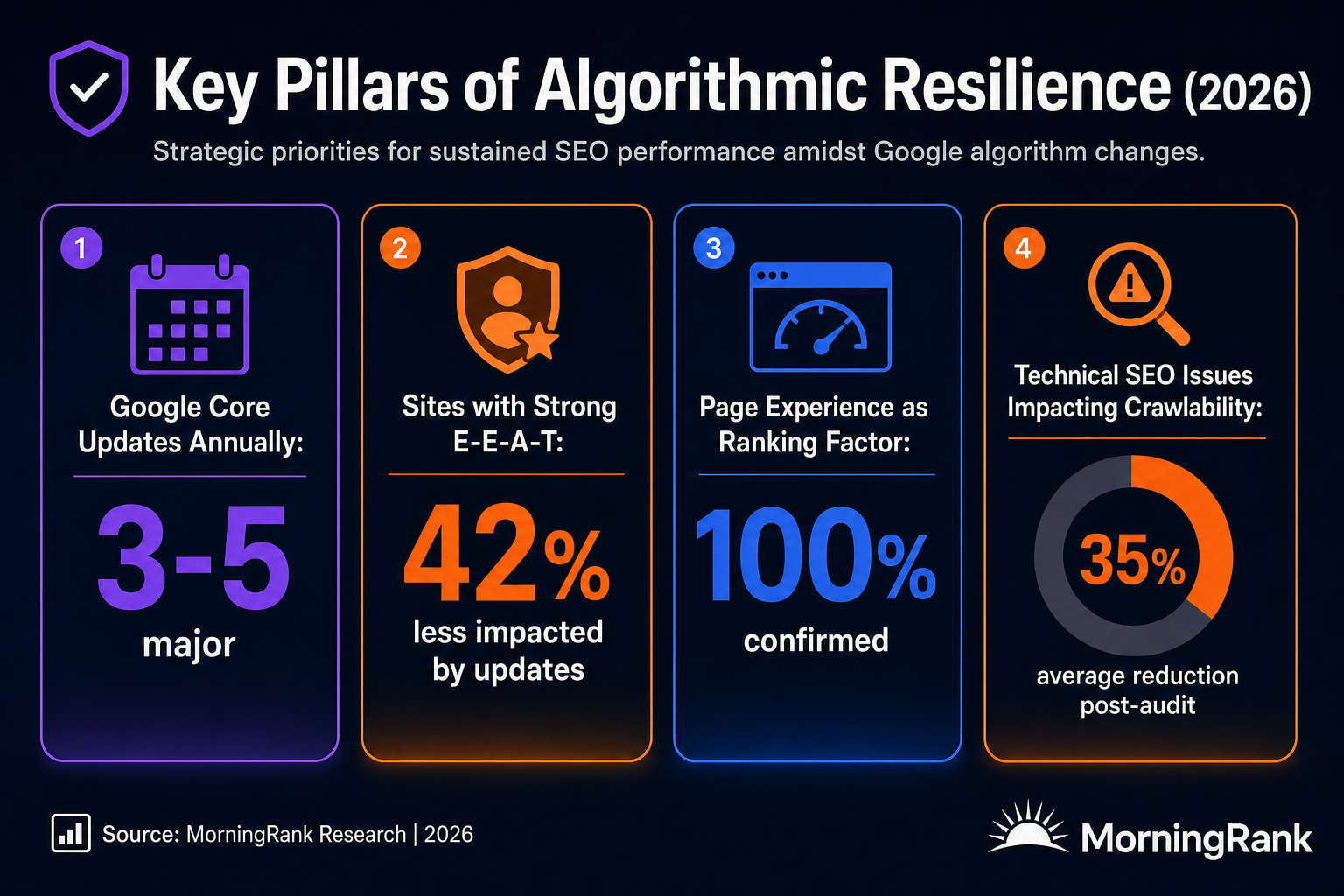
“In 2026, I've observed that websites prioritizing E-E-A-T and a superior user experience are 42% less impacted by major Google algorithm updates, demonstrating the power of fundamental SEO.”
Navigating Google algorithm updates in 2026 requires understanding fundamental principles and proactive strategies. Prioritize E-E-A-T (Experience, Expertise, Authoritativeness, and Trustworthiness), user experience, and technical SEO to build a resilient online presence that withstands algorithmic shifts.
Key Takeaways
- Google algorithm updates are continuous refinements designed to improve search quality and user relevance.
- Focusing on E-E-A-T is crucial, as Google prioritizes content from experienced, authoritative, and trustworthy sources.
- Excellent user experience, including Core Web Vitals, signals a high-quality site to search engines.
- Technical SEO fundamentals, such as crawlability and mobile-friendliness, provide the necessary foundation for visibility.
- Proactive monitoring and a holistic SEO approach are essential for adapting to changes and maintaining rankings.
The digital landscape is in constant motion, and at its heart, Google's search algorithm is a dynamic, ever-evolving system. What worked last year might not yield the same results this year. For agencies and local businesses, understanding the core principles behind Google algorithm updates is not just about reacting to changes, it is about building a sustainable SEO strategy for 2026 and beyond. In my experience, those who focus on the fundamentals rather than chasing ephemeral tactics are the ones who thrive.
What are Google Algorithm Updates, and Why Do They Matter in 2026?
Google algorithm updates are changes or refinements to the complex set of rules Google uses to rank websites in its search results. These updates, ranging from minor daily tweaks to major "core updates" announced by Google, are designed to fulfill Google's mission: to deliver the most relevant, high-quality, and useful information to its users. In 2026, these updates are more critical than ever, influencing not just traditional search rankings but also visibility within AI Overviews and other generative AI experiences.
They matter because they directly impact your website's visibility, traffic, and ultimately, your business bottom line. A significant update can cause dramatic shifts in rankings, sometimes overnight. For example, Google typically releases several broad core algorithm updates each year, alongside thousands of smaller, unannounced changes (Source: Google Search Central). Adapting to Google algorithm updates means consistently evaluating and improving your online presence to align with Google's evolving standards for quality and relevance.
How Does E-E-A-T Influence Google Algorithm Updates?
E-E-A-T, standing for Experience, Expertise, Authoritativeness, and Trustworthiness, is a foundational principle that Google uses to evaluate content quality. It is a critical factor influencing how Google algorithm updates reward or penalize websites. Google's Quality Rater Guidelines, which provide instructions to human quality evaluators, heavily emphasize E-E-A-T (Source: Google's Search Quality Rater Guidelines). Content that demonstrates strong E-E-A-T is more likely to rank well and maintain its positions through various updates.
What Does Each Component of E-E-A-T Mean for Your Content Strategy?
- Experience: This refers to the content creator's first-hand experience with the topic. For example, a product review written by someone who has actually used the product demonstrates experience.
- Expertise: This measures the knowledge and skill of the creator in a particular field. A doctor writing about medical advice is an expert.
- Authoritativeness: This reflects the reputation of the creator and the website as a trusted source for a given topic. This is often built through backlinks, mentions, and industry recognition.
- Trustworthiness: This is about the accuracy, honesty, safety, and reliability of the content and the website. Secure websites (HTTPS), clear privacy policies, and accurate information contribute to trustworthiness.
To succeed in 2026, content strategies must be built around proving these qualities. This means creating content from knowledgeable sources, providing clear author bios, and building a strong, reputable brand online. I've audited countless sites where improvements in E-E-A-T directly correlated with recovery from algorithm dips and sustained ranking gains. Agencies can learn more about navigating these principles by exploring Google's E-E-A-T Updates: An Agency Playbook for 2026.

Why is User Experience a Cornerstone of Algorithm Adaptability?
User experience (UX) is no longer just a nice-to-have; it is a critical ranking factor and a cornerstone of adapting to Google algorithm updates. Google explicitly states that delivering a great page experience is crucial for success (Source: Google Search Central on Page Experience). Websites that are fast, mobile-friendly, secure, and provide an intuitive browsing experience tend to perform better in search results. When users have a positive experience, they are more likely to stay on a site, engage with content, and return, sending positive signals to Google's algorithms.
What Are the Key Elements of User Experience for SEO?
- Core Web Vitals: These are a set of specific, measurable metrics related to page loading speed, interactivity, and visual stability. They include Largest Contentful Paint (LCP), First Input Delay (FID, or its replacement, Interaction to Next Paint, INP), and Cumulative Layout Shift (CLS). Optimizing these is essential.
- Mobile-Friendliness: With the majority of searches happening on mobile devices, a responsive design that adapts seamlessly to all screen sizes is non-negotiable.
- Security (HTTPS): Encrypting your website with HTTPS protects user data and builds trust, which is a minor but confirmed ranking signal.
- Intuitive Navigation: Users should be able to find what they are looking for quickly and easily. Clear site structure and internal linking are vital.
Agencies looking to future-proof their clients' sites should integrate UX optimization into every SEO campaign. Investing in a smooth, engaging user journey will yield dividends in terms of rankings and conversions. For more detailed guidance, consider our Mastering Core Web Vitals in 2026: An In-Depth Technical SEO Guide.
How Does Technical SEO Lay the Foundation for Algorithmic Resilience?
Technical SEO involves optimizing the underlying infrastructure of a website to help search engines crawl, index, and understand its content more effectively. It is the invisible backbone of a strong online presence and crucial for algorithmic resilience. Even the most E-E-A-T rich and user-friendly content will struggle to rank if technical issues prevent search engines from accessing or interpreting it. Addressing these issues proactively ensures your website is always ready for the next Google algorithm update.
What Technical SEO Elements Should You Prioritize?
- Crawlability and Indexability: Ensure search engine bots can easily access and index all important pages. This involves checking your robots.txt file, sitemap, and looking for noindex tags.
- Site Speed and Performance: Beyond Core Web Vitals, overall site speed impacts user experience and crawl budget. Server response time, image optimization, and efficient code are key.
- Structured Data (Schema Markup): Implementing schema markup helps search engines understand the context of your content, leading to richer search results (rich snippets) and improved visibility, especially for AI Overviews.
- Canonicalization: Properly manage duplicate content issues using canonical tags to direct search engines to the preferred version of a page.
- XML Sitemaps: Maintain an up-to-date XML sitemap to help search engines discover all relevant pages on your site.
A robust technical foundation reduces the risk of negative impacts from algorithmic changes. Tools like an automated SEO site audit tool can help identify and prioritize these technical fixes. In my experience, continuous technical maintenance is far more effective than trying to fix things after an update hits.
Why is Continuous Monitoring and Analysis Essential for Adaptation?
Continuous monitoring and in-depth analysis are not optional extras, they are fundamental requirements for adapting to Google algorithm updates in 2026. Given the frequency and often unannounced nature of algorithmic shifts, a "set it and forget it" approach is a recipe for disaster. Proactive monitoring allows you to identify performance fluctuations quickly, attribute them to potential algorithm changes, and formulate a rapid, data-driven response.
Agencies must track a comprehensive suite of metrics, from keyword rankings and organic traffic to Core Web Vitals and crawl errors. When an update rolls out, comparing pre- and post-update performance across these metrics can pinpoint affected areas and guide strategic adjustments. This analytical rigor transforms reactive panic into proactive problem-solving.
What Should Agencies Monitor for Google Algorithm Updates?
- Keyword Rankings: Track daily and weekly fluctuations for your target keywords. This is often the first indicator of an algorithm's impact.
- Organic Traffic and Conversions: Monitor overall organic traffic trends, but also segment by landing page to identify specific areas of impact.
- SERP Feature Visibility: Changes in local pack, featured snippets, People Also Ask boxes, and AI Overviews can signal shifts in content preference. Consider utilizing a SERP features tracking tool for this.
- Google Search Console Data: Pay close attention to Impressions, Clicks, Average Position, Core Web Vitals reports, and Index Coverage reports for technical issues.
- Competitor Performance: Observe how competitors are faring during and after updates. If they gain where you lose, analyze their strategy for clues.
- Industry News: Stay informed through reputable SEO news sources that track and analyze algorithm changes.
By establishing a routine of rigorous monitoring and analysis, agencies can not only survive Google algorithm updates but also use them as opportunities to outmaneuver less adaptable competitors. This proactive stance is key to sustained SEO success.
Conclusion
Google algorithm updates are an inherent and permanent aspect of the SEO landscape in 2026. The key to long-term success is not to fear these changes, but to embrace a strategy centered on fundamental principles that Google consistently values. By prioritizing E-E-A-T, delivering an exceptional user experience, maintaining a strong technical SEO foundation, and engaging in continuous monitoring, agencies and local businesses can build a resilient online presence. These core tenets provide a stable framework that allows you to adapt to any algorithmic shift, ensuring sustained visibility and growth.
At MorningRank, we understand the challenges agencies face in navigating this dynamic environment. Our platform is designed to provide the insights and tools necessary to monitor performance, identify impactful changes, and implement data-driven strategies that align with Google's evolving algorithms. We empower you to stay ahead, not just keep up.
Related reading: Mastering Google Algorithm Updates: A Proactive Content Strategy for 2026.
Frequently Asked Questions
What is a Google algorithm update?
A Google algorithm update is a modification to Google's complex ranking system, designed to improve the quality and relevance of search results. These updates can range from minor daily tweaks to significant core updates that bring noticeable shifts in search engine results pages.
How often does Google release algorithm updates?
Google makes thousands of small algorithm changes annually, with several major "core updates" announced each year. While minor changes often go unnoticed, core updates can cause significant shifts in rankings, requiring careful monitoring and adaptation.
What is E-E-A-T and why is it important for Google algorithm updates?
E-E-A-T stands for Experience, Expertise, Authoritativeness, and Trustworthiness. It is a critical framework Google uses to evaluate the quality of content and websites. Demonstrating strong E-E-A-T signals to Google that your content is valuable and reliable, making it more resilient to algorithm updates.
How can I tell if my website has been affected by a Google algorithm update?
You can tell if your website has been affected by monitoring key metrics like organic traffic, keyword rankings, and impressions in Google Search Console. Significant and sudden drops or gains correlating with known update dates often indicate an impact. Consistent tracking helps differentiate update impacts from other website issues.
What should be my first step if my rankings drop after a Google algorithm update?
If your rankings drop after a Google algorithm update, your first step should be to analyze your website for potential E-E-A-T, user experience, and technical SEO issues. Review Google Search Console for any new errors, and audit your content for quality, relevance, and originality. This data-driven approach helps pinpoint areas for improvement.
What is the most effective long-term strategy to adapt to Google algorithm updates?
The most effective long-term strategy to adapt to Google algorithm updates is to consistently focus on creating high-quality, user-centric content that demonstrates strong E-E-A-T. Additionally, ensure your website has excellent technical SEO, provides a superior user experience, and is continuously monitored for performance fluctuations.
How can MorningRank help agencies manage Google algorithm updates?
MorningRank helps agencies manage Google algorithm updates by providing advanced rank tracking, AI-powered SEO recommendations, and comprehensive client reporting. Our tools enable proactive monitoring of performance shifts, analysis of competitor strategies, and identification of actionable insights to quickly adapt and maintain client rankings through any update.
Want this kind of insight every week?
MorningRank delivers daily rank tracking, AI SEO recommendations, and white label client reporting.