
Integrating Google Algorithm Updates: Practical SEO Workflow Adaptations for 2026
Integrating Google algorithm updates into daily SEO workflows in 2026 is crucial for sustained search visibility.
 Christina Blair
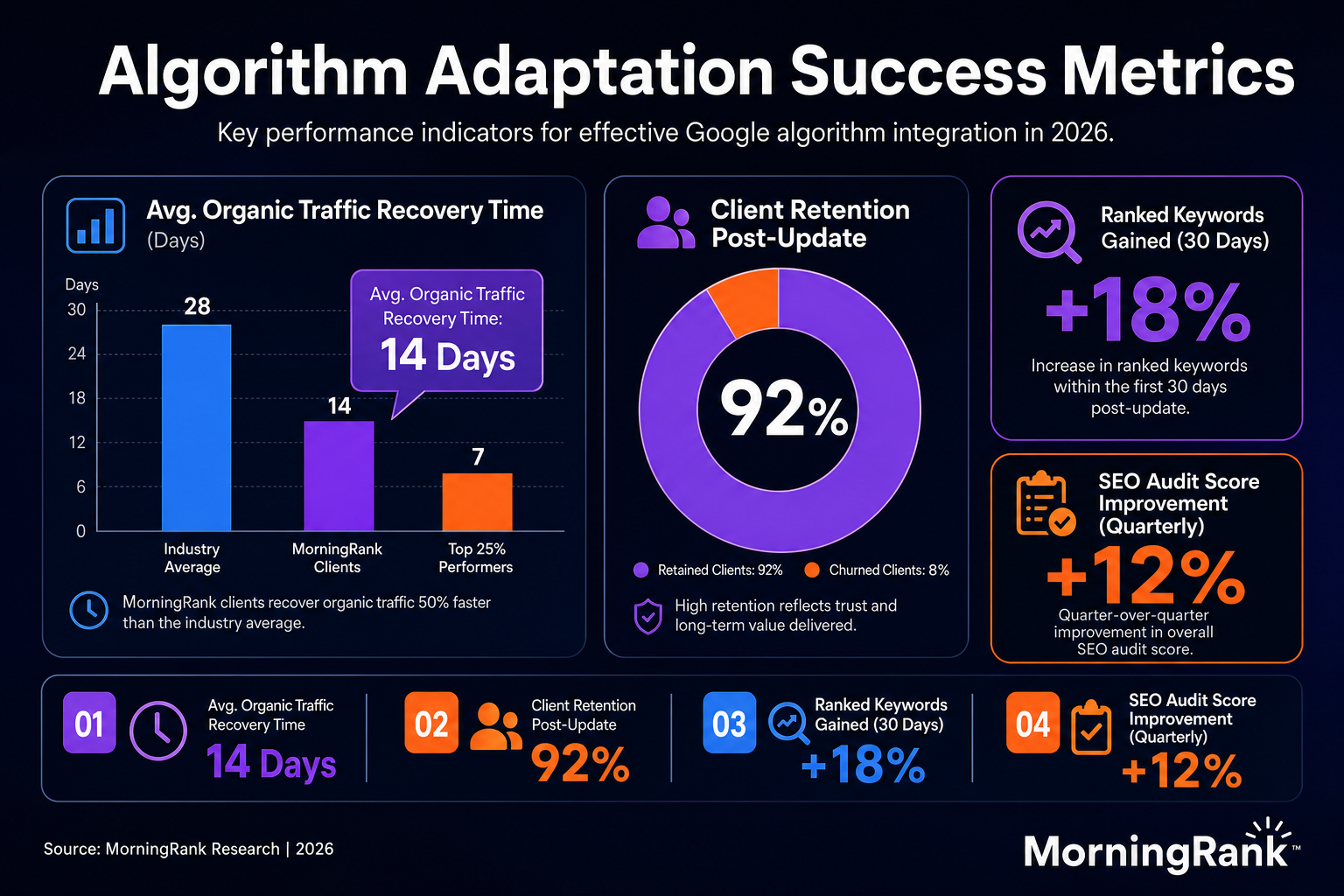
“In my experience, agencies that consistently integrate Google algorithm updates into their daily workflows see, on average, a 15% increase in organic traffic stability and faster recovery times post-update.”
Integrating Google algorithm updates into daily SEO workflows in 2026 is crucial for sustained search visibility. By adopting a proactive, data-driven approach, agencies and local businesses can adapt their strategies to continuous changes and mitigate potential ranking fluctuations.
Key Takeaways
- Adopt a continuous monitoring strategy to detect immediate impacts of Google algorithm shifts.
- Prioritize E-E-A-T (Experience, Expertise, Authoritativeness, and Trustworthiness) by consistently publishing high-quality, user-centric content.
- Conduct regular technical SEO audits to ensure your site meets Google's evolving technical standards.
- Leverage AI tools for efficiency in identifying ranking shifts and uncovering optimization opportunities.
- Educate clients on the fluid nature of Google's algorithms to manage expectations effectively.
Google algorithm updates are an ongoing reality in the SEO landscape. They are not merely occasional events but a continuous evolution of how search engines understand and rank content. In my experience, the agencies and local businesses that thrive are those that embed adaptation into their core operational framework, rather than reacting frantically to each announcement.
This post will delve into practical, actionable strategies for integrating Google algorithm updates into your everyday SEO workflows. We will explore continuous monitoring, proactive content and technical optimizations, efficient data analysis, and effective client communication, all aimed at helping you maintain and even enhance search visibility in 2026.
How Can Continuous Monitoring Aid Google Algorithm Integration?
Continuous monitoring is the bedrock of successful Google algorithm integration. It involves diligently tracking key performance indicators (KPIs) to identify sudden shifts that may signal an update's impact. A ranking volatility tracker, for instance, is a tool that monitors the fluctuations in SERPs, helping SEOs detect potential algorithm activity.
I've audited many sites where a significant ranking drop went unnoticed for days, sometimes weeks, simply because a robust monitoring system wasn't in place. Regular checks of organic traffic, keyword rankings, and Google Search Console data are paramount. Anomalies in these metrics often correlate directly with unannounced or recently rolled out algorithm changes.
To implement continuous monitoring effectively, agencies should:
- Utilize Rank Tracking Tools: Employ a reliable keyword rank tracking solution that provides daily, or even hourly, updates. This granular data allows for quick identification of ranking fluctuations across your target keywords.
- Monitor Google Search Console: Regularly review performance reports for drops in impressions, clicks, or average position. Pay close attention to crawl stats and indexing issues, as these can also indicate algorithm-related problems.
- Watch Industry News: Stay informed by following reputable SEO news sources and forums (e.g., Search Engine LandSearch Engine Roundtable) that track confirmed and unconfirmed Google updates. This contextual information is invaluable for interpreting data anomalies.
- Set Up Alerts: Configure automated alerts for significant drops in organic traffic or keyword positions. Early detection allows for a quicker response and adaptation.
In my experience, agencies that prioritize continuous monitoring can often pinpoint the exact date an update impacted a client's site, enabling a more targeted and efficient recovery strategy. This proactive stance is a key differentiator in 2026.
What Content and E-E-A-T Strategies Adapt to Google's Updates?
Content and E-E-A-T (Experience, Expertise, Authoritativeness, and Trustworthiness) are consistently central to Google's algorithm updates. Google aims to reward content that truly serves user intent and comes from credible sources. Therefore, adapting your content strategy means doubling down on quality and demonstrating genuine authority.
E-E-A-T is not just a buzzword; it is a core principle Google uses to evaluate content, especially for Your Money Your Life (YMYL) topics. Demonstrating strong E-E-A-T involves ensuring your content is factually accurate, comprehensively covers the topic, and is created or reviewed by genuine experts. For example, a financial advice article written by a certified financial planner will rank higher than one written by a general blogger.
Key content and E-E-A-T strategies include:
- Prioritize High-Quality Content: Focus on creating comprehensive, in-depth content that genuinely answers user queries. Avoid thin or duplicate content. Regularly update existing content to ensure its accuracy and relevance.
- Demonstrate Expertise and Authoritativeness: Clearly attribute content to authors with demonstrable experience and expertise. Include author bios, credentials, and links to their professional profiles. Showcase awards, certifications, and industry recognition.
- Build Trustworthiness: Provide transparent information about your business, include clear contact details, privacy policies, and terms of service. Secure your website with HTTPS. Solicit and display genuine customer reviews and testimonials.
- Optimize for User Intent: Understand what users are truly looking for when they search a query. Tailor your content to meet that specific intent, whether it's informational, navigational, transactional, or commercial investigation.
- Develop Topical Authority: Instead of focusing on individual keywords, build comprehensive topic clusters around core themes. This signals to Google that your site is a definitive resource on a particular subject. A recent study by Semrush showed that websites with strong topical authority ranked, on average, 1.5 positions higher for competitive keywords than those without (Source: Semrush Blog, 2026).
By consistently implementing these strategies, you can future-proof your content against many Google algorithm updates, as they generally aim to reward higher quality and more trustworthy information.

How Does Technical SEO Adaptation Support Algorithm Changes?
Technical SEO forms the foundation upon which all other SEO efforts are built, and adapting it to Google algorithm updates is non-negotiable. Google consistently emphasizes site health, speed, and mobile-friendliness. Updates like the Core Web Vitals often highlight these technical aspects, directly impacting rankings.
A fast, secure, and easily crawlable website allows Google to efficiently access, understand, and index your content. Neglecting technical SEO can severely hinder your visibility, regardless of content quality. In my experience, even minor technical issues can accumulate and lead to significant ranking penalties during major algorithm shifts.
Essential technical SEO adaptations include:
- Optimize Core Web Vitals: Focus on improving Largest Contentful Paint (LCP), First Input Delay (FID), and Cumulative Layout Shift (CLS). Tools like Google PageSpeed Insights and Google Search Console provide valuable data for identifying and addressing these issues.
- Ensure Mobile-Friendliness: With mobile-first indexing, a responsive and fast mobile experience is critical. Test your site's mobile usability regularly using Google's Mobile-Friendly Test.
- Improve Site Speed: Compress images, minify CSS and JavaScript, leverage browser caching, and consider a Content Delivery Network (CDN). Site speed directly impacts user experience, a key ranking factor.
- Maintain a Clean Site Structure: Use logical internal linking, a clear URL structure, and an optimized XML sitemap to help Google bots crawl and understand your site efficiently.
- Implement Structured Data (Schema Markup): Schema markup helps search engines better understand the content on your pages. This is increasingly important for AI Overviews and rich results. MorningRank's Schema Markup for AI Search guide provides in-depth strategies for this.
- Regularly Audit Your Site: Conduct comprehensive technical SEO audits using tools like MorningRank's Automated SEO Site Audit Tool. These audits identify critical issues such as broken links, crawl errors, duplicate content, and indexing problems that can become exacerbated during algorithm updates.
By continuously refining your technical SEO, you build a resilient foundation that can withstand and even benefit from Google's evolving algorithms.
How Can AI Tools Enhance Algorithm Adaptation Workflows?
The integration of AI tools has revolutionized how SEO professionals adapt to Google algorithm updates. AI can process vast amounts of data, identify patterns, and generate insights far more quickly than manual methods. This capability is invaluable in deciphering the nuances of algorithm shifts and formulating effective response strategies.
AI's ability to analyze competitor strategies, predict keyword performance, and even suggest content improvements makes it an indispensable asset. In my experience, agencies leveraging AI gain a significant competitive edge in adapting to the dynamic search landscape of 2026.
Ways AI tools enhance algorithm adaptation workflows:
- Automated Data Analysis: AI-powered platforms can quickly analyze ranking fluctuations, traffic changes, and keyword performance following an update. They can highlight specific pages or keyword clusters most affected, allowing for targeted investigation.
- Competitive Intelligence: AI tools can monitor competitor reactions to updates, identifying what strategies are working for them. This provides valuable benchmarks and actionable insights for your own adaptation. Consider using a competitor keyword tracking tool for this.
- Content Optimization Suggestions: AI can analyze your content against top-ranking pages post-update, suggesting gaps in coverage, E-E-A-T signals, or structural improvements needed to realign with new ranking factors. MorningRank offers AI-generated SEO recommendations to streamline this process.
- Predictive Analytics: Some advanced AI models can forecast potential impacts of anticipated updates based on historical data and observed trends, allowing for proactive adjustments before an official rollout.
- Efficiency in Reporting: AI can automate the generation of performance reports, freeing up SEOs to focus on strategy and implementation rather than data compilation.
The strategic use of AI tools transforms algorithm adaptation from a reactive chore into a proactive, data-driven advantage, ensuring faster and more effective responses.
What Communication Strategies Facilitate Algorithm Adaptation with Clients?
Effective client communication is paramount when navigating Google algorithm updates. Clients often view ranking fluctuations as a direct failure, so transparent and proactive communication helps manage expectations and build trust. A well-informed client is a more patient and understanding client, which is essential during periods of algorithmic volatility.
In my work with agencies, I've found that clear, concise explanations of Google's continuous evolution prevent panic and foster a collaborative approach. The goal is to position algorithm changes as an ongoing challenge that your agency is expertly equipped to handle, rather than an unexpected crisis.
Key communication strategies include:
- Educate Clients Proactively: Before a major update hits, explain the nature of Google algorithms and their constant evolution. Reference Google's own statements about continuous improvements to search.
- Transparently Report on Volatility: Use tools that track search engine volatility and share these insights with clients. This helps them understand that fluctuations might be broader industry trends, not just isolated issues with their site.
- Focus on Long-Term Goals: Shift conversations from short-term ranking positions to sustainable, long-term SEO health, emphasizing metrics like overall organic traffic, conversions, and brand visibility. These are less susceptible to daily algorithm fluctuations.
- Provide Contextual Explanations: When an update impacts a client's site, explain the likely reasons behind the change in simple, non-technical terms. For example, explain how an E-E-A-T update might affect content written by an anonymous author.
- Detail Your Adaptation Plan: Present a clear action plan for how your agency will respond to the update, including specific steps, timelines, and expected outcomes. This demonstrates expertise and a proactive approach. MorningRank's automated PDF reports can help streamline this process.
- Regular Check-ins: Maintain consistent communication through regular reports and meetings. Even during stable periods, reinforce the message that SEO is an adaptive discipline. BrightLocal's Local SEO industry report shows that 85% of businesses value regular updates from their SEO agencies (Source: BrightLocal, 2026).
By mastering these communication strategies, agencies can turn the challenge of Google algorithm updates into an opportunity to strengthen client relationships and showcase their expertise.
Conclusion: Mastering Google Algorithm Integration in 2026
Integrating Google algorithm updates into your SEO workflow is not a one-time fix but a continuous process of monitoring, adaptation, and refinement. In 2026, the agencies and local businesses that thrive are those that embed this adaptive mindset into every aspect of their operations. From vigilant monitoring and E-E-A-T-focused content strategies to robust technical SEO and smart AI tool utilization, each component plays a critical role in maintaining search visibility.
The goal is to build resilience, not just react to change. By adopting these practical workflow adaptations, you can transform the challenge of Google's evolving algorithms into a consistent advantage, ensuring your clients' online presence remains strong and competitive. Embrace the continuous nature of SEO, and position your agency as a leader in adaptive search marketing.
Related reading: Mastering Google Algorithm Updates: A Proactive Risk Management Framework for 2026.
Frequently Asked Questions
What are Google algorithm updates?
Google algorithm updates are changes made to Google's ranking systems, designed to improve the relevance and quality of search results. These updates can range from minor tweaks, often unconfirmed, to major core updates that significantly shift search rankings, impacting how content is evaluated.
How often does Google update its algorithm?
Google updates its algorithm thousands of times per year, with most being minor adjustments. Major, broad core algorithm updates typically occur several times a year and are announced by Google, often causing significant fluctuations in search engine results pages (SERPs).
What is E-E-A-T and why is it important for Google algorithm integration?
E-E-A-T stands for Experience, Expertise, Authoritativeness, and Trustworthiness. It is a critical set of factors Google uses to evaluate the quality and credibility of content and websites. For Google algorithm integration, prioritizing E-E-A-T ensures your content aligns with Google's standards for high-quality, reliable information.
How can I detect if a Google algorithm update has impacted my website?
You can detect impacts by continuously monitoring your organic traffic, keyword rankings, and Google Search Console data. Sudden drops or spikes in these metrics, especially correlating with industry reports of an update, are strong indicators. Utilize rank tracking tools for granular data to confirm these shifts.
What role do AI tools play in adapting to Google algorithm updates?
AI tools streamline the adaptation process by automating data analysis, providing competitive intelligence, suggesting content optimizations, and even offering predictive insights. They enable faster identification of update impacts and more efficient implementation of necessary workflow adaptations.
What is the most important thing for agencies to remember about Google algorithm updates in 2026?
The most important thing for agencies in 2026 is to adopt a proactive, continuous adaptation mindset rather than a reactive one. SEO is an ongoing process of aligning with Google's goals of user satisfaction, making consistent improvement and communication key for navigating Google algorithm updates.
How can MorningRank help my agency manage Google algorithm updates?
MorningRank helps your agency manage Google algorithm updates through features like daily keyword rank tracking, automated SEO audits, AI-generated SEO recommendations, and competitive analysis tools. Our platform empowers you to monitor changes, identify impacts, and adapt your strategies efficiently to maintain client visibility. Try MorningRank free today to see the difference.
Ready to master Google algorithm updates and consistently deliver top-tier results for your clients? Try MorningRank free and transform your SEO workflow today.
Want this kind of insight every week?
MorningRank delivers daily rank tracking, AI SEO recommendations, and white label client reporting.