
Mastering Google Algorithm Update Analysis in 2026
Mastering Google algorithm update analysis involves systematically identifying ranking shifts, investigating potential causes, and implementing data-driven…
 Christina Blair
“In my experience, a sudden drop of 15% or more in organic traffic over a few days, without any internal website changes, strongly suggests an external factor, likely an algorithm update.”
Mastering Google algorithm update analysis involves systematically identifying ranking shifts, investigating potential causes, and implementing data-driven adaptations to maintain and improve search visibility in 2026. This proactive approach helps SEO professionals and agencies interpret Google's continuous evolution and safeguard client performance.
Key Takeaways
- Google algorithm updates are continuous, requiring constant monitoring and data analysis to understand their impact.
- Effective update analysis involves correlating traffic and ranking drops with announced or unconfirmed Google changes.
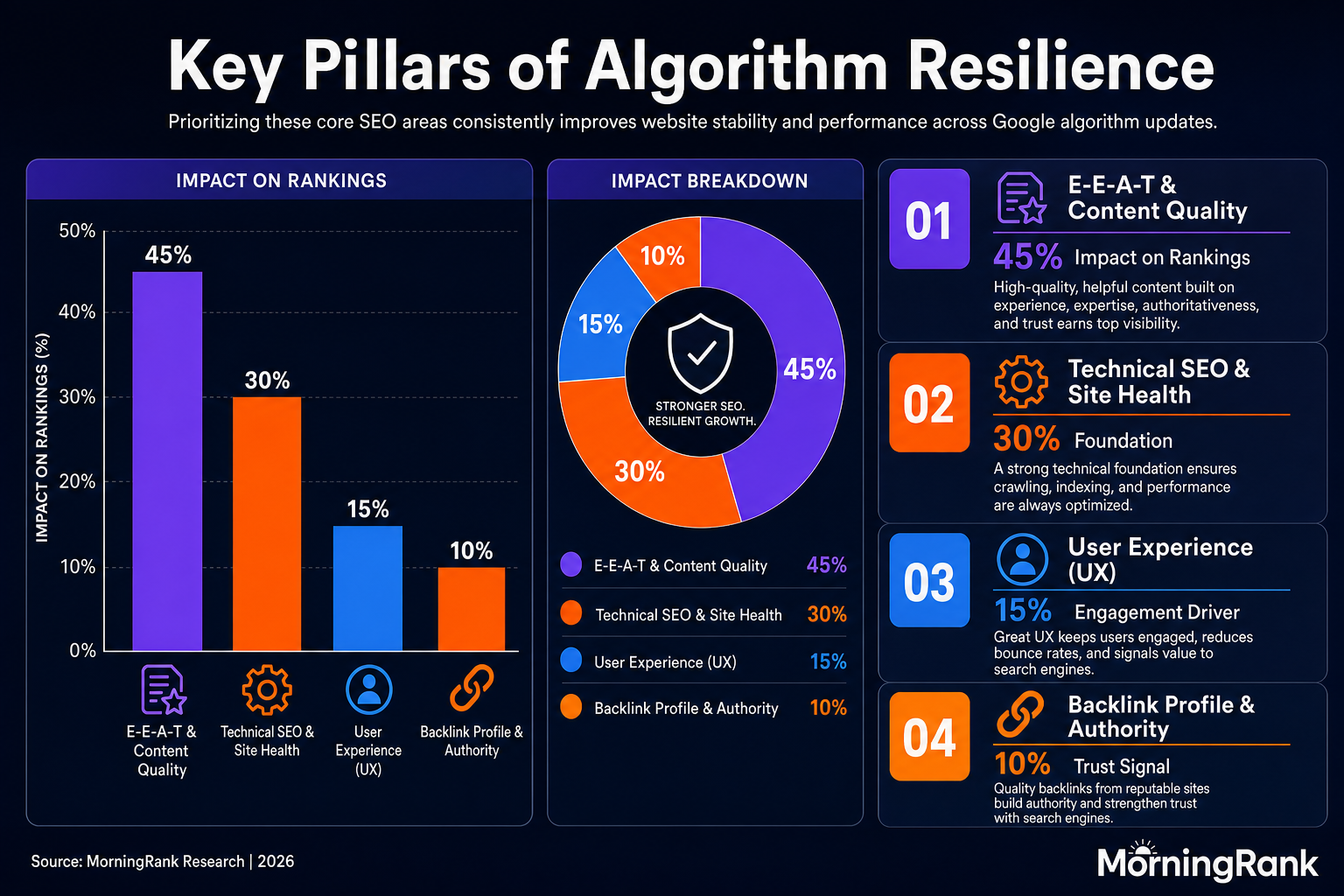
- Prioritize E-E-A-T, user experience, and technical SEO as foundational elements that consistently withstand algorithm shifts.
- Utilize specialized SEO tools for granular data, competitive analysis, and rapid insight into ranking fluctuations.
- Proactive adaptation based on interpreted update signals is crucial for sustained search engine visibility.
Google's algorithm updates are a constant force, reshaping the search landscape with remarkable frequency. In my experience, reacting purely on instinct or panic after a drop in rankings is a surefire way to lose ground. Instead, successful agencies in 2026 will implement a robust framework for Google algorithm update analysis, transforming uncertainty into strategic insight. This guide will walk you through how to systematically analyze updates, pinpoint their effects, and adapt your SEO strategies for resilience and growth, ensuring your clients maintain strong search visibility.
What is Google Algorithm Update Analysis?
Google algorithm update analysis is the systematic process of monitoring website performance metrics, identifying significant fluctuations coinciding with Google algorithm changes, and deciphering the underlying reasons for those shifts. This analysis helps SEO professionals understand which ranking factors have gained or lost emphasis, allowing for informed strategic adjustments.
Google frequently deploys updates to its search algorithm, ranging from broad core updates that can affect a wide range of sites, to more niche updates targeting specific spam techniques or content types. The goal is always to improve search result quality and user satisfaction. For agencies, understanding the "why" behind ranking changes is critical for communicating value to clients and demonstrating strategic leadership. Without proper analysis, it's impossible to differentiate between a site-specific issue and a broader algorithmic shift.
A proactive approach to understanding Google algorithm cycles means you are always prepared to interpret changes, rather than being caught off guard. This preparedness involves constant monitoring of SERPs, traffic, and ranking data, combined with an understanding of Google's stated goals for its algorithm. For example, Google often reiterates its commitment to helpful content and user experience. Any update likely reinforces these principles.
How Do You Identify an Algorithm Update's Impact?
Identifying an algorithm update's impact requires diligent monitoring and careful correlation of data points. It begins with tracking key performance indicators (KPIs) and observing abnormal fluctuations that coincide with known or suspected update windows.
Monitoring Key Performance Indicators (KPIs)
Start by tracking a baseline of essential SEO metrics. These include organic traffic, keyword rankings, click-through rates (CTR), bounce rates, and conversion rates. Using a robust keyword rank tracking tool is fundamental here. Look for sudden, inexplicable drops or surges across these metrics. Pay particular attention to:
- Organic traffic: Significant dips or spikes from Google Search Console and Google Analytics 4.
- Keyword rankings: Mass changes in positions for a large set of keywords, not just isolated terms.
- SERP features: Changes in the presence or type of featured snippets, local packs, or AI Overviews for your target keywords.
In my experience, a sudden drop of 15% or more in organic traffic over a few days, without any internal website changes, strongly suggests an external factor, likely an algorithm update. Conversely, a significant improvement could indicate that your existing optimization efforts have been rewarded.
Correlating Fluctuations with Google Announcements
Once unusual activity is detected, cross-reference these dates with official Google announcements or industry reports of suspected updates. Google sometimes confirms core updates, providing general guidance. However, many smaller, unconfirmed updates occur regularly. Tools that monitor search engine volatility or industry news sites like Search Engine Journal and Search Engine Land are invaluable here. They often report on widespread ranking fluctuations even before Google confirms an update.
This correlation step helps differentiate between a site-specific error, such as a broken canonical tag or a crawl budget issue, and a broader algorithmic shift affecting many sites. If multiple sites across different niches report similar patterns of ranking volatility around the same time, it's highly probable an algorithm update is at play. Understanding Google unconfirmed updates is just as important as monitoring confirmed ones.

What Data Points are Crucial for Post-Update Analysis?
Post-update analysis hinges on a deep dive into specific data points to accurately diagnose the nature of the algorithm's impact. This requires combining quantitative metrics with qualitative content assessment.
| Data Category | Specific Metrics & Data Points | Why It Matters for Algorithm Analysis |
|---|---|---|
| Traffic & Rankings | Organic sessions, keyword positions (overall, by page, by keyword group), SERP feature visibility, impression share. | Directly indicates impact magnitude and affected content areas. Shifts in SERP features (like GEO and AEO citations) are crucial for AI search. |
| Content Quality | E-E-A-T signals (author credibility, factual accuracy, depth), user engagement (bounce rate, time on page), content freshness, originality score. | Google's updates frequently target content quality. A drop might signal a deficiency in experience, expertise, authoritativeness, or trustworthiness. |
| Technical SEO Health | Core Web Vitals (LCP, FID/INP, CLS), crawl errors, index coverage, mobile-friendliness, site speed, HTTPS status. | Technical issues can be exacerbated by updates. Google prioritizes fast, secure, and accessible websites. MorningRank's SEO audit tool can quickly flag these. |
| Backlink Profile | Referring domains, anchor text distribution, link quality (spam score, relevancy), new vs. lost links. | Toxic backlinks or sudden changes in your link profile can trigger negative algorithmic assessments. |
| User Experience (UX) | Session duration, pages per session, heatmaps, scroll depth, conversion paths, pop-up intrusiveness. | Updates often reflect Google's push for better user experience. Poor UX can lead to higher bounce rates and lower rankings. |
| Competitive Landscape | Competitor ranking changes, content strategy shifts by top performers, new SERP entrants. | Understanding if competitors also faced similar impacts, or if they gained, provides crucial context. Use a competitor keyword tracking tool for this. |
Analyzing these diverse data points helps construct a comprehensive picture of the algorithm's intent and impact. For example, if rankings for informational content drop while commercial content remains stable, it might signal an update emphasizing E-E-A-T for specific knowledge domains.
How Can Agencies Adapt to Google Algorithm Updates in 2026?
Adapting to Google algorithm updates in 2026 requires a proactive, continuous, and holistic SEO strategy focused on core principles rather than chasing individual algorithm tweaks. Agencies must build resilience into their clients' online presence.
Prioritize E-E-A-T and User Experience
Google consistently emphasizes E-E-A-T (Experience, Expertise, Authoritativeness, and Trustworthiness) and user experience. Content should be written by demonstrable experts, thoroughly researched, factually accurate, and presented in a way that provides genuine value to the user. This means focusing on original insights, comprehensive answers, and clear calls to action. Ensure websites are fast, mobile-friendly, easy to navigate, and free from intrusive elements. Sites that offer a superior user journey and credible, helpful content are inherently more resilient to algorithm shifts. Navigating Google's E-E-A-T updates is a cornerstone of modern SEO.
Maintain Technical SEO Excellence
A technically sound website forms the bedrock of strong SEO. Regular technical audits using tools like MorningRank's automated SEO site audit tool are essential to ensure optimal crawlability, indexability, and site speed. Address Core Web Vitals, ensure proper schema markup implementation, and fix any broken links or redirect chains. Technical SEO issues can severely limit a site's ability to rank, regardless of content quality. Google's algorithms rely on efficient site structure to understand and categorize content.
Diversify Traffic Sources and Content Formats
While SEO is paramount, relying solely on organic search can be risky. Agencies should help clients diversify their traffic generation strategies to include social media, email marketing, paid advertising, and direct traffic. Furthermore, explore different content formats like video, podcasts, and interactive tools, optimizing them for various platforms. This strategy not only mitigates risk during algorithm fluctuations but also expands brand reach. Moreover, optimize content for AI visibility tracking across platforms like Google AI Overviews, ChatGPT, and Gemini.
Build a Strong and Relevant Backlink Profile
High-quality, relevant backlinks remain a significant ranking factor. Focus on earning links from authoritative and reputable websites within your niche. Avoid black-hat link building tactics, as these are increasingly targeted by Google's spam algorithms. A natural and diverse backlink profile signals credibility and authority to search engines, enhancing a site's overall resilience. Regularly monitor your backlink profile using a backlink monitoring tool to identify and disavow any potentially harmful links.
What Tools Support Effective Algorithm Update Analysis?
Leveraging the right tools is non-negotiable for effective Google algorithm update analysis. They provide the data, insights, and automation necessary to quickly identify impacts and formulate responsive strategies.
Comprehensive SEO Platforms
Tools like MorningRank offer a suite of features crucial for monitoring and analyzing algorithm impacts. This includes advanced keyword rank tracking (including local and AI visibility), competitor analysis, technical SEO audits, and backlink monitoring. Having all these functions integrated into one platform streamlines the analysis process, allowing you to correlate data points more efficiently. For instance, MorningRank's SERP feature tracking can quickly reveal if your content is losing or gaining visibility in rich snippets or AI Overviews, which is vital for adapting to AI search changes.
Google's Own Tools
Google Search Console (GSC) and Google Analytics 4 (GA4) are indispensable. GSC provides direct insights into how Google crawls and indexes your site, including crawl errors, index coverage reports, and performance data like impressions, clicks, and average position. GA4 offers detailed user behavior metrics, helping you understand how users interact with your site. These first-party data sources are critical for validating trends observed in third-party tools and diagnosing specific issues. For local businesses, Google Business Profile insights also offer valuable data on map and local search performance.
SERP Volatility Trackers and Industry News
Dedicated SERP volatility trackers (e.g., MozCast, Semrush Sensor, AccuRanker Grumpiness) provide a daily snapshot of algorithm fluctuations across the industry. While they don't tell you *why* an update happened, they alert you to its presence. Combining these with industry news sources like Search Engine Land, Search Engine Journal, and the Google Search Central Blog ensures you are informed about confirmed updates and expert analysis. Subscribing to their newsletters can give you an edge in rapid response.
By integrating these tools into your workflow, agencies can move beyond guesswork, employing a data-driven approach to Google algorithm update analysis. This strategic capability allows for precise adjustments, safeguarding client performance and maintaining competitive advantage in the ever-evolving search landscape.
Conclusion: Mastering Google Algorithm Update Analysis in 2026
Mastering Google algorithm update analysis is not merely about reacting to changes, it is about developing a deep understanding of Google's core objectives and building resilient, user-centric online properties. In 2026, the SEO landscape is more dynamic than ever, with continuous updates, unconfirmed shifts, and the rise of AI Overviews. Agencies that prioritize E-E-A-T, technical excellence, and a proactive data-driven approach will be best positioned to not only survive these changes but to thrive. Consistent monitoring, correlation of data, and strategic adaptation are the hallmarks of successful SEO in this era. Embrace the continuous evolution, and you will ensure sustained search visibility for your clients.
Related reading: Mastering Google Algorithm Update Impact on Local SEO in 2026.
Frequently Asked Questions
What are Google algorithm updates in 2026?
Google algorithm updates in 2026 are continuous modifications to Google's search ranking systems, designed to improve the quality, relevance, and helpfulness of search results for users. These updates can range from small, unannounced tweaks to major core updates with significant impact on rankings.
How frequently does Google update its algorithm?
Google updates its algorithm thousands of times per year, with most being minor, unconfirmed changes. Major "core updates" are typically announced a few times annually. There are also specific updates targeting spam or particular content types, making constant monitoring essential.
What is the most important factor in adapting to Google algorithm updates?
The most important factor in adapting to Google algorithm updates is a steadfast commitment to providing high-quality, helpful content that demonstrates strong E-E-A-T (Experience, Expertise, Authoritativeness, and Trustworthiness). Websites that prioritize user experience and technical excellence consistently perform better across algorithm shifts.
Can I recover from a Google algorithm update penalty?
Yes, it is possible to recover from a Google algorithm update impact, though it requires diligent analysis and strategic remediation. Identify the likely cause of the ranking drop by analyzing affected pages and keywords, then implement improvements focused on content quality, technical SEO, and user experience. Recovery can take time, often aligning with subsequent updates.
How does MorningRank help with Google algorithm update analysis?
MorningRank helps with Google algorithm update analysis by providing comprehensive keyword rank tracking, competitor analysis, technical SEO audits, and AI visibility tracking. These tools allow agencies to quickly identify ranking shifts, understand competitive movements, and pinpoint technical issues, enabling data-driven adaptations to algorithm changes.
What metrics should I monitor to detect a Google algorithm update impact?
To detect a Google algorithm update impact, monitor organic traffic via Google Analytics 4, keyword rankings and SERP feature visibility in a rank tracker, and index coverage and crawl errors in Google Search Console. Sudden, widespread fluctuations in these metrics often signal an algorithmic shift.
Ready to turn algorithm uncertainty into a competitive advantage? Try MorningRank free today and empower your agency with the tools for mastering Google algorithm update analysis. Visit https://morningrank.com.
Want this kind of insight every week?
MorningRank delivers daily rank tracking, AI SEO recommendations, and white label client reporting.