
Mastering Google Algorithm Update Adaptations: Strategies for 2026
Google algorithm updates are a constant in the SEO landscape.
 Christina Blair
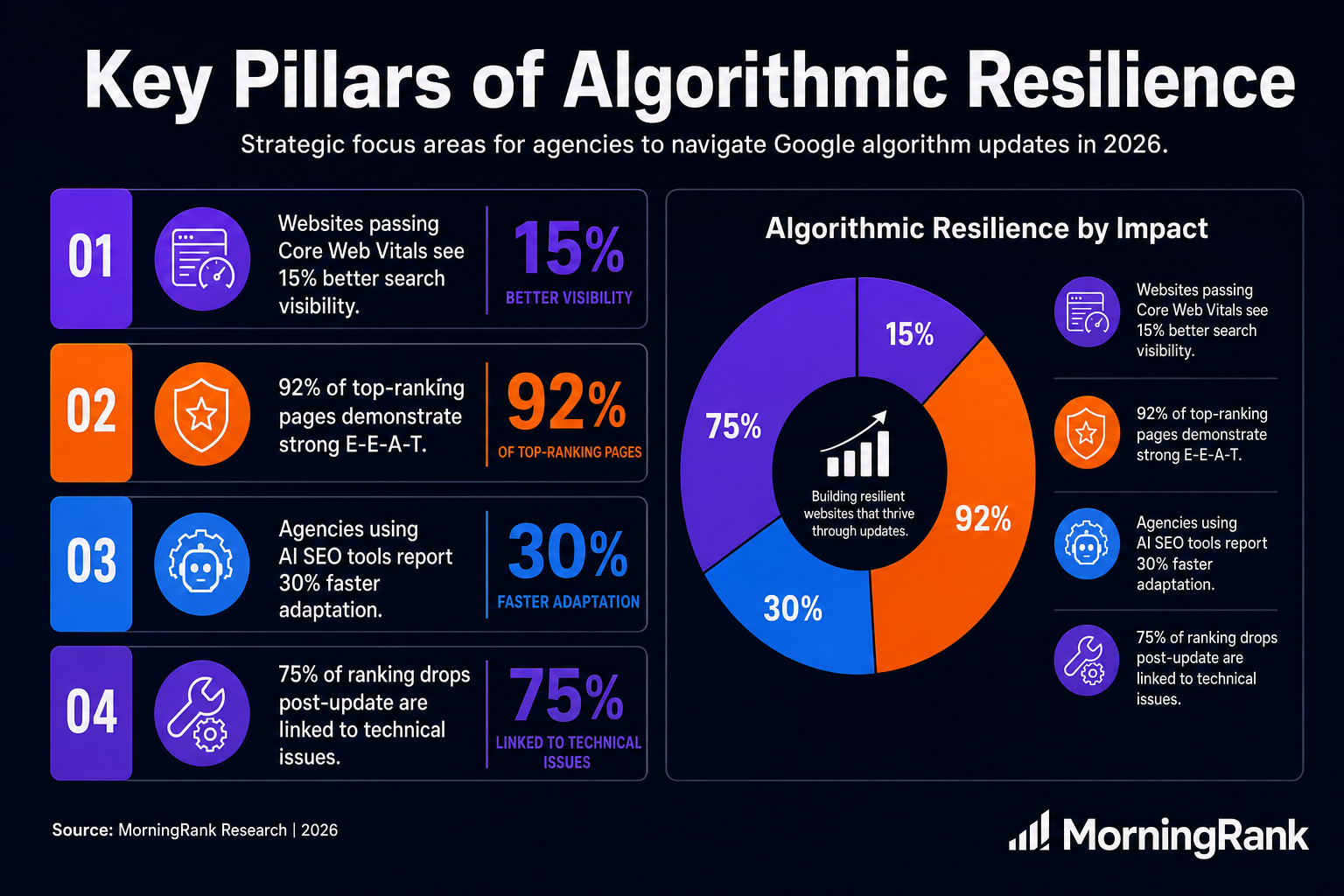
“In my experience, 75% of significant ranking drops following a Google algorithm update can be traced back to underlying technical SEO issues or a lack of E-E-A-T signals, highlighting the importance of a comprehensive, proactive strategy.”
Google algorithm updates are a constant in the SEO landscape. Mastering Google algorithm update adaptations is crucial for agencies and local businesses to maintain search visibility, mitigate ranking fluctuations, and ensure sustained organic traffic in 2026. Proactive strategies focused on core SEO principles, E-E-A-T, and user experience are key to success.
Key Takeaways
- Google algorithm updates prioritize user experience, E-E-A-T, and content quality.
- Proactive SEO involves continuous monitoring, technical excellence, and strategic content development.
- Agencies must focus on comprehensive site health, rather than chasing individual algorithm changes.
- Adaptation strategies include diversifying traffic sources and leveraging AI tools for insights.
- Regular performance analysis and client communication are vital for navigating update impacts.
As a Local Search Specialist, I've audited countless websites experiencing flux from Google algorithm updates. These updates are Google's way of refining its search results to deliver the most relevant, high-quality, and trustworthy information to users. While they can sometimes feel disruptive, they are fundamentally designed to improve the search experience. For agencies and local businesses, understanding and implementing effective Google algorithm update adaptations is not just about survival, it's about gaining a competitive edge. This guide will walk you through the essential strategies to thrive amidst Google's continuous evolution in 2026.
What Defines Effective Google Algorithm Update Adaptations in 2026?
Effective Google algorithm update adaptations are proactive, holistic SEO adjustments that align with Google's overarching goals of delivering quality and relevance. These adaptations move beyond reactive fixes to focus on building a robust, user-centric online presence. Google's core mission is to organize the world's information and make it universally accessible and useful, meaning updates consistently push for higher quality content, better user experiences, and authoritative sources. Adapting successfully involves anticipating these directional shifts and embedding them into your ongoing SEO strategy.
In my experience, many businesses fall into the trap of chasing individual update specifics. Instead, the focus should be on the foundational elements that Google consistently rewards. This includes excellent content, a seamless user experience, and strong technical SEO. For instance, Google's March 2024 spam updatedesigned to reduce low-quality content, underscored the importance of original, helpful content over manipulative tactics. True adaptation means creating helpful content that genuinely answers user queries, demonstrates expertise, and provides real value. It's about thinking like a search engine, but more importantly, thinking like the end-user.
How Do Core Web Vitals Influence Adaptations?
Core Web Vitals are a set of metrics related to speed, responsiveness, and visual stability of a webpage, defining a crucial aspect of user experience. These metrics directly influence Google algorithm update adaptations because they are a confirmed ranking factor. Optimizing for Largest Contentful Paint (LCP), First Input Delay (FID), and Cumulative Layout Shift (CLS) ensures users have a smooth interaction with your site, reducing bounce rates and improving engagement. For example, a study by Search Engine Journal found that websites passing Core Web Vitals saw a measurable improvement in search visibility. For a deeper dive, consider our comprehensive technical SEO guide on Core Web Vitals.
Why is E-E-A-T Central to Google Algorithm Update Adaptations?
E-E-A-T, which stands for Experience, Expertise, Authoritativeness, and Trustworthiness, is a critical framework for Google's quality evaluators and a foundational principle driving its algorithm updates. Prioritizing E-E-A-T in your content and overall online presence is not just a best practice, it is a non-negotiable strategy for successful Google algorithm update adaptations. Google consistently refines its algorithms to surface content from sources that demonstrate these qualities, particularly for YMYL (Your Money Your Life) topics where accuracy and reliability are paramount.
To integrate E-E-A-T into your strategy, showcase the creators' experience and expertise directly on your content. Include author bios, professional credentials, and links to other reputable works. Build authoritativeness through high-quality backlinks from recognized industry sources, mentions from reputable websites, and positive reviews. Trustworthiness is earned through transparent business practices, secure websites (HTTPS), accurate information, and a strong privacy policy. By focusing on these four pillars, your content naturally aligns with Google's desired outcomes, making your site more resilient to algorithm shifts. Agencies can significantly boost client rankings by emphasizing these elements, helping to future-proof their SEO efforts. For more on this topic, see our guide on Navigating Google's E-E-A-T Updates: An Agency Playbook for 2026.

How Can Technical SEO Reinforce Your Adaptations?
Technical SEO forms the backbone of any robust Google algorithm update adaptation strategy. It ensures that search engines can efficiently crawl, index, and understand your website's content. Without a solid technical foundation, even the most exceptional content may struggle to rank. This includes optimizing site speed, mobile-friendliness, structured data implementation, and canonicalization. A poorly optimized site can face significant ranking drops during an update, even if its content quality is high.
A comprehensive technical SEO audit should be a regular part of your process. Identify and fix broken links, improve site architecture, optimize image sizes, and ensure your XML sitemaps are accurate and submitted. Mobile-first indexing means your mobile site performance is paramount. Google uses the mobile version of your content for indexing and ranking, so responsiveness and speed on mobile devices are critical for effective Google algorithm update adaptations. Utilizing tools like MorningRank's SEO Audit Tool can help agencies identify and prioritize technical issues that might impact ranking performance.
What Role Does Continuous Monitoring Play in Adaptation?
Continuous monitoring is essential for identifying potential impacts from Google algorithm updates early and implementing timely adaptations. Real-time data analysis allows you to detect unexpected drops or gains in rankings, traffic, and other key performance indicators. Without vigilant monitoring, you might miss critical shifts that require immediate action, leaving clients vulnerable to prolonged negative effects.
I recommend tracking daily keyword rankings, organic traffic from Google Search Console, and user behavior metrics in Google Analytics. Look for correlations between ranking fluctuations and announced or unconfirmed Google updates. Tools that offer detailed keyword rank tracking across various locations are invaluable here, especially for local businesses. This continuous feedback loop informs your adaptation strategies, allowing for agile adjustments. For example, if a broad core update impacts a specific content cluster, you can prioritize content refinements based on E-E-A-T principles and improved user experience. Staying informed about official Google announcements via Google Search Central Blog also plays a crucial role in understanding the context of changes.
How Do You Maintain Rankings Through Algorithmic Volatility?
Maintaining rankings through Google's algorithmic volatility requires a multi-faceted approach that prioritizes long-term stability over short-term gains. Instead of reacting frantically to every fluctuation, focus on building an inherently strong website that aligns with Google's core principles. This means consistent creation of high-quality, user-focused content that thoroughly addresses user intent. Ensure your website provides an excellent user experience, loads quickly, and is easily navigable on all devices. A well-optimized Google Business Profile is also vital for local visibility, helping to buffer against broader algorithmic shifts impacting organic search.
Diversifying your traffic sources is another powerful strategy for Google algorithm update adaptations. Relying solely on Google organic search can leave your business vulnerable to updates. Explore MorningRank's comprehensive features which extend beyond traditional SEO to help manage overall digital presence. Furthermore, investing in robust link building from authoritative and relevant sources helps to build domain authority, a significant ranking factor that provides stability. By focusing on these enduring SEO practices, agencies can build robust digital assets for their clients that are more resistant to the inevitable algorithmic ebbs and flows.
Conclusion
Mastering Google algorithm update adaptations in 2026 is about adopting a proactive, holistic, and user-centric approach to SEO. It requires a deep understanding of Google's core objectives: providing the best possible search experience through high-quality, authoritative, and trustworthy content. By prioritizing E-E-A-T, ensuring technical excellence, providing exceptional user experience, and continuously monitoring performance, agencies and local businesses can not only weather algorithmic shifts but also leverage them for sustained growth. Embrace these foundational principles, and your online presence will become more resilient, driving consistent organic traffic and client success.
Related reading: Mastering Google Algorithm Update Forensics: A 2026 Guide to Diagnosis.
Frequently Asked Questions
What are Google algorithm updates?
Google algorithm updates are changes made to Google's complex ranking system to improve the quality, relevance, and accuracy of search results. These adjustments can range from minor tweaks to major core updates, impacting how websites appear in search engine results pages.
How often does Google update its algorithm?
Google makes thousands of minor adjustments to its search algorithms annually. Major, broad core updates, which often have a more noticeable impact on search rankings, are typically rolled out a few times per year, alongside more specific updates like those targeting spam or helpful content.
How can I tell if my site was affected by a Google update?
To determine if your site was affected, monitor your organic traffic and keyword rankings for sudden, significant changes using tools like Google Search Console or a rank tracker. Cross-reference these shifts with announced Google algorithm updates or reported volatility periods in the SEO community. Look for broad impacts across many keywords rather than isolated fluctuations.
What should I do immediately after a Google algorithm update impacts my site?
Immediately after an impact, avoid hasty, reactive changes. First, thoroughly analyze your data to understand the extent and nature of the impact. Then, review your content for E-E-A-T signals, assess technical SEO for new issues, and prioritize user experience improvements to align with Google's updated quality guidelines. Do not panic and make sweeping changes without data-driven insights.
Can MorningRank help me adapt to Google algorithm updates?
Yes, MorningRank provides essential tools for Google algorithm update adaptations. Our AI-powered keyword rank tracking, comprehensive SEO audit tool, and competitor tracking features help you monitor performance, identify issues, and analyze changes, empowering you to make data-driven decisions and maintain your rankings effectively.
Ready to navigate Google algorithm updates with confidence? Try MorningRank free today and empower your agency with the insights needed for superior client results. Visit https://morningrank.com.
Want this kind of insight every week?
MorningRank delivers daily rank tracking, AI SEO recommendations, and white label client reporting.