
Mastering Google Algorithm Update Tracking in 2026
Google algorithm update tracking is the continuous process of monitoring search engine ranking fluctuations, analyzing their potential causes, and attributing…
 Christina Blair
“In 2023, Google announced 14 significant updates, many with multiple iterations, illustrating the constant evolution of its search algorithms.”
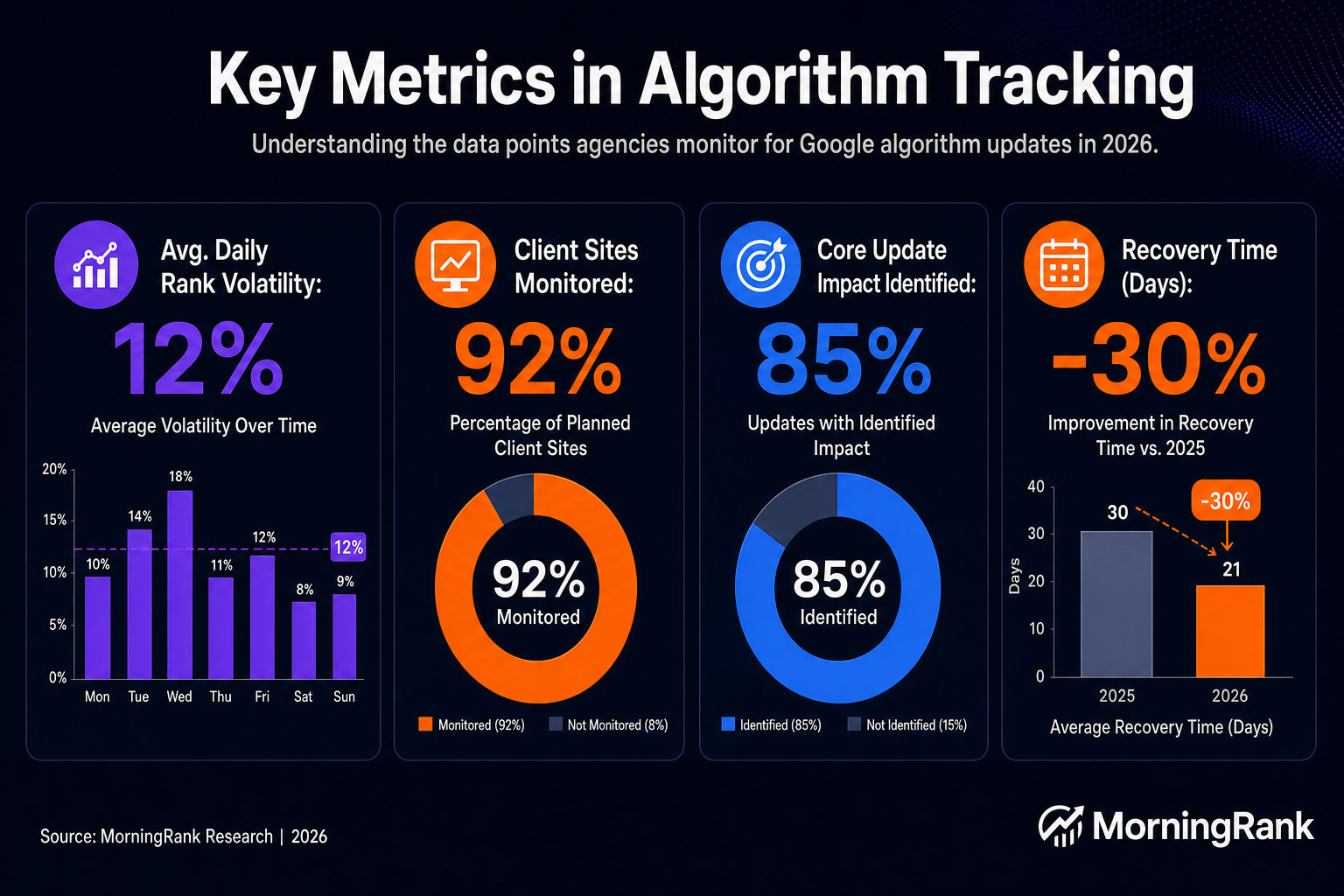
Google algorithm update tracking is the continuous process of monitoring search engine ranking fluctuations, analyzing their potential causes, and attributing them to specific Google algorithm changes. This practice is crucial for SEO professionals in 2026 to detect ranking shifts, understand their impact, and adapt strategies quickly, ensuring sustained search visibility.
Key Takeaways
- Proactive tracking of Google algorithm updates is essential for maintaining and improving search visibility in 2026.
- Utilize specialized tools for real-time rank tracking, SERP volatility monitoring, and competitor analysis.
- Focus on core SEO principles like E-E-A-T, user experience, and technical hygiene to build resilience against updates.
- Attribute ranking changes to specific updates by correlating performance data with announced and unconfirmed algorithm shifts.
- Regularly audit and adjust client strategies based on comprehensive tracking data and insights.
In the dynamic landscape of 2026, Google algorithm updates are not just periodic events; they are a continuous flow of adjustments designed to refine search results. For agencies and local businesses, simply reacting to ranking drops is no longer sufficient. Proactive Google algorithm update tracking is your first line of defense and offense, allowing you to anticipate, understand, and strategically respond to changes before they impact your clients' bottom line significantly. I've audited countless sites, and in my experience, those with robust tracking protocols consistently demonstrate greater resilience and faster recovery.
Why is Google Algorithm Tracking Crucial for SEO Agencies in 2026?
Google's algorithms are constantly evolving to provide users with the most relevant and high-quality search results. These updates can range from minor tweaks to major core updates that significantly alter ranking factors. For SEO agencies, understanding and tracking these shifts is paramount for several reasons. Firstly, it allows for timely identification of ranking changes, whether positive or negative. Early detection means faster diagnosis and strategic intervention.
Secondly, effective tracking provides the data needed to understand the "why" behind ranking fluctuations. Was it a core update targeting content quality? A spam update affecting link profiles? Or a product reviews update impacting e-commerce listings? Without precise tracking, these questions remain unanswered, leading to reactive guesswork rather than data-driven decisions. Lastly, tracking empowers agencies to communicate proactively and transparently with clients, explaining performance changes and outlining strategic responses with confidence.
What Tools Are Essential for Tracking Google Algorithm Updates?
Deploying the right toolkit is fundamental for comprehensive Google algorithm update tracking. I rely on a combination of proprietary and industry-standard platforms. First and foremost, a robust rank tracker is non-negotiable. This tool should provide daily, granular keyword position data across various devices and geographies, allowing you to pinpoint specific ranking shifts. MorningRank's AI-powered keyword rank tracking provides precise insights for local and national SEO, which is invaluable.
Beyond individual keyword performance, you need a tool that monitors overall SERP volatility. Tools like Semrush Sensor or MozCast offer a visual representation of how much the search results are fluctuating, giving you an early warning system for potential updates. Google Search Console is also indispensable, offering official performance data, indexing status, and manual action alerts directly from Google. Finally, a good analytics platform, like Google Analytics 4, helps correlate traffic changes with ranking shifts, providing a holistic view of impact.
How Can You Proactively Identify Potential Algorithm Update Indicators?
Proactive identification of potential Google algorithm update indicators involves more than just waiting for official announcements. It requires continuous monitoring and a keen eye for patterns. I always advise my agency clients to first monitor sudden, widespread fluctuations in their keyword rankings and overall traffic through their rank tracking tools and Google Search Console. A significant dip or spike across multiple clients or keywords in a short period often signals an unconfirmed update.
Another key indicator is increased SERP volatility reported by industry tools. If the "temperature" is rising, it's time to pay closer attention to your data. Staying informed about industry chatter on platforms like Search Engine Roundtable or Search Engine Journal is also vital, as SEO professionals often report anomalies before official confirmation. Furthermore, reviewing your competitors' performance during these volatile periods can provide context and insights into broader industry trends or specific ranking factors being targeted. Historically, Google has made thousands of updates per year. In 2023, Google announced 14 significant updatesmany with multiple iterations, illustrating the constant evolution.
What Strategies Build Resilience Against Future Algorithm Updates?
Building resilience against future Google algorithm updates is about prioritizing Google's core directive: providing the best possible user experience. This means focusing on foundational SEO principles rather than chasing temporary hacks. The E-E-A-T framework (Experience, Expertise, Authoritativeness, and Trustworthiness) is more critical than ever. Produce high-quality, original content that demonstrates deep subject matter expertise and directly answers user queries.
Technical SEO hygiene is another pillar of resilience. Ensure your website is fast, mobile-friendly, secure (HTTPS), and easily crawlable by search engines. Address Core Web Vitals proactively, as these user experience metrics are direct ranking signals. For example, a study by Backlinko found a moderate correlation between Core Web Vitals and higher search rankings. Finally, cultivate a strong and natural backlink profile. Focus on earning links from authoritative and relevant websites, signaling to Google that your content is valuable and trustworthy. These strategies are not update-specific; they are evergreen principles that will serve your clients well regardless of Google's next move.
I've often seen agencies scramble after an update. However, those that continuously invest in these fundamentals tend to weather updates with minimal impact. In some cases, they even see gains as lower-quality sites are demoted. Proactive monitoring with a tool like MorningRank's keyword rank tracking and continuous optimization based on its insights are key. This approach aligns perfectly with our philosophy at MorningRank.
How Do You Attribute Ranking Changes to Specific Algorithm Updates?
Attributing ranking changes to specific Google algorithm updates is a process of elimination and correlation. When a ranking fluctuation occurs, the first step is to check if Google has officially announced an update around that time. Resources like Google Search Central and reputable SEO news sites (e.g., Search Engine Journal, Search Engine Land) are excellent for this. If an official update aligns with your observed changes, delve into the announced focus of that update.
For unconfirmed updates or periods of high volatility, the process is more detective work. Analyze the characteristics of the affected pages and keywords. Did content-heavy pages drop? Look towards content quality or E-E-A-T related factors. Were technical issues prevalent on affected pages? Focus on crawlability or Core Web Vitals. Did a specific niche or industry see widespread changes? Compare your site's characteristics with those that gained or lost rankings. This involves looking at data for specific groups of keywords or pages, like those related to particular topics or those with certain technical characteristics. This structured approach helps narrow down the potential algorithmic targets. I recommend reading Mastering Google Algorithm Update Forensics: A 2026 Guide to Diagnosis for a deeper dive.
Conclusion
In 2026, Google algorithm update tracking is no longer a luxury but a fundamental requirement for successful SEO. By embracing proactive monitoring, utilizing advanced tools, and focusing on evergreen SEO principles, agencies can navigate Google's evolving search landscape with confidence. The ability to quickly identify, understand, and respond to algorithmic shifts differentiates top-performing agencies from those constantly playing catch-up. Prioritizing user experience, E-E-A-T, and technical excellence provides the strongest foundation for enduring search visibility. For further reading on related topics, consider Building Google Algorithm Resilience: A Proactive SEO Guide for 2026 or Navigating Google's E-E-A-T Updates: An Agency Playbook for 2026. These resources offer additional strategies to solidify your SEO approach.

Frequently Asked Questions
What does Google algorithm update tracking involve?
Google algorithm update tracking involves constantly monitoring changes in search engine rankings, analyzing SERP volatility, and correlating these shifts with known or suspected Google algorithm adjustments. This process helps SEO professionals understand why rankings change and how to adapt strategies effectively.
How often does Google update its algorithm in 2026?
Google constantly updates its algorithm, making thousands of minor adjustments throughout the year. Major, publicly announced core updates typically occur several times a year, with additional specific updates targeting spam, product reviews, or local search.
Can I prevent negative impacts from Google algorithm updates?
While you cannot prevent Google algorithm updates, you can build strong resilience by focusing on foundational SEO principles. This includes delivering exceptional user experience, producing high-quality E-E-A-T content, maintaining technical SEO hygiene, and building a natural, authoritative backlink profile.
What should I do immediately after noticing a ranking drop?
Immediately after noticing a ranking drop, check your rank tracking tools and Google Search Console for the extent of the impact. Then, cross-reference the timing with any recent official Google algorithm announcements or periods of high SERP volatility reported by industry tools. Begin analyzing affected pages for common characteristics.
How can MorningRank help with Google algorithm update tracking?
MorningRank offers AI-powered keyword rank tracking with granular daily data, allowing you to quickly identify ranking shifts and their potential causes. Our platform also provides valuable insights into competitor performance and helps agencies manage and report on these changes to clients effectively. Track your performance with precision.
Start mastering Google algorithm update tracking today and ensure your clients maintain their competitive edge. Try MorningRank free.
Want this kind of insight every week?
MorningRank delivers daily rank tracking, AI SEO recommendations, and white label client reporting.