
Mastering Google Algorithm Update Preparation: A 2026 SEO Blueprint
Google algorithm updates are continuous adjustments to the search engine's ranking systems, designed to improve the quality and relevance of search results for…
 Christina Blair
“In my experience, sites that actively cultivate E-E-A-T signals tend to recover faster, or even benefit, from core algorithm updates.”
Google algorithm updates are continuous adjustments to the search engine's ranking systems, designed to improve the quality and relevance of search results for users. Agencies and local businesses that proactively prepare for these updates in 2026 are better positioned to maintain search visibility, mitigate ranking drops, and capitalize on new opportunities.
Key Takeaways
- Proactive Google algorithm update preparation involves continuous monitoring of ranking shifts and industry news.
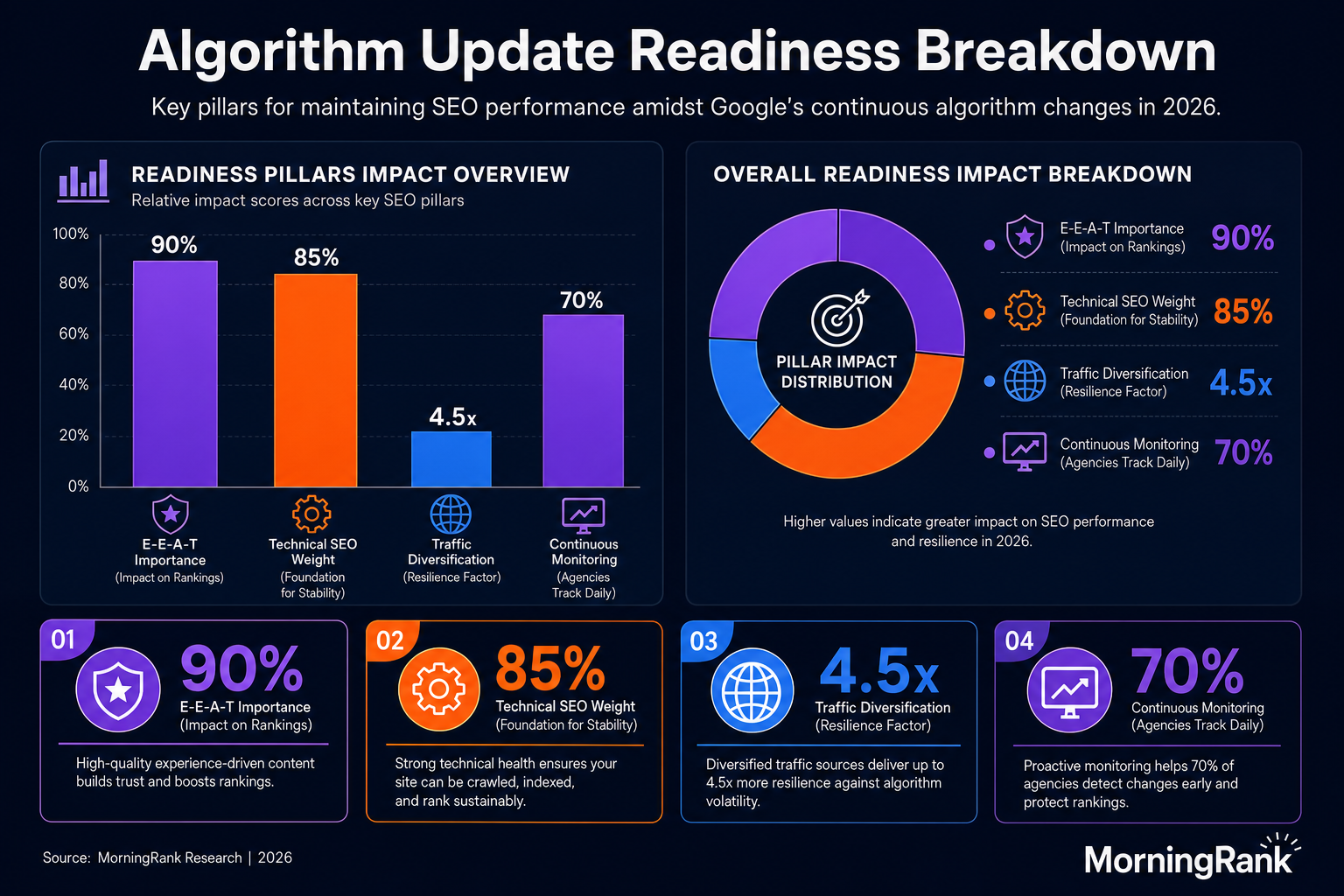
- Prioritizing E-E-A-T signals across all content is essential for long-term SEO stability.
- Technical SEO excellence, including Core Web Vitals, builds a robust foundation against algorithmic changes.
- Diversifying traffic sources and not relying solely on organic search reduces vulnerability to updates.
- Agencies must communicate clearly with clients about the dynamic nature of Google's algorithms.
Google's algorithms are in a constant state of evolution. For agencies and local businesses, this means that SEO is not a "set it and forget it" endeavor; it requires ongoing vigilance and strategic adaptation. In my experience, the most successful entities are those that view algorithm updates not as threats, but as regular checkpoints to reaffirm their commitment to quality and user experience. This post will walk you through a comprehensive SEO blueprint for Google algorithm update preparation in 2026ensuring your clients remain resilient and competitive.
What is Google Algorithm Update Preparation, and Why Does it Matter?
Google algorithm update preparation is the strategic process of optimizing a website and its content to align with Google's evolving ranking factors, thereby minimizing negative impacts and maximizing positive outcomes from algorithm changes. This proactive stance is vital because Google rolls out thousands of updates annually. While most are minor, some are significant "core updates" that can drastically alter search engine results pages (SERPs).
Preparing proactively means you are less likely to experience sudden, unexplained drops in rankings and traffic. Instead, you can anticipate potential shifts and adjust your strategies accordingly. This minimizes client panic, preserves trust, and positions your agency as a forward-thinking expert. A reactive approach, on the other hand, often leads to scrambling, costly recovery efforts, and potential client churn. For instance, a study by BrightLocal found that 68% of consumers would stop using a local business if they had a negative online experiencehighlighting the importance of maintaining strong online visibility.
Effective preparation involves not just understanding what Google values today, but also anticipating what it will prioritize tomorrow. This often ties into foundational SEO principles that remain constant despite algorithmic shifts. Prioritizing user experience, authoritative content, and a technically sound website are evergreen strategies that form the bedrock of any successful preparation plan. By focusing on these core elements, you build an inherent resilience into your SEO efforts, making your sites less susceptible to the volatility that often accompanies major updates. I've audited countless sites that saw significant drops because they chased fleeting trends instead of solidifying their SEO foundation.
How Does E-E-A-T Influence Google Algorithm Update Readiness in 2026?
E-E-A-T, which stands for Experience, Expertise, Authoritativeness, and Trustworthiness, is a fundamental pillar of Google's ranking systems and profoundly influences Google algorithm update readiness. Google explicitly states that E-E-A-T is a critical factor, particularly for Your Money or Your Life (YMYL) topics, which encompass areas like finance, health, and safety. Websites demonstrating high E-E-A-T signals are generally more robust against algorithm fluctuations because they align with Google's ultimate goal: to provide users with reliable, high-quality information.
To prepare for algorithm updates through an E-E-A-T lens, agencies should:
- Showcase Experience: Ensure content is written or reviewed by individuals with genuine firsthand experience on the topic. Use author bios with relevant credentials and link to their professional profiles.
- Highlight Expertise: Develop content that thoroughly addresses user queries and demonstrates deep knowledge. This means going beyond surface-level information and providing comprehensive, nuanced answers.
- Build Authoritativeness: Earn high-quality backlinks from reputable sources within your industry. This external validation signals to Google that your site is a trusted resource. You can track referring domains with MorningRank's backlink monitoring tool.
- Establish Trustworthiness: Maintain transparent contact information, secure your site with HTTPS, ensure accuracy of facts and citations, and moderate user-generated content. Providing clear privacy policies and terms of service also contributes to trust.
In my experience, sites that actively cultivate E-E-A-T signals tend to recover faster, or even benefit, from core algorithm updates. These sites consistently demonstrate to Google that they are providing genuine value to users, making them less likely to be negatively impacted by changes designed to filter out low-quality content. It's not about tricking the algorithm, but about genuinely serving the user. This approach aligns perfectly with Google's ongoing efforts to enhance search quality, as detailed on Google Search Central.

What Technical SEO Optimizations are Key for Algorithm Adaptability?
Technical SEO optimizations are critical for Google algorithm update preparation and adaptability in 2026. A technically sound website provides a stable foundation for all other SEO efforts, making it less vulnerable to algorithmic shifts. Google prioritizes user experience, and technical elements directly contribute to how users interact with your site and how effectively Google can crawl, index, and understand your content.
Key technical optimizations include:
- Core Web Vitals: Focus on optimizing for Largest Contentful Paint (LCP), First Input Delay (FID), and Cumulative Layout Shift (CLS). These metrics measure loading performance, interactivity, and visual stability, directly impacting user experience. Google has confirmed Core Web Vitals as a ranking signalmaking their optimization non-negotiable for update readiness.
- Mobile-First Indexing: Ensure your website is fully responsive and offers an excellent experience on mobile devices. Google primarily uses the mobile version of your content for indexing and ranking. Any discrepancies or poor mobile performance can significantly hinder your search visibility.
- Site Speed: Beyond Core Web Vitals, strive for overall fast loading times. Users expect quick experiences, and Google rewards sites that deliver them. Minify code, optimize images, leverage browser caching, and use a Content Delivery Network (CDN).
- Crawlability and Indexability: Regularly audit your site to ensure Googlebot can easily crawl and index all important pages. Check your robots.txt file, sitemap, and internal linking structure. Use MorningRank's automated SEO site audit tool to identify and fix issues.
- Schema Markup Implementation: Properly implementing structured data helps Google understand the context of your content. This can lead to rich snippets and enhanced visibility in SERPs and AI Overviewswhich are increasingly important for generative engine optimization.
In my experience, technical issues often magnify the negative impact of algorithm updates. A site with a strong technical foundation can weather changes more effectively, as Google can clearly see and interpret its value. Ignoring technical SEO is like building a house on sand; it might look good for a while, but it won't stand up to the storms.
How Does Continuous Monitoring Inform Google Algorithm Update Preparation?
Continuous monitoring is an indispensable component of Google algorithm update preparation, providing essential data to inform and refine SEO strategies. By consistently tracking key performance indicators, agencies and local businesses can detect early signs of algorithmic shifts, understand their impact, and adapt quickly. This proactive surveillance allows for strategic adjustments before minor fluctuations escalate into significant ranking issues.
Effective continuous monitoring involves:
- Daily Keyword Rank Tracking: Monitor your target keywords across various locations and devices. Sudden drops or gains for specific keyword groups can signal an algorithm shift. MorningRank's AI-powered keyword rank tracking offers granular insights to spot these changes quickly.
- Traffic and Conversion Analysis: Beyond rankings, observe organic traffic trends in Google Analytics and conversion rates. A dip in traffic, even if rankings remain stable, could indicate a change in user intent or SERP feature dominance.
- SERP Feature Tracking: Keep an eye on changes in SERP features, such as AI Overviews, local packs, featured snippets, and knowledge panels. Algorithm updates can alter the visibility and format of these features, directly impacting your click-through rates. MorningRank's SERP feature tracking tool is invaluable here.
- Competitor Performance: Monitor your competitors' rankings and traffic. If their performance mirrors yours after an update, it might indicate a broad algorithmic change affecting the entire niche. If they surge while you drop, it suggests specific weaknesses in your strategy.
- Google Search Console Data: Regularly review performance reports in Google Search Console for sudden changes in impressions, clicks, average position, and indexing issues. This first-party data from Google is crucial for understanding direct algorithmic impact.
In my experience, agencies that integrate robust monitoring into their workflow are far more resilient. They can identify patterns, correlate them with known or suspected updates, and implement targeted solutions rather than engaging in guesswork. This data-driven approach is the hallmark of effective Google algorithm update preparation.
Why is Diversifying Traffic Sources Essential for Algorithm Readiness?
Diversifying traffic sources is essential for Google algorithm readiness because it insulates your business from the inherent volatility of organic search. While organic traffic from Google remains a primary driver for many, relying solely on it makes your online presence highly vulnerable to algorithm updates. A significant negative shift can wipe out months or even years of SEO effort overnight, severely impacting lead generation and revenue.
By building multiple channels, you create a more stable and resilient digital ecosystem. If one channel experiences a downturn due to an algorithm update or platform change, others can compensate, maintaining overall business continuity. This strategy minimizes risk and provides a buffer, allowing your team time to analyze and adjust your SEO efforts without immediate existential pressure.
Consider these alternative traffic sources:
- Paid Advertising: Google Ads, social media ads, and display ads can provide immediate, targeted traffic. This is particularly useful for quickly recovering lost organic visibility or boosting campaigns during critical periods.
- Social Media Marketing: Building a strong presence on relevant social platforms can drive significant referral traffic and brand awareness. Engaging with your audience and sharing valuable content keeps your brand top of mind.
- Email Marketing: An owned audience via an email list is incredibly powerful. Direct communication with subscribers provides a consistent traffic source that is immune to algorithm changes.
- Direct Traffic: Cultivating brand recognition through offline marketing, PR, and excellent customer service encourages users to type your URL directly into their browser, signaling strong brand loyalty to search engines.
- Referral Traffic: Partnering with complementary businesses, guest posting on industry blogs, or securing mentions on high-authority websites can bring qualified referral traffic.
A diversified approach ensures that your clients are not putting all their eggs in one algorithmic basket. In my experience, businesses with a balanced traffic portfolio rarely face catastrophic losses after a Google update, unlike those heavily reliant on a single source. It's about building a robust digital presence that thrives beyond just Google's organic search.
Conclusion: Your Blueprint for Google Algorithm Update Preparation in 2026
Successfully navigating Google algorithm updates in 2026 requires more than just reactive adjustments; it demands a proactive and comprehensive approach. By prioritizing E-E-A-T, maintaining technical SEO excellence, engaging in continuous monitoring, and diversifying your traffic sources, agencies and local businesses can build an SEO blueprint that is not only resilient but also poised for sustained growth. Embrace these strategies to transform potential threats into opportunities for strengthening your online presence and consistently delivering value to your clients.
Related reading: Mastering Google Algorithm Update Tracking in 2026.
Frequently Asked Questions
What are Google algorithm updates?
Google algorithm updates are changes to the complex system Google uses to rank websites in search results. These updates, ranging from minor tweaks to major core updates, aim to improve the relevance and quality of information presented to users, directly impacting search visibility and rankings.
How frequently does Google update its algorithm?
Google updates its algorithm thousands of times annually, though most are minor and unconfirmed. Major "core updates" are typically rolled out a few times a year, often leading to noticeable shifts in search rankings for many websites. Consistent Google algorithm update preparation helps mitigate potential negative effects.
Can I predict a Google algorithm update?
No, you cannot precisely predict when Google will release an algorithm update. However, by monitoring industry news, official announcements from Google Search Centraland tracking tools, you can anticipate potential changes and observe the early signs of an update rollout, which is part of effective Google algorithm update preparation.
What is the most important factor for surviving Google algorithm updates?
The most important factor for surviving Google algorithm updates is consistently prioritizing user experience and content quality, aligned with Google's E-E-A-T guidelines. Websites that genuinely serve user needs with authoritative, trustworthy, and well-organized information tend to fare better and maintain long-term search visibility.
How can MorningRank help with Google algorithm update preparation?
MorningRank offers a suite of toolsincluding AI-powered keyword rank tracking, SERP feature tracking, and automated SEO site audits, to help agencies and local businesses with Google algorithm update preparation. These features enable continuous monitoring of performance, identification of issues, and tracking of competitor movements, providing the data needed for informed strategic adjustments.
Ready to build a resilient SEO strategy for your clients? Try MorningRank free today and put these Google algorithm update preparation strategies into action. Visit https://morningrank.com.
Want this kind of insight every week?
MorningRank delivers daily rank tracking, AI SEO recommendations, and white label client reporting.