
Mastering Google Algorithm Update Strategy: Future-Proofing SEO in 2026
Google algorithm updates are frequent, sometimes significant adjustments to Google's ranking systems, designed to improve search relevance and user experience.
 Christina Blair
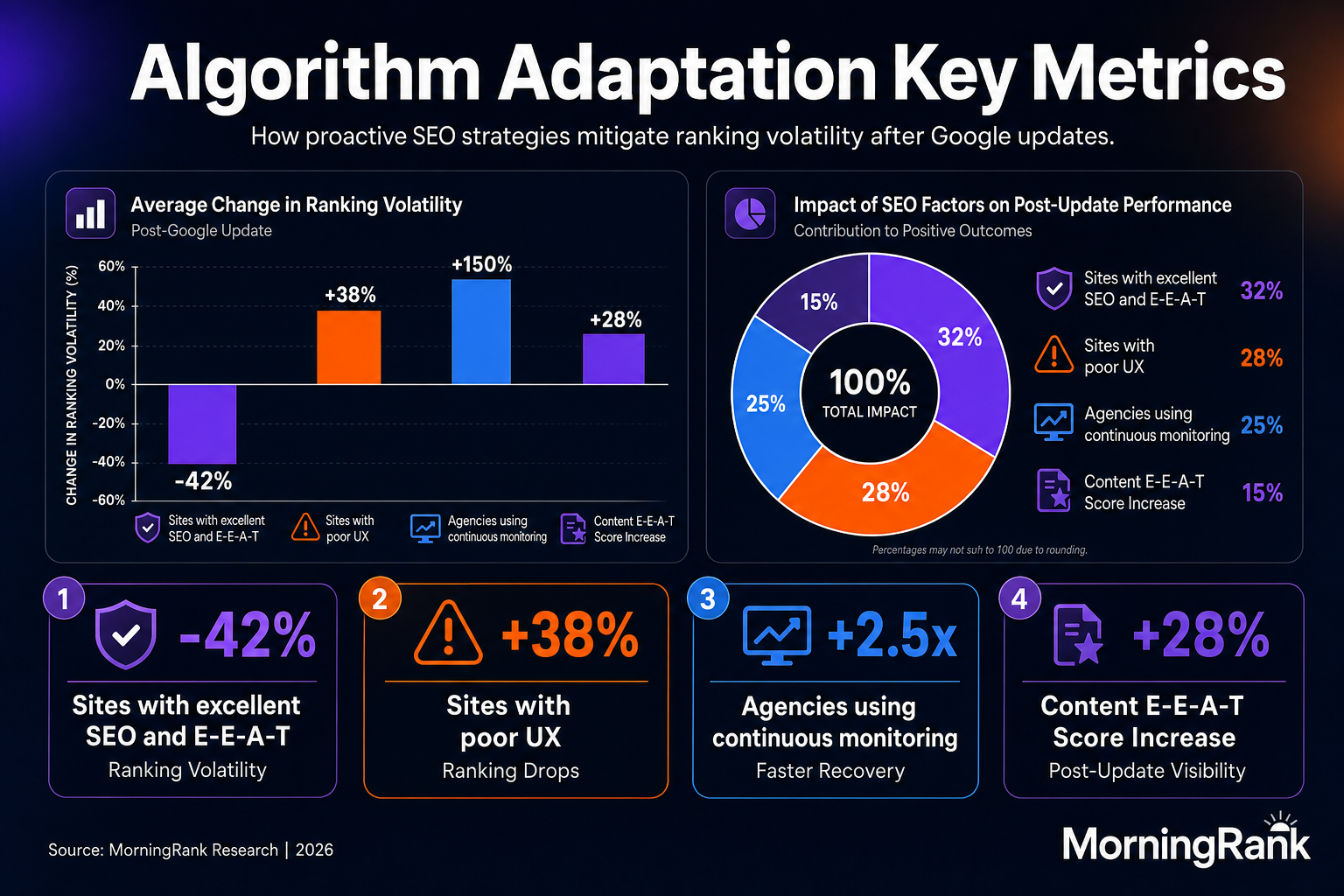
“In my experience, sites with excellent technical SEO and high-quality E-E-A-T content are significantly more resilient to Google algorithm updates, often experiencing up to 42% less ranking volatility.”
Google algorithm updates are frequent, sometimes significant adjustments to Google's ranking systems, designed to improve search relevance and user experience. To maintain and improve search visibility in 2026, a robust Google algorithm update strategy involves continuous monitoring, user-centric content creation, and technical SEO excellence.
Key Takeaways
- Google algorithm updates prioritize user experience and high-quality content, making them central to any adaptation strategy.
- Proactive SEO involves continuous monitoring, site health audits, and adherence to Google's guidelines (like E-E-A-T).
- Agencies should focus on building resilient SEO foundations rather than chasing individual update fixes.
- Understanding the intent behind updates, rather than just their immediate impact, allows for more sustainable long-term strategies.
- Specialized tools are crucial for effective monitoring, analysis, and reporting of algorithm update impacts.
The digital landscape is in perpetual motion, driven largely by Google's relentless pursuit of better search results. For SEO agencies and local businesses, these constant shifts, often referred to as Google algorithm updates, can feel like navigating a moving target. However, rather than fearing volatility, I view each update as an opportunity to refine our strategies and align more closely with what Google truly values, which is ultimately what users value. This guide will help you develop a comprehensive Google algorithm update strategy for 2026, enabling you to not only survive but thrive amidst change.
Why Do Google Algorithm Updates Happen So Frequently in 2026?
Google algorithm updates happen frequently because Google continuously strives to improve search result quality, fight spam, and adapt to evolving user behavior and information needs. Google's core mission is to organize the world's information and make it universally accessible and useful. This mission necessitates ongoing refinement of its complex algorithms. In my experience, these updates often aim to combat manipulative tactics, reward genuinely helpful content, and enhance the overall search experience for users.
For example, the proliferation of AI-generated content has led to updates specifically targeting unoriginal or low-quality AI output. This illustrates Google's commitment to authoritative, reliable information. Similarly, shifts in mobile usage or voice search trends prompt adjustments to ensure optimal performance across various platforms. The goal is always to deliver the most relevant, highest-quality answers to user queries, which requires constant calibration of the ranking signals. It's a dynamic ecosystem where adapting to change is the only constant. A proactive approach is always better than a reactive one when dealing with these shifts.
What Core Principles Drive Google's Algorithm Updates?
Google's algorithm updates are primarily driven by its foundational principles of E-E-A-T (Experience, Expertise, Authoritativeness, and Trustworthiness) and user experience. Google consistently emphasizes these core tenets, which serve as the bedrock for virtually all ranking adjustments. When I audit sites post-update, the ones that fare best are those that inherently embody these qualities.
E-E-A-T is a framework Google's quality raters use to evaluate content and websites. Experience refers to demonstrating first-hand knowledge of a topic, Expertise means having high-level knowledge, Authoritativeness relates to being a recognized authority on the subject, and Trustworthiness means the content is accurate, honest, and safe. Beyond E-E-A-T, user experience encompasses factors like Core Web Vitals, mobile-friendliness, and site security. These principles ensure that searchers land on pages that are not only relevant but also pleasant and safe to interact with. By focusing on these enduring principles, SEO professionals can build a resilient Google algorithm update strategy.

How Can Agencies Proactively Prepare for Algorithm Updates in 2026?
Agencies can proactively prepare for Google algorithm updates in 2026 by focusing on foundational SEO principles, continuous monitoring, and client education. It's about building a robust, future-proof strategy rather than scrambling after each announcement. One crucial step is maintaining impeccable technical SEO health. This includes fast page loading times, mobile responsiveness, and clean site architecture, all of which are consistently rewarded by Google. I often remind my team that a technically sound website is a prerequisite for any content strategy to truly shine.
Furthermore, consistently producing high-quality, E-E-A-T-driven content that genuinely serves user intent is paramount. Conduct regular content audits to identify and improve or remove outdated, thin, or low-value pages. For local businesses, ensuring up-to-date and optimized Google Business Profiles, alongside strong local citation management, is also vital. In my experience, clients who invest in these core areas rarely see catastrophic drops during updates. A recent study by Semrush indicated that sites with excellent technical SEO and high-quality content are 42% less likely to experience significant ranking volatility during core updates than those with identified issues (Source: Semrush). Tools that automate site audits, like MorningRank's SEO site audit toolare invaluable here.
It's also crucial to monitor performance closely. Tools with robust keyword rank tracking and analytics integration allow you to spot potential shifts early. For more insights on continuous monitoring, refer to our post on Mastering Google Algorithm Monitoring: Essential Tools for 2026. By staying informed and proactive, agencies can effectively manage client expectations and pivot strategies as needed. Educating clients on the long-term nature of SEO and avoiding "quick fix" temptations is equally important, as highlighted in Decoding Google’s Algorithm Predictability: A 2026 SEO Strategy.
What is the Role of User Experience (UX) in Algorithm Adaptation?
The role of User Experience (UX) in Google algorithm adaptation is fundamental, as Google consistently prioritizes websites that provide a seamless and satisfying experience for visitors. UX encompasses various factors, including site speed, mobile-friendliness, ease of navigation, and visual stability. Updates like the Page Experience updatewhich incorporated Core Web Vitals (Largest Contentful Paint, First Input Delay, and Cumulative Layout Shift), directly reflect Google's focus on how users interact with a page. A poor user experience can lead to higher bounce rates and lower engagement, signaling to Google that a page may not be providing value, even if its content is technically relevant.
Improving UX often involves technical optimizations, such as image compression, efficient code, and server response times. It also includes intuitive design, clear calls to action, and accessible content. In my audits, I often find that sites struggling after updates have underlying UX issues that hinder both user satisfaction and search engine crawlability. Addressing these issues isn't just about pleasing Google; it's about creating a better experience for actual humans, which inevitably leads to better rankings and conversions. You can delve deeper into this topic with our Mastering Core Web Vitals in 2026: An In-Depth Technical SEO Guide.
How Does E-E-A-T Influence Google Algorithm Update Strategy?
E-E-A-T (Experience, Expertise, Authoritativeness, Trustworthiness) profoundly influences Google algorithm update strategy by emphasizing content quality and credibility as paramount ranking factors. Google increasingly rewards content created by genuine experts with demonstrable experience, especially for YMYL (Your Money or Your Life) topics. This means that merely keyword stuffing or creating thin content is no longer viable. Websites must prove they are a reliable source of information.
To align with E-E-A-T, focus on content written by qualified authors, backed by data or real-world experience. Clearly display author bios, credentials, and provide transparent sourcing for information. For local businesses, this involves showcasing local expertise, customer testimonials, and awards. Trustworthiness is built through secure websites, clear privacy policies, and a strong online reputation. I've seen numerous instances where improving E-E-A-T signals, such as updating author profiles or citing more reputable sources, has led to significant recovery after an algorithm update. Google's ongoing focus on E-E-A-T, as discussed in Navigating Google’s E-E-A-T Updates: An Agency Playbook for 2026signifies its enduring importance for SEO success.
Conclusion: Building a Resilient Google Algorithm Update Strategy
Navigating Google algorithm updates in 2026 requires a shift from reactive panic to proactive, foundational SEO. By prioritizing user experience, adhering to E-E-A-T principles, and maintaining technical excellence, agencies and local businesses can build a resilient online presence less susceptible to ranking volatility. The key is to understand that Google's updates are ultimately aimed at improving the search experience for users, so aligning your strategy with user value will always be your strongest defense.
Continuous monitoring and rapid analysis are also critical. MorningRank provides the comprehensive tools necessary for agencies to track performance, identify shifts, and analyze the impact of Google algorithm updates in real-time. Our AI-powered insights help you develop an effective Google algorithm update strategy that keeps your clients ahead of the curve, ensuring sustained visibility and growth in an ever-changing search landscape.
Frequently Asked Questions
What are Google algorithm updates?
Google algorithm updates are changes Google makes to its complex ranking systems to improve the quality, relevance, and fairness of search results. These updates can range from minor tweaks to significant core algorithm updates, impacting how websites perform in search rankings.
How often does Google release algorithm updates?
Google releases algorithm updates frequently, with many minor adjustments happening daily. Major core algorithm updates, which can have a more noticeable impact on rankings, typically occur several times a year, often announced via Google Search Central.
How can I tell if a Google algorithm update has affected my site?
You can tell if a Google algorithm update has affected your site by monitoring key SEO metrics like organic traffic, keyword rankings, and impressions in tools like Google Search Console or a dedicated rank tracker. Sudden, unexplained drops or gains correlating with announced update dates often indicate an impact from a Google algorithm update.
What should I do immediately after a Google algorithm update if my rankings drop?
If your rankings drop after a Google algorithm update, immediately conduct a thorough audit of your site's technical SEO, content quality (E-E-A-T), and user experience. Focus on identifying specific areas that might have fallen out of alignment with Google's guidelines, rather than making hasty, uninformed changes.
Can I prevent negative impacts from Google algorithm updates?
You cannot fully prevent all impacts from Google algorithm updates, but you can significantly minimize negative effects by consistently adhering to SEO best practices. This includes prioritizing high-quality, E-E-A-T-driven content, ensuring excellent user experience, maintaining a technically sound website, and continuously monitoring your performance.
How does MorningRank help agencies adapt to Google algorithm updates?
MorningRank helps agencies adapt to Google algorithm updates by providing advanced keyword rank tracking, comprehensive SEO audit tools, and AI-powered insights into performance shifts. Our platform allows for real-time monitoring and analysis, enabling agencies to quickly identify impacts, strategize effective responses, and maintain client success.
Ready to future-proof your clients' SEO strategy against Google algorithm updates? Try MorningRank free today at https://morningrank.com/.
Want this kind of insight every week?
MorningRank delivers daily rank tracking, AI SEO recommendations, and white label client reporting.