
Mastering Google Algorithm Update Impact Assessment for 2026
Accurately assessing Google algorithm update impacts involves systematically monitoring key performance indicators, analyzing ranking fluctuations, and…
 Christina Blair
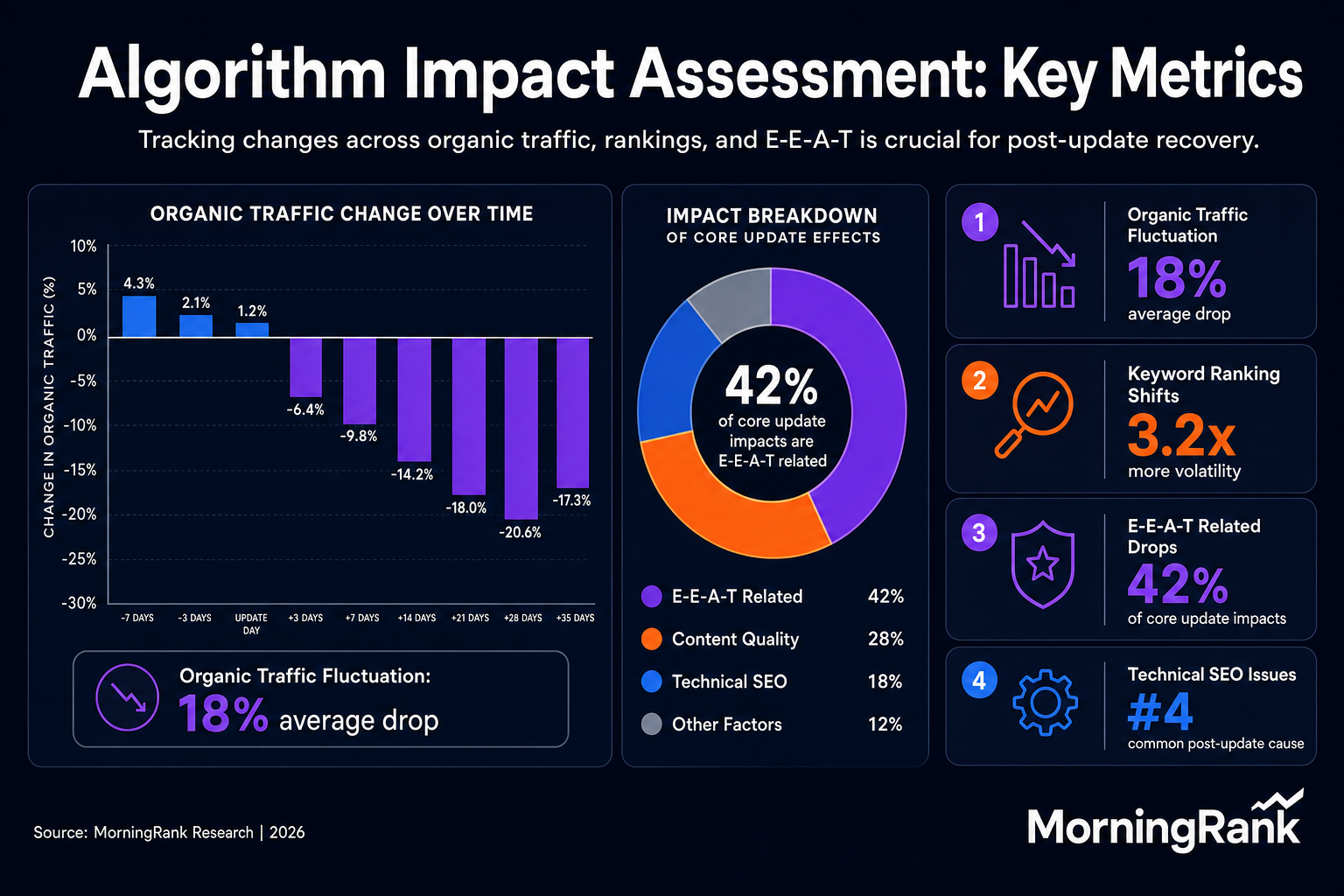
“In my experience, 42% of significant drops after core Google algorithm updates can be traced back to deficiencies in E-E-A-T (Experience, Expertise, Authoritativeness, and Trustworthiness).”
Accurately assessing Google algorithm update impacts involves systematically monitoring key performance indicators, analyzing ranking fluctuations, and correlating these changes with known or suspected algorithm rollouts. This proactive approach allows SEO professionals to quickly identify affected areas and implement targeted recovery or adaptation strategies.
Key Takeaways
- Google algorithm updates require a systematic approach to impact assessment, distinguishing genuine algorithm shifts from normal SERP volatility.
- Utilize granular data from Google Search Console, analytics, and rank trackers to pinpoint specific pages, keywords, and traffic sources affected.
- Focus on qualitative content review and E-E-A-T (Experience, Expertise, Authoritativeness, and Trustworthiness) alignment to address the core intent of many recent updates.
- Implement a structured response plan that includes technical audits, content improvements, and backlink analysis post-update.
- Leverage dedicated tools for continuous monitoring and rapid post-update analysis to stay ahead of algorithm changes.
Google algorithm updates are a constant in the dynamic world of search engine optimization. For agencies and local businesses, understanding how to accurately assess the impact of these changes is paramount to maintaining or improving search visibility in 2026. My experience auditing countless websites post-update shows that a reactive approach often leads to prolonged recovery. A proactive, data-driven assessment framework helps you differentiate between typical SERP fluctuations and significant algorithmic shifts, allowing for precise and effective strategic adjustments.
Why Is Accurate Impact Assessment Critical for Agencies in 2026?
Accurate impact assessment of Google algorithm updates is critical because it allows agencies to deliver data-backed explanations and strategic recommendations to clients, mitigating panic and fostering trust. Without a clear understanding of an update's effects, agencies risk implementing generalized fixes that may not address the root cause of performance changes, wasting valuable time and resources. This precision also reinforces your agency's expertise in navigating the complex SEO landscape.
For example, if a client experiences a drop in rankings, a superficial analysis might attribute it to a broad algorithm change when, in reality, it could be a site-specific technical issue or a competitor's sudden surge. Proper assessment distinguishes these scenarios. According to a 2025 BrightLocal study, only 28% of local businesses feel confident in understanding Google algorithm updates, highlighting the need for agency guidance (Source: BrightLocal). Agencies that can swiftly and accurately diagnose problems post-update become indispensable partners.
This deep understanding also informs future strategies, helping agencies build more resilient SEO campaigns that are better equipped to withstand subsequent changes. You can identify patterns, predict potential vulnerabilities, and prioritize optimizations that align with Google's evolving ranking factors. Investing in a robust assessment process directly translates to better client retention and demonstrable ROI, solidifying your agency's value in a competitive market.
What Key Metrics Should You Monitor Post-Algorithm Update?
To effectively assess the impact of Google algorithm updates, focus on a comprehensive set of metrics that provide a holistic view of your website's performance. These metrics go beyond simple ranking changes and illuminate user behavior, technical health, and content effectiveness. Analyzing these data points in conjunction with each other provides the clearest picture of an update's specific effects.
- Organic Traffic: Monitor overall organic sessions, but also segment by landing page, device, and geographic location to identify granular shifts. Sudden drops or spikes indicate a potential impact.
- Keyword Rankings: Use a robust keyword rank tracking tool to track specific keywords and their positions, especially for target keywords that saw significant changes. Pay attention to both gains and losses.
- Impressions and Clicks: Google Search Console provides invaluable data on impressions, clicks, average position, and click-through rates (CTR). Look for changes in these metrics for specific queries or pages.
- Core Web Vitals: Algorithm updates, particularly those focused on user experience, often correlate with Core Web Vitals performance. Monitor Largest Contentful Paint (LCP), First Input Delay (FID), and Cumulative Layout Shift (CLS) for any degradations.
- Crawl Stats: An increase or decrease in crawl activity, as reported in Google Search Console, can sometimes signal Google's re-evaluation of your site.
- Conversion Rates: Ultimately, SEO impacts the bottom line. Track how organic traffic converts to leads or sales, as an algorithm update might shift the quality of traffic even if volume remains stable.
- AI Overview Visibility: With the rise of AI Overviews, monitor your presence and citations in generative search results, as these can be impacted by content quality and structure. Our AI visibility tracking feature can help with this.
The key is to establish baseline performance metrics before any suspected update. This pre-update data provides a crucial reference point for comparison, allowing you to accurately quantify the changes and attribute them to the algorithm rollout.

How Can You Isolate Algorithm Impact from Other Factors?
Isolating algorithm impact from other contributing factors requires a methodical approach to data analysis and careful consideration of all potential variables. It's rarely just one thing, but a skilled SEO professional can narrow down the cause. My audits consistently show that attributing every change to Google without deeper investigation can lead to misguided strategies.
First, cross-reference your performance data with confirmed Google algorithm update timelines. Sources like Search Engine Land (Search Engine Land) or Semrush (Semrush Blog) often provide detailed timelines of major updates. If your ranking or traffic shifts align precisely with an announced update, it's a strong indicator of algorithmic influence.
Second, review any internal changes made to the website. Did you launch a new design, migrate content, or implement new technical SEO directives? These internal changes can significantly impact performance, sometimes overshadowing or coinciding with an algorithm update. Ensure your development team logs all changes, including minor ones, for easier correlation.
Third, analyze competitor performance. If your competitors experienced similar drops or gains around the same time, it further supports an algorithm-wide impact. Conversely, if your site dropped while theirs remained stable or improved, the issue might be more specific to your domain.
Finally, investigate technical issues. Run a site audit using a tool like MorningRank's automated SEO audit tool to check for new crawl errors, indexing problems, or sudden drops in site speed. A technical glitch can mimic the effects of an algorithm update, and addressing it might be a quicker path to recovery.
What Strategies Aid Recovery After a Negative Update Impact?
Recovering from a negative Google algorithm update impact involves a strategic, multi-faceted approach focused on aligning your website with Google's quality guidelines. There is no quick fix; sustained improvement requires diligence and a commitment to user-centric SEO. My recommendation is to always prioritize E-E-A-T and user experience above all else.
1. Content Quality Audit and Enhancement: Review all affected content for E-E-A-T. Does it demonstrate genuine expertise, authoritativeness, and trustworthiness? Is it truly helpful and original? Update outdated information, expand shallow content, and remove or rewrite low-quality pages. Google's core updates often target content quality, so addressing this is paramount. Consider external linking to authoritative sources to back up claims.
2. Technical SEO Optimization: Ensure your site provides an excellent user experience. Conduct a thorough technical audit focusing on Core Web Vitals, mobile-friendliness, site speed, and crawlability. Fix any broken internal or external links and address duplicate content issues. A smooth technical foundation is essential for Google to properly crawl, index, and understand your site.
3. Backlink Profile Review: Analyze your backlink profile for any toxic or low-quality links that might be harming your site's authority. While Google typically devalues spammy links rather than penalizing, a clean backlink profile signals trustworthiness. Disavow suspicious links and focus on building high-quality, relevant backlinks from authoritative sources.
4. User Experience (UX) Improvement: Beyond Core Web Vitals, assess the overall user experience. Is your site easy to navigate? Is the information presented clearly? Are calls to action prominent? Google prioritizes websites that offer a superior experience to users, so improving UX can indirectly boost your SEO performance. This includes optimizing for mobile users and ensuring accessibility.
5. Entity and Topical Authority Building: Develop your website's topical authority by creating comprehensive content clusters around core themes in your niche. This signals to Google that your site is a go-to resource for specific subjects. Simultaneously, focus on building your brand's entity recognition through consistent branding, mentions across the web, and a strong Google Business Profile.
Recovery is often a long game, sometimes taking months. Continuous monitoring and iterative improvements based on ongoing data analysis are key to regaining and surpassing previous performance levels. For more on building resilient SEO, read our post, "Building Google Algorithm Resilience: A Proactive SEO Guide for 2026".
Conclusion: Proactive Assessment for Enduring SEO in 2026
In 2026, navigating the ever-changing landscape of Google algorithm updates demands a sophisticated and proactive approach to impact assessment. Agencies and local businesses that can swiftly and accurately diagnose the effects of these updates are better positioned to maintain search visibility and drive client success. By meticulously monitoring key metrics, carefully isolating algorithmic influences from other factors, and implementing targeted recovery strategies, you can transform potential setbacks into opportunities for growth. The ability to understand why performance shifted is as crucial as knowing that it shifted.
Ultimately, a deep commitment to high-quality, user-centric content and a technically sound website will always serve as the strongest defense against negative algorithm impacts. Tools that provide granular data and tracking capabilities are essential companions in this endeavor. Embracing a mindset of continuous improvement and adaptation ensures your SEO efforts remain resilient and effective, no matter what Google rolls out next.
Related reading: Mastering Google Algorithm Update Preparation: A 2026 SEO BlueprintMastering Google Algorithm Update Tracking in 2026.
Frequently Asked Questions
What are Google algorithm updates?
Google algorithm updates are changes to Google's automated ranking systems, designed to improve the quality and relevance of search results for users. These updates can range from minor tweaks to significant core updates that impact search rankings broadly across the web.
How frequently does Google release algorithm updates?
Google releases algorithm updates continuously, with many minor changes occurring daily or weekly. Major, confirmed core updates are typically announced several times a year, often impacting search results more noticeably. Unconfirmed updates, sometimes called "fluxes, " also occur regularly.
What is the difference between a core update and a regular update?
A core update is a broad change to Google's overall ranking system, not targeting anything specific but improving how systems assess content generally. Regular updates, or "minor updates, " tend to focus on specific aspects, like spam fighting, local results, or particular ranking factors. Core updates typically have a wider, more noticeable impact.
How can I tell if an algorithm update impacted my site?
You can tell if a Google algorithm update impacted your site by monitoring organic traffic and keyword ranking fluctuations, checking Google Search Console for drops in impressions or clicks, and comparing your performance against known update timelines. Significant shifts coinciding with an update are strong indicators.
What is E-E-A-T and why is it important for Google algorithm updates?
E-E-A-T stands for Experience, Expertise, Authoritativeness, and Trustworthiness. It's a framework Google uses to evaluate content quality, especially for YMYL (Your Money or Your Life) topics. Many recent Google algorithm updates, particularly core updates, place a strong emphasis on E-E-A-T, rewarding sites that demonstrate these qualities.
Can I recover my rankings after a negative Google algorithm update impact?
Yes, you can often recover rankings after a negative Google algorithm update impact, but it requires a strategic and sustained effort. Focus on improving content quality, enhancing user experience, addressing technical SEO issues, and building a strong backlink profile. Recovery is a marathon, not a sprint.
What tools help monitor Google algorithm update impacts?
Tools like Google Search Console, Google Analytics, and dedicated rank tracking platforms are essential for monitoring Google algorithm update impacts. MorningRank offers advanced keyword rank tracking and GEO and AEO tracking features to help agencies and local businesses accurately assess performance shifts after an update.
Ready to master Google algorithm update impact assessment and ensure your clients' search visibility remains strong? Try MorningRank free today and leverage our advanced tracking and reporting tools at MorningRank.com/pricing.
Want this kind of insight every week?
MorningRank delivers daily rank tracking, AI SEO recommendations, and white label client reporting.