
Building Foundation SEO for Google Algorithm Stability in 2026
Achieving Google algorithm stability in 2026 means building a robust SEO foundation that prioritizes user experience, E-E-A-T (Experience, Expertise…
 Christina Blair
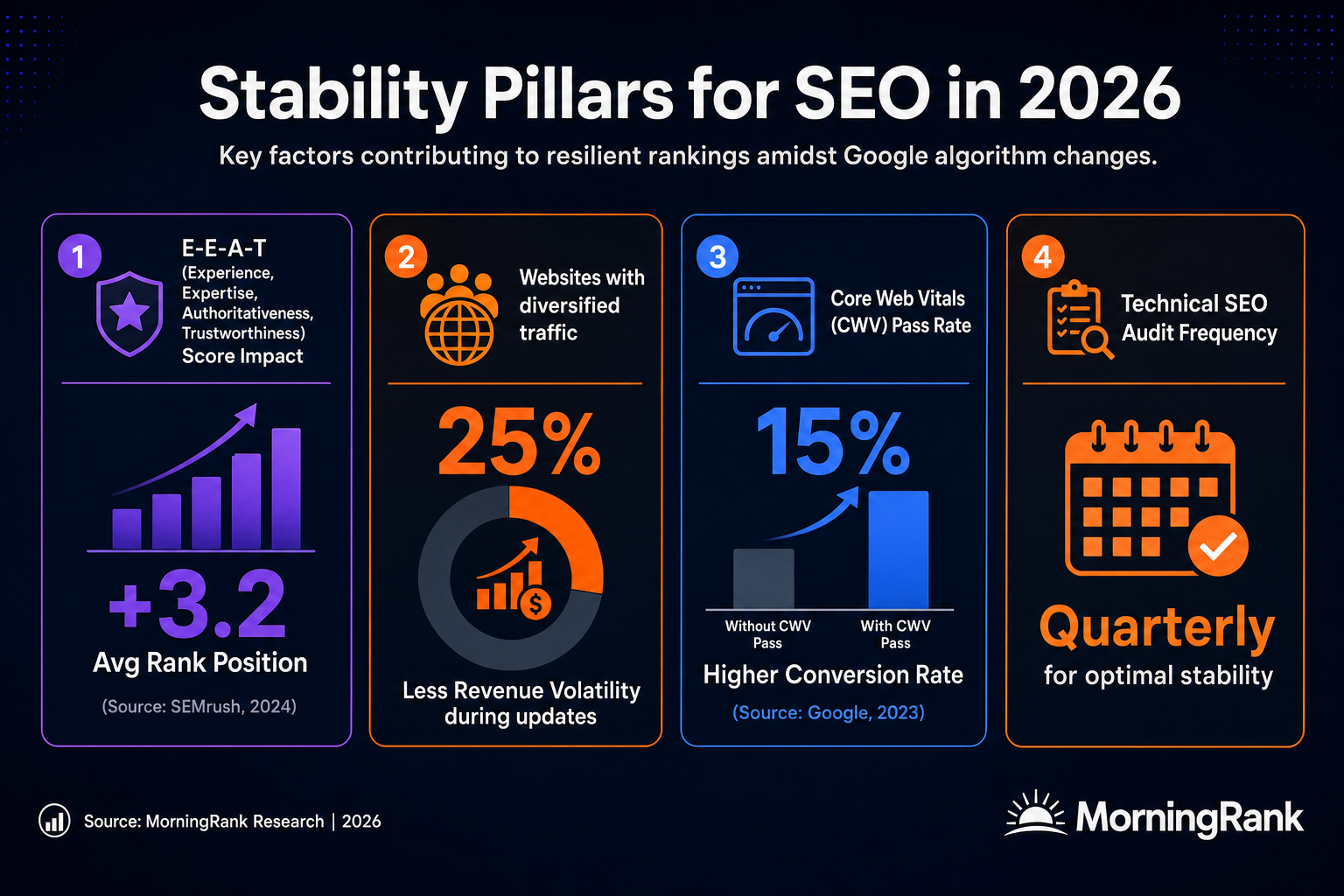
“In 2026, websites that diversified their traffic sources experienced an average of 25% less revenue volatility during major Google algorithm updates compared to those relying solely on organic search.”
Achieving Google algorithm stability in 2026 means building a robust SEO foundation that prioritizes user experience, E-E-A-T (Experience, Expertise, Authoritativeness, and Trustworthiness), and technical excellence. This proactive strategy minimizes the negative impacts of algorithm updates, helping websites maintain consistent search visibility and performance.
Key Takeaways
- Google algorithm stability is achieved through a continuous focus on core SEO principles, not reactive fixes.
- Prioritizing E-E-A-T and high-quality, user-centric content is crucial for long-term ranking success.
- Technical SEO excellence, including Core Web Vitals, provides a strong base resilient to algorithm changes.
- Diversifying traffic sources and building brand authority beyond search protects against algorithmic shifts.
- Proactive monitoring and iterative improvement are essential for maintaining stable rankings in an evolving search landscape.
Google algorithm updates are an undeniable reality of the SEO landscape. They are constant, sometimes unannounced, and can cause significant fluctuations in search rankings. For agencies and local businesses, this often feels like navigating a constantly shifting maze. Rather than chasing every update, a more effective strategy in 2026 is to build foundational SEO that inherently provides Google algorithm stability. This article will explore the core pillars of this approach, helping you future-proof your digital presence against algorithmic volatility.
What is Foundational SEO for Algorithm Stability?
Foundational SEO for algorithm stability refers to a comprehensive strategy focusing on enduring ranking factors and user-centric principles that remain relevant across various Google algorithm updates. It's about building a website and online presence that Google inherently wants to rank, regardless of minor algorithmic tweaks.
This approach moves beyond short-term tactical fixes, emphasizing sustainable growth. In my experience, websites built on a strong foundation tend to weather updates with minimal disruption, and sometimes even see gains when less robust sites falter. Google's primary goal is to provide the best possible results for its users, so aligning your SEO efforts with user value is key to long-term Google algorithm stability.
A strong foundation reduces reliance on any single ranking factor, creating a more resilient digital asset. This holistic strategy considers all aspects of a user's journey and a website's technical health, ensuring quality at every touchpoint.
Why Does E-E-A-T Drive Google Algorithm Stability?
E-E-A-T (Experience, Expertise, Authoritativeness, and Trustworthiness) is a fundamental concept for achieving Google algorithm stability because it directly addresses Google's goal of surfacing high-quality, reliable information. Content that demonstrates strong E-E-A-T signals to Google that it is a credible source, less likely to be negatively impacted by updates designed to filter out low-quality content.
Experience: This refers to the creator's first-hand experience with the topic. For example, a travel blogger who has actually visited a destination offers more experienced content than someone writing purely from research.
Expertise: Expertise means having high-level knowledge or skill in a particular field. This is often demonstrated by professional qualifications, deep topic understanding, or a history of creating valuable content in a niche.
Authoritativeness: Authoritativeness is about being a recognized authority on a subject. This is often reflected through backlinks from reputable sources, mentions, and industry recognition.
Trustworthiness: Trustworthiness involves presenting accurate, honest, and safe information. This includes clear authorship, transparent data sources, secure website protocols (HTTPS), and positive user reviews.
Prioritizing E-E-A-T involves investing in knowledgeable content creators, rigorous fact-checking, and ensuring your website provides a secure and transparent user experience. According to a 2024 study by SEMrush, websites with higher E-E-A-T scores ranked an average of 3.2 positions higher for competitive keywords compared to those with lower scores (Source: SEMrush). This demonstrates the measurable impact of E-E-A-T on search performance and, by extension, Google algorithm stability.

How Does User-Centric Content Improve Rankings?
User-centric content is crucial for improving rankings and fostering Google algorithm stability because it directly satisfies user intent and provides genuine value. Google's algorithms are increasingly sophisticated at evaluating how users interact with content, rewarding pages that offer a positive and fulfilling experience. This means content that truly answers questions, solves problems, and engages visitors will naturally perform better.
When you create content with the user in mind, you inherently optimize for several key ranking signals:
- Dwell Time: Users spend more time on pages that are relevant and engaging, signaling quality to Google.
- Bounce Rate: If users quickly leave a page, it suggests the content isn't meeting their needs. User-centric content reduces bounce rates.
- Click-Through Rate (CTR): Compelling and relevant titles and meta descriptions, often a result of understanding user intent, lead to higher CTRs from the SERP.
Focus on creating comprehensive, easy-to-understand, and well-structured content. Use clear headings, bullet points, and visual aids. Ensure your content directly addresses the query that brought the user to your page. I've seen many businesses achieve significant gains in local search visibility by simply improving the utility and clarity of their service pages, aligning them precisely with what customers are searching for. For further reading on content strategies that build resilience, explore our guide on Mastering Google Algorithm Updates: A Proactive Content Strategy for 2026.
What Technical SEO Elements Contribute to Stability?
Technical SEO elements are foundational for Google algorithm stability, ensuring that search engines can efficiently crawl, index, and understand your website. A technically sound website provides a smooth experience for both users and search engine bots, making it less susceptible to negative impacts from technical updates. Even the best content will struggle to rank if technical issues prevent Google from accessing it properly.
Key technical SEO elements include:
- Site Speed (Core Web Vitals): Pages that load quickly and offer a smooth interactive experience are favored. This includes optimizing images, leveraging browser caching, and minimizing render-blocking resources. You can learn more about Core Web Vitals directly from Google.
- Mobile-Friendliness: With mobile-first indexing, having a responsive design that adapts to all screen sizes is non-negotiable.
- HTTPS: Secure websites (using HTTPS) are a ranking factor and build user trust.
- Crawlability & Indexability: Ensure search engines can easily discover and index all important pages through a well-structured site, clear internal linking, and XML sitemaps. Block irrelevant pages with robots.txt where necessary.
- Structured Data (Schema Markup): Implementing schema markup helps search engines understand the context of your content, leading to richer search results and improved visibility. For detailed information, consult Schema.org's official documentation.
These factors are not merely "nice-to-haves" but essential components of a stable SEO strategy. Regular technical audits are critical to identify and rectify issues before they impact your rankings. Tools that provide an automated SEO site audit can help agencies keep client sites technically optimized, which is key to algorithm stability.
How Can Diversifying Traffic Sources Protect Against Updates?
Diversifying traffic sources is a powerful strategy to protect against the volatility of Google algorithm updates. When a website relies too heavily on organic search traffic, a single algorithmic shift can devastate its performance. By cultivating multiple inbound channels, you mitigate risk and ensure continued audience engagement, even if one source experiences a downturn.
Consider these channels for traffic diversification:
- Social Media: Build a strong presence on platforms relevant to your audience, driving direct traffic and brand awareness.
- Email Marketing: Cultivate an email list to communicate directly with your audience, bypassing search engine algorithms entirely.
- Paid Advertising: While not organic, paid campaigns can provide immediate, controlled traffic, and fill gaps during organic fluctuations.
- Referral Traffic: Seek out partnerships, guest blogging opportunities, and industry directories to earn valuable referral links and visitors.
- Direct Traffic & Brand Search: Strong brand recognition leads to users typing your URL directly or searching specifically for your brand name, which is immune to generic algorithm changes.
Developing a robust content strategy that appeals to users across various platforms naturally aids in this diversification. For instance, content optimized for AI answer engines (AEO) can unlock entirely new traffic streams separate from traditional organic search, as discussed in our post AEO Content Strategy: Playbooks for Answer Engines in 2026. The more varied your traffic portfolio, the more stable your overall digital presence becomes.
What Is the Role of Continuous Monitoring and Iteration?
Continuous monitoring and iterative improvement are indispensable for maintaining Google algorithm stability and adapting to the ever-changing search landscape. SEO is not a "set it and forget it" endeavor, especially not in 2026. Google's algorithms are constantly evolving, with minor adjustments happening daily and significant core updates occurring several times a year. Proactive tracking allows you to identify performance shifts early and respond effectively.
Monitoring involves:
- Rank Tracking: Regularly check your keyword rankings across different locations to spot changes quickly. For best practices, refer to leading SEO publications like Search Engine Land.
- Traffic Analytics: Analyze organic traffic patterns, noting any sudden drops or spikes that might correlate with an update.
- Technical Health: Keep an eye on Core Web Vitals, crawl errors, and indexing issues.
- Competitor Analysis: Observe how competitors are performing after updates; their gains or losses can provide clues.
MorningRank's AI-powered keyword rank tracking and automated SEO site audit tool are designed to provide the granular data you need for this process. Iteration involves taking the insights from your monitoring efforts and making data-driven adjustments to your content, technical SEO, or off-page strategies. This cycle of observation, analysis, and adaptation creates a resilient SEO strategy that can withstand future algorithmic shifts.
Conclusion: Building a Stable SEO Future in 2026
Achieving Google algorithm stability in 2026 is less about predicting the next update and more about proactively building an unshakeable SEO foundation. By relentlessly prioritizing E-E-A-T, crafting truly user-centric content, maintaining technical excellence, and diversifying your traffic sources, you create a digital presence that is inherently valuable to both users and search engines. This holistic approach ensures your website remains visible and performs consistently, regardless of Google's iterative changes.
As a local search specialist, I've seen firsthand how businesses that invest in these core principles consistently outperform those who chase fleeting trends. The path to sustained success in organic search lies in alignment with Google's long-term objectives: delivering the best possible results to its users. Embrace continuous monitoring and iterative improvement, and your agency's clients will experience enduring ranking stability.
Related reading: Building Google Algorithm Resilience: A Proactive SEO Guide for 2026.
Frequently Asked Questions
What are Google algorithm updates?
Google algorithm updates are changes made to Google's ranking systems, designed to improve the quality and relevance of search results. These updates can range from minor daily tweaks to significant core updates that impact search visibility across many websites.
How often does Google update its algorithm?
Google makes thousands of small algorithm changes annually, with numerous larger, unconfirmed updates, and several major "core updates" announced officially each year. This constant evolution is why building a foundation for Google algorithm stability is crucial.
What is E-E-A-T in the context of Google algorithms?
E-E-A-T stands for Experience, Expertise, Authoritativeness, and Trustworthiness. These are critical quality signals Google uses to evaluate content and website credibility, directly impacting rankings and contributing to Google algorithm stability.
Can I recover from a Google algorithm update drop?
Yes, recovery is possible by analyzing the update's focus (e.g., content quality, technical issues), identifying your site's weaknesses, and systematically improving those areas. Focus on strengthening your foundational SEO principles to regain Google algorithm stability.
How can MorningRank help monitor Google algorithm updates?
MorningRank provides AI-powered keyword rank tracking, automated SEO site audits, and competitor monitoring tools that help agencies and local businesses detect ranking shifts quickly. This data empowers proactive adjustments to maintain Google algorithm stability and overall search performance.
Ready to build a resilient SEO strategy that ensures Google algorithm stability for your clients? Try MorningRank free today and discover how our platform can help you monitor, adapt, and succeed.
Want this kind of insight every week?
MorningRank delivers daily rank tracking, AI SEO recommendations, and white label client reporting.