
Mastering Google Algorithm Update Strategies for 2026
Adapting to Google algorithm updates means consistently evaluating and refining your SEO approach, focusing on foundational quality signals, user experience…
 Christina Blair
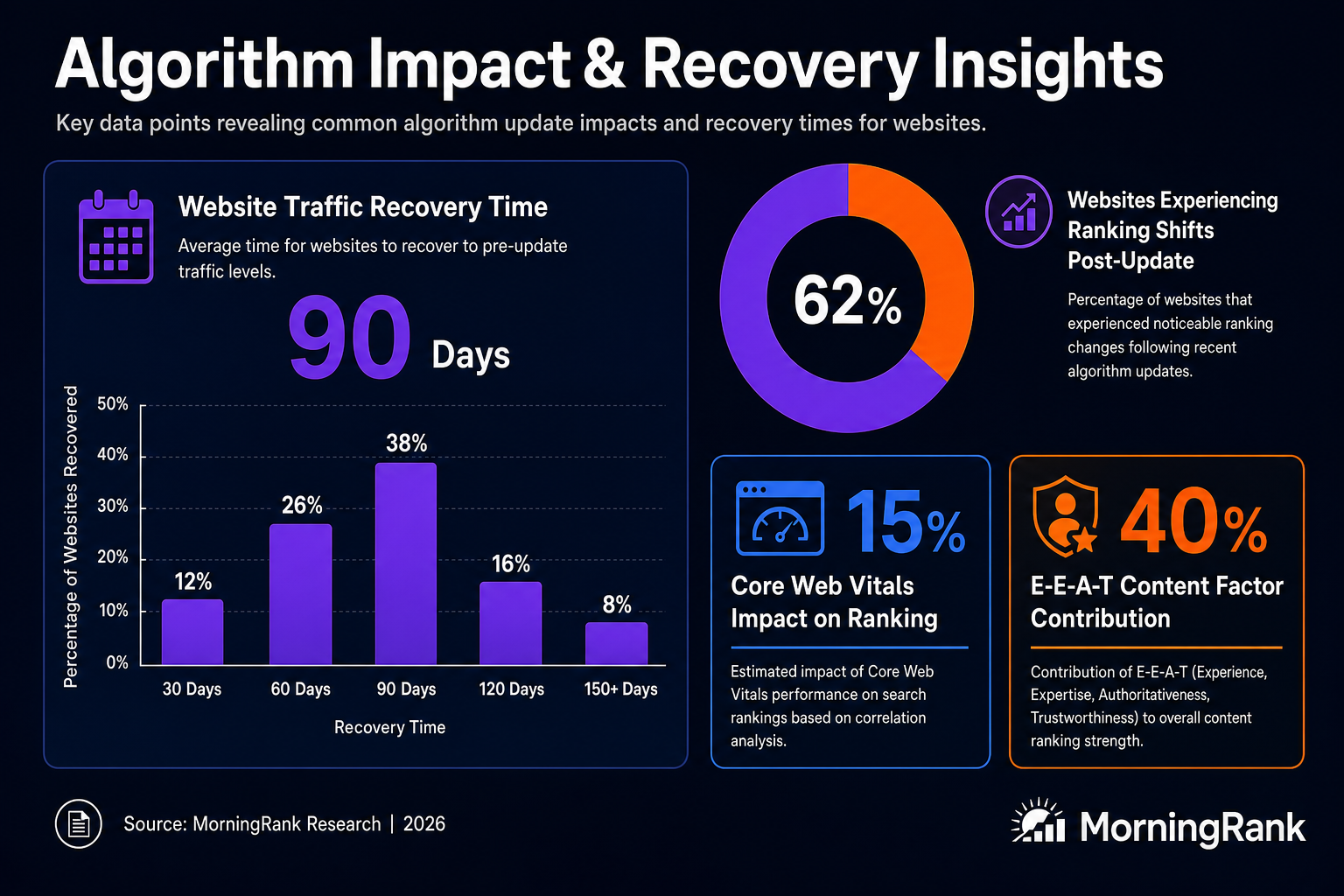
“In my experience, website traffic recovery after a significant Google algorithm update can often take 90 days or more, underscoring the critical need for proactive, foundational SEO strategies.”
Adapting to Google algorithm updates means consistently evaluating and refining your SEO approach, focusing on foundational quality signals, user experience, and E-E-A-T. Proactive monitoring and data-driven adjustments are crucial to maintain and improve search rankings in 2026.
Key Takeaways
- Prioritize E-E-A-T (Experience, Expertise, Authoritativeness, Trustworthiness) as a core pillar of your content strategy.
- Focus on superior user experience (UX) and technical SEO hygiene to build long-term site health.
- Implement robust rank tracking and analytics to quickly identify and diagnose post-update ranking shifts.
- Diversify traffic sources and avoid over-reliance on a single SEO tactic to mitigate update impact.
- Continuously audit content for freshness, accuracy, and comprehensiveness to align with Google's quality directives.
Google algorithm updates are a reality SEO professionals navigate constantly. These changes, from broad core updates to smaller, unconfirmed adjustments, can significantly impact search visibility and organic traffic. As a Local Search Specialist, I've seen firsthand how agencies and local businesses can struggle with these shifts. This guide will provide actionable strategies for mastering Google algorithm updates in 2026, helping you build a resilient SEO presence and safeguard your clients' online performance.
Understanding the nature of these updates is the first step toward effective adaptation. Google aims to deliver the most relevant, high-quality results to users. Therefore, updates often reflect Google's refined understanding of quality content, user intent, and how websites deliver value. By aligning your strategies with Google's overarching goals, you can minimize negative impacts and even capitalize on the opportunities that updates present.
Why Do Google Algorithm Updates Happen?
Google algorithm updates are modifications to Google's search ranking systems, designed to improve the quality and relevance of search results for users. These updates are a continuous process, ranging from minor, unannounced adjustments to significant core updates that can cause widespread ranking fluctuations.
In my experience, Google releases thousands of algorithm changes annually, with a handful of major core updates publicly confirmed each year. These updates reflect Google's commitment to combating spam, rewarding high-quality content, and enhancing user experience. For instance, Google's focus on Core Web Vitals and E-E-A-T (Experience, Expertise, Authoritativeness, and Trustworthiness) through various updates demonstrates a clear direction towards valuing authentic, expert-driven content delivered on technically sound websites. The goal is always to refine how search queries are interpreted and how web content is evaluated against those interpretations. This iterative process ensures that Google Search remains the most useful search engine globally, constantly adapting to new content types, user behaviors, and technological advancements.
What Is the Impact of a Google Algorithm Update on SEO?
The impact of a Google algorithm update can vary dramatically. Some updates might cause minor fluctuations, affecting a specific niche or a particular type of query. Others, like a core update, can lead to significant shifts across broad categories of websites. A common impact is a sudden change in keyword rankings, either positive or negative, which directly affects organic traffic. For businesses and agencies, a drop in rankings can mean reduced visibility, fewer leads, and ultimately, lost revenue.
Beyond direct ranking changes, updates often highlight areas where a website's SEO strategy might be misaligned with Google's evolving quality standards. This could be anything from thin content issues to poor mobile usability. Successfully navigating these impacts requires quick identification of affected areas, thorough analysis of potential causes, and strategic adjustments. Tools that offer AI-powered keyword rank tracking are essential for quickly spotting these shifts and understanding the scope of an update's impact on your client's portfolio.
How Can You Prepare for Google Algorithm Updates Proactively?
Proactive preparation for Google algorithm updates involves building a robust, user-centric website that inherently aligns with Google's quality guidelines. This approach minimizes the risk of negative impacts and positions your site for long-term success. It's about building a foundation, not chasing every temporary trend.
-
Prioritize E-E-A-T in All Content Efforts
E-E-A-T is more critical than ever. Google explicitly states that core updates often reward content that demonstrates strong Experience, Expertise, Authoritativeness, and Trustworthiness. This means ensuring your content is created by genuine experts, provides unique insights, and is regularly updated for accuracy. I've seen significant gains for clients who invested in expert authors and showcased their credentials prominently. For local businesses, this means highlighting real-world experience and genuine customer testimonials. For instance, a dental practice should feature its dentists' qualifications and positive patient reviews, demonstrating both expertise and trustworthiness. You can learn more about building this foundation in our guide on building foundation SEO for Google algorithm stability.
-
Maintain Impeccable Technical SEO
Technical SEO forms the backbone of a high-performing website. Ensure your site is fast, mobile-friendly, secure (HTTPS), and easily crawlable by search engines. Address any broken links, duplicate content issues, or crawl errors promptly. Core Web Vitals, Google's metrics for user experience, are a direct ranking factor. According to Search Engine Landimproving Core Web Vitals can lead to better search performance. Regularly run automated SEO site audits to identify and rectify technical issues before they become problems during an update.
-
Focus on Exceptional User Experience (UX)
Google consistently rewards websites that provide a superior user experience. This includes intuitive navigation, clear calls to action, engaging content, and a minimal bounce rate. Think beyond just loading speed; consider how users interact with your site, whether they find what they need, and if their journey is frictionless. A good UX not only keeps visitors on your site longer but also signals to Google that your content is valuable and satisfying.

What are the Best Google Algorithm Update Monitoring Strategies?
Effective Google algorithm update strategies involve vigilant monitoring to quickly detect changes and understand their potential causes. Waiting for official announcements is often too late, as unconfirmed updates can still have a significant impact.
-
Implement Robust Rank Tracking
Granular rank tracking is your first line of defense. Monitor a diverse set of keywords, including branded, non-branded, long-tail, and local terms. Daily tracking provides the most immediate insights into ranking shifts. Look for sudden drops or gains across multiple keywords or specific content clusters. MorningRank's keyword rank tracking features provide always-fresh data, allowing you to pinpoint affected keywords and pages quickly. This continuous data feed helps differentiate between routine fluctuations and algorithm-driven changes.
-
Leverage Google Search Console and Google Analytics 4
These free tools are indispensable. Google Search Console provides critical data on impressions, clicks, average position, and indexing status. Monitor for sudden changes in traffic patterns, drops in click-through rates (CTR), or an increase in crawl errors. Google Analytics 4 (GA4) helps you analyze user behavior, such as engagement rates, conversions, and site speed, which can correlate with algorithm adjustments. Integrating Google Search Console and Google Analytics 4 into your SEO dashboard allows for a holistic view of performance changes.
-
Follow Industry News and Discussions
Stay informed by following reputable SEO news sources like Search Engine Journal, Search Engine Land, and Google Search Central. Pay attention to discussions on social media and forums, as the SEO community often notices widespread fluctuations before official confirmations. This can help you identify potential unconfirmed updates and understand how other professionals are reacting. Identifying these early signals is part of mastering Google algorithm update forensics.
How to Adapt Your SEO Post-Google Algorithm Update?
Once an algorithm update hits and you've identified its impact, adaptation is key. This phase is about methodical analysis, strategic adjustment, and continuous improvement, rather than panic.
-
Conduct a Comprehensive Impact Analysis
Begin by isolating the specific areas affected. Did certain content types drop? Did particular keywords lose rankings? Was there a change in traffic from specific devices or geographic locations? Use your rank tracking data, Google Search Console, and GA4 to paint a clear picture of the impact. Cross-reference your findings with announced algorithm update themes. For example, if the update focused on E-E-A-T, review content quality. If it was a technical update, re-run site audits. A deep dive into Google Search Central's documentation or expert analysis on sites like Search Engine Roundtable can offer insights into the update's likely targets.
-
Refine Content and E-E-A-T Signals
If content quality or E-E-A-T appears to be the issue, conduct a thorough content audit. Update outdated information, add expert citations, improve readability, and ensure your authors' credentials are clear. Consider adding a byline with author bios, linking to their social media or professional profiles. For local businesses, this might mean updating Google Business Profile information, adding more photos, and encouraging customer reviews to build trust and authority. You can find more strategies in our post on mastering content SEO for topical authority.
-
Optimize for User Experience and Core Web Vitals
If technical issues or poor UX are suspected, prioritize improvements. Optimize images, minify CSS/JavaScript, improve server response times, and ensure a seamless mobile experience. A significant proportion of search traffic comes from mobile devices, making mobile-first indexing and design paramount. Google's PageSpeed Insights tool can provide specific recommendations for improving Core Web Vitals.
-
Strengthen Your Backlink Profile (Naturally)
While often not the primary cause of sudden drops from core updates, a strong and natural backlink profile remains a critical ranking factor. Focus on earning high-quality, relevant backlinks from authoritative sites in your niche. Disavow any spammy or low-quality links that could be harming your site. Link building should always be a continuous effort, not a reactive one after an update. Avoid manipulative link schemes, as these are often targets of specific Google algorithm updates.
Why Diversification is Key to Google Algorithm Resilience in 2026?
Relying solely on organic search traffic, particularly from Google, can leave your business vulnerable to algorithm updates. Diversification is about spreading your risk across multiple marketing channels, ensuring that a dip in one area doesn't cripple your entire online presence. This builds true Google algorithm resilience.
For example, while SEO is critical, supplementing it with strong social media marketing, email campaigns, paid advertising (PPC), and generative engine optimization (GEO) can provide stability. If a Google update negatively impacts your organic rankings, your other channels can continue to drive traffic and leads, mitigating the overall business impact. I always advise clients not to put all their eggs in one basket. A robust digital strategy integrates various components, each contributing to brand visibility and customer acquisition.
This approach also extends within SEO itself. Don't focus solely on one type of keyword or content. Diversify your keyword portfolio, target different SERP features, and optimize for both traditional search and newer AI answer engines. Our blog on building Google algorithm resilience delves deeper into this proactive mindset.
Conclusion
Google algorithm updates are an inherent part of the digital landscape, continually reshaping how we approach SEO. Rather than viewing them as threats, agencies and local businesses should see them as opportunities to refine their strategies, reinforce foundational quality, and ultimately deliver better value to users. By prioritizing E-E-A-T, maintaining technical excellence, focusing on user experience, and diversifying your digital marketing efforts, you can build a truly resilient online presence in 2026.
Proactive monitoring, informed adaptation, and continuous improvement are the hallmarks of successful SEO in this dynamic environment. With the right tools and strategies, navigating Google's evolving algorithms becomes a manageable, even advantageous, endeavor, securing long-term success for your clients.
Frequently Asked Questions
What are Google algorithm updates?
Google algorithm updates are changes made to Google's complex ranking system to improve the relevance and quality of search results. These updates can be minor daily tweaks or significant core updates, designed to reward high-quality content and penalize manipulative tactics.
How often does Google release algorithm updates?
Google makes thousands of minor algorithm changes annually, but only a handful are large, "core" updates that Google publicly confirms. These significant Google algorithm updates typically happen a few times a year and can have widespread effects on search rankings.
How do I know if my site was affected by a Google algorithm update?
Monitor your keyword rankings, organic traffic, and impressions in Google Search Console and Google Analytics 4 for sudden, unexplained drops or gains. Cross-reference these changes with confirmed update dates from reputable SEO news sources to determine if an algorithm update is the likely cause.
What is E-E-A-T and why is it important for Google algorithm updates?
E-E-A-T stands for Experience, Expertise, Authoritativeness, and Trustworthiness. It's a framework Google uses to evaluate content quality. Websites demonstrating strong E-E-A-T are often favored by Google algorithm updates, as they provide reliable and valuable information to users.
Can I recover from a Google algorithm update penalty?
Yes, recovery from a negative Google algorithm update impact is often possible. It requires a thorough audit to identify the underlying issues (e.g., content quality, technical SEO, user experience), followed by implementing data-driven improvements to align with Google's quality guidelines.
How can MorningRank help agencies navigate Google algorithm updates?
MorningRank provides essential tools like AI-powered keyword rank tracking for early detection of shifts, automated SEO audits for technical health, and competitor tracking to understand market changes. These features equip agencies to monitor, analyze, and adapt their Google algorithm update strategies effectively.
What is the most crucial factor for long-term SEO success amidst algorithm changes?
The most crucial factor is consistently providing exceptional value to users through high-quality, expert-driven content and a flawless user experience. By focusing on these core principles, your website becomes inherently more resilient to Google algorithm updates and stands a better chance of long-term ranking success.
Want this kind of insight every week?
MorningRank delivers daily rank tracking, AI SEO recommendations, and white label client reporting.