
Mastering Google Algorithm Update Impact on Local SEO in 2026
Google algorithm updates are continuous modifications to the search engine's ranking systems, designed to improve the quality and relevance of search results.
 Christina Blair
“In my experience, a neglected Google Business Profile is often the first casualty of a significant local algorithm change, highlighting the need for proactive and consistent optimization.”
Google algorithm updates are continuous modifications to the search engine's ranking systems, designed to improve the quality and relevance of search results. These updates, ranging from broad core updates to more specific changes, significantly influence local search rankings and Google Business Profile visibility in 2026. For local businesses and the agencies that serve them, adapting quickly to these changes is not optional, it is essential for maintaining online presence and attracting customers.
Key Takeaways
- Google algorithm updates disproportionately affect local search results, especially Google Business Profile rankings.
- E-E-A-T (Experience, Expertise, Authoritativeness, and Trustworthiness) is paramount for local SEO, influencing how Google perceives business credibility.
- Proactive optimization of Google Business Profiles, including accurate information and consistent engagement, is vital for algorithm resilience.
- Monitoring local keyword rankings and SERP features allows agencies to detect update impacts early and adjust strategies effectively.
- A focus on user experience, mobile-friendliness, and high-quality local content helps businesses adapt to algorithm changes.
As a local search specialist, I've audited countless Google Business Profiles and watched how even subtle algorithm tweaks can send local rankings tumbling or soaring. In my experience, the unpredictability of these updates often catches businesses off guard, leading to lost visibility and reduced foot traffic. This post will delve into how Google algorithm updates specifically influence local SEO, what factors are most affected, and how your agency can develop a robust strategy to not just survive, but thrive, amidst these ongoing changes.
How Do Google Algorithm Updates Affect Local Search Rankings?
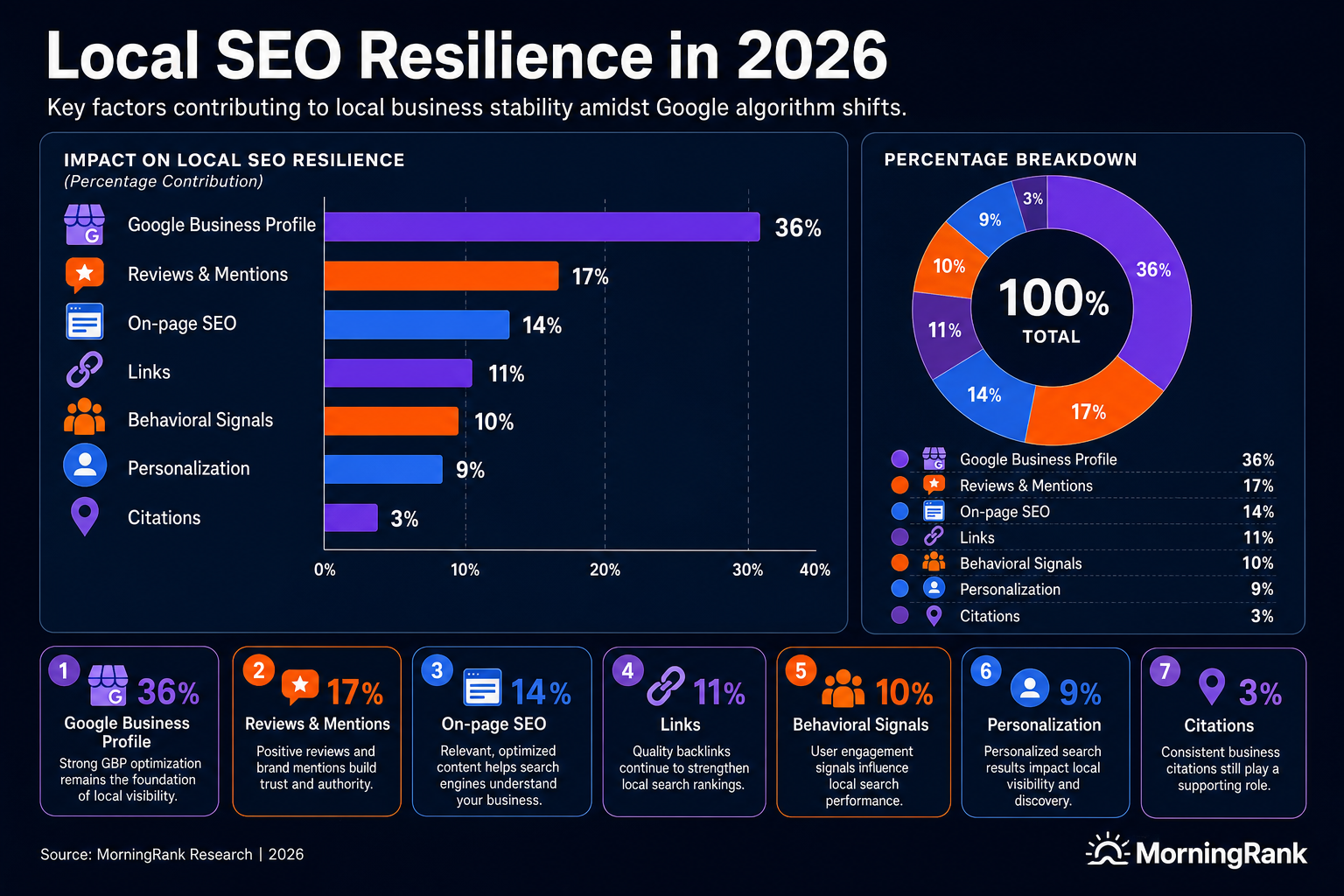
Google algorithm updates often have a profound and distinct impact on local search rankings, sometimes more so than on national or global search. This is because local algorithms factor in proximity, relevance, and prominence, which can be sensitive to adjustments in how Google evaluates these signals. A BrightLocal study from 2023for instance, indicated that Google Business Profile signals remain the most important local ranking factor, accounting for 36% of the overall weight.
When Google rolls out an update, it can recalibrate the importance of various signals. For example, a core update might place a heavier emphasis on E-E-A-T, affecting how Google perceives the trustworthiness of a local business's website and its Google Business Profile. This could lead to sudden drops or gains for businesses that either align strongly or poorly with the updated criteria. Local businesses must therefore ensure their online presence is robust across multiple dimensions to mitigate risks.
The local pack, which displays a curated list of local businesses directly in the SERP, is particularly susceptible to these changes. Fluctuations here can dramatically alter a business's visibility. For example, an update prioritizing user-generated content might elevate businesses with more recent, high-quality reviews. Conversely, an update targeting spam could demote listings with manipulative practices, even if those tactics previously yielded results.
Why Is Google Business Profile Optimization Critical During Algorithm Shifts?
Optimizing your Google Business Profile (GBP) is not merely a best practice, it is a defensive and offensive strategy against algorithm shifts in 2026. A well-maintained GBP acts as your business's primary identity on Google, directly influencing your visibility in Google Maps and local search results. Google frequently uses GBP data, reviews, and posts as direct signals for local rankings.
During an algorithm update, Google reassesses information quality. Businesses with outdated or inconsistent GBP information are more likely to see a negative impact. Ensuring your business name, address, phone number (NAP), hours of operation, and service categories are accurate and consistent across all online platforms is foundational. This consistency helps Google confidently understand who you are and what you offer, reinforcing trust signals.
Beyond basic information, active engagement on your GBP is increasingly important. Regularly posting updates, responding to reviews promptly, and uploading high-quality photos signal to Google that your business is active and customer-focused. These actions can translate into improved prominence, helping your profile maintain its ranking even as the algorithm adjusts. In my experience, a neglected GBP is often the first casualty of a significant local algorithm change.
For agencies, leveraging tools for Google Business Profile optimization can provide a significant advantage. MorningRank offers specific features to help manage and optimize multiple client GBPs, including tracking for local pack prominence and geo-specific keyword rankings. This proactive management helps agencies ensure their clients' profiles remain compliant and highly visible, regardless of algorithmic fluctuations.

How Does E-E-A-T Influence Local Search Post-Update?
E-E-A-T, which stands for Experience, Expertise, Authoritativeness, and Trustworthiness, is a set of guidelines Google uses to evaluate content and websites. It is especially critical in local search following algorithm updates. For local businesses, E-E-A-T translates into demonstrating real-world experience, showcasing industry expertise, establishing authority within the community, and building unquestionable trustworthiness.
After an update, Google's algorithms might become more discerning about the quality and credibility of local business information. For instance, a medical practice demonstrating strong E-E-A-T through expert-written health articles, board certifications listed on its website, and numerous positive patient reviews will likely fare better than a competitor lacking these signals. Google wants to provide users with the most reliable local information.
To bolster E-E-A-T for local clients, agencies should focus on several areas. Encourage clients to publish authentic, insightful content related to their niche. Highlight employee credentials and awards on their website. Actively seek out and respond to customer reviews, building a strong reputation. Positive sentiment and professional interactions on platforms like Google Maps and social media contribute significantly to perceived trustworthiness. Local businesses that consistently prioritize E-E-A-T are more likely to be resilient against negative algorithm impacts.
What Are Proactive Strategies for Adapting to Local Algorithm Updates?
Adapting to Google algorithm updates in local SEO requires a proactive and multi-faceted approach. Rather than reacting to ranking drops, agencies should implement ongoing strategies that build inherent resilience into their clients' online presence. This involves continuous monitoring, comprehensive optimization, and a deep understanding of Google's core principles.
How Can Agencies Monitor Local SEO Performance Effectively?
Effective monitoring is the first line of defense against negative algorithm impacts. Agencies need to track local keyword rankings not just at a city level, but often at a neighborhood or even street level to identify precise shifts. Monitoring important SERP features, like the local pack, featured snippets, and local ads, is also critical. Sudden changes in these areas are often early indicators of an update's influence.
In addition to ranking data, pay close attention to Google Search Console for any changes in impressions, clicks, or crawl errors. Google Analytics provides insights into user behavior on the website, which can indirectly signal algorithm shifts if traffic patterns change drastically. Identifying unexpected dips or spikes in traffic allows for quicker investigation and strategy adjustments. Tools like MorningRank's Local SEO rank tracking by city and location are essential for granular monitoring.
How Can Businesses Future-Proof Their Google Business Profile?
Future-proofing a Google Business Profile involves consistent, high-quality management. Beyond accurate NAP data, businesses should regularly update their profile with fresh photos, videos, and Google Posts announcing specials or events. Actively encourage and respond to customer reviews, as these are powerful signals of engagement and customer satisfaction. Consider using the Q&A feature to preemptively answer common customer questions, further enhancing information richness and user experience.
Ensuring your GBP categories are as specific and accurate as possible is also vital. Avoid broad categories when more precise ones exist. Regularly auditing your GBP for spam, such as fake reviews or competitor manipulation, and reporting it to Google, helps maintain a clean and trustworthy profile. A well-managed GBP provides a stable anchor for local visibility, even when other ranking factors fluctuate.
What Role Does Technical SEO Play in Local Algorithm Adaptation?
Technical SEO often gets overlooked in local contexts, but it plays a crucial role in algorithm adaptation. A fast, mobile-friendly, and secure website is fundamental for Google to properly crawl, index, and rank a local business. Core Web Vitalsa set of metrics measuring page experience, are direct ranking factors that can impact local visibility. Businesses with poor page load times or frustrating mobile experiences may see their local rankings suffer post-update.
Ensuring your local business website has proper schema markup (like LocalBusiness schema) helps Google understand key information about your business. This structured data makes it easier for search engines to present your business details accurately in search results and AI Overviews. Regular technical audits using tools like MorningRank's Automated SEO Site Audits can identify and resolve issues that might otherwise hinder local search performance.
Conclusion: Embracing Continuous Adaptation for Local SEO Success in 2026
Google algorithm updates are an inherent, continuous aspect of the search landscape, particularly within local SEO. For agencies and local businesses, maintaining strong visibility in 2026 means moving beyond reactive fixes to proactive, sustained optimization. Focusing on robust Google Business Profile management, bolstering E-E-A-T signals, and implementing thorough monitoring and technical SEO practices are not just best practices, they are essential for resilience.
As a local search specialist, I've seen firsthand that businesses committed to delivering exceptional user experience and credible information consistently weather algorithm changes better. By embracing an attitude of continuous adaptation and leveraging the right tools, you can ensure your local clients not only survive but truly thrive, even as Google's algorithms evolve. Staying agile and data-driven is your most powerful asset in this dynamic environment.
Related reading: Integrating Google Algorithm Updates: Practical SEO Workflow Adaptations for 2026Mastering Google Algorithm Updates: A Proactive Risk Management Framework for 2026Understanding Google Algorithm Update Types and Their Implications for 2026 SEO.
Frequently Asked Questions
What are Google algorithm updates specifically for local SEO?
Google algorithm updates for local SEO are changes to the ranking systems that specifically influence how local businesses appear in Google Maps and the local pack. These updates often adjust the weight of factors like proximity, relevance, and prominence, directly impacting local search visibility. They ensure that users find the most relevant and high-quality local businesses for their queries.
How do I know if a Google algorithm update affected my local business?
You can identify if a Google algorithm update affected your local business by closely monitoring your Google Business Profile insights, local keyword rankings, and website traffic from local searches. Significant, sudden drops or gains in visibility, map pack rankings, or calls/direction requests often indicate an update's impact. Cross-reference these changes with announced or suspected update dates.
What is the most important factor for local SEO after a Google update?
After a Google algorithm update, the most important factor for local SEO often remains the strength and optimization of your Google Business Profile, coupled with strong E-E-A-T signals. A complete, accurate, and actively managed GBP provides foundational stability. Additionally, demonstrating experience, expertise, authoritativeness, and trustworthiness through your website and reviews is critical for sustained local rankings.
Can optimizing my website improve my local rankings during an update?
Yes, optimizing your website can significantly improve your local rankings during and after a Google algorithm update. Ensuring your site is mobile-friendly, loads quickly (Core Web Vitals), and includes local keywords and content helps Google understand your relevance to local searches. A technically sound website that offers an excellent user experience supports and reinforces your Google Business Profile's strength.
How frequently does Google update its local search algorithm?
Google constantly makes small adjustments to its local search algorithm, often daily. Major, broad core algorithm updates that affect all search results, including local, typically occur a few times a year. Additionally, specific local-focused updates may happen periodically, though these are less frequently announced than core updates. Continuous monitoring is essential due to this ongoing evolution.
What role do customer reviews play in local SEO post-update?
Customer reviews play a critical role in local SEO, especially after an algorithm update. They are a strong signal of trust, prominence, and customer experience. More numerous, recent, and positive reviews, along with prompt and professional responses from the business, can significantly boost a local business's ranking. Google often prioritizes businesses with strong, authentic social proof in its local results.
How can MorningRank help agencies adapt to Google local algorithm updates?
MorningRank helps agencies adapt to Google local algorithm updates by providing advanced keyword rank tracking by city and location, allowing for granular performance monitoring. Our platform also offers automated SEO site audits to ensure technical health, and comprehensive reporting features to analyze impact and communicate strategy adjustments to clients effectively. This allows agencies to proactively manage client visibility and respond swiftly to changes.
Ready to gain an unfair advantage in local SEO, even during Google algorithm updates? Try MorningRank free today and see how our AI-powered platform can help your agency track, adapt, and dominate local search for your clients. Visit https://morningrank.com.
Want this kind of insight every week?
MorningRank delivers daily rank tracking, AI SEO recommendations, and white label client reporting.