
Mastering Google Algorithm Updates: A Proactive Risk Management Framework for 2026
Navigating Google algorithm updates in 2026 requires more than reactive adjustments; it demands a proactive risk management framework to safeguard SEO…
 Christina Blair
“In my experience, agencies that thrive are those that view Google algorithm updates not as threats, but as opportunities to refine their craft and differentiate their services.”
Navigating Google algorithm updates in 2026 requires more than reactive adjustments; it demands a proactive risk management framework to safeguard SEO performance. This framework involves continuous monitoring, strategic adaptation, and a deep understanding of Google's core objectives for search quality. By implementing these practices, businesses and agencies can minimize negative impacts and even leverage updates for growth.
Key Takeaways
- Google algorithm updates are frequent and necessitate a structured risk management approach.
- Proactive monitoring of key performance indicators and Google's official communications is crucial for early detection of potential impacts.
- Prioritizing E-E-A-T (Experience, Expertise, Authoritativeness, and Trustworthiness) and user experience builds long-term algorithmic resilience.
- A robust recovery plan, including site audits and content adjustments, is essential for rapid bounce-back after an update.
- Leveraging AI-powered tools for tracking and analysis simplifies the adaptation process for agencies and businesses.
Google algorithm updates are a fundamental, evolving aspect of the search landscape. In my experience, waiting to react until after an update hits is a recipe for lost rankings and client churn. The key to sustained success in 2026 lies in adopting a comprehensive risk management framework. This post will walk you through the essential steps, from preparation and real-time monitoring to post-update recovery and strategic adaptation. Understanding Google's continuous drive for quality and relevance allows us to build SEO strategies that not only survive updates but thrive because of them.
What is the Google Algorithm Risk Management Framework?
A Google algorithm risk management framework is a structured, systematic approach designed to identify, assess, mitigate, and monitor the potential impact of Google's continuous algorithm changes on search engine rankings and organic traffic. It shifts SEO from a reactive scramble to a proactive, data-driven strategy, emphasizing resilience and adaptability.
This framework is built on pillars of foresight, continuous evaluation, and strategic response. It helps agencies and local businesses anticipate potential shifts by observing trends in Google's guidance and market behavior. Instead of being caught off guard, teams can develop contingency plans and implement optimizations that align with Google's evolving preferences.
For example, Google's consistent emphasis on E-E-A-T (Experience, Expertise, Authoritativeness, and Trustworthiness) over the past several years indicates a clear direction. A risk management framework would include ongoing audits of content to ensure it meets these high standards. This proactive measure significantly reduces the risk of negative impact from future quality-focused updates. Furthermore, it helps maintain long-term search visibility and client satisfaction.
How Can Agencies Proactively Prepare for Google Algorithm Updates?
Proactive preparation for Google algorithm updates involves building a robust, user-centric website and staying informed about Google's core principles. Agencies should focus on foundational SEO practices that align with Google's long-term goals rather than chasing short-term hacks. This includes technical excellence, high-quality content, and an exceptional user experience.
What are Foundational SEO Pillars for Algorithmic Resilience?
Foundational SEO pillars for algorithmic resilience are the core elements of a website that consistently meet Google's quality guidelines, making the site less susceptible to negative impacts from algorithm updates. These include technical SEO health, content quality, and user experience signals.
- Technical SEO: Ensure your website is fast, mobile-friendly, secure (HTTPS), and easily crawlable and indexable. Regular technical audits using tools like MorningRank's automated SEO site audit tool can identify and fix issues before they become problems.
- Content Quality: Prioritize creating helpful, unique, and high-quality content that thoroughly addresses user intent and demonstrates strong E-E-A-T. Google explicitly states that creating helpful, reliable, people-first content is key for long-term success.
- User Experience (UX): Optimize for Core Web Vitals, intuitive navigation, and overall site usability. A positive user experience directly correlates with lower bounce rates and higher engagement, signals that Google values highly.
By consistently strengthening these foundational pillars, agencies can build a website that is inherently more resilient to Google algorithm updates. This proactive approach minimizes the need for drastic, costly overhauls after an update rolls out.

What Strategies Mitigate the Impact of Algorithm Changes in 2026?
Mitigating the impact of Google algorithm changes in 2026 involves continuous monitoring, swift analysis, and adaptive content strategies. Agencies must establish clear processes for detecting changes and responding effectively, minimizing downtime and protecting client rankings. This means integrating real-time data analysis into daily SEO workflows.
How Can Real-Time Monitoring Aid Impact Mitigation?
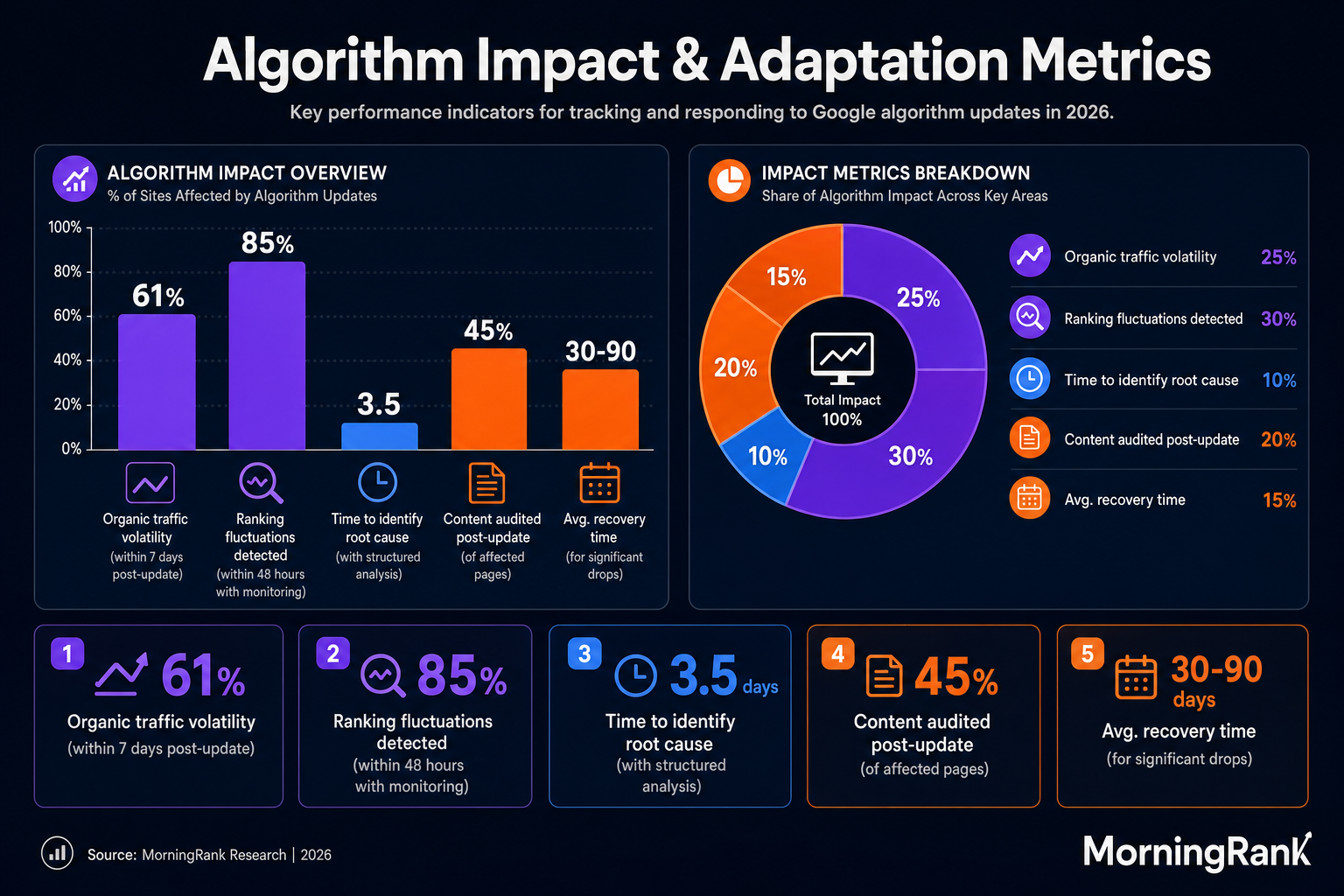
Real-time monitoring aids impact mitigation by providing immediate alerts on ranking fluctuations, traffic drops, or other performance anomalies, allowing for rapid investigation and response. Tools offering AI visibility tracking and rank tracking help identify changes quickly.
I've seen agencies save countless hours and prevent significant ranking losses by implementing advanced monitoring. For instance, if a client's keywords suddenly drop by 10-15 positions, a real-time alert system can trigger an immediate deep dive into analytics and Search Console data. This allows SEOs to correlate changes with potential algorithm shifts or technical issues, rather than discovering the problem weeks later. According to a 2023 study by BrightLocal, 61% of local businesses believe SEO is becoming more complex, underscoring the need for advanced monitoring systems (Source: BrightLocal).
Furthermore, understanding the timing of Google's announcements, often shared via the Google Search Central Blogis critical. Combining external signals with internal performance data provides a comprehensive view. Monitoring competitor rankings, utilizing MorningRank's competitor keyword tracking feature, can also provide valuable context, indicating whether changes are site-specific or industry-wide.
How Does Post-Update Recovery Work After a Google Algorithm Update?
Post-update recovery after a Google algorithm update involves a systematic process of identifying root causes, developing a targeted action plan, and meticulously implementing optimizations. It requires a calm, data-driven approach, avoiding panic-driven, knee-jerk reactions that can exacerbate problems. The first step is always analysis, not immediate action.
What are the Key Steps in an Algorithm Recovery Plan?
Key steps in an algorithm recovery plan include comprehensive site audits, content re-evaluation, technical SEO checks, and backlink profile analysis. This multi-faceted approach ensures all potential areas of impact are addressed systematically.
- Identify Affected Areas: Pinpoint specific keywords, pages, or content types that experienced the most significant drops. Use tools to analyze traffic and ranking data.
- Review Algorithm Focus: Research the nature of the recent Google algorithm update. Was it content-focused, technical, or link-oriented? Google often provides hints or general guidance, even for unconfirmed updates. Our blog post on Mastering Google Algorithm Recovery offers deeper insights.
- Conduct Technical Audit: Look for any new crawling or indexing issues, site speed regressions, or mobile usability problems that might have been impacted.
- Content Audit & Enhancement: Evaluate content for E-E-A-T, helpfulness, originality, and user intent alignment. Update or remove low-quality pages. Ensure proper schema markup, as discussed in Schema Markup for AI Searchcan also play a role.
- Backlink Analysis: Check for any sudden influx of spammy backlinks or changes in your link profile that could signal a negative SEO attack or a change in Google's evaluation of links.
- Monitor and Iterate: Implement changes incrementally, monitoring the impact of each adjustment before proceeding. This allows for precise identification of effective solutions.
Effective recovery is less about a single fix and more about an ongoing commitment to quality and user experience. Patience and consistent effort are crucial during this phase.
Why is a Continuous Adaptation Mindset Essential for Agencies?
A continuous adaptation mindset is essential for agencies because Google's algorithm is constantly evolving, with minor adjustments occurring daily and major core updates rolling out multiple times a year. This dynamic environment means that static SEO strategies quickly become obsolete, making ongoing learning and flexibility paramount.
In my experience, agencies that thrive are those that view algorithm updates not as threats, but as opportunities to refine their craft and differentiate their services. They embrace change, proactively educate their teams, and pivot strategies based on new insights. This mindset permeates their internal processes, from client onboarding to reporting.
Furthermore, a continuous adaptation mindset enables agencies to better advise clients on realistic expectations. It fosters transparency and trust when you can explain that SEO is an ongoing process of optimization in response to an ever-changing search landscape. Clients appreciate honesty and a clear plan for navigating uncertainty.
Conclusion: Future-Proofing SEO Through Strategic Adaptation
Google algorithm updates are an inherent, permanent aspect of the SEO landscape in 2026. Agencies and local businesses cannot afford to merely react; they must adopt a strategic, proactive risk management framework to ensure sustained visibility and growth. By prioritizing foundational SEO principles like E-E-A-T, technical health, and superior user experience, sites build inherent resilience. Continuous monitoring, aided by advanced tools, allows for early detection of shifts, while a structured recovery plan facilitates quick and effective adjustments.
Embracing a mindset of continuous adaptation transforms challenges into opportunities for refinement and competitive advantage. The future of SEO belongs to those who are not only prepared for change but actively anticipate and integrate it into their core strategy. Leveraging platforms like MorningRank helps consolidate data, automate monitoring, and provide the insights needed to navigate Google's evolving algorithms successfully.
Related reading: Understanding Google Algorithm Update Types and Their Implications for 2026 SEO.
Frequently Asked Questions
What is a Google algorithm update?
A Google algorithm update is a modification to Google's ranking systems, designed to improve the quality, relevance, and fairness of search results. These updates can range from minor, unannounced tweaks to major, broadly announced core updates that significantly impact search visibility across many websites.
How often does Google update its algorithm?
Google updates its algorithm constantly, with thousands of minor changes occurring throughout the year, many of which are unconfirmed. Major "core" algorithm updates, which tend to have a more noticeable impact on rankings, are typically announced a few times per year, often every few months.
How do I know if my website was affected by a Google algorithm update?
You can identify if your website was affected by monitoring organic traffic and keyword rankings in tools like Google Search Console and MorningRank. Significant drops or gains that correlate with known or suspected update dates, alongside changes in competitor rankings, often indicate an algorithmic impact. Look for broad, site-wide changes rather than isolated fluctuations.
What should I do immediately after a Google algorithm update impacts my site?
Immediately after an algorithm update impacts your site, remain calm and begin a data-driven investigation. First, verify the impact by checking analytics and ranking data. Then, identify affected pages and keyword groups. Avoid making hasty changes; instead, focus on understanding the nature of the update and align your recovery strategy with Google's stated goals, such as E-E-A-T or technical performance.
What is E-E-A-T and why is it important for Google algorithm updates?
E-E-A-T stands for Experience, Expertise, Authoritativeness, and Trustworthiness. It's a set of guidelines Google uses to evaluate content quality, particularly for "Your Money or Your Life" (YMYL) topics. Google algorithm updates frequently reinforce E-E-A-T, making it crucial for demonstrating content quality and building long-term algorithmic resilience.
Can MorningRank help me adapt to Google algorithm updates?
Yes, MorningRank provides a comprehensive suite of tools designed to help agencies and local businesses adapt to Google algorithm updates. Features like AI-powered keyword rank tracking, real-time monitoring, automated SEO audits, and competitor analysis enable proactive risk management and faster recovery. This helps you track impacts and refine your strategy.
What is the most important factor in adapting to Google algorithm updates in 2026?
The most important factor in adapting to Google algorithm updates in 2026 is a commitment to creating genuinely helpful, high-quality, user-centric content that aligns with Google's E-E-A-T principles. This foundational focus, combined with continuous technical excellence and proactive monitoring, builds long-term algorithmic resilience, making your site less vulnerable to negative impacts and more likely to benefit from quality-focused changes.
Ready to proactively manage Google algorithm updates and protect your clients' SEO performance? Try MorningRank free today and experience the power of AI-driven insights for algorithm adaptation.
Want this kind of insight every week?
MorningRank delivers daily rank tracking, AI SEO recommendations, and white label client reporting.