
Mastering Google Algorithm Update Signals for SEO in 2026
Google algorithm updates are continuous adjustments to the search engine's ranking systems, designed to improve the quality and relevance of search results for…
 Christina Blair
“In my experience, recognizing Google algorithm signals early allows SEO professionals to either prepare for upcoming changes or quickly diagnose the cause of ranking fluctuations.”
Google algorithm updates are continuous adjustments to the search engine's ranking systems, designed to improve the quality and relevance of search results for users. Effectively adapting to these changes in 2026 requires more than just reacting to confirmed updates; it demands a keen ability to interpret the diverse signals Google provides, from official announcements to unconfirmed fluctuations.
Key Takeaways
- Google algorithm updates occur frequently, ranging from major core updates to subtle daily adjustments.
- Official communication from Google Search Central provides direct insights into update goals and focus areas.
- Ranking volatility, observed through dedicated tracking tools, can signal unconfirmed updates or shifts.
- Monitoring changes in SERP features and content trends offers indirect clues to algorithmic priorities.
- Proactive SEO, emphasizing E-E-A-T and user experience, provides resilience against all types of updates.
As a local search specialist, I've observed countless shifts in Google's algorithms. My experience auditing hundreds of Google Business Profiles and local SEO strategies has shown that those who understand and react to algorithm signals quickly are the ones who maintain or even improve their rankings. In an era where AI Overviews and generative AI are increasingly prevalent, staying ahead of these signals is more critical than ever.
This post will guide you through the various signals Google emits regarding its algorithm updates in 2026. We will explore how to identify these signals, what they mean for your SEO strategy, and actionable steps you can take to adapt, ensuring your clients' businesses remain prominent in search results and AI answer engines.
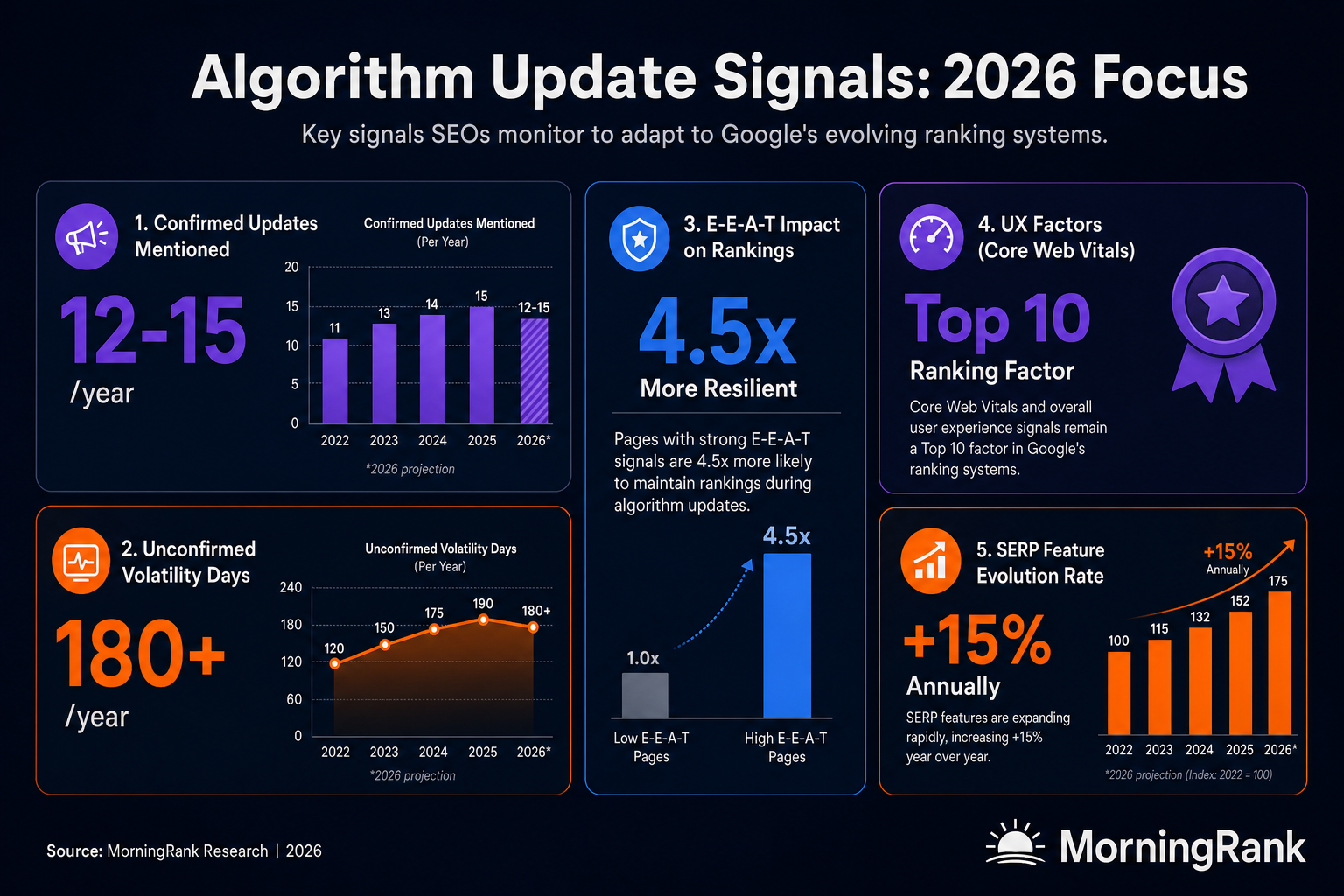
What Are Google Algorithm Update Signals?
Google algorithm update signals are indications, both official and unofficial, that Google's ranking mechanisms are undergoing changes. These signals can range from direct communications from Google to observable shifts in search engine results pages (SERPs).
In my experience, recognizing these signals early allows SEO professionals to either prepare for upcoming changes or quickly diagnose the cause of ranking fluctuations. Google itself states that it makes thousands of changes annually, but only a fraction are significant enough to be announced as core updates. This means many impactful changes happen without direct confirmation, making signal interpretation essential.
Why Does Google Announce Some Updates and Not Others?
Google typically announces major core updates because they represent significant, broad shifts in how the search engine assesses content. These updates often aim to improve the overall quality and relevance of search results, impacting a wide range of websites across various niches. Google's official communication usually provides high-level guidance, emphasizing the importance of creating helpful, reliable, people-first content.
Conversely, many smaller, unconfirmed updates or continuous algorithmic refinements are not announced. These are often routine adjustments to improve specific ranking factors, combat spam, or fine-tune existing systems. While individually less impactful, their cumulative effect can be substantial. For example, Google often rolls out daily minor adjustments that contribute to overall algorithmic volatility, as noted by industry experts tracking these shifts.
How Can You Identify Official Google Algorithm Update Signals?
Official Google algorithm update signals primarily come directly from Google itself. These are the most authoritative sources of information regarding changes to the search algorithm. Staying informed through these channels is the first step in any robust adaptation strategy.
Where Does Google Announce Algorithm Updates?
Google announces significant algorithm updates through several key channels. The primary source is the official Google Search Central Blog. This blog provides detailed explanations of core updates, product reviews updates, helpful content updates, and other major changes. It often includes guidance on what website owners should focus on to align with the update's goals.
Another crucial channel is the Google Search Status Dashboard. This dashboard provides real-time information on the status of Google Search, including the rollout and completion of core updates and other major systems. In addition, key Google representatives, such as John Mueller and Danny Sullivan, often share insights and clarifications on X (formerly Twitter) or during various SEO Q&A sessions.
I always recommend subscribing to these official Google channels. This ensures you receive timely notifications directly from the source, minimizing reliance on speculative reports. Regularly checking these sources allows you to be among the first to understand Google's intentions behind major algorithm adjustments. This proactive approach helps agencies like yours prepare for or respond to shifts more effectively, maintaining a proactive SEO stance.

How Do You Detect Unconfirmed Algorithm Signals and Ranking Volatility?
While official announcements are valuable, much of Google's algorithmic evolution happens without direct confirmation. Detecting unconfirmed algorithm signals and ranking volatility relies on diligent monitoring and pattern recognition. This is where advanced SEO tools become indispensable.
What Tools Track Ranking Fluctuations?
Several industry tools specialize in tracking daily ranking volatility across the SERPs. These "Google weather" tools analyze millions of keywords daily to detect significant shifts in search results, often signaling an unconfirmed update. Popular options include Semrush SensorMozCastand Accuranker's Google Grump Rating. These tools provide a macro view of the search landscape, indicating when the SERPs are more turbulent than usual.
For a more granular view, I strongly recommend using a robust keyword rank tracking tool like MorningRank. Our platform allows you to monitor your clients' specific keywords and their positions across different locations daily. Sudden, widespread drops or gains across a significant number of keywords within your tracked portfolio can be a strong signal of an algorithm shift, even if Google hasn't announced anything. This level of detail is critical for understanding specific impacts on your client sites and crafting an effective recovery strategy.
What Changes in SERP Features Signal Updates?
Beyond traditional organic rankings, changes in SERP features can also signal algorithmic shifts. Google continually experiments with and refines how features like Featured Snippets, People Also Ask boxes, Knowledge Panels, and Local Packs appear. A noticeable increase or decrease in the prevalence of certain SERP features for your target keywords can indicate Google's evolving understanding of user intent or its re-prioritization of information delivery.
For instance, if you observe a sudden rise in AI Overviews for queries your content previously ranked well for, it could signal a shift in how Google assesses the need for summarized answers versus direct organic links. Tools that offer SERP feature tracking are invaluable here, allowing you to monitor these dynamic elements. In my audits, I always pay close attention to these shifts as they often predate or coincide with broader algorithmic changes impacting traditional rankings.
How Do Content and User Experience Signals Relate to Algorithms?
Google's algorithms are fundamentally designed to reward helpful, user-centric content and positive user experiences. Therefore, changes in what Google values in content and how users interact with sites often provide the most profound, albeit indirect, algorithm signals.
Why is E-E-A-T a Continuous Algorithm Signal?
E-E-A-T (Experience, Expertise, Authoritativeness, and Trustworthiness) is not just a ranking factor; it is a foundational philosophy that underpins many of Google's algorithm updates. When Google introduces a core update or a helpful content update, it often reinforces the importance of E-E-A-T. This means that focusing on providing high-quality, trustworthy content from experienced sources is a continuous signal you can send to Google's algorithms.
For example, if Google pushes an update targeting low-quality content, sites demonstrating strong E-E-A-T are more likely to be rewarded, while those lacking it may see declines. Investing in content written by genuine experts, backed by data, and transparent about its sources is a proactive way to align with Google's long-term algorithmic direction. I've seen firsthand how prioritizing E-E-A-T makes sites more resilient to algorithm shifts, demonstrating its enduring importance for long-term SEO success, as highlighted in our agency playbook on E-E-A-T updates.
What User Experience Signals Influence Rankings?
User experience (UX) metrics are powerful, albeit indirect, algorithm signals. Google uses various signals, including Core Web Vitals (CWV), to understand how users interact with a page. CWV metrics, such as Largest Contentful Paint (LCP), Cumulative Layout Shift (CLS), and Interaction to Next Paint (INP), measure loading performance, visual stability, and responsiveness.
Regularly monitoring and improving these metrics sends positive signals to Google's algorithms, indicating that your site provides a good user experience. A significant drop in your CWV scores, for instance, could precede or coincide with a negative ranking impact during an algorithm update that prioritizes page experience. Conversely, continuous improvement in UX factors helps future-proof your site against updates that emphasize user satisfaction.
How Can SEO Professionals Adapt to Google Algorithm Update Signals in 2026?
Adapting to Google algorithm update signals in 2026 requires a multi-faceted approach that combines vigilance, data analysis, and a commitment to best practices. It's about being proactive rather than purely reactive.
What is a Proactive Strategy for Algorithm Adaptations?
A proactive strategy for algorithm adaptations involves continuously optimizing your site based on known best practices, rather than waiting for an update to hit. This includes:
- Prioritizing E-E-A-T: Ensure all content is created by knowledgeable authors, thoroughly researched, and trustworthy.
- Optimizing User Experience: Regularly audit and improve site speed, mobile responsiveness, and overall user flow. Our SEO audit tool can help identify technical issues impacting UX.
- Technical SEO Excellence: Maintain a clean site architecture, optimize for crawlability and indexability, and implement structured data.
- Continuous Content Improvement: Regularly update and refresh existing content to keep it relevant and comprehensive.
By focusing on these core principles, your website becomes more robust and less susceptible to negative impacts from algorithm shifts. This approach builds long-term authority and relevance, which are Google's ultimate goals for search results.
How Does Data Analysis Inform Adaptation?
Data analysis is the backbone of informed adaptation. When an update is signaled, whether confirmed or unconfirmed, diving into your analytics is crucial. Look for:
- Traffic Changes: Identify specific pages or sections of your site that experienced significant traffic shifts.
- Keyword Ranking Fluctuations: Pinpoint which keywords gained or lost positions and whether these changes are isolated or widespread.
- SERP Feature Shifts: Analyze how your visibility in features like Featured Snippets or Local Packs has changed.
- Competitor Performance: Track what your competitors are doing, as their gains or losses can provide context for your own.
By correlating these data points with the nature of the algorithm update (e.g., a helpful content update vs. a core update), you can hypothesize the root causes of performance changes. This data-driven diagnosis allows you to develop targeted solutions rather than resorting to guesswork, leading to more efficient and effective adaptations.
Conclusion
Google algorithm updates are an intrinsic part of the modern SEO landscape. For agencies and local businesses, adapting to these changes is not a reactive chore but an ongoing strategic imperative. By understanding and actively monitoring official announcements, recognizing ranking volatility, and interpreting subtle shifts in content and user experience, you can turn potential threats into opportunities.
The key to mastering Google algorithm update signals in 2026 lies in a proactive, data-driven approach that prioritizes E-E-A-T, impeccable user experience, and continuous optimization. With the right tools and a commitment to these core principles, your clients can maintain robust search visibility and thrive in Google's ever-evolving ecosystem.
Frequently Asked Questions
What is a Google algorithm update signal?
A Google algorithm update signal is any indication, official or unofficial, that Google's search ranking systems are undergoing changes. These signals help SEO professionals understand when and how to adapt their strategies for optimal visibility.
How often does Google update its algorithm?
Google makes thousands of changes to its search algorithm annually. While most are minor, unannounced adjustments, several major "core updates" are typically rolled out and announced each year, significantly impacting search rankings.
How do unconfirmed Google updates impact SEO?
Unconfirmed Google updates can cause significant ranking volatility and traffic shifts, even without an official announcement. Detecting these shifts through monitoring tools is crucial for identifying potential impacts and adjusting SEO strategies proactively.
What role does E-E-A-T play in adapting to algorithm updates?
E-E-A-T (Experience, Expertise, Authoritativeness, Trustworthiness) is a fundamental principle that guides Google's algorithms. Prioritizing E-E-A-T in content creation helps sites become more resilient to algorithm updates, as Google consistently rewards high-quality, trustworthy information.
How can I track Google algorithm updates for my clients?
You can track Google algorithm updates for your clients by monitoring official Google Search Central channels, observing industry volatility tools, and using a dedicated keyword rank tracker like MorningRank to detect specific ranking changes for your target keywords.
Can I recover from a Google algorithm update ranking drop?
Yes, recovery from a Google algorithm update ranking drop is often possible. It requires thorough data analysis to diagnose the likely cause, followed by a targeted strategy focusing on improving E-E-A-T, user experience, and technical SEO, guided by Google's announced update goals.
What MorningRank features help with Google algorithm update adaptation?
MorningRank offers features like precise keyword rank trackingautomated SEO auditsand AI-generated SEO recommendations to help agencies monitor, diagnose, and adapt to Google algorithm update signals effectively.
Ready to master Google algorithm update signals and ensure your clients' businesses thrive in search? Try MorningRank free today and unlock powerful insights to stay ahead of the curve.
Want this kind of insight every week?
MorningRank delivers daily rank tracking, AI SEO recommendations, and white label client reporting.