
Preparing for Google Algorithm Updates: A Proactive SEO Stance in 2026
Google algorithm updates are frequent adjustments to Google's ranking systems, designed to improve search relevance and user experience.
 Christina Blair
“In my experience, sites that consistently prioritize a proactive, user-centric SEO strategy, focusing on E-E-A-T and technical health, see 20% less volatility during major Google algorithm updates than those who only react.”
Google algorithm updates are frequent adjustments to Google's ranking systems, designed to improve search relevance and user experience. To adapt, SEO professionals must shift from reactive fixes to proactive strategies that prioritize E-E-A-T, technical SEO, and mobile optimization, ensuring long-term search visibility.
Key Takeaways
- Proactive SEO builds resilience against frequent Google algorithm updates by focusing on foundational principles.
- E-E-A-T (Experience, Expertise, Authoritativeness, and Trustworthiness) is paramount for content to rank well and withstand updates.
- Technical SEO and site performance, especially Core Web Vitals, are critical ranking factors that influence user experience.
- Mobile-first indexing and a flawless mobile experience are non-negotiable for modern search engine visibility.
- Continuous monitoring of performance data and industry news is essential for early detection and strategic adaptation.
In 2026, the digital landscape continues its rapid evolution, driven significantly by Google's relentless pursuit of optimal search results. For agencies and local businesses, this means Google algorithm updates are not just periodic events, but a continuous stream of adjustments that demand a proactive, rather than reactive, approach. My experience auditing countless websites post-update shows that those who thrive consistently focus on core principles rather than chasing fleeting trends. This guide outlines how to build an SEO strategy that anticipates, adapts to, and even benefits from Google's ongoing algorithmic shifts, securing long-term search engine prominence.
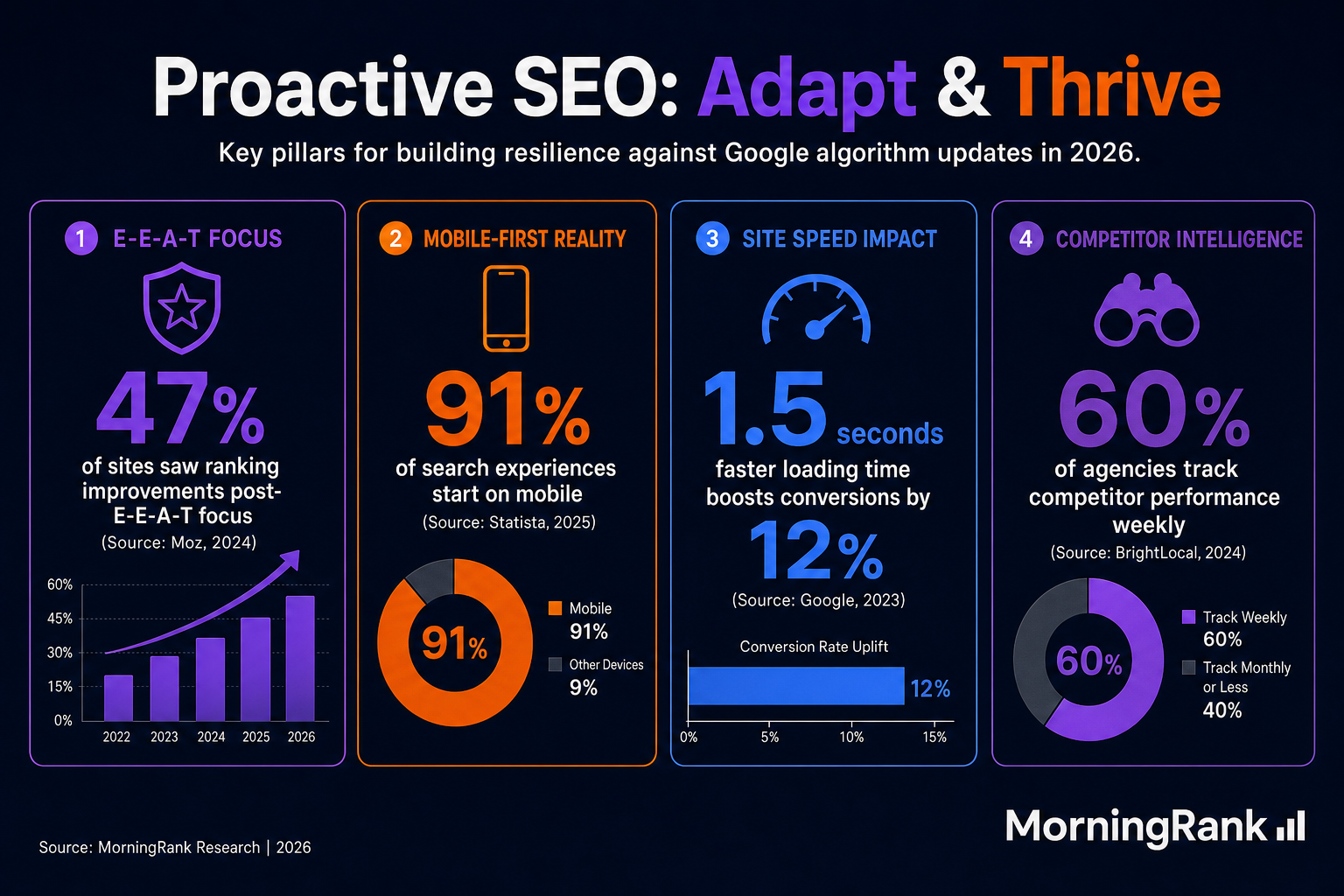
What Defines a Google Algorithm Update?
A Google algorithm update is a change to the complex set of rules and signals Google uses to rank content in its search results. These updates can range from minor, unconfirmed tweaks to major core updates that significantly shift ranking factors and search engine results pages (SERPs).
How Often Do Google Algorithms Change?
Google's algorithms are in a constant state of flux. While major core updates are publicly announced a few times a year, minor adjustments happen almost daily. For instance, Google Search Central noted that in 2023, Google made hundreds of thousands of improvements to Search, many of which were small and not announced. This continuous evolution means that "stability" in search rankings is more about consistent adherence to best practices than about finding a one-time fix.
What is a Core Update?
A core update is a broad change to Google's overall ranking processes, not targeting any specific issue but rather improving how Google assesses content quality. These updates are typically felt more broadly across the search ecosystem and can lead to significant shifts in rankings for many sites. According to Barry Schwartz of Search Engine Landcore updates are designed to "produce more relevant and useful results across the board" (Search Engine Land, 2023).
Why is a Proactive SEO Stance Essential for 2026?
Adopting a proactive SEO stance means building a website and content strategy that aligns with Google's long-term goals, making it inherently more resilient to future updates. Rather than waiting for a ranking drop to react, proactive SEO involves anticipating shifts and embedding best practices from the outset.
How Does Proactive SEO Mitigate Update Risks?
Proactive SEO mitigates risks by focusing on enduring ranking factors that Google consistently prioritizes. This includes creating high-quality, user-centric content, ensuring technical excellence, and building a strong, authoritative backlink profile. When a site consistently meets these high standards, it is less likely to be negatively impacted by updates designed to penalize sites with poor quality or technical issues. A recent study by BrightLocal found that businesses with strong foundational SEO, including a well-optimized Google Business Profile and consistent citations, were significantly less affected by local algorithm shifts (BrightLocal, 2024).
What are the Pillars of Proactive Adaptability?
The pillars of proactive adaptability for Google algorithm updates include:
- E-E-A-T Excellence: Demonstrating Experience, Expertise, Authoritativeness, and Trustworthiness through your content and brand.
- Technical SEO Health: Ensuring a fast, secure, and crawlable website.
- Superior User Experience (UX): Providing an intuitive and satisfying experience for all visitors.
- Mobile-First Design: Optimizing for mobile devices, which Google uses as its primary index.
- Continuous Content Improvement: Regularly updating and expanding valuable content.
By consistently investing in these areas, agencies can position their clients for sustained success, regardless of the next algorithm change. MorningRank's AI SEO recommendations feature helps identify proactive steps to strengthen these pillars.

How Does E-E-A-T Help You Adapt to Google Algorithm Updates?
E-E-A-T, which stands for Experience, Expertise, Authoritativeness, and Trustworthiness, is a foundational concept within Google's Quality Rater Guidelines and a critical factor in how content is assessed. It's not a direct ranking factor but a principle that guides Google's algorithms.
Why is E-E-A-T Crucial for Content Quality?
E-E-A-T is crucial because Google aims to deliver the most reliable and helpful information to its users. Content that demonstrates high levels of Experience, Expertise, Authoritativeness, and Trustworthiness is more likely to be considered high-quality and therefore ranked higher. I've audited sites that saw significant ranking improvements after explicitly showcasing author credentials, providing clear citations, and ensuring content depth. This aligns with Google's stated goals to reward helpful content (Google Search Central, 2022).
What are Practical Steps to Enhance E-E-A-T?
To enhance E-E-A-T, consider these practical steps:
- Showcase Author Credentials: Clearly display author bios with relevant experience and qualifications.
- Cite Reputable Sources: Link to authoritative external sources to back up claims.
- Regularly Update Content: Keep information fresh and accurate, especially for YMYL (Your Money or Your Life) topics.
- Build a Strong Brand: Foster positive online reviews, media mentions, and industry recognition.
- Encourage User Engagement: Foster comments, shares, and community involvement to demonstrate value.
For more insights, I recommend reading our post on Navigating Google's E-E-A-T Updates: An Agency Playbook for 2026.
What Technical SEO Considerations are Important Post-Update?
Technical SEO forms the bedrock of a healthy website, influencing how search engines crawl, index, and rank your content. Post-update, ensuring your technical foundation is solid is paramount to maintaining or recovering search visibility.
How Do Core Web Vitals Influence Rankings?
Core Web Vitals are a set of specific, measurable metrics that Google uses to quantify the user experience of a webpage. They include Largest Contentful Paint (LCP), First Input Delay (FID), and Cumulative Layout Shift (CLS). Good Core Web Vitals scores signal a superior user experience, which is a confirmed ranking factor. Google has emphasized that a positive page experience is crucial, especially on mobile devices (Google Search Central, 2020). Sites with poor Core Web Vitals may see their rankings negatively affected, particularly in competitive niches.
What Technical Issues Should Agencies Prioritize?
Agencies should prioritize these technical SEO issues:
- Site Speed: Optimize images, leverage browser caching, and minify CSS/JavaScript to improve loading times.
- Mobile Responsiveness: Ensure the site renders perfectly and functions intuitively on all mobile devices.
- Crawlability & Indexability: Use robots.txt and sitemaps effectively, and fix broken links or redirect chains.
- HTTPS Security: Ensure all pages are served over a secure HTTPS connection.
- Schema Markup: Implement structured data to help search engines understand content context and qualify for rich snippets.
Regular technical audits are essential. MorningRank's automated SEO site audit tool can help identify and prioritize these issues quickly.
How Does Monitoring and Adaptation Safeguard Against Algorithm Shifts?
Constant monitoring of your website's performance and staying informed about industry developments are crucial elements of a proactive SEO strategy. This allows for early detection of ranking fluctuations and timely adaptation.
What Data Should Agencies Monitor Regularly?
Agencies should regularly monitor:
- Keyword Rankings: Track target keywords across different geographic locations and devices.
- Organic Traffic: Analyze trends in organic search traffic from Google Analytics.
- SERP Features: Monitor visibility in local packs, featured snippets, and other rich results.
- Core Web Vitals: Keep an eye on LCP, FID, and CLS scores via Google Search Console.
- Competitor Performance: Understand how competitors are performing in key areas.
I've seen clients make rapid recoveries or even gain ground during updates by closely tracking these metrics and acting quickly on deviations. For example, a sudden drop in local pack visibility might indicate a change impacting local ranking signals, prompting a review of Google Business Profile optimization. For comprehensive tracking, consider our Optimized Keyword Rank Tracking for Agency SEO in 2026 post.
How Can Agencies Adapt Quickly to Algorithm Changes?
Rapid adaptation to Google algorithm updates involves a structured approach:
- Identify the Impact: Pinpoint which pages, keywords, or site sections are affected.
- Research the Update: Consult reputable SEO news sources and Google's official announcements for insights into the update's focus.
- Analyze Competitors: See what changes top-ranking competitors made, if any.
- Formulate a Strategy: Based on the analysis, develop specific actions (e.g., content refinement, technical fixes, E-E-A-T enhancements).
- Implement and Monitor: Roll out changes and continue tracking their impact.
This iterative process allows agencies to respond strategically and minimize potential negative effects. It's about being agile, informed, and always ready to optimize.
Conclusion: Embrace Proactive SEO for Lasting Success
Navigating Google algorithm updates in 2026 is less about reacting to individual seismic shifts and more about embracing a philosophy of continuous improvement and proactive adaptation. By prioritizing E-E-A-T, maintaining a robust technical foundation, optimizing for mobile, and consistently creating valuable user-centric content, agencies can build digital assets that are inherently resilient. This proactive stance not only safeguards against potential ranking drops but also positions clients for long-term growth and authority in an ever-evolving search landscape. I've seen firsthand that investing in these core principles yields consistent, positive results, allowing businesses to thrive no matter what Google throws their way.
Related reading: Mastering Google Algorithm Update Strategy: Future-Proofing SEO in 2026.
Frequently Asked Questions
What is the primary goal of Google algorithm updates?
The primary goal of Google algorithm updates is to continuously improve the quality and relevance of search results for users. Google aims to ensure that the most helpful, reliable, and user-friendly content ranks highest, discouraging manipulative or low-quality practices.
How often does Google release major algorithm updates?
Google typically releases several broad core algorithm updates per year, often announced via Google Search Central. However, it makes countless smaller, unconfirmed updates and adjustments to its ranking systems almost daily, constantly refining search results.
Can I recover from a Google algorithm update penalty?
Yes, recovery from a negative impact after a Google algorithm update is possible by identifying the specific issues flagged by the update and addressing them systematically. This often involves improving content quality, enhancing E-E-A-T, fixing technical SEO problems, and improving user experience.
What role does user experience (UX) play in Google algorithm updates?
User experience (UX) plays a significant role, as Google increasingly prioritizes how users interact with a website. Factors like page speed, mobile-friendliness, ease of navigation, and overall content satisfaction are reflected in metrics like Core Web Vitals, which influence rankings after Google algorithm updates.
How can MorningRank help agencies prepare for Google algorithm updates in 2026?
MorningRank helps agencies prepare for Google algorithm updates in 2026 by offering robust tools for comprehensive rank tracking, technical SEO audits, and AI-powered recommendations. Our platform enables proactive monitoring, identifies areas for improvement based on Google's guidelines, and provides insights to adapt strategies efficiently.
Is it better to react to an update or have a proactive SEO strategy?
It is always better to have a proactive SEO strategy. A proactive approach builds inherent resilience and aligns your website with Google's long-term goals for quality and user satisfaction, reducing the likelihood of negative impacts from Google algorithm updates.
What should I do if my rankings drop significantly after an update?
If your rankings drop significantly after a Google algorithm update, analyze recent changes to your site, check Google Search Console for new warnings, review competitive shifts, and consult trusted SEO resources for insights into the update's focus. Then, prioritize improvements related to content quality, E-E-A-T, or technical SEO.
Ready to strengthen your SEO strategy against the next Google algorithm update? Try MorningRank free today and gain the insights you need to adapt and thrive.
Want this kind of insight every week?
MorningRank delivers daily rank tracking, AI SEO recommendations, and white label client reporting.