
AEO Strategy Playbooks: Navigating AI Answer Engines in 2026
Implementing effective AEO strategy playbooks is crucial for agencies and local businesses in 2026 to secure visibility and prominent citations within AI…
 Daniel Park
“For agencies in 2026, the first touchpoint for a significant portion of user queries now occurs within AI interfaces, making AEO not merely an add-on, but a foundational component of a comprehensive digital strategy.”
Implementing effective AEO strategy playbooks is crucial for agencies and local businesses in 2026 to secure visibility and prominent citations within AI answer engines like Google AI Overviews, ChatGPT, and Gemini. These playbooks outline the strategic content creation and optimization processes necessary to ensure your information is readily discoverable, understood, and leveraged by generative AI systems, directly answering user queries and establishing your authority.
Key Takeaways
- Answer Engine Optimization (AEO) focuses on structuring content for AI consumption, leading to direct answers and citations.
- Agencies must adopt an "answer-first" content creation approach, prioritizing clarity, conciseness, and directness.
- Schema markup, particularly for FAQs and structured data, significantly enhances content parseability for AI.
- Building topical authority through comprehensive content clusters is essential for establishing expertise in AI search.
- Monitoring AI citations and visibility is critical for refining AEO strategy playbooks and demonstrating ROI.
As we navigate 2026, the landscape of search is no longer solely dominated by traditional ten-blue-link results. The rise of AI answer engines and AI Overviews has fundamentally reshaped how users find information, and consequently, how agencies must optimize content. In my experience, failing to adapt to these shifts means ceding significant visibility to competitors. This guide will walk you through essential AEO strategy playbooksequipping your agency with the tools and tactics needed to thrive in this evolving digital environment, ensuring your clients' content is not just found, but cited, by the new generation of AI search.
What is Answer Engine Optimization (AEO) and Why Does It Matter for Agencies?
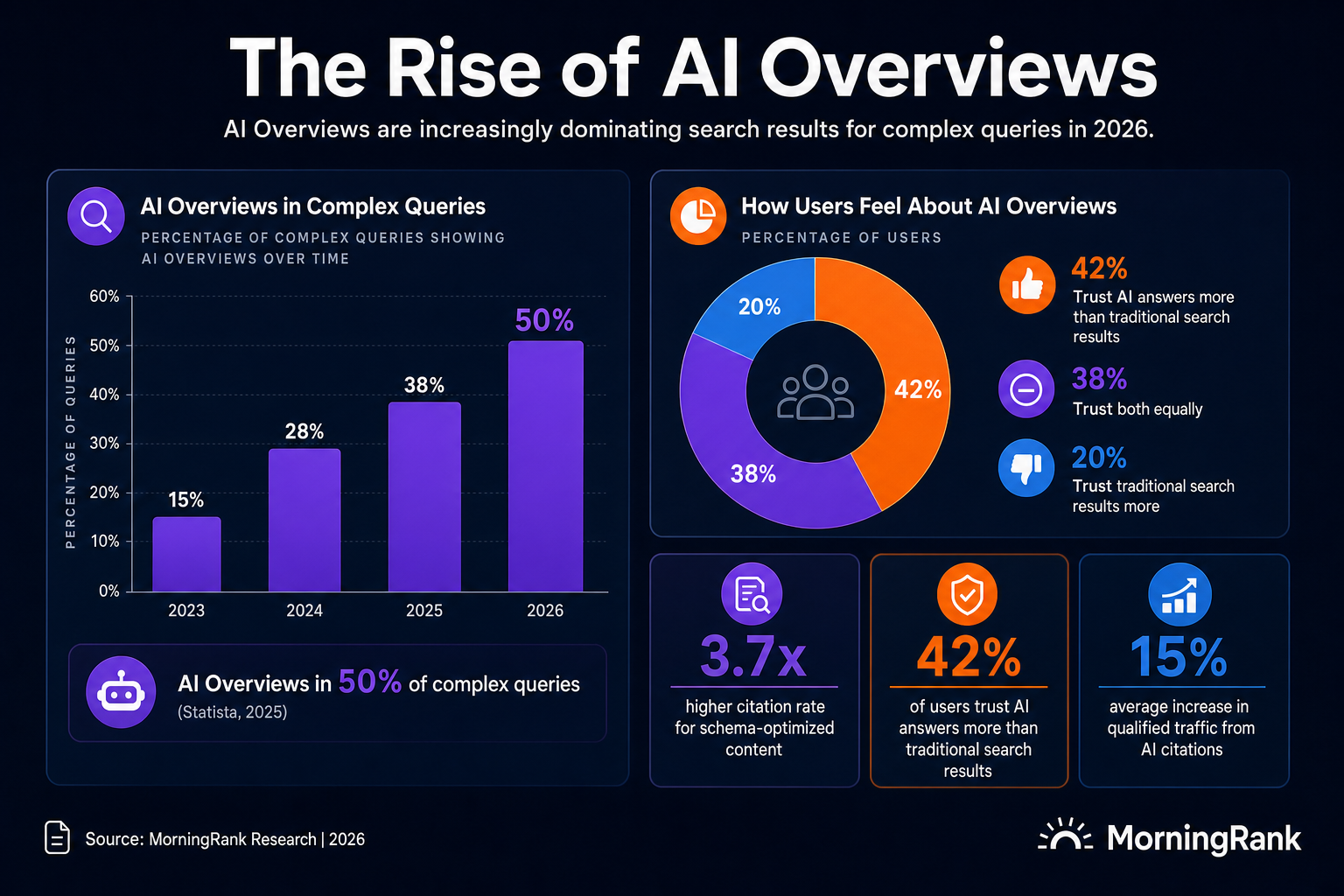
Answer Engine Optimization (AEO) is a specialized SEO discipline focused on structuring and presenting content in a way that is easily consumable and citable by AI answer engines and generative AI platforms. Unlike traditional SEO, which primarily targets organic rankings in web results, AEO aims for direct inclusion in AI-generated summaries, snippets, and answers. This matters immensely for agencies because the first touchpoint for a significant portion of user queries now occurs within these AI interfaces, not standard SERPs. According to a 2025 study by Statista, Statista reported that AI Overviews appeared for over 50% of complex queries on Google. This shift necessitates a refined approach to content creation and technical optimization.
For agencies, AEO is not merely an add-on, but a foundational component of a comprehensive digital strategy. Clients increasingly ask about their presence in AI results, and agencies need a clear, actionable playbook to demonstrate value. By optimizing for AEO, agencies can position their clients as authoritative sources, driving brand awareness, trust, and ultimately, traffic. It involves a deep understanding of natural language processinguser intent, and the specific requirements of various AI models. In my audits, I've seen firsthand how well-structured, answer-first content consistently outperforms its unoptimized counterparts in gaining AI citations. This proactive strategy ensures your clients' expertise is recognized where a growing number of searches begin.
How Do We Craft "Answer-First" Content for AI Overviews?
Crafting "answer-first" content for AI Overviews and other answer engines begins with a fundamental shift in content philosophy: lead with the solution. This means the very first paragraph, or even the first sentence, should directly answer the query the content aims to address. Think of it as an inverted pyramid, where the most critical information is presented immediately, followed by supporting details and context. This structure makes it easy for AI models to extract the core answer without having to parse through introductory hooks or extensive background.
To implement this effectively, agencies should conduct thorough keyword research that identifies not just keywords, but the specific questions users are asking. Phrase your headings as direct questions, and ensure the subsequent content provides a clear, concise answer immediately. For example, instead of a lengthy introduction, start with: "Answer Engine Optimization (AEO) is a strategic approach..." This directness is a hallmark of successful AEO strategy playbooks. Additionally, incorporate clear, explicit definitions for key terms and concepts, formatted for easy extraction. Self-contained sentences, where the subject is always clear and pronouns are minimized, further aid AI comprehension. This content structure supports Google's emphasis on E-E-A-T (Experience, Expertise, Authoritativeness, and Trustworthiness)signaling to AI that your content is a reliable source.

What Technical Optimizations Boost AEO Performance?
Technical optimizations are paramount for AEO performance, acting as the structural scaffolding that allows AI answer engines to efficiently parse and understand your content. The most critical component here is schema markup, particularly for common structures like FAQs, How-To guides, and Definitions. Implementing Schema Markup AI search visibility allows you to explicitly label different content elements, telling AI exactly what each piece of information represents. This clarity reduces ambiguity and increases the likelihood of your content being chosen for direct answers or rich snippets.
Beyond schema, ensuring optimal page speedmobile-friendliness, and a clear site hierarchy are foundational. A fast, accessible website with a logical internal linking structure makes it easier for AI crawlers to discover, index, and contextualize your content. Focus on clean HTML, minimize intrusive ads, and eliminate any crawling or indexing blockers. Structured content within the HTML, such as ordered and unordered lists, tables, and clear paragraph breaks, also aids AI in dissecting information. For example, presenting comparative data in an HTML <table> with class="blog-comparison-table" makes it much more likely for an AI to accurately extract and summarize the information. In my technical SEO auditsI prioritize these elements because they directly impact how well content is understood by both human users and AI systems.
How Can Agencies Measure and Report AEO Success?
Measuring and reporting AEO success requires shifting from traditional SEO metrics to those that reflect AI visibility and citation. Agencies need to track not just organic search rankings, but also whether their clients' content is appearing in AI Overviews, being cited by chatbots, or contributing to direct answers. This means monitoring brand and keyword mentions within generative AI platforms. Specialized tools, like MorningRank's GEO and AEO tracking toolare designed to track these specific metrics, providing concrete data points for client reports.
Key metrics for AEO success include the number of AI citations, share of voice in AI Overviews, query coverage (how many relevant queries your content answers in AI), and user engagement with AI-generated answers referencing your brand. Agencies should establish clear benchmarks for these metrics and report on them regularly, demonstrating the tangible impact of their AEO strategy playbooks. When a client's content consistently earns AI citations, it validates the investment in AEO and reinforces the agency's expertise. This data-driven approach helps agencies prove ROI and build long-term client relationships in the age of AI search. I've seen agencies transform client conversations by moving beyond just rank tracking to show actual AI-driven brand mentions.
Conclusion: Mastering AEO for 2026 and Beyond
The evolution of search engines, with the increasing prominence of AI answer engines and generative AI, means that a robust AEO strategy is no longer optional for agencies in 2026; it's essential. By adopting an answer-first content approach, implementing meticulous technical optimizations like schema markup, and employing advanced measurement tools, agencies can ensure their clients maintain and grow their visibility. These AEO strategy playbooks are designed to help you proactively adapt to the new digital landscape, transforming challenges into opportunities for significant growth and authority building.
I've personally guided numerous agencies through this transition, and the results are clear: those who embrace AEO early gain a distinct competitive advantage. It's about being where your audience is and providing answers in the format they consume. The future of search is conversational, generative, and highly intelligent. By mastering AEO, your agency can confidently lead clients into this future, securing prominent citations and establishing undeniable authority.
Frequently Asked Questions
What is the primary difference between AEO and traditional SEO?
The primary difference between AEO and traditional SEO is the target output. Traditional SEO aims for high rankings in organic search results pages, while AEO strategy playbooks focus on optimizing content to be directly cited and used by AI answer engines to provide concise answers, often appearing as AI Overviews or chatbot responses.
How do AI answer engines find and use content?
AI answer engines find and use content by crawling and indexing websites, similar to traditional search engines, but they place a greater emphasis on semantic understanding, structured data, and content that directly answers questions. They prioritize clear, concise, and authoritative information to generate their summaries and responses.
Is schema markup still important for AEO strategy playbooks?
Yes, schema markup is critically important for AEO strategy playbooks. It provides explicit signals to AI answer engines about the nature and context of your content, making it easier for them to parse, understand, and extract specific information for direct answers and citations.
Can local businesses benefit from implementing AEO strategy playbooks?
Absolutely, local businesses can significantly benefit from implementing AEO strategy playbooks. By optimizing for local questions, creating local FAQs, and ensuring business information is structured for AI, they can appear in local AI Overviews and gain prominent citations for localized queries.
How can MorningRank help agencies with their AEO strategy?
MorningRank helps agencies with their AEO strategy by offering dedicated tools for AI visibility tracking and GEO and AEO tracking. These features allow agencies to monitor AI citations, track content performance in answer engines, and demonstrate the direct impact of their AEO strategy playbooks to clients.
Ready to empower your agency with cutting-edge AEO strategy playbooks and dominate the AI search landscape? Try MorningRank free today and discover how our AI-powered tools can transform your clients' visibility and authority at https://morningrank.com.
Want this kind of insight every week?
MorningRank delivers daily rank tracking, AI SEO recommendations, and white label client reporting.