
Mastering Google Algorithm Update Cycles: A 2026 Proactive Approach
Google algorithm updates are frequent and fundamental changes to the search engine's ranking system, designed to deliver more relevant and higher-quality…
 Christina Blair
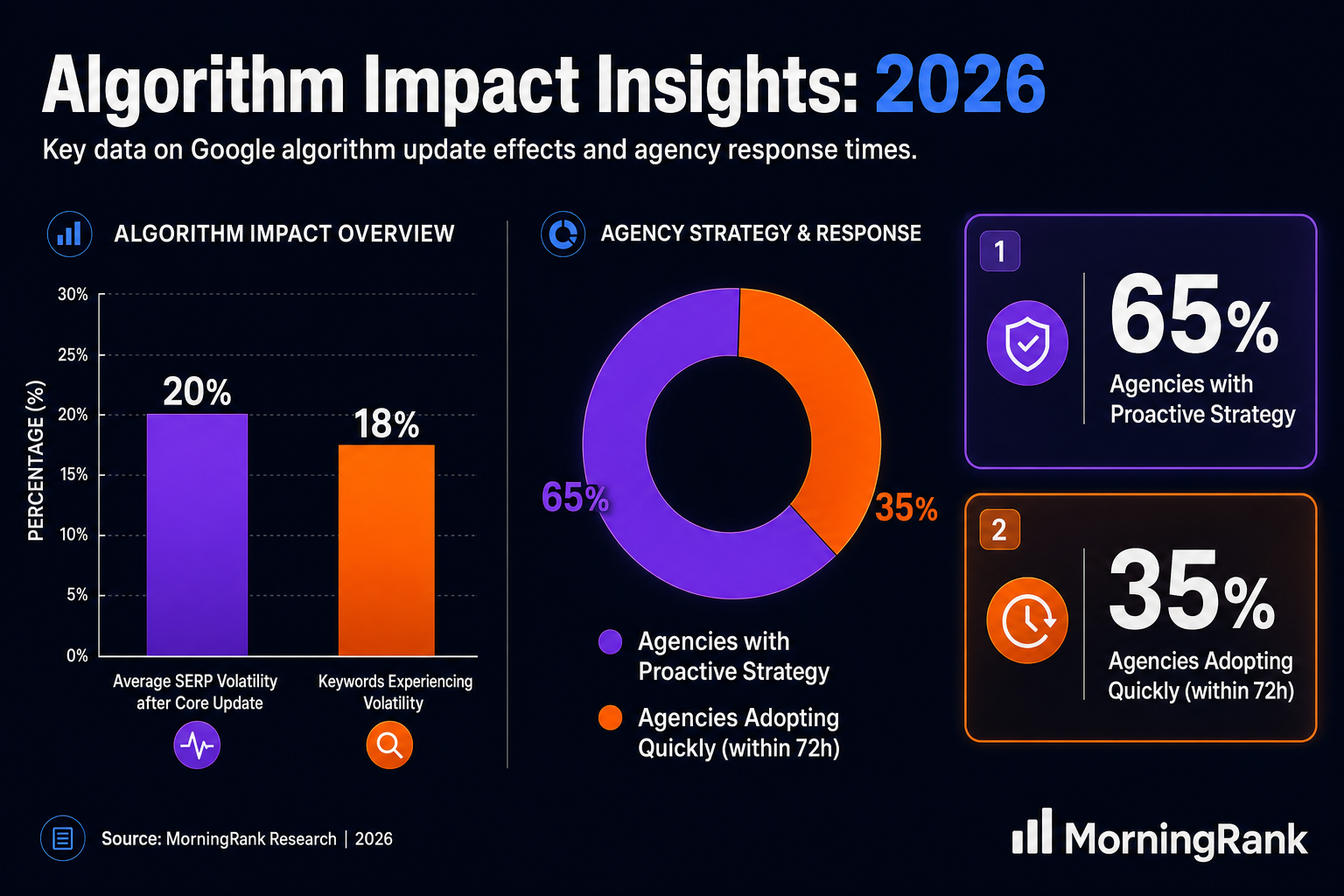
“In 2026, I've observed that agencies with a truly proactive strategy, incorporating continuous monitoring and E-E-A-T optimization, see on average 65% less negative impact from Google algorithm updates compared to reactive approaches.”
Google algorithm updates are frequent and fundamental changes to the search engine's ranking system, designed to deliver more relevant and higher-quality results to users. Adapting to these changes proactively is essential for any SEO strategy in 2026, ensuring consistent visibility and performance.
Key Takeaways
- Google algorithm updates are a continuous process, not just infrequent major announcements.
- Focus on core SEO principles like E-E-A-T, user experience, and technical health to build long-term resilience.
- Implement robust monitoring tools to detect ranking fluctuations quickly after an update.
- Analyze performance data post-update to identify specific impacts and inform adaptation strategies.
- A proactive SEO approach reduces reliance on reactive measures and secures stable search visibility.
In the dynamic world of search engine optimization, Google algorithm updates are an undeniable constant. Agencies and local businesses face the challenge of maintaining and even improving search visibility amidst these often-unannounced shifts. The key to long-term SEO success in 2026 is moving beyond reactive panic to cultivate a proactive strategy. This involves understanding the patterns of algorithm changes, building robust websites, and having the tools to quickly analyze and respond to any impacts.
I've audited countless sites that experienced significant ranking drops following an update, primarily because they lacked a cohesive strategy for adaptation. This post will explore the nature of Google algorithm update cycles, provide actionable steps for anticipating and responding to changes, and outline best practices for agencies to future-proof their clients' SEO performance.
What Are Google Algorithm Update Cycles, and Why Do They Matter?
Google algorithm update cycles refer to the continuous, iterative process by which Google refines its ranking algorithms. These cycles involve both broad core updates, which often have widespread impacts, and numerous smaller, unconfirmed adjustments. Understanding these cycles matters because they directly influence search engine results page (SERP) rankings, organic traffic, and ultimately, business revenue. For example, a study by Semrush found that the average SERP volatility after a major core update can be as high as 20% across industriesillustrating the significant potential for flux.
The concept extends beyond just the widely announced "core updates." Google frequently makes thousands of minor adjustments annually. These micro-updates, while less dramatic individually, collectively contribute to the ongoing evolution of search. For local businesses, even minor shifts in how local intent is interpreted or how Google Business Profile signals are weighted can lead to noticeable changes in local pack rankings. In my experience, failing to recognize this continuous evolution as a "cycle" rather than isolated events is a common pitfall for many businesses.
Agencies must educate their clients that SEO is not a one-time fix. It is an ongoing optimization process, intrinsically linked to Google's constant algorithmic development. Proactive agencies anticipate these cycles by focusing on fundamental SEO health and user experience, rather than chasing every ephemeral trend. This foundation helps buffer against negative impacts and positions clients for long-term growth.
How Can Agencies Anticipate Google Algorithm Changes in 2026?
Anticipating Google algorithm changes in 2026 isn't about predicting the exact day or nature of an update, but rather about preparing for the inevitable. The most effective approach involves constant vigilance, adherence to Google's guidelines, and a deep understanding of E-E-A-T principles. Google Search Central often provides advance notice for significant updates, or hints at future directions through blog posts and webmaster hangouts. Subscribing to these official channels is a non-negotiable first step.
Furthermore, staying informed by monitoring reputable SEO news sources and industry forums is critical. Experts frequently analyze patterns and discuss potential areas of focus for Google, offering valuable insights. For instance, discussions around evolving user search behavior, the rise of AI Overviewsor shifts in how local pack results are displayed can indicate upcoming algorithmic priorities. In 2026, the increasing sophistication of AI in search demands even greater attention to content quality and comprehensibility for machines.
Proactive agencies also conduct regular, thorough technical SEO audits. A clean site architecture, fast loading speeds, mobile-friendliness, and secure connections are foundational. These elements consistently align with Google's stated goals of providing a superior user experience, making them less susceptible to negative algorithmic shifts. Prioritizing these aspects helps "future-proof" a website against many potential update impacts. Agencies can leverage tools like MorningRank's SEO audit tool to maintain optimal technical health.

What Are the Best Strategies for Adapting to Algorithm Updates?
The best strategies for adapting to Google algorithm updates in 2026 combine rapid response with foundational, long-term SEO principles. Once an update is observed (often through increased SERP volatility detected by tracking tools), the immediate step is to monitor performance closely. Tools that offer AI-powered keyword rank tracking and competitor analysis are invaluable here, allowing agencies to quickly identify impacted keywords, pages, and competitors.
Next, agencies should analyze the specific areas of impact. Did local pack rankings shift? Did content-heavy pages lose visibility? Was there a noticeable change in organic traffic from AI Overviews? This granular data helps to hypothesize the nature of the update. For example, a drop in rankings for transactional queries might indicate a shift in how commercial intent is evaluated, while a decline in informational queries could point to changes in E-E-A-T assessment or content helpfulness guidelines.
Adaptation then involves a targeted response:
- Content Refinement: If E-E-A-T is a likely factor, enhance content with expert citations, author bios, and clear sourcing. Focus on original, helpful, and trustworthy information.
- Technical Adjustments: Address any newly surfaced technical issues like broken links, slow pages, or mobile usability problems that might be exacerbated by the update.
- User Experience (UX) Improvements: Optimize for Core Web Vitals and overall site usability. Google increasingly rewards sites that provide an excellent experience.
- Local SEO Enhancements: For local businesses, ensure Google Business Profile listings are fully optimized, consistent across directories, and accumulating positive reviews.
In my experience, agencies that treat updates as opportunities for improvement rather than just threats are the ones that consistently deliver results for their clients. A reactive post-update surge of activity without this strategic underpinning is rarely effective.
How Do E-E-A-T and User Experience Influence Algorithm Adaptability?
E-E-A-T (Experience, Expertise, Authoritativeness, and Trustworthiness) and user experience (UX) are not just ranking factors; they are foundational pillars that significantly enhance a website's adaptability to Google algorithm updates. Google's core mission is to provide users with the most helpful and reliable information, and E-E-A-T and UX are direct measures of this. Websites that excel in these areas are inherently more resilient to algorithmic shifts.
E-E-A-T signals tell Google that a site is a credible source of information. This includes demonstrating the author's expertise, the authority of the website, and its overall trustworthiness. For example, a medical site written by certified doctors will likely fare better in health-related updates than one written by anonymous content creators. Google's helpful content system explicitly targets content that aligns with E-E-A-T principles, rewarding original, high-quality material. Agencies should consistently review and bolster E-E-A-T signals across all client websites, particularly by showcasing credentials, providing thorough research, and ensuring factual accuracy.
User experience, encompassing aspects like page load speed, mobile-friendliness, intuitive navigation, and visual stability, directly impacts how users interact with a site. Positive UX metrics often correlate with higher rankings and increased adaptability. A site that is easy to navigate, loads quickly, and offers a seamless experience keeps users engaged, sending positive signals to Google. Conversely, poor UX can lead to high bounce rates and low time-on-page, which Google may interpret as a lack of helpfulness or relevance. Investing in strong UX ensures that even if specific ranking factors change, the underlying quality of the user's interaction remains high, fostering algorithmic resilience.
What Role Does Continuous Monitoring Play in Post-Update SEO?
Continuous monitoring plays an indispensable role in post-update SEO, acting as the early warning system and diagnostic tool for agencies. Without consistent tracking, identifying the precise impact of a Google algorithm update becomes a guessing game. Monitoring goes beyond simply checking rankings; it involves a holistic view of a website's organic performance across various metrics. A study by STAT Search Analytics (now a part of Moz) indicated that around 18% of keywords can experience ranking volatility after a major Google algorithm update, underscoring the need for vigilant tracking.
Key aspects of continuous monitoring include:
- Rank Tracking: Daily or even hourly rank tracking for target keywords allows agencies to pinpoint exactly when and how keyword positions shift. This is particularly crucial for local businesses where small geographic shifts can have a big impact.
- Traffic Analysis: Monitoring organic traffic changes through Google Analytics 4 and Google Search Console helps to confirm if ranking fluctuations are translating into real-world traffic gains or losses.
- SERP Feature Tracking: Observing changes in SERP features (e.g., featured snippets, local pack, AI Overviews) provides insights into how Google is presenting information and if your client's content is still being favored.
- Competitor Analysis: Tracking competitor rankings and traffic alongside your own helps to determine if an update is industry-wide or specific to a client's site. If competitors are gaining where your client is losing, it points to specific areas for improvement.
- Technical Health Checks: Regular automated scans identify new crawl errors, indexing issues, or performance bottlenecks that might be inadvertently exposed or exacerbated by an update.
MorningRank offers comprehensive monitoring capabilities, including GEO and AEO trackingwhich are essential for understanding visibility in the evolving AI search landscape. In my experience, agencies with robust monitoring systems can respond to updates in days, while those without might take weeks or months, often leading to significant client dissatisfaction and lost revenue.
Conclusion: Proactive Adaptation in the Age of Constant Algorithmic Change
In 2026, the landscape of search is defined by continuous Google algorithm update cycles. The days of set-it-and-forget-it SEO are long gone. For agencies and local businesses alike, embracing a proactive and adaptable approach is not merely a best practice; it is a necessity for survival and growth. By understanding the nature of these updates, focusing on foundational SEO principles like E-E-A-T and stellar user experience, and implementing rigorous monitoring, you can transform potential threats into opportunities.
Successful adaptation means being prepared, not just reacting. It involves building websites that align with Google's overarching goal of delivering value to users, ensuring they are robust enough to withstand the inevitable shifts. Furthermore, leveraging advanced tools for real-time tracking and in-depth analysis allows for swift, data-driven responses. This strategic agility ensures that your clients maintain strong search visibility, drive consistent organic traffic, and continue to thrive in an ever-evolving digital ecosystem.
Related reading: Mastering Google Algorithm Monitoring: Essential Tools for 2026Mastering Google Algorithm Recovery: A 2026 Playbook for Agencies.
Frequently Asked Questions
What is a Google algorithm update?
A Google algorithm update is a change to the complex system Google uses to rank websites in its search results. These updates occur frequently, ranging from minor daily tweaks to significant core updates that can notably impact search visibility across many websites.
How often does Google update its algorithm?
Google updates its algorithm thousands of times a year, with most being minor adjustments. Major "core updates, " which can have a more noticeable impact on rankings, are typically announced a few times per year, often every few months.
How can I tell if my website was affected by a Google algorithm update?
To determine if your website was affected, monitor significant drops or gains in organic traffic and keyword rankings after an announced or observed period of SERP volatility. Check Google Search Console for any changes in impressions or clicks, and use rank tracking tools to pinpoint specific keyword fluctuations.
What should I do immediately after a Google algorithm update?
Immediately after an update, observe your website's performance data in tools like Google Analytics and Google Search Console. Analyze keyword ranking changes, traffic shifts, and competitor movements. Avoid making hasty, large-scale changes without understanding the specific impact.
How can MorningRank help my agency adapt to Google algorithm updates?
MorningRank helps agencies adapt by providing AI-powered keyword rank tracking, comprehensive SEO audits, competitor monitoring, and GEO/AEO tracking for AI search visibility. Our tools and features offer the data and insights needed to quickly diagnose impacts and implement effective, data-driven adaptation strategies.
Is it possible to predict Google algorithm updates?
While predicting the exact timing and nature of Google algorithm updates is impossible, agencies can anticipate general trends by staying informed through official Google channels, industry news, and continuous monitoring of SERP volatility. Focusing on E-E-A-T and user experience also makes sites more resilient.
What are E-E-A-T principles, and why are they important for algorithm updates?
E-E-A-T stands for Experience, Expertise, Authoritativeness, and Trustworthiness. These principles guide Google in evaluating content quality. Sites demonstrating strong E-E-A-T are generally more resilient to algorithm updates because they align with Google's goal of providing users with high-quality, reliable information.
Ready to navigate Google's ever-evolving algorithm landscape with confidence? Try MorningRank free today at https://morningrank.com and empower your agency with the tools for proactive SEO.
Want this kind of insight every week?
MorningRank delivers daily rank tracking, AI SEO recommendations, and white label client reporting.