
Understanding Google’s Dynamic Ranking: A Proactive Guide for 2026
Google’s search algorithms are not static, episodic events but rather a continuously evolving system, making it crucial for SEO professionals to understand and…
 Christina Blair
“In my experience, agencies that thrive amidst Google's continuous algorithmic shifts are those that embed adaptability and a focus on fundamental SEO excellence into their core operations, rather than chasing every individual update. They prioritize E-E-A-T and technical performance above all else.”
Google’s search algorithms are not static, episodic events but rather a continuously evolving system, making it crucial for SEO professionals to understand and adapt to its dynamic ranking factors. Rather than reacting to each individual update, a proactive strategy focusing on fundamental principles and continuous optimization ensures sustained search visibility and performance in 2026.
Key Takeaways
- Google's ranking is a dynamic, continuous process driven by AI and user signals, not just major updates.
- Prioritizing E-E-A-T (Experience, Expertise, Authoritativeness, Trustworthiness) is essential for content that satisfies user intent.
- Technical SEO, including Core Web Vitals, remains a foundational element for search performance.
- Continuous monitoring of performance data and SERP changes is critical for identifying and responding to shifts.
- Adapting to generative AI features, like AI Overviews, requires optimized content structure and clear sourcing.
In the past, SEO agencies often prepared for "the next big Google update." This mindset, however, overlooks the fundamental shift in how Google’s search engine operates. In 2026, Google Search is less about discrete algorithm updates and more about a fluid, AI-driven evaluation of billions of signals. As a Local Search Specialist at MorningRank, I've audited countless sites impacted by these shifts, and the most resilient always focus on foundational excellence and proactive monitoring.
This post will delve into what "dynamic ranking factors" truly means, explore the role of AI in shaping search results, outline actionable strategies for adapting your SEO, and discuss how to prepare for the continued evolution of search in the age of generative AI.
What Are Google's Dynamic Ranking Factors in 2026?
Google’s dynamic ranking factors are the ever-changing, interconnected signals that Google’s algorithms use to determine the relevance and quality of search results in real-time. This system is far more nuanced than a series of isolated updates, instead reflecting continuous improvements driven by artificial intelligence and machine learning.
Unlike historical, named updates, many of today's algorithmic adjustments are deployed incrementally and automatically. Google's systems, like RankBrain and its various AI models, constantly learn from user interactions and massive datasets. This means that a website's ranking can fluctuate without a formal announcement, purely as a result of these dynamic evaluations. For instance, Google processes billions of searches daily, and its systems are constantly evaluating how well content satisfies user intent, how users engage with results, and the overall quality signals of a page and site. This ongoing learning loop is a core aspect of dynamic ranking. I've seen agencies successfully navigate these changes by focusing on quality and relevance above all else.
How Does AI Influence Google's Ranking Dynamics?
Artificial intelligence (AI) profoundly influences Google's dynamic ranking, shifting the focus from simple keyword matching to understanding complex queries and content relevance. AI algorithms, such as those powering Google's search engine, continuously analyze vast amounts of data to interpret user intent and assess content quality, leading to constant micro-adjustments in ranking. For example, Google uses AI to identify patterns in user behavior, such as dwell time, click-through rates, and bounce rates, to infer the effectiveness of a search result. This goes beyond traditional SEO signals, making it imperative for content to be genuinely useful and engaging.
Moreover, AI is central to Google's ability to combat spam and low-quality content, ensuring that helpful, reliable information rises to the top. This continuous algorithmic refinement means that SEO is no longer about "gaming the system" but about consistently meeting a high bar for quality and user satisfaction. Preparing for AI-driven search means focusing on E-E-A-T and providing comprehensive answers to user questions, a strategy I advocate for all our clients. You can read more about adapting to AI search in our guide on AI search visibility and AI Overview optimization.
Why Is E-E-A-T Critical for Adapting to Google's Dynamic Ranking?
E-E-A-T, which stands for Experience, Expertise, Authoritativeness, and Trustworthiness, is critical because it represents the core principles Google's dynamic algorithms use to evaluate content quality and reliability. As Google strives to deliver the most helpful and trustworthy information, content that demonstrates strong E-E-A-T signals is consistently favored in search rankings. In my experience, neglecting E-E-A-T is a primary reason for rank volatility during algorithm shifts.
Experience: This refers to the creator's personal or lived experience with the topic. For instance, a product review written by someone who has actually used the product provides more valuable "experience" than one written purely from research.
Expertise: This measures the knowledge or skill of the content creator in a particular field. Content on medical topics, for example, requires medical expertise. Journalists writing about complex financial markets need financial expertise.
Authoritativeness: This relates to the reputation of the content creator and the website as a recognized source of information on the topic. Backlinks from reputable sources and mentions across the web contribute to perceived authority.
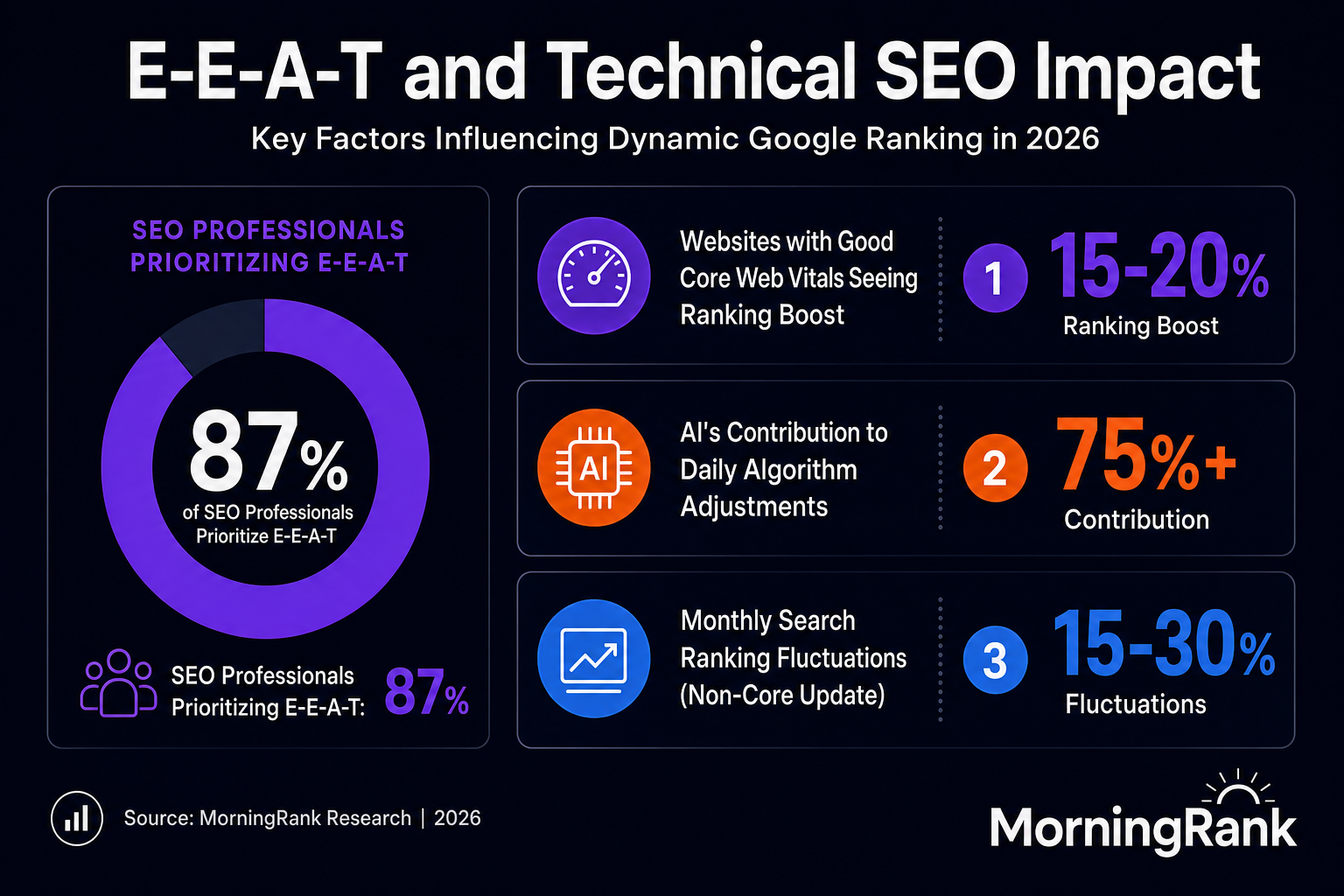
Trustworthiness: This is about the legitimacy, accuracy, and safety of the website and its content. This includes factors like secure websites (HTTPS), clear privacy policies, accurate information, and transparent sourcing. Google's Quality Rater Guidelines, which provide insights into what Google values, emphasize E-E-A-T heavily. According to a study by SEMrush, 87% of SEO professionals consider E-E-A-T a crucial ranking factor (Source: Semrush).
Agencies must implement strategies that showcase these attributes for their clients. This includes featuring author bios, citing credible sources, acquiring authoritative backlinks, and ensuring all factual claims are verifiable. Focusing on E-E-A-T provides a stable foundation against the continuous shifts of Google's dynamic ranking. We cover this in depth in our post, Navigating Google's E-E-A-T Updates: An Agency Playbook for 2026.

How Can Technical SEO Build Algorithmic Resilience in 2026?
Technical SEO is a foundational element that builds algorithmic resilience by ensuring websites are crawlable, indexable, and provide an excellent user experience, which Google’s dynamic ranking factors heavily consider. A technically sound website is easier for Google to understand and evaluate, reducing the risk of negative impacts during algorithmic adjustments. In 2026, core technical elements like Core Web Vitals are directly integrated into ranking evaluations.
What are Core Web Vitals and Why Do They Matter?
Core Web Vitals are a set of specific, measurable metrics related to a page's loading performance, interactivity, and visual stability, directly impacting user experience. These include Largest Contentful Paint (LCP), First Input Delay (FID), and Cumulative Layout Shift (CLS). Good Core Web Vitals scores signal to Google that a page offers a smooth, fast, and stable experience, which contributes positively to its dynamic ranking.
For example, a slow-loading page (poor LCP) or one with unexpected layout shifts (poor CLS) can frustrate users, leading to higher bounce rates and signaling a subpar experience to Google. Google's official stance confirms Core Web Vitals as a ranking signal (Source: Google Search Central). Ensuring excellent Core Web Vitals helps maintain consistent performance even as other ranking signals shift. My team leverages tools like MorningRank's Automated SEO Site Audits to proactively identify and fix these issues for clients.
Other crucial technical SEO aspects include mobile-friendliness, secure site protocols (HTTPS), clear site architecture, and fast server response times. These elements collectively create an optimal environment for both users and search engine crawlers. Ignoring technical SEO is like building a skyscraper on a weak foundation; it might stand for a while, but it's vulnerable to any tremor. Prioritizing these technical aspects is a proactive defense against Google's dynamic ranking changes, ensuring your content is always presented in the best possible light.
What Data Should Agencies Monitor for Dynamic Ranking Shifts?
Agencies must monitor a comprehensive suite of data points to identify and respond to Google's dynamic ranking shifts effectively. Relying solely on keyword rankings is insufficient in 2026; a holistic view combining traffic, user behavior, and SERP feature changes is essential. This proactive data monitoring allows agencies to detect subtle algorithm adjustments before they become major problems.
Key data points to track include:
- Organic Traffic Trends: Look for sudden drops or spikes not attributable to seasonality or marketing campaigns. Segment by landing page, device, and geographic location to pinpoint specific issues.
- Keyword Ranking Fluctuations: While not the sole metric, significant and widespread drops across multiple keywords can indicate an algorithmic impact. Pay attention to changes in different SERP features, not just the "10 blue links." MorningRank's AI-powered keyword rank tracking provides granular insights into these shifts.
- User Engagement Metrics: Monitor bounce rate, dwell time, click-through rate (CTR), and pages per session. Deteriorating engagement metrics often signal content quality issues or a mismatch between user intent and content, which dynamic algorithms quickly pick up.
- Core Web Vitals Performance: Regularly check LCP, FID, and CLS scores. Declines in these metrics can directly impact rankings and user experience.
- SERP Feature Visibility: Track changes in rich snippets, featured snippets, People Also Ask boxes, and AI Overviews. Increased or decreased presence in these features can indicate algorithmic preferences for certain content types or formats. Our SERP feature tracking tool helps agencies stay on top of these changes.
- Indexing Status: Ensure all critical pages are properly indexed and that Google isn't reporting any crawling errors.
By integrating data from Google Analytics, Google Search Console, and robust SEO tools, agencies can create a powerful monitoring dashboard. This allows for quick identification of anomalies and facilitates data-driven decisions when adapting to Google's dynamic ranking environment.
How Can Agencies Proactively Adapt to Google's Continuous Evolution?
Agencies can proactively adapt to Google's continuous evolution by adopting a strategy focused on enduring SEO principles, technological integration, and a culture of continuous learning. This approach moves beyond reactive "update chasing" to building long-term search resilience for clients. In my experience, the agencies that thrive are those that embed adaptability into their core operations.
Key proactive adaptation strategies include:
- Prioritize User Intent and Content Quality: Always focus on creating content that genuinely addresses user needs and demonstrates strong E-E-A-T. Google's algorithms are designed to reward the best answer, regardless of specific keyword density.
- Invest in Technical SEO Excellence: Maintain a fast, secure, mobile-friendly, and easily crawlable website. Regular technical audits and optimization of Core Web Vitals are non-negotiable.
- Embrace Generative AI Optimization (GEO/AEO): As AI Overviews become more prevalent, structure content for easy extraction by AI models. This means clear, concise answers, schema markup, and well-organized information. Learn more about Generative Engine Optimization for agencies.
- Diversify Traffic Sources: While SEO is critical, don't put all your eggs in one basket. Explore social media, email marketing, and paid channels to reduce dependence on a single search engine.
- Continuous Learning and Education: Stay informed about industry trends, official Google announcements, and research from reputable SEO sources. Encourage team members to continuously develop their expertise.
- Leverage Advanced SEO Tools: Utilize platforms like MorningRank for real-time rank tracking, competitive analysis, site auditing, and AI-powered recommendations. These tools provide the insights needed to make informed, proactive decisions.
- Build a Strong Backlink Profile: High-quality, relevant backlinks from authoritative sites continue to be a powerful signal of trustworthiness and authority to Google's algorithms.
By embedding these strategies, agencies can build robust, future-proof SEO campaigns that not only withstand Google's dynamic ranking changes but also capitalize on new opportunities as search continues to evolve. This proactive stance ensures sustained growth and visibility for clients.
Conclusion: Mastering Google's Dynamic Ranking in 2026
Mastering Google's dynamic ranking in 2026 requires a profound shift in perspective from reactive update chasing to proactive, continuous optimization. Google's algorithms are perpetually evolving, driven by advanced AI and an unwavering commitment to delivering the most relevant and highest-quality results to users. For agencies and local businesses, this means prioritizing foundational SEO principles like E-E-A-T, maintaining technical excellence, and rigorously monitoring diverse data points. The landscape demands adaptability, a deep understanding of user intent, and a forward-looking approach to generative AI search. By consistently delivering exceptional user experiences and demonstrating clear authority and trustworthiness, you can build algorithmic resilience that not only withstands changes but thrives within them. Embrace continuous learning and leverage intelligent tools to stay ahead, ensuring your clients' visibility remains strong amidst Google's ever-changing search environment.
Frequently Asked Questions
What does "dynamic ranking" mean in Google SEO for 2026?
Dynamic ranking in Google SEO refers to the continuous, real-time adjustments Google's AI-driven algorithms make to search results. These changes are based on billions of evolving signals, including user behavior, content quality, and technical performance, rather than just periodic, large-scale updates.
How frequently does Google update its search algorithms?
Google makes thousands of small, unannounced updates to its search algorithms every year, often on a daily basis. Major, broad core updates are typically announced a few times per year, but the system is in a constant state of flux due to dynamic ranking.
What is the most important factor for adapting to Google's dynamic ranking?
The most important factor for adapting to Google's dynamic ranking is prioritizing E-E-A-T (Experience, Expertise, Authoritativeness, Trustworthiness) and creating high-quality content that genuinely satisfies user intent. Websites that consistently provide valuable, trustworthy information tend to perform well regardless of algorithmic shifts.
Can I recover quickly from a Google dynamic ranking shift?
Recovering quickly from a Google dynamic ranking shift depends on the cause of the decline. If it's due to technical issues or content quality, addressing those problems diligently can lead to recovery. Continuous monitoring and proactive adherence to best practices minimize significant negative impacts.
How do Core Web Vitals fit into dynamic ranking?
Core Web Vitals, which measure loading speed, interactivity, and visual stability, are direct ranking signals and a key component of dynamic ranking. Optimizing these metrics ensures a superior user experience, signaling to Google's algorithms that your site is high quality and should be favored.
How can MorningRank help agencies manage Google's dynamic ranking factors?
MorningRank helps agencies manage Google's dynamic ranking factors by providing AI-powered tools for real-time keyword rank tracking, comprehensive site audits, SERP feature monitoring, and AI-generated SEO recommendations. These features allow agencies to proactively adapt, identify issues quickly, and implement data-driven strategies for sustained client visibility.
Ready to empower your agency with the tools needed to thrive amidst Google's dynamic ranking changes? Try MorningRank free today and experience the difference of AI-driven SEO.
Want this kind of insight every week?
MorningRank delivers daily rank tracking, AI SEO recommendations, and white label client reporting.