
Mastering Google Algorithm Cycles: A 2026 Proactive SEO Guide
Adapting to Google algorithm cycles and shifts is a continuous process for SEO professionals in 2026.
 Christina Blair
“In 2026, Google algorithm cycles are becoming more nuanced with increasing AI sophistication. Agencies that leverage advanced analytics consistently outperform competitors by making informed, targeted adjustments.”
Adapting to Google algorithm cycles and shifts is a continuous process for SEO professionals in 2026. By understanding the patterns, types, and impacts of these cycles, businesses and agencies can implement proactive strategies to maintain and improve search visibility, ensuring resilience against ranking fluctuations.
Key Takeaways
- Google algorithm cycles involve continuous adjustments, not just major updates, requiring constant monitoring.
- Proactive SEO emphasizes data analysis, user experience, and E-E-A-T to build long-term search resilience.
- Tracking algorithm-related signals, such as SERP volatility and core web vitals, is essential for early adaptation.
- Agencies should focus on content quality, technical health, and an adaptive strategy to thrive amidst ongoing changes.
- Leveraging advanced SEO tools provides critical insights to anticipate and react effectively to algorithm shifts.
In 2026, the digital landscape is more dynamic than ever. Google’s search algorithms are not static events but rather a series of continuous adjustments and cyclical major updates. For agencies and local businesses, simply reacting to these changes is no longer sufficient. A proactive approach, built on understanding the inherent Google algorithm cycles, is vital for sustained search engine optimization (SEO) success.
Ignoring these cycles can lead to significant drops in search rankings, traffic, and ultimately, revenue. In my experience, many businesses only address algorithm changes after a negative impact, leading to costly recovery efforts. This guide aims to equip you with the knowledge and strategies to anticipate, understand, and adapt to Google's ongoing algorithmic evolution, turning potential threats into opportunities for growth.
What Are Google Algorithm Cycles, and Why Do They Matter?
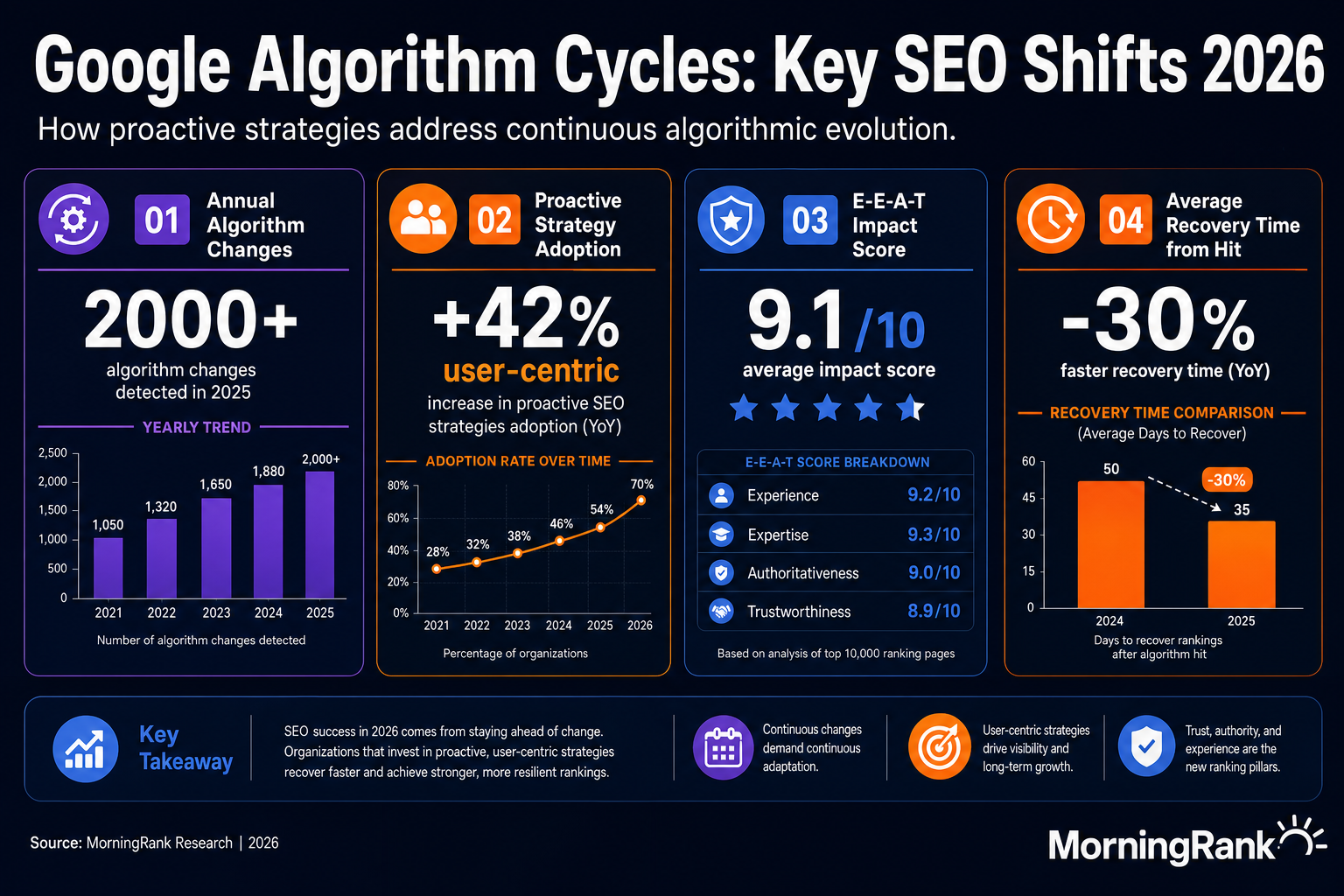
Google algorithm cycles refer to the continuous, often predictable patterns of updates, refreshes, and adjustments that Google makes to its search ranking systems. These cycles can range from minor daily tweaks to significant core algorithm updates that impact a broad spectrum of websites. The term "cycle" highlights the ongoing, iterative nature of these changes, rather than treating each update as an isolated event.
These cycles matter because they dictate how search results are ranked. Google’s primary goal is to provide the most relevant and highest-quality results to users. Therefore, their algorithms are constantly refined to better understand user intent, evaluate content quality, and combat spam. For SEO professionals, recognizing these patterns allows for strategic planning, rather than reactive scrambling. For example, understanding that Google prioritizes E-E-A-T (Experience, Expertise, Authoritativeness, and Trustworthiness) means that continuous content improvement aligned with these principles is a core component of any resilient SEO strategy.
In 2026, the increasing sophistication of AI in Google’s ranking systems means that these cycles are becoming more nuanced. Signals related to user engagement, content utility, and semantic understanding are constantly being evaluated and refined. A report by Statista indicated that Google makes thousands of algorithm changes annually, though only a fraction are officially announced. This continuous evolution underscores the necessity of a proactive and data-driven approach to SEO.
How Do We Track and Anticipate Google Algorithm Cycles?
Tracking and anticipating Google algorithm cycles involves a combination of constant monitoring, data analysis, and staying informed through official and industry sources. Since not all updates are announced, observing patterns in SERP volatility is key.
Several methods help in this crucial task:
- SERP Volatility Trackers: Tools that monitor daily fluctuations in search engine results pages (SERPs) can signal unconfirmed updates. Spikes in volatility across various industries and keywords often indicate an algorithmic shift.
- Official Google Communications: Google Search Central (formerly Google Webmasters Blog) is the primary source for official announcements regarding significant updates. Subscribing to their blog and social media channels ensures you receive timely information.
- Industry News and Analysis: Reputable SEO news sites and forums often provide early detection and analysis of perceived algorithm changes, offering valuable insights from the broader SEO community. Sources like Search Engine Land and Search Engine Roundtable are essential reads.
- Data Monitoring with SEO Platforms: Advanced SEO platforms, like MorningRank, provide comprehensive keyword rank tracking and SERP feature monitoring. They can highlight changes in rankings across your portfolio, helping to correlate these shifts with potential algorithm activity. My team leverages MorningRank's historical data to identify trends and patterns unique to our client niches.
By integrating these tracking methods, agencies can develop an early warning system for Google algorithm cycles. This allows for quicker analysis of impacted pages and the formulation of adaptive strategies, rather than playing catch-up.

What Proactive Strategies Adapt to Ongoing Algorithm Shifts?
Proactive strategies for adapting to ongoing Google algorithm shifts focus on foundational SEO principles and continuous improvement, rather than chasing every minor tweak. In my experience, agencies that consistently prioritize user value are the most resilient.
Key proactive strategies include:
- Prioritize E-E-A-T (Experience, Expertise, Authoritativeness, Trustworthiness): This framework, emphasized by Google's Quality Rater Guidelines, remains paramount. Content should demonstrate genuine expertise, be authored by credible sources, and build trust with users. Continually auditing content for E-E-A-T signals helps future-proof your strategy. You can also gain deeper insights into adapting to these changes by reading our guide on Navigating Google’s E-E-A-T Updates.
- Focus on User Experience (UX) and Core Web Vitals: Google increasingly uses UX signals as ranking factors. Ensuring fast loading times, mobile-friendliness, and intuitive navigation (measured by Core Web Vitals) provides a stable foundation. Regular technical SEO audits are crucial for maintaining site health.
- Content Quality and Topical Authority: Create comprehensive, high-quality content that thoroughly addresses user intent and covers topics in depth. Building topical authority signals to Google that your site is a reliable resource, making it less susceptible to content-focused algorithm shifts.
- Diversified Traffic Sources: While SEO is critical, relying solely on organic search can be risky. Diversifying traffic with paid search, social media, email marketing, and direct channels creates a more stable online presence.
- Continuous Monitoring and Adaptation: Set up alerts for significant ranking changes and traffic drops. Rather than panicking, analyze the affected pages and apply data-driven adjustments. This agile approach is critical in 2026's dynamic environment.
By embedding these strategies into your ongoing SEO efforts, you build a robust and adaptable online presence that can withstand the inevitable shifts in Google's algorithms.
Why is Data-Driven Analysis Essential for Algorithm Adaptation?
Data-driven analysis is essential for algorithm adaptation because it provides the objective insights needed to understand impact, diagnose issues, and formulate effective responses. Without data, responses to algorithm changes are often based on guesswork, which can be inefficient or even detrimental.
Here's why data is non-negotiable:
- Pinpointing Impact: When an algorithm update hits, data helps identify which keywords, pages, or even site sections were most affected. Did organic traffic drop across the board, or was it confined to specific content types? Did certain keywords lose rank while others remained stable? These details are critical for understanding the scope of the problem.
- Identifying Patterns: Analyzing performance data over time allows you to spot trends. For example, if all your thin content pages saw a dip, it suggests a content quality algorithm adjustment. If mobile page speeds are universally low, a Core Web Vitals-related update might be the culprit.
- Informing Strategy: Data-driven insights dictate the most effective corrective actions. Instead of a broad content overhaul, you might identify that only specific types of content need E-E-A-T enhancements. Or, you might discover that technical issues like broken links or slow server response times are holding you back. Tools that offer AI-generated SEO recommendations can significantly streamline this process by providing actionable insights based on your site's data.
- Measuring Effectiveness: Post-implementation, data helps measure whether your adaptive strategies are working. Are rankings recovering? Is traffic increasing? This feedback loop is crucial for refining your approach. GEO and AEO tracking can also help agencies monitor citations and visibility across AI answer engines, which are increasingly influenced by traditional SEO signals.
In my auditing work, I've seen that agencies relying on intuition often struggle. Those leveraging robust analytics, however, consistently outperform competitors by making informed, targeted adjustments. This allows them to effectively navigate Google algorithm cycles.
How Can Agencies Future-Proof Against Google Algorithm Changes?
Agencies can future-proof against Google algorithm changes by building diversified, user-centric, and technically sound online presences that align with Google's overarching mission of providing valuable information. This goes beyond simply reacting to individual updates; it's about cultivating an enduring digital asset.
Key strategies for future-proofing include:
- Holistic SEO Approach: Instead of focusing on isolated ranking factors, adopt a holistic strategy that integrates technical SEO, on-page SEO, content quality, user experience, and off-page signals. Google's algorithms consider hundreds of factors, and a balanced approach creates resilience.
- User-Centric Content: Always create content for your target audience first, with search engines second. High-quality, original, and helpful content that genuinely solves user problems or answers their questions is rarely penalized by updates. This aligns perfectly with E-E-A-T principles.
- Strong Technical Foundation: Ensure websites are technically flawless, with clean code, fast loading speeds, mobile-friendliness, and proper indexing. A strong technical foundation minimizes potential algorithmic penalties related to site health.
- Continuous Learning and Adaptation: The SEO landscape is constantly evolving. Agencies must invest in continuous learning for their teams, keeping abreast of industry trends, new technologies, and shifts in Google's emphasis (such as the rise of AI Overviews). For further reading, explore our comprehensive technical SEO guides.
- Leveraging Advanced Tools: Utilize comprehensive SEO platforms that provide deep insights into performance, competitor analysis, and AI-driven recommendations. MorningRank, for instance, offers AI visibility trackingallowing agencies to monitor their clients' presence not just in traditional search, but also across emerging AI answer engines. This foresight is invaluable for future-proofing.
By implementing these robust, forward-thinking strategies, agencies can ensure their clients' digital assets remain valuable and visible, regardless of what Google algorithm cycles bring in 2026 and beyond.
Conclusion
Navigating Google algorithm cycles is a permanent aspect of modern SEO. These continuous updates, ranging from minor refinements to major core changes, underscore the importance of a proactive, data-driven, and user-centric approach. Agencies and local businesses that focus on foundational SEO principles, prioritize high-quality content, maintain technical site health, and leverage advanced tracking tools are best positioned to thrive. Rather than fearing algorithm shifts, view them as opportunities to refine your strategies and better serve your audience, ultimately building a more resilient and authoritative online presence. Staying informed, analyzing data, and continuously adapting are not just best practices, but essential requirements for sustained success in 2026.
Frequently Asked Questions
What are Google algorithm cycles?
Google algorithm cycles refer to the continuous, often predictable patterns of updates, refreshes, and adjustments that Google makes to its search ranking systems. These cycles are ongoing, ensuring search results remain relevant and high-quality for users.
How often does Google update its algorithms?
Google updates its algorithms constantly, making thousands of small changes annually. While most are minor and unconfirmed, several significant core algorithm updates are officially announced each year, impacting search rankings more broadly.
How do I know if my website was affected by a Google algorithm update?
You can identify if your website was affected by an algorithm update by monitoring sudden drops or surges in organic traffic and keyword rankings in tools like Google Analytics and MorningRank's keyword rank tracking. Cross-reference these changes with reported SERP volatility or official Google announcements.
What is the most important factor in adapting to Google algorithm changes?
The most important factor in adapting to Google algorithm changes is prioritizing a user-centric approach, focusing on high-quality content, excellent user experience, and demonstrating E-E-A-T (Experience, Expertise, Authoritativeness, and Trustworthiness). These foundational elements align with Google's long-term goals.
Can a website recover from a Google algorithm hit?
Yes, a website can recover from a Google algorithm hit by identifying the underlying issues (e.g., content quality, technical SEO, E-E-A-T gaps) and systematically addressing them. Recovery often requires a comprehensive audit and consistent implementation of best practices, with monitoring to track progress.
How can MorningRank help agencies manage Google algorithm cycles?
MorningRank helps agencies manage Google algorithm cycles through advanced keyword rank tracking, SERP volatility monitoring, AI-generated SEO recommendationsand automated site audits. These features provide the data and insights needed to quickly detect changes, diagnose impacts, and implement proactive adaptive strategies for client success.
Ready to proactively manage Google algorithm cycles and ensure your clients' sustained search visibility? Try MorningRank free today and experience the power of AI-driven SEO insights. Visit https://morningrank.com.
Want this kind of insight every week?
MorningRank delivers daily rank tracking, AI SEO recommendations, and white label client reporting.