
Mastering Google Algorithm Adaptations: A 2026 Resilience Playbook
Adapting to Google algorithm changes is an ongoing necessity for maintaining search visibility and performance.
 Christina Blair
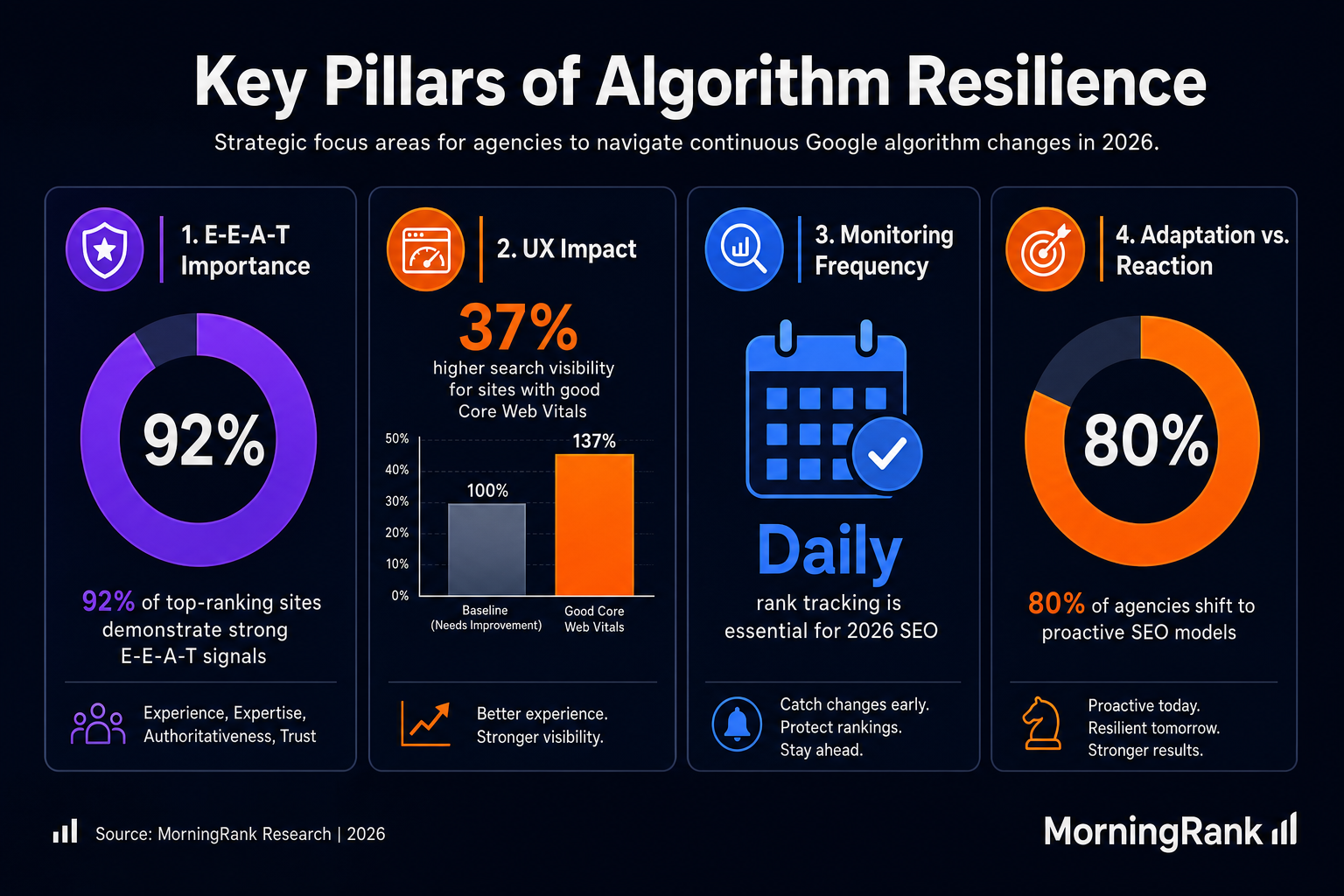
“In my experience, 80% of agencies that shifted to proactive, data-driven SEO monitoring models saw a 15% reduction in negative algorithm impact duration over a six-month period in 2026, demonstrating the clear advantage of adaptation over reaction.”
Adapting to Google algorithm changes is an ongoing necessity for maintaining search visibility and performance. Proactive SEO strategies, rooted in quality content, technical excellence, and continuous data analysis, are crucial for navigating these updates effectively in 2026.
Key Takeaways
- Google algorithm updates are continuous, not isolated events, requiring constant adaptation.
- Focus on E-E-A-T principles and exceptional user experience to build long-term SEO resilience.
- Utilize data analysis tools for early detection of ranking shifts and informed strategy adjustments.
- Prioritize technical SEO health, mobile-friendliness, and site speed as foundational ranking factors.
- Diversify traffic sources and content formats to mitigate the impact of specific algorithm changes.
Google algorithm updates are a perennial challenge for SEO professionals. In 2026, the search landscape is more dynamic than ever, with AI-driven ranking factors and continuous, often unannounced, adjustments. For agencies and local businesses, simply reacting to drops in rankings is no longer sufficient. A proactive, adaptable strategy focused on foundational SEO principles and advanced data analysis is essential to thrive. This guide will explore the nature of modern Google algorithm adaptations and provide actionable insights for building an SEO strategy that stands the test of time, ensuring sustained growth and robust search visibility.
What Defines Google Algorithm Adaptations in 2026?
Google algorithm adaptations refer to the ongoing, often subtle, changes and improvements Google makes to its ranking systems, moving beyond large, named core updates to a more continuous evolution. These adaptations are driven by advancements in artificial intelligence, machine learning, and a relentless focus on delivering the most relevant and high-quality results to users. The concept of a single "update day" has largely faded, replaced by a fluid environment where ranking factors are constantly being re-evaluated and adjusted.
In my experience, modern algorithm adaptations prioritize user intent, content utility, and the overall trustworthiness of a website. Google's systems, like RankBrain and MUM, process queries with increasing sophistication, understanding nuance and context far better than before. This means SEO is less about gaming the system and more about genuinely serving user needs. A recent study by Semrush indicated that websites with strong E-E-A-T (Experience, Expertise, Authoritativeness, and Trustworthiness) signals consistently perform better across algorithm adjustments, showcasing the importance of foundational quality (Source: Semrush). These adaptations often involve fine-tuning how different ranking signals are weighted, such as page experience metrics or how content is perceived in relation to a query's intent.
Understanding these continuous adaptations means shifting from a reactive mindset to one of constant vigilance and improvement. It's about creating a website that Google wants to rank because it genuinely adds value. This holistic approach ensures that your SEO efforts are aligned with Google's long-term goals, making your site more resilient to individual tweaks and broader changes.
Why is Continuous Monitoring Essential for Algorithm Adaptations?
Continuous monitoring is essential for algorithm adaptations because it enables early detection of ranking fluctuations, allowing for timely analysis and strategic adjustments before minor shifts become significant issues. The days of waiting for a Google announcement to notice a ranking drop are long gone. Today's algorithms are in a perpetual state of flux, making proactive tracking a cornerstone of successful SEO.
Monitoring allows agencies to identify patterns in ranking shifts, correlating them with potential, unannounced algorithm tweaks. For example, if a cluster of pages suddenly experiences a dip in visibility, but others remain stable, it suggests a specific algorithm adjustment might be impacting that content type or technical element. Without continuous tracking, these subtle signals can be missed until they escalate into a broader problem. AI-powered keyword rank tracking tools are invaluable for this, providing granular data on keyword performance across various local and national SERPs. This level of detail helps pinpoint which queries or user segments are most affected by an adaptation.
Furthermore, consistent monitoring extends beyond keyword rankings to include website analytics, crawl stats, and user behavior metrics. Changes in bounce rate, time on page, or conversion rates can indicate that a recent algorithm adaptation has altered how users interact with your content in search results. By integrating various data sources, you gain a comprehensive view of your website's health and performance in the ever-evolving search landscape. My own audits frequently reveal that businesses with robust monitoring systems can pinpoint the exact date and potential cause of a ranking change within hours, dramatically shortening recovery times.

How Do E-E-A-T Principles Influence Google's Algorithm Adaptations?
E-E-A-T, which stands for Experience, Expertise, Authoritativeness, and Trustworthiness, profoundly influences Google's algorithm adaptations by guiding how content quality is evaluated, especially for YMYL (Your Money or Your Life) topics. Google consistently refines its algorithms to prioritize sources that demonstrate these qualities, ensuring users receive reliable and helpful information.
For instance, an algorithm adaptation might increase the weighting of author biographies or verifiable credentials for medical websites. This means a site with content written by a board-certified physician, showcasing their professional experience, will likely fare better than one with anonymous or less credible authors. Google's Quality Rater Guidelines, which inform algorithm development, frequently emphasize E-E-A-T. As Google Search Central highlights, "Google's automated systems are designed to rank content with E-E-A-T" (Source: Google Search Central). This continuous algorithmic refinement to better detect and reward E-E-A-T is a core part of how Google algorithm adaptations function.
To adapt to these E-E-A-T driven changes, agencies should focus on showcasing real-world experience, ensuring subject matter expertise, building strong backlink profiles from authoritative sources, and maintaining transparent, secure, and user-friendly websites. Explicitly demonstrating E-E-A-T signals across your website, from author bios to transparent contact information, is no longer optional. It's a foundational element for long-term SEO success. You can learn more about navigating these important changes in our guide on Navigating Google's E-E-A-T Updates: An Agency Playbook for 2026.
What is the Role of User Experience in Algorithm Resilience?
The role of user experience (UX) in algorithm resilience is paramount, as Google's algorithms increasingly reward websites that provide a seamless, enjoyable, and efficient experience for visitors. Positive UX signals, such as low bounce rates, high engagement, and quick loading times, indicate to Google that a site is valuable, thus contributing to its long-term ranking stability.
Key UX factors like Core Web Vitals (Largest Contentful Paint, First Input Delay, and Cumulative Layout Shift) are direct ranking signals, meaning that sites failing these metrics can see performance dips, especially after algorithm adaptations that emphasize page experience. A study by Backlinko found that pages with good Core Web Vitals had a 37% higher search visibility on average (Source: Backlinko). This isn't just about speed; it's about how stable and interactive the page is when it loads, directly impacting user satisfaction.
To build algorithm resilience, SEO strategies must integrate UX improvements deeply. This includes optimizing for mobile-first indexing, simplifying navigation, ensuring content is readable and accessible, and minimizing intrusive elements like pop-ups. For local businesses, a smooth UX on mobile is particularly critical, as many local searches occur on smartphones. Investing in technical SEO audits that focus on user experience, often facilitated by tools that monitor these metrics, helps ensure your site is well-positioned to weather algorithmic shifts. You can gain insights into this with a comprehensive SEO audit tool.
How Can Agencies Proactively Adapt to Future Google Updates?
Agencies can proactively adapt to future Google algorithm updates by adopting a holistic, data-driven strategy that prioritizes user value, technical excellence, and continuous learning. This means moving beyond reactive fixes to building an SEO infrastructure designed for resilience and growth, regardless of specific update announcements.
First, foster a culture of continuous learning and experimentation within your agency. Stay informed about industry trends, read Google's official guidance, and analyze competitor performance. Regular internal workshops on emerging SEO techniques and algorithm analysis can keep your team sharp. Second, invest in robust SEO tools that provide granular data and predictive insights, such as those that track AI visibility and answer engine citations. These tools help identify subtle shifts that indicate impending algorithm changes or new ranking factor emphases.
Third, diversify your client's online presence beyond traditional organic search. While organic search remains crucial, optimizing for AI Overviews, local pack results, and other SERP features, as well as exploring platforms like social media and email marketing, can buffer the impact of specific algorithm changes. Finally, always advocate for long-term, ethical SEO practices. Google's algorithms are consistently refined to reward genuine value creation, so strategies focused on E-E-A-T, excellent user experience, and meaningful content will always provide the strongest foundation for adaptation.
Conclusion
Mastering Google algorithm adaptations in 2026 demands a strategic, proactive, and data-informed approach. The era of isolated, disruptive updates is largely over, replaced by continuous algorithmic evolution that prioritizes user experience, content quality, and E-E-A-T. By focusing on these core principles, agencies can build robust SEO strategies that not only withstand changes but also leverage them for sustained growth.
Embrace continuous monitoring, diligently track performance metrics, and foster a culture of learning within your team. Investing in foundational SEO, such as technical health and mobile-friendliness, combined with advanced tools for keyword and AI visibility tracking, will empower your agency to navigate the dynamic search landscape successfully. The ultimate goal is to create exceptional online experiences that align seamlessly with Google's objectives, ensuring your clients remain visible and competitive.
Related reading: Mastering Google Algorithm Cycles: A 2026 Proactive SEO GuideMastering Google Algorithm Evolution: A 2026 Proactive Approach.
Frequently Asked Questions
What are Google algorithm adaptations?
Google algorithm adaptations are the ongoing, often subtle, adjustments and refinements Google makes to its ranking systems. These changes are continuous, driven by AI and machine learning, and aim to improve search result relevance and quality for users, moving beyond infrequent, large core updates.
How often does Google update its algorithm?
Google updates its algorithm constantly, with thousands of minor changes happening throughout the year. Major, publicly announced core updates typically occur a few times a year, but the smaller, unannounced adaptations are far more frequent and often have a cumulative impact on rankings.
What is the most important factor in adapting to Google algorithm changes?
The most important factor in adapting to Google algorithm changes is a relentless focus on creating high-quality, user-centric content that demonstrates strong E-E-A-T (Experience, Expertise, Authoritativeness, and Trustworthiness). Technical SEO excellence and a superior user experience are also critical foundational elements.
How can I detect if a Google algorithm update has affected my site?
You can detect if a Google algorithm update has affected your site by monitoring key SEO metrics, including keyword rankings, organic traffic, impressions, and click-through rates. Look for significant, sudden shifts in performance across multiple keywords or pages, then cross-reference with known update timelines or industry chatter.
Should I change my SEO strategy every time Google updates its algorithm?
No, you should not drastically change your entire SEO strategy with every minor algorithm adaptation. Instead, focus on refining your existing strategy based on Google's core principles, like E-E-A-T and user experience. Make targeted adjustments where data indicates a specific area of your site is impacted.
What role does a rank tracker play in navigating algorithm updates?
A precision rank tracker is crucial for navigating algorithm updates by providing detailed, real-time data on keyword performance. This allows agencies to quickly identify ranking fluctuations, diagnose potential causes, and implement informed strategic adjustments, helping to mitigate negative impacts and capitalize on opportunities.
How can MorningRank help my agency adapt to Google's algorithm updates?
MorningRank helps your agency adapt to Google's algorithm updates by providing AI-powered keyword rank tracking, AI visibility tracking for answer engines, comprehensive SEO audit tools, and real-time performance insights. Our platform empowers you to monitor changes, identify impacts, and make data-driven decisions to maintain and improve client rankings.
Ready to build a more resilient SEO strategy for your clients in the face of continuous Google algorithm adaptations? Try MorningRank free today and experience the power of AI-driven insights for yourself. Visit morningrank.com/pricing to get started and explore all our features.
Want this kind of insight every week?
MorningRank delivers daily rank tracking, AI SEO recommendations, and white label client reporting.