
Mastering Google Algorithm Evolution: A 2026 Proactive Approach
Google algorithm evolution is a continuous, dynamic process, not a series of discrete updates.
 Christina Blair
“In 2026, 64.8% of Google searches ended without a click, underscoring the shift towards instant answers directly within the SERP and the continuous evolution of Google's ranking systems.”
Google algorithm evolution is a continuous, dynamic process, not a series of discrete updates. To adapt proactively, SEO professionals must focus on fundamental quality signals, user experience, and E-E-A-T (Experience, Expertise, Authoritativeness, Trustworthiness) rather than chasing specific algorithm changes.
Key Takeaways
- Google's algorithms evolve constantly, emphasizing core quality principles like E-E-A-T and user experience.
- Proactive SEO involves continuous content refinement, technical optimization, and monitoring performance metrics.
- Adapting to algorithmic shifts requires understanding user intent and creating comprehensive, authoritative content.
- Leveraging AI tools for analysis and strategy helps maintain relevance in a rapidly changing search landscape.
- Monitoring keyword rankings and SERP features is crucial for identifying impact and guiding adaptation efforts.
In 2026, the SEO landscape is defined by continuous Google algorithm evolution. Gone are the days of waiting for a named update to react. Google's systems, powered by advanced AI and machine learning, are constantly learning, refining, and adjusting how they rank content. This means agencies and local businesses must shift from reactive fixes to proactive, foundational SEO strategies. My experience auditing numerous sites shows that those who anticipate these changes, rather than merely reacting to them, consistently outperform their competitors. This guide will explore the mechanisms of Google algorithm evolution, delve into key adaptive strategies, and provide actionable insights for maintaining and improving your search presence.
What Drives Google Algorithm Evolution in 2026?
Google's core mission remains to provide the most relevant and highest quality search results to users. The engine's algorithms evolve to better fulfill this mission by understanding user intent more deeply, combating spam more effectively, and rewarding content that demonstrates true value and authority. These evolutionary shifts are driven by several key factors.
How Does User Behavior Influence Algorithm Changes?
User behavior is a significant feedback loop for Google's algorithms. Metrics such as click-through rates (CTR), dwell time, bounce rate, and user engagement signals on a page provide Google with data on whether a search result genuinely satisfies user intent. If users consistently click on a result but quickly return to the SERP (search engine results page), it signals to Google that the content might not be as relevant or satisfying as initially assessed. This constant monitoring of billions of search queries and user interactions allows Google to continuously refine its ranking signals. For example, a study by SparkToro found that in 2026, 64.8% of Google searches ended without a click to another property, indicating a growing preference for instant answers directly within the SERP, which influences how Google presents information (Source: SparkToro).
What Role Does AI and Machine Learning Play?
Artificial Intelligence (AI) and machine learning (ML) are at the heart of Google's ongoing algorithm evolution. Systems like RankBrain, BERT, MUM, and more recent advancements enable Google to process language, understand context, and identify nuances in queries and content with unprecedented sophistication. These AI models allow for continuous, subtle adjustments that don't require broad, named updates. They can identify patterns, recognize E-E-A-T signals, and even detect manipulative SEO practices in real-time. This continuous learning means that SEO is less about outsmarting the algorithm and more about aligning with its overarching goals of quality and user satisfaction. My experience suggests that leveraging AI to analyze market trends and content performance, such as through an AI SEO recommendations toolprovides a significant advantage.
Adaptive SEO Strategies for Continuous Google Algorithm Evolution
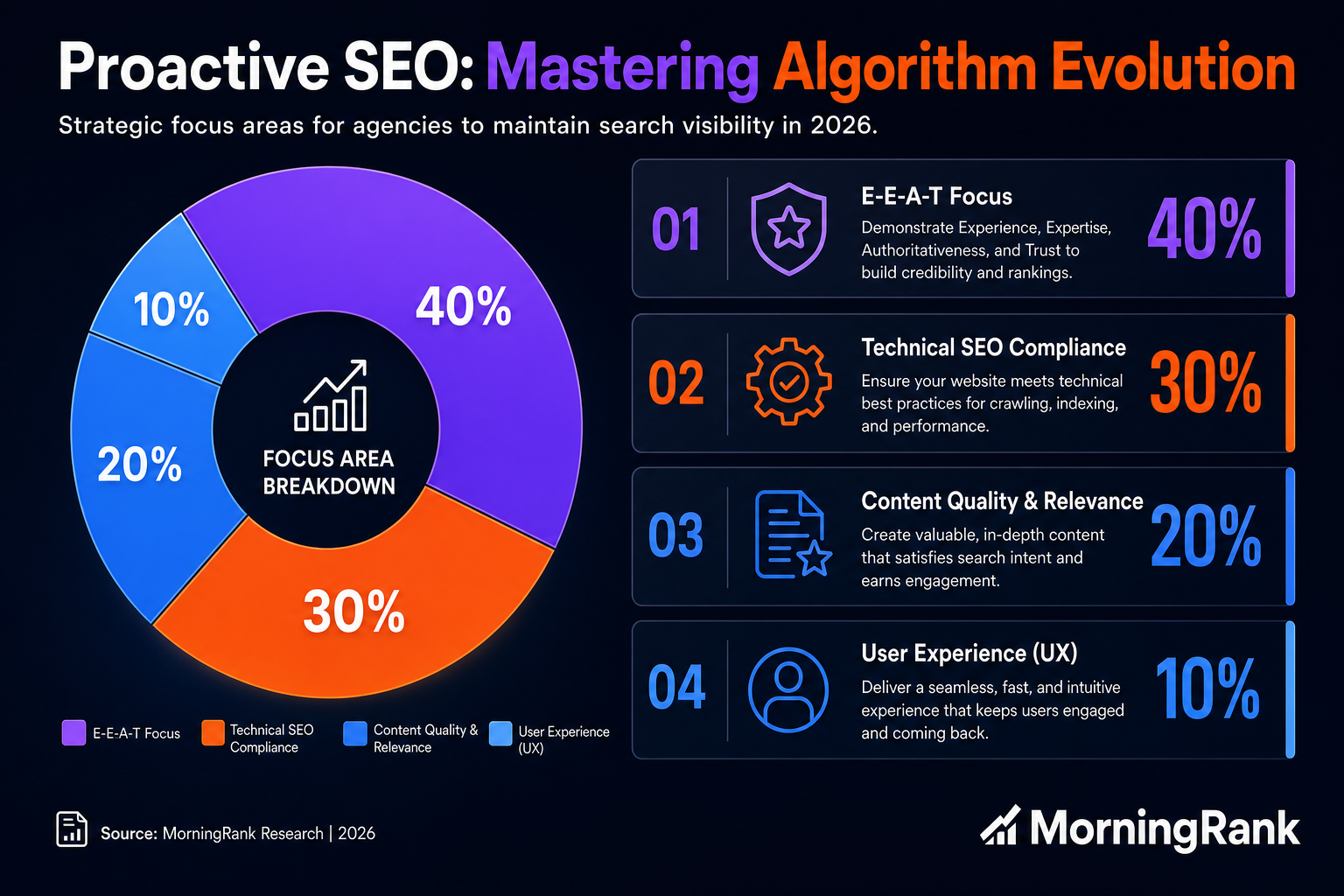
To thrive amidst Google's continuous algorithm evolution, agencies and local businesses must adopt adaptive SEO strategies that prioritize long-term foundational strength over short-term tactical gains. This involves a holistic approach to content, technical SEO, and user experience.
How Can E-E-A-T Be Prioritized in Content Strategy?
E-E-A-T (Experience, Expertise, Authoritativeness, and Trustworthiness) remains a cornerstone of Google's quality guidelines. As algorithms evolve, their ability to discern these qualities in content becomes more refined. Prioritizing E-E-A-T means:
- Demonstrating Experience: Share firsthand accounts, case studies, and practical application of knowledge.
- Showcasing Expertise: Ensure content is written by or reviewed by genuine experts in the field.
- Building Authoritativeness: Earn high-quality backlinks from reputable sources and be cited by others in your niche.
- Fostering Trustworthiness: Maintain accuracy, transparency, and a secure website (HTTPS).
For local businesses, this translates to actively managing your Google Business Profile, accumulating genuine customer reviews, and ensuring consistent NAP (Name, Address, Phone Number) information across all online citations. Agencies should implement robust content strategies that focus on topical authority building to establish clients as definitive sources of information.
Why Is Technical SEO More Critical Than Ever?
While content is king, technical SEO provides the kingdom. A technically sound website ensures that Google's evolving algorithms can efficiently crawl, index, and understand your content. Key technical considerations include:
- Core Web Vitals: Optimize for page load speed, interactivity, and visual stability (Largest Contentful Paint, First Input Delay, Cumulative Layout Shift). Google has increasingly emphasized these user experience metrics as ranking factors.
- Mobile-First Indexing: Ensure your website offers a seamless and complete experience on mobile devices, as Google primarily uses the mobile version of content for indexing and ranking.
- Structured Data: Implement schema markup to help Google understand the context of your content, which can lead to rich snippets and enhanced visibility in SERPs and AI Overviews.
- Crawlability and Indexability: Regularly audit your site for broken links, crawl errors, and proper use of robots.txt and sitemaps to ensure Google can access and index all important pages.
In my experience, agencies that consistently run comprehensive automated SEO site audits are better equipped to identify and rectify technical issues before they impact rankings.

Monitoring and Adapting to Algorithmic Shifts in 2026
Even with proactive strategies, continuous Google algorithm evolution necessitates vigilant monitoring and swift adaptation. The ability to quickly identify and respond to performance fluctuations is a hallmark of successful SEO in 2026.
How Can Performance Volatility Be Detected Early?
Detecting performance volatility early is crucial. Tools that provide precise keyword rank tracking and SERP feature monitoring are invaluable. Look for:
- Sudden Ranking Drops or Gains: Significant shifts in keyword rankings for key terms can indicate an algorithmic impact.
- Traffic Fluctuations: Monitor organic traffic trends in Google Analytics 4 (GA4) for any unexplained spikes or drops.
- Changes in SERP Features: Observe alterations in how your content appears in rich snippets, featured snippets, People Also Ask boxes, and local packs.
- Competitor Performance: Analyze if competitors are experiencing similar shifts or if their performance remains stable, which can indicate site-specific issues versus broader algorithmic changes.
A robust AI-powered keyword rank tracking platform that provides daily updates and visualizes changes can alert you to shifts almost immediately.
What's the Best Way to Respond to Algorithm Impacts?
When an algorithmic impact is detected, the response should be systematic and data-driven. Avoid knee-jerk reactions.
- Analyze the Scope: Determine which pages, keywords, or content types are affected. Is it a sitewide issue or isolated to specific sections?
- Cross-Reference with Google Announcements: Check official Google channels like Search Central blogs and social media for any announced updates that coincide with your observed changes. While not every evolution is announced, major core updates are.
- Review Quality Guidelines: Revisit Google's Quality Rater Guidelines, especially sections related to E-E-A-T and content quality. Are there any areas where your content might fall short?
- Benchmark Against Competitors: Analyze what top-ranking competitors are doing differently. Look at their content depth, technical setup, and backlink profiles.
- Implement Targeted Improvements: Based on your analysis, implement specific changes. This could involve content rewrites, technical optimizations, schema updates, or link building efforts. Remember, a post-update recovery strategy often involves a nuanced approach, as detailed in our guide on Mastering Post-Update SEO.
Conclusion
Google algorithm evolution is an inherent part of the modern search landscape. For agencies and local businesses in 2026, success lies not in fearing these changes, but in embracing a philosophy of continuous adaptation and improvement. By focusing on fundamental SEO principles like E-E-A-T, maintaining technical excellence, and diligently monitoring performance, you can build a resilient online presence. Proactive strategies, supported by advanced analytics and AI-driven insights, ensure that your clients remain visible and competitive, regardless of Google's next refinement. The goal is to consistently deliver the best possible user experience and the most authoritative content. This alignment with Google's core mission is the ultimate adaptive strategy.
Frequently Asked Questions
What is Google algorithm evolution?
Google algorithm evolution refers to the continuous, often subtle adjustments and refinements Google makes to its ranking systems. These changes are driven by AI and machine learning to improve search result relevance and quality, moving beyond infrequent, large-scale updates.
How often does Google's algorithm change?
Google's algorithm is constantly evolving, with thousands of small, unconfirmed changes happening throughout the year. Major core updates, which can have a more noticeable impact, are typically announced a few times per year by Google, such as in our blog post Decoding Google Core Algorithm Updates.
What are the most important factors for adapting to Google algorithm changes in 2026?
In 2026, the most important factors for adapting to Google algorithm evolution are prioritizing E-E-A-T (Experience, Expertise, Authoritativeness, Trustworthiness), ensuring excellent user experience (including Core Web Vitals), and maintaining a technically sound website.
Can Google algorithm evolution impact local SEO?
Yes, Google algorithm evolution significantly impacts local SEO. Changes can affect local pack rankings, Google Business Profile visibility, and how local queries are interpreted, making tools for local SEO rank tracking essential for businesses.
How do I know if a Google algorithm change affected my website?
You can identify if a Google algorithm evolution affected your website by monitoring significant fluctuations in organic traffic and keyword rankings. Cross-referencing these changes with announced updates or industry chatter, and analyzing competitor performance, can help confirm an algorithmic impact.
How can MorningRank help agencies adapt to Google algorithm evolution?
MorningRank helps agencies adapt to Google algorithm evolution by providing AI-powered rank tracking, comprehensive SEO audit tools, and AI-driven recommendations. This allows agencies to quickly identify impacts, understand shifts, and implement proactive strategies to maintain client visibility and adapt to ongoing Google algorithm evolution effectively.
Ready to proactively adapt your SEO strategy to Google's continuous algorithm evolution? Try MorningRank free today and leverage AI-powered insights to maintain and improve your search visibility. Visit https://morningrank.com/ to get started.
Want this kind of insight every week?
MorningRank delivers daily rank tracking, AI SEO recommendations, and white label client reporting.