
Mastering Google Algorithm Shocks: A Proactive SEO Strategy for 2026
Google algorithm shocks, sudden and often unannounced shifts in search rankings, are an inevitable part of the SEO landscape.
 Christina Blair
“In my experience, successful agencies in 2026 don't just react to Google algorithm shocks, they anticipate them by building resilient SEO strategies from the ground up.”
Google algorithm shocks, sudden and often unannounced shifts in search rankings, are an inevitable part of the SEO landscape. Adapting to these unpredictable changes requires a proactive SEO strategy focused on fundamental best practices, technical excellence, and an unwavering commitment to user experience and E-E-A-T principles to maintain and recover search visibility.
Key Takeaways
- Google algorithm shocks are common and necessitate a proactive rather than reactive SEO approach.
- Focusing on user experience, E-E-A-T (Experience, Expertise, Authoritativeness, Trustworthiness), and technical SEO provides long-term resilience.
- Continuous monitoring of keyword rankings and traffic is crucial for early detection of algorithmic impacts.
- Agencies should prioritize clear communication with clients about the unpredictable nature of Google updates.
- Diversifying traffic sources reduces over-reliance on organic search and mitigates update risks.
As a Local Search Specialist, I've witnessed firsthand how Google algorithm shocks can send ripples, or even tidal waves, through search engine results pages (SERPs). These aren't always the widely announced core updates. Often, they are subtle, unconfirmed shifts that can still decimate rankings for businesses unprepared to adapt. In my experience, successful agencies in 2026 don't just react to these changes, they anticipate them by building resilient SEO strategies from the ground up.
This guide will dive deep into what Google algorithm shocks are, how they differ from announced updates, and most importantly, the proactive steps your agency can take to minimize their impact and foster long-term SEO success for your clients.

What are Google Algorithm Shocks and How Do They Differ from Core Updates?
Google algorithm shocks refer to significant, unconfirmed fluctuations in search rankings that occur outside of Google's officially announced core updates. While Google routinely deploys thousands of small, unconfirmed updates annually, a "shock" implies a noticeable, often widespread impact on SERP volatility. These differ from core updates, which are broad, system-wide changes Google officially acknowledges and provides guidance on, albeit often vague guidance.
The key distinction lies in transparency and scale. Core updates are confirmed and typically have a broader impact across various niches. Google algorithm shocks, on the other hand, might be narrower in scope, affecting specific industries or types of websites, and are rarely confirmed. These unannounced shifts still necessitate a strong understanding of foundational SEO principles. Google's public guidance, such as the Google Search Central Blogconsistently emphasizes building great content and providing an excellent user experience as the best long-term strategy, regardless of the update type.
Why Does Google Conduct Unannounced Algorithm Shocks?
Google conducts unannounced algorithm adjustments, or shocks, as part of its continuous effort to improve search quality and combat spam. These frequent, smaller changes allow Google to fine-tune its ranking systems, test new signals, and react quickly to emerging spam tactics without the fanfare of a major announcement. It is a necessary part of maintaining a relevant and trustworthy search engine. Think of it as constant maintenance and minor upgrades rather than a complete system overhaul. From Google's perspective, these incremental changes ensure the search experience remains optimal for users.
How Can Proactive SEO Build Resilience Against Algorithmic Volatility?
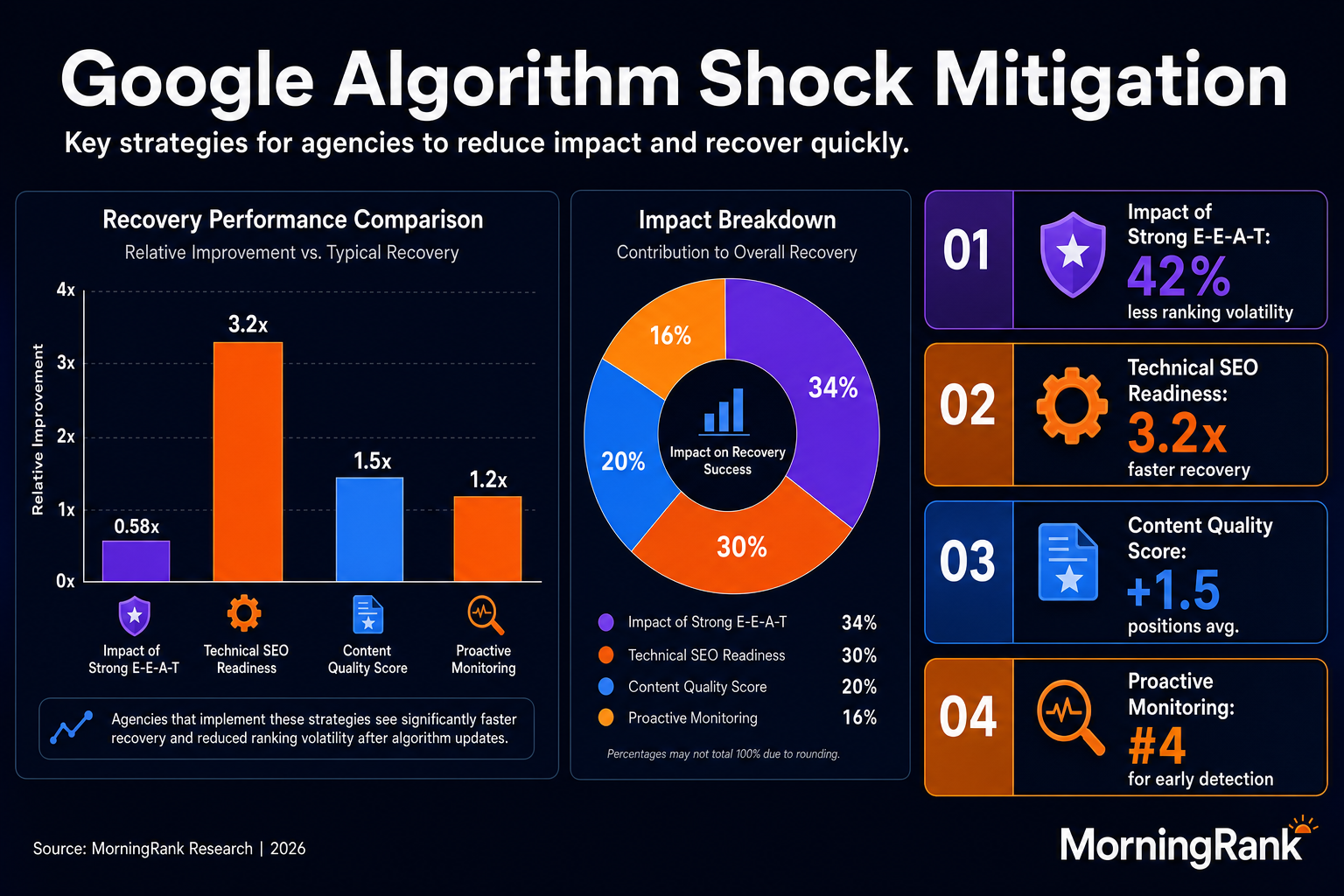
Building resilience against Google algorithm shocks involves a proactive SEO approach that emphasizes foundational best practices and continuous improvement. It means moving beyond a reactive stance, where you only respond after a drop in rankings, to a proactive one, where your website is consistently optimized to withstand and even thrive amidst algorithmic changes.
This approach prioritizes three core pillars: exceptional user experience, comprehensive E-E-A-T signals, and robust technical SEO. In my experience, these are the evergreen strategies that Google consistently rewards, making them the ultimate defense against unexpected volatility. A recent study by Statistaindicates that Google continues to dominate the global search engine market share, holding over 91% as of late 2025, underscoring the critical importance of understanding their algorithms.
What Role Does User Experience (UX) Play in Algorithmic Stability?
User experience (UX) plays a pivotal role in maintaining algorithmic stability. Google's algorithms are designed to serve the best possible results to users, and a positive UX is a strong indicator of a high-quality website. This includes fast loading times, mobile-friendliness, intuitive navigation, and engaging content that satisfies user intent. Websites that deliver a superior UX are more likely to retain high rankings even through algorithm shocks because they align with Google's ultimate goal. Prioritizing Core Web Vitals, for instance, is a direct way to enhance user experience, which Google explicitly uses as a ranking signal, as detailed in their documentation on page experience. For more on this, consider reading our guide on Mastering Core Web Vitals in 2026.
How Can E-E-A-T Principles Fortify Your SEO Strategy?
E-E-A-T (Experience, Expertise, Authoritativeness, and Trustworthiness) principles are fundamental to fortifying your SEO strategy against algorithm shocks. Google heavily emphasizes E-E-A-T, especially for YMYL (Your Money or Your Life) topics, to ensure users receive reliable and safe information. Building strong E-E-A-T involves creating high-quality, well-researched content from credible sources, showcasing the author's expertise, and earning authoritative backlinks and mentions. Websites that clearly demonstrate E-E-A-T are less likely to be negatively impacted by updates designed to filter out low-quality or untrustworthy content. Understanding Google's E-E-A-T Updates is more crucial than ever.

What Technical SEO Safeguards Protect Against Ranking Drops?
Technical SEO safeguards are critical for protecting against sudden ranking drops caused by Google algorithm shocks. A technically sound website provides a strong foundation that Google's crawlers can easily access, understand, and index. This includes a robust site architecture, proper use of schema markup, clean code, optimized crawl budget management, and secure HTTPS implementation. Any technical debt can become a vulnerability during an algorithm shift, as Google might become stricter in its evaluation of site quality signals.
Regular technical audits are not just a best practice, they are a necessity. Automated SEO audit tools, like those offered by MorningRank, can identify and prioritize critical issues, ensuring your client sites remain in optimal health. Ignoring technical SEO issues is akin to building a skyscraper on a shaky foundation; it might stand for a while, but it is highly susceptible to collapse when the ground shakes. My audits have consistently shown that sites with excellent technical SEO bounce back faster from volatility.
Is a Strong Site Architecture Important for Algorithmic Resilience?
Yes, a strong site architecture is extremely important for algorithmic resilience. A logical, hierarchical site structure helps Google understand the relationships between your pages and the overall topical authority of your website. It ensures that important pages are easily discoverable and that link equity flows efficiently throughout your site. A poorly organized site can confuse crawlers, leading to missed content and diluted authority, making it more vulnerable to negative impacts during algorithm shocks. Good architecture also directly benefits user experience by making navigation intuitive.
How Do Core Web Vitals Impact Algorithmic Shocks?
Core Web Vitals directly impact a site's performance during algorithmic shocks because they are explicit ranking signals related to user experience. These metrics, which measure loading performance (Largest Contentful Paint), interactivity (First Input Delay), and visual stability (Cumulative Layout Shift), provide Google with quantifiable data about a user's on-page experience. Websites with strong Core Web Vitals are likely to be favored, while those with poor scores may see their rankings suffer during updates that emphasize user experience. Maintaining excellent Core Web Vitals offers a competitive advantage.
Why is Continuous Monitoring Essential for Agencies in 2026?
Continuous monitoring is essential for agencies in 2026 to effectively navigate Google algorithm shocks and ensure client success. The digital landscape is in constant flux, with new algorithms, AI Overviews, and ranking signals emerging regularly. Without vigilant tracking of keyword rankings, organic traffic, and core web vitals, agencies risk being blindsided by shifts that could take weeks or months to recover from. This proactive monitoring allows for early detection of issues, rapid analysis, and timely strategic adjustments, minimizing potential damage.
Tools that provide daily, granular insights into keyword performance across various locations are invaluable. This helps agencies quickly pinpoint which keywords and pages are affected by an algorithm shock, enabling them to formulate targeted recovery plans. Furthermore, monitoring competitor performance offers crucial context, helping to determine if a ranking change is site-specific or a broader industry trend. For agencies, providing detailed, up-to-date reports to clients also builds trust and transparency during turbulent times.
How Does Real-Time Rank Tracking Help Detect Algorithm Shocks?
Real-time rank tracking helps detect algorithm shocks by providing immediate visibility into keyword position changes. If a client's rankings for a significant set of keywords suddenly drop or fluctuate wildly across multiple locations, it can be an early indicator of an algorithm shock. This quick identification allows agencies to investigate potential causes, analyze impacted pages, and begin implementing corrective measures much faster than if they were relying on weekly or monthly reports. MorningRank's AI-powered keyword rank tracking capabilities are designed for this level of precision.
What Data Points Should Agencies Monitor Post-Update?
Post-update, agencies should closely monitor a range of data points to assess the impact of an algorithm shock. Key metrics include overall organic traffic, individual page traffic, keyword rankings (especially for target and money keywords), Core Web Vitals scores, crawl errors in Google Search Console, and indexing status. Additionally, it's important to observe changes in SERP features for target keywords, as algorithmic shifts can alter how rich snippets, local packs, and AI Overviews are displayed. A comprehensive view of these data points provides a clearer picture of the shock's effects and informs recovery strategies.
What Strategic Responses Minimize the Impact of Algorithmic Changes?
Strategic responses to minimize the impact of Google algorithm shocks involve a multi-faceted approach focused on continuous optimization, content diversification, and robust client communication. Instead of chasing every minor signal, agencies should double down on proven strategies that align with Google's long-term objectives: quality, user satisfaction, and trustworthiness. This includes regularly auditing and improving content, enhancing technical SEO, and building a diverse backlink profile to reduce reliance on any single ranking factor.
Content diversification, for example, means not putting all your eggs in one basket with just one type of content or keyword. It means exploring different content formats, targeting a wider range of user intents, and ensuring your content serves various stages of the customer journey. This breadth of quality content makes your overall online presence more resilient. Furthermore, proactively communicating the nature of algorithm shocks to clients, setting realistic expectations, and transparently sharing monitoring data can transform a potential crisis into an opportunity to build stronger client relationships.
How Can Content Audits Help in Post-Shock Recovery?
Content audits are invaluable for post-shock recovery by identifying underperforming or outdated content that may have been negatively impacted. During an audit, you can assess content for E-E-A-T signals, relevance, accuracy, and user engagement. Content that no longer meets Google's quality standards can be updated, expanded, or consolidated. Removing or improving low-quality content can significantly boost the overall quality signal of a website, aiding in recovery from algorithm shocks that often target such issues. It's a crucial step in re-establishing authority.
Why is Client Communication Key During Algorithmic Volatility?
Client communication is key during algorithmic volatility because it manages expectations and builds trust. Agencies must proactively inform clients about the nature of Google algorithm shocks, explaining that such fluctuations are common and often outside of direct control. Transparently sharing monitoring data, outlining the agency's strategy for investigation and recovery, and providing regular updates helps reassure clients that their investment is in capable hands. This open dialogue prevents panic and allows agencies to focus on the strategic work required for recovery without added pressure from uninformed clients.
Conclusion: Navigating the Evolving SEO Landscape in 2026
The landscape of SEO in 2026 is defined by constant evolution, where Google algorithm shocks are a recurring challenge rather than an anomaly. For agencies and local businesses, success hinges not on predicting every algorithmic twist but on building a foundation of resilience. This means relentlessly focusing on providing an exceptional user experience, demonstrating clear E-E-A-T, maintaining a pristine technical SEO infrastructure, and employing continuous monitoring. By adopting a proactive, data-driven strategy, you can minimize the impact of sudden shifts and ensure your clients' online visibility remains strong.
Embracing these principles allows agencies to adapt quickly, reassure clients with data-backed insights, and ultimately deliver sustained growth. The goal is to create websites that Google wants to rank because they genuinely serve users well. As a Local Search Specialist, I know this approach creates lasting value. Don't just survive the next algorithm shock, be positioned to thrive.
Related reading: Mastering Google Algorithm Update Responses: A 2026 Playbook for Agencies.
Frequently Asked Questions
What is a Google algorithm shock?
A Google algorithm shock is a significant, unannounced fluctuation in search engine rankings that occurs outside of Google's officially confirmed core updates. These shifts can cause noticeable changes in organic visibility for websites and typically require investigation to understand their impact.
How often do Google algorithm shocks occur?
Google algorithm shocks, or unconfirmed updates, occur frequently, often daily. While most are minor and go unnoticed, some can lead to widespread volatility in search rankings. Google is constantly making small adjustments to its ranking systems to improve search quality.
Can you recover from a Google algorithm shock?
Yes, you can recover from a Google algorithm shock by focusing on core SEO principles like E-E-A-T (Experience, Expertise, Authoritativeness, Trustworthiness), improving user experience, and addressing any technical SEO issues. Consistent effort in these areas helps restore and improve rankings over time.
What should agencies do immediately after a significant ranking drop?
Immediately after a significant ranking drop due to a Google algorithm shock, agencies should monitor affected keywords, analyze traffic patterns in Google Analytics, and check Google Search Console for any new crawl errors or indexing issues. Communicating transparently with clients is also crucial.
How can I stay informed about Google algorithm changes?
You can stay informed about Google algorithm changes by regularly checking official sources like the Google Search Central Blog and following reputable SEO news sites. Using a reliable keyword rank tracker, like MorningRank, also helps detect shifts quickly, even for unconfirmed Google algorithm shocks.
Does MorningRank help in understanding Google algorithm shocks?
Yes, MorningRank helps agencies understand Google algorithm shocks by providing precise, real-time keyword rank tracking, historical data, and volatility monitoring. This enables agencies to quickly identify impacted keywords and pages, allowing for faster analysis and strategic adjustments.
Ready to build a resilient SEO strategy that can withstand Google algorithm shocks? Try MorningRank free today and empower your agency with the tools needed for proactive monitoring and sustained client success. Visit https://morningrank.com.
Want this kind of insight every week?
MorningRank delivers daily rank tracking, AI SEO recommendations, and white label client reporting.